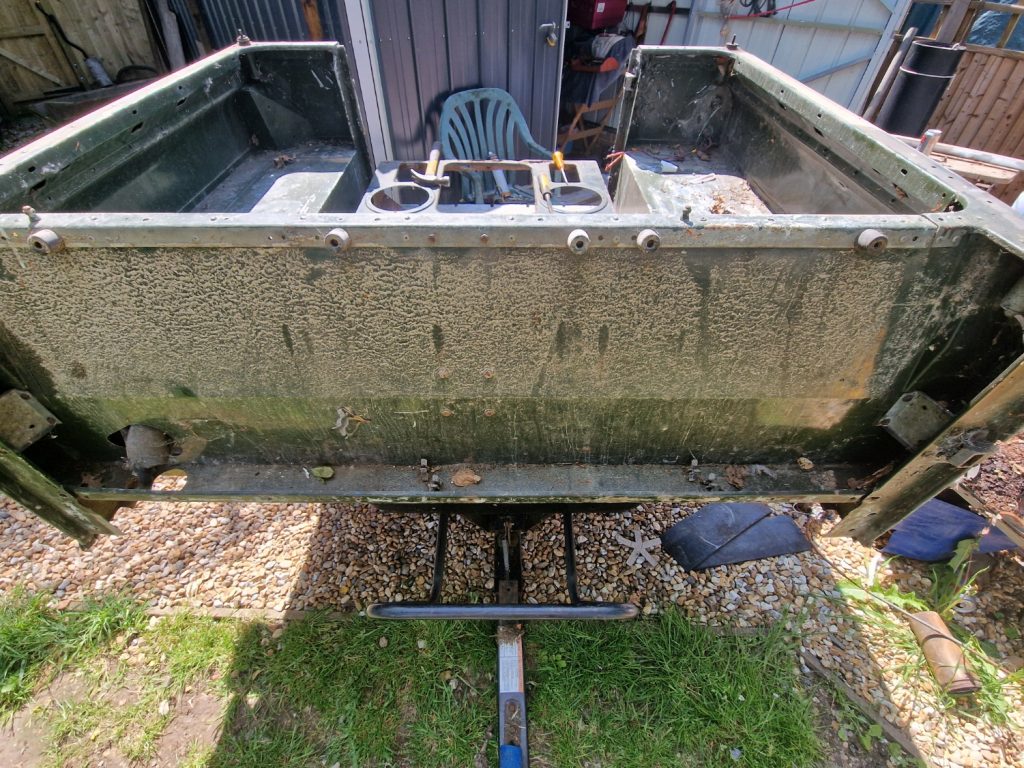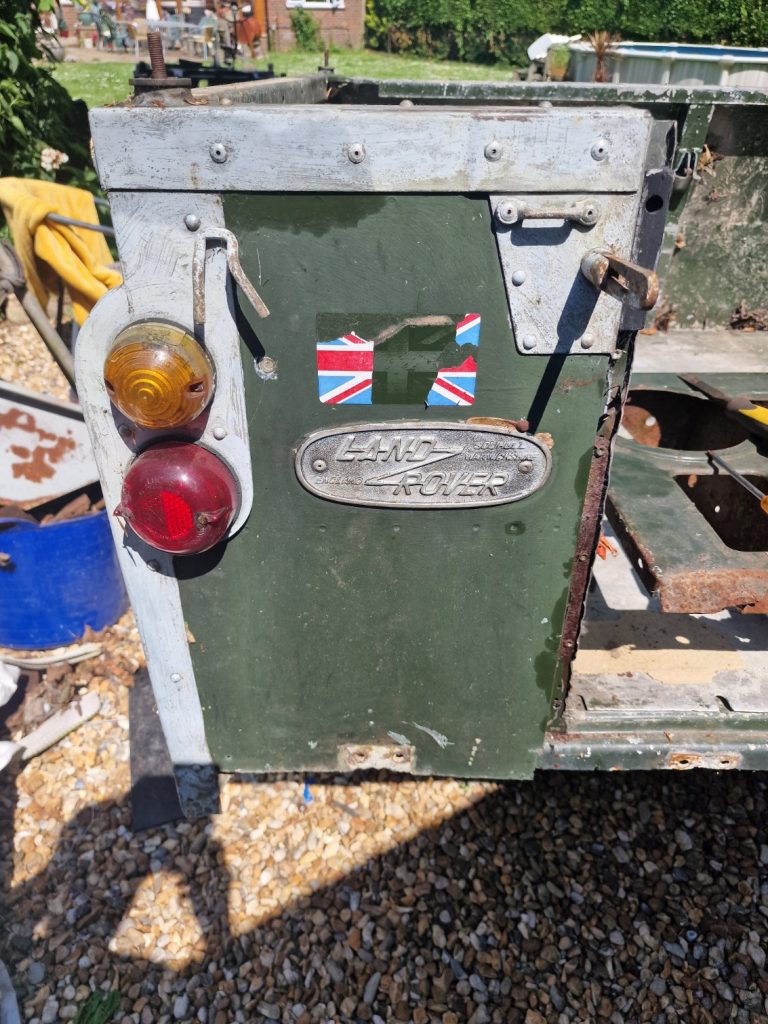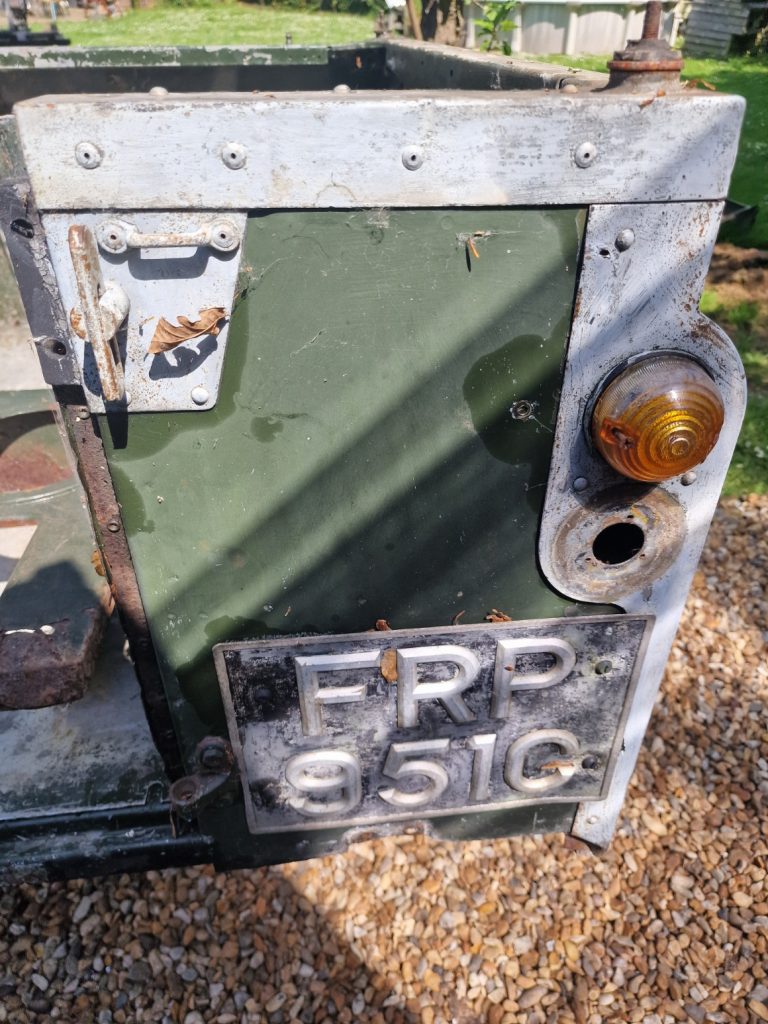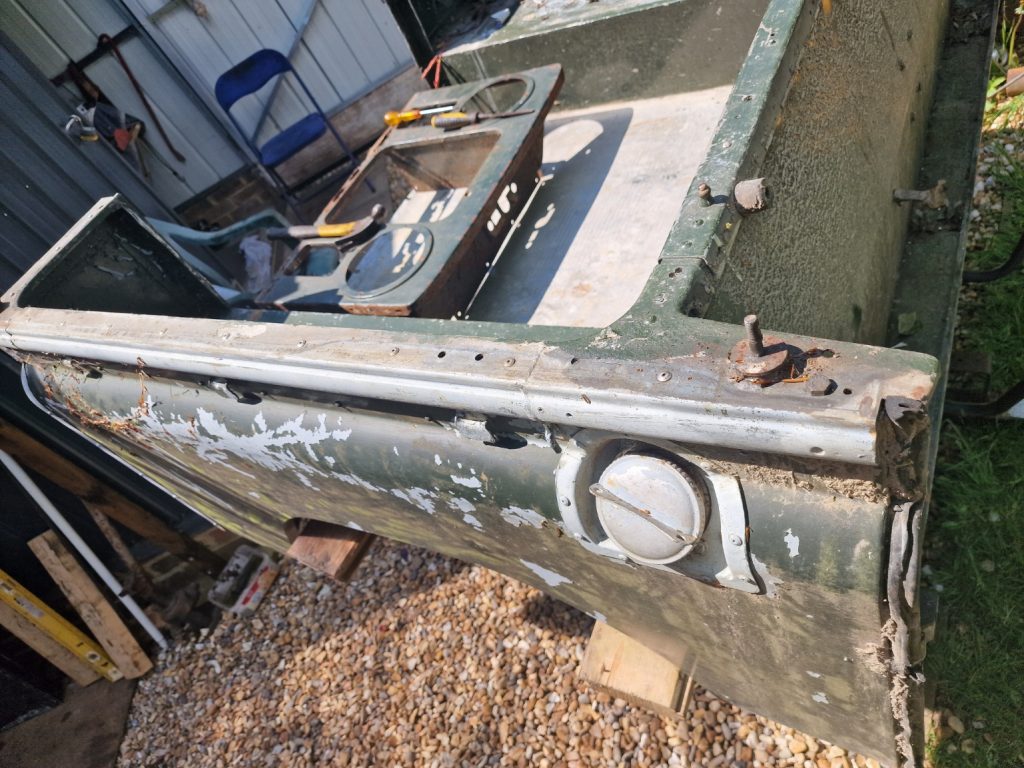
Articles

Brake Pipes

OK, so a rather short one this time. I was going to wait, but there is lots going on and hopefully lots to write up in the very near future, so thought I would get this one out of the way.

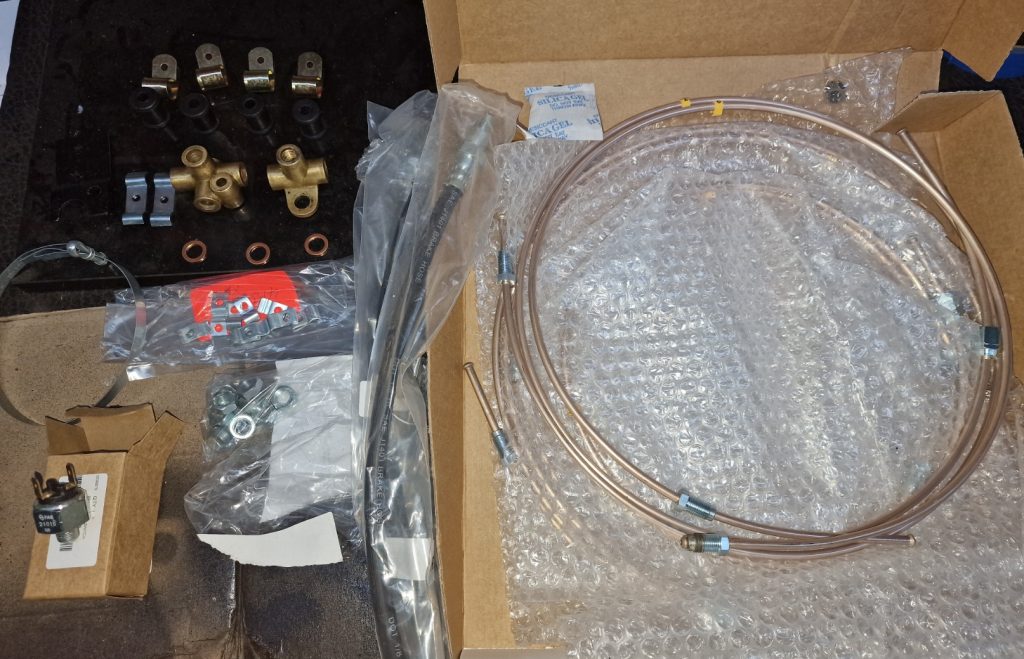
Last time I re-fitted a new front axle case and added all the brake cylinders for each of the wheels, this time I fitted the brake pipes. So, need to get my wallet out again and buy some new parts. This is a snapshot of what I got. I am staggered each time I buy parts, whether new or second-hand, the smallest parts are stupidly priced for what they seem to be!

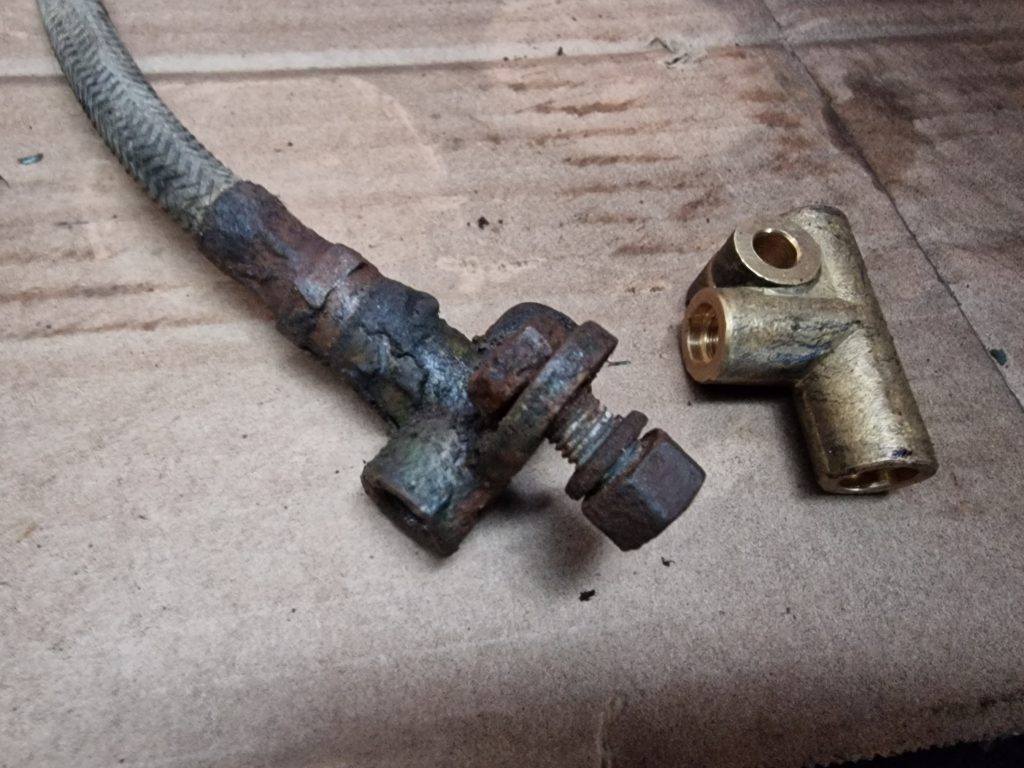
I didn’t buy everything new, there are two brass connectors, this one (The cruddy looking one) shows one (the clean one I didn’t actually need) and another which is a 5-way connector. I cleaned these up and treated them to a bit of etching clear coat to keep them looking good.

What I did buy, was a complete set of pre-made pipes. I dont have the tools to do brake pipes, and didn’t fancy spending more on tools I will never use again. (I Hope).

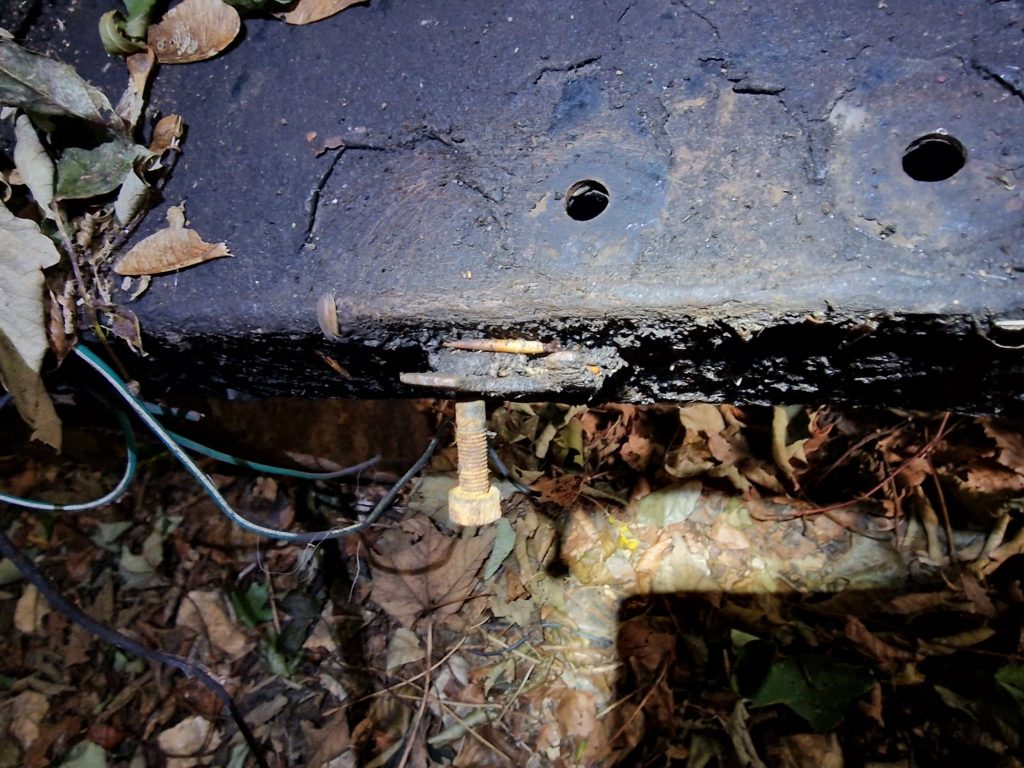
I also had to recover a part from the old chassis, the little bracket that holds the 5-way connector in position. I cut the screws off, salvaged the part, cleaned it and painted it. So talking about price of things, to buy a new one of these, which is just a piece of bent metal with a couple of holes in, more than £13.00. Now thats not a lot on its own, but it adds up, and for a simple piece of metal, that I could probably make myself.

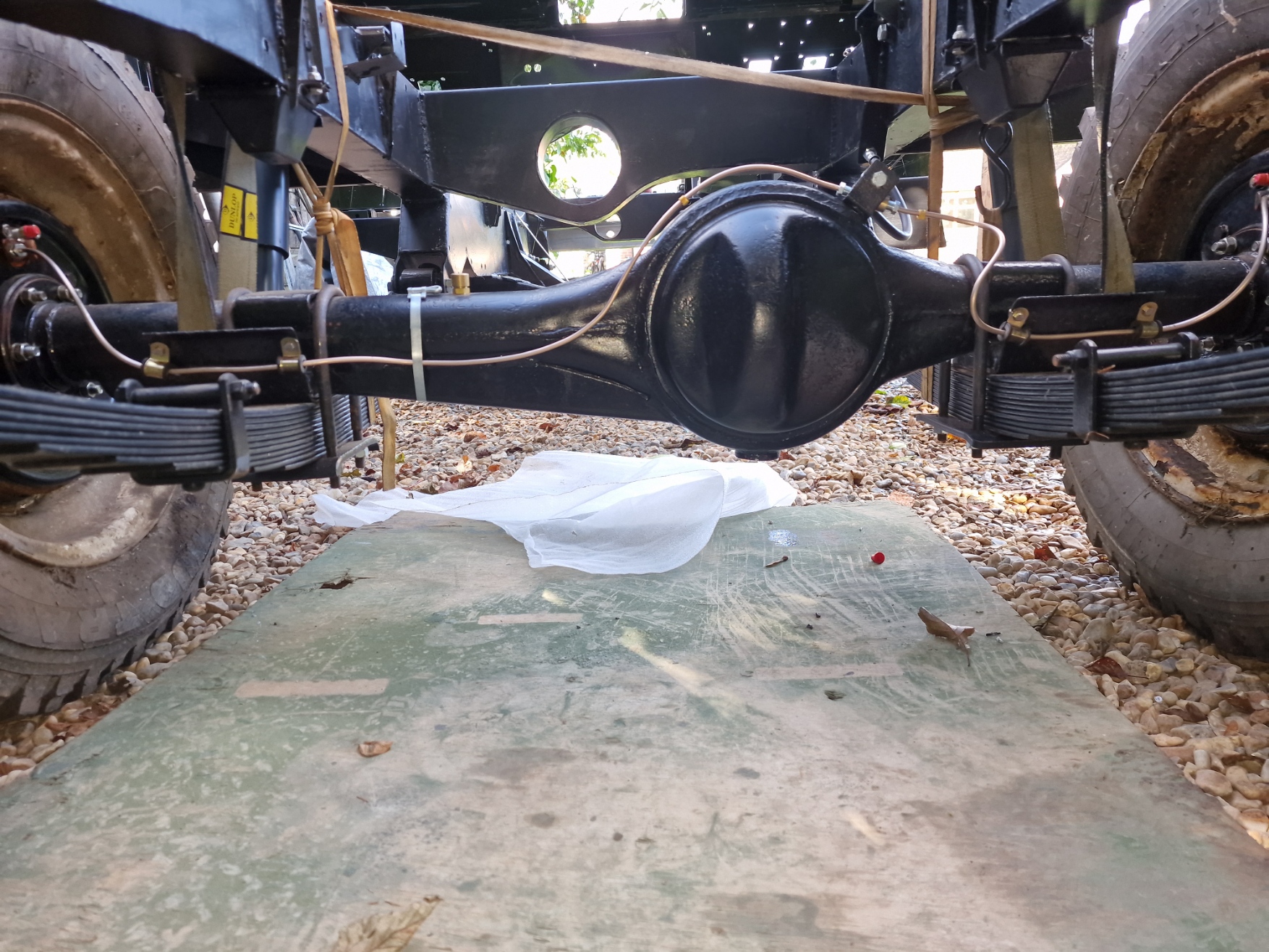
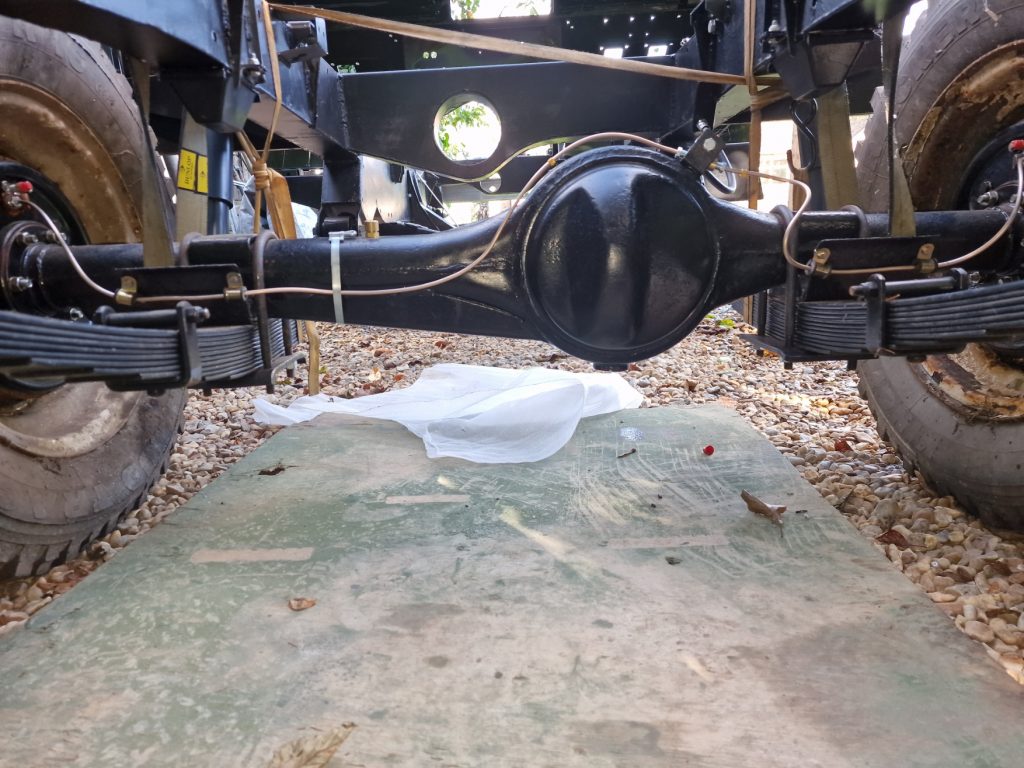
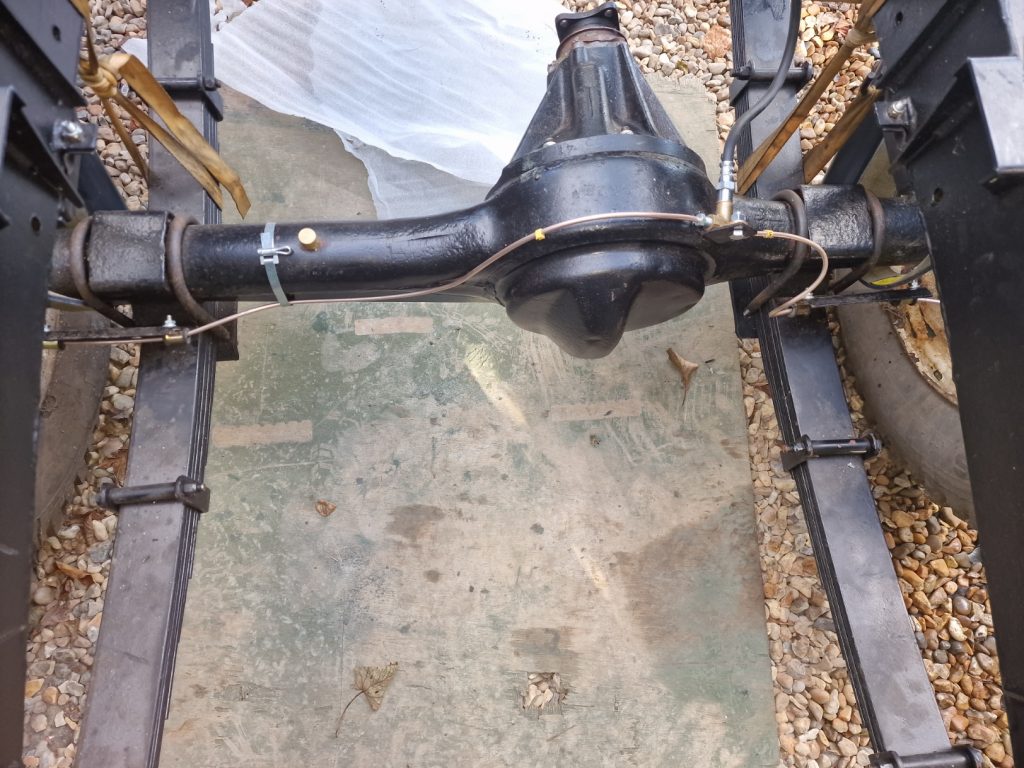
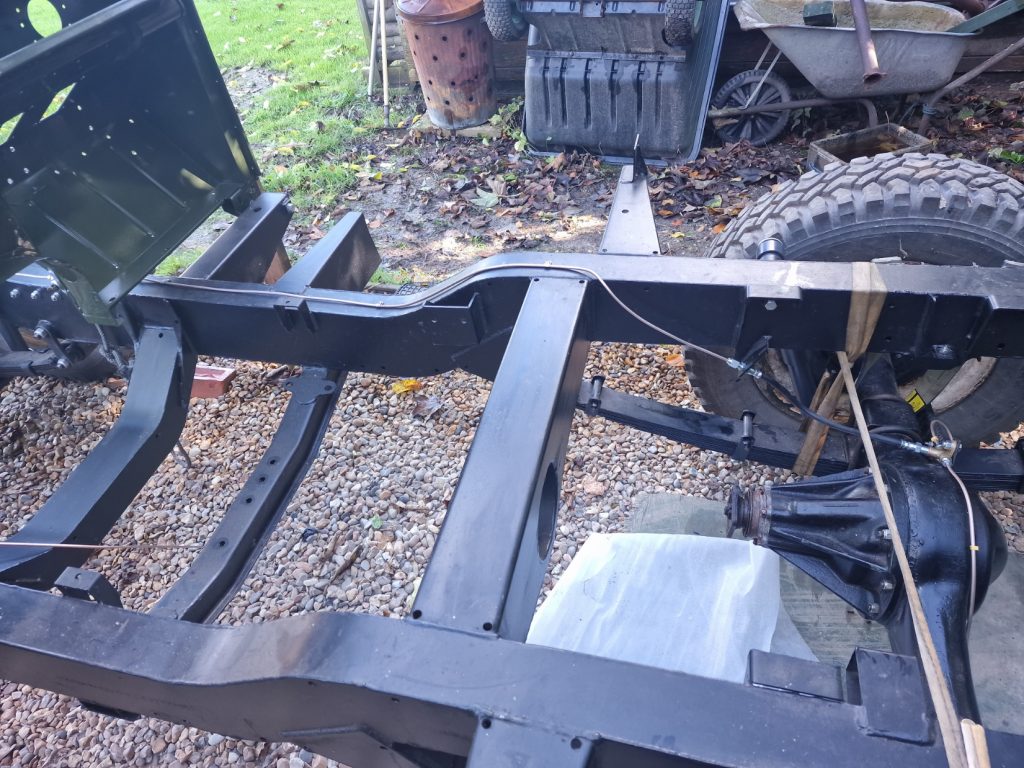
First off was to get the pipes across the back axle. A 3-way connector was bolted to the axle case and gently routed the pipes from the connector to each of the wheels, using P-clips and grommets to support them as necessary.

My only slight disappointment with the pre-made pipes was that the right hand one, seemed a little too long, so had to make a, what seems like an unnecessary S bend in it.

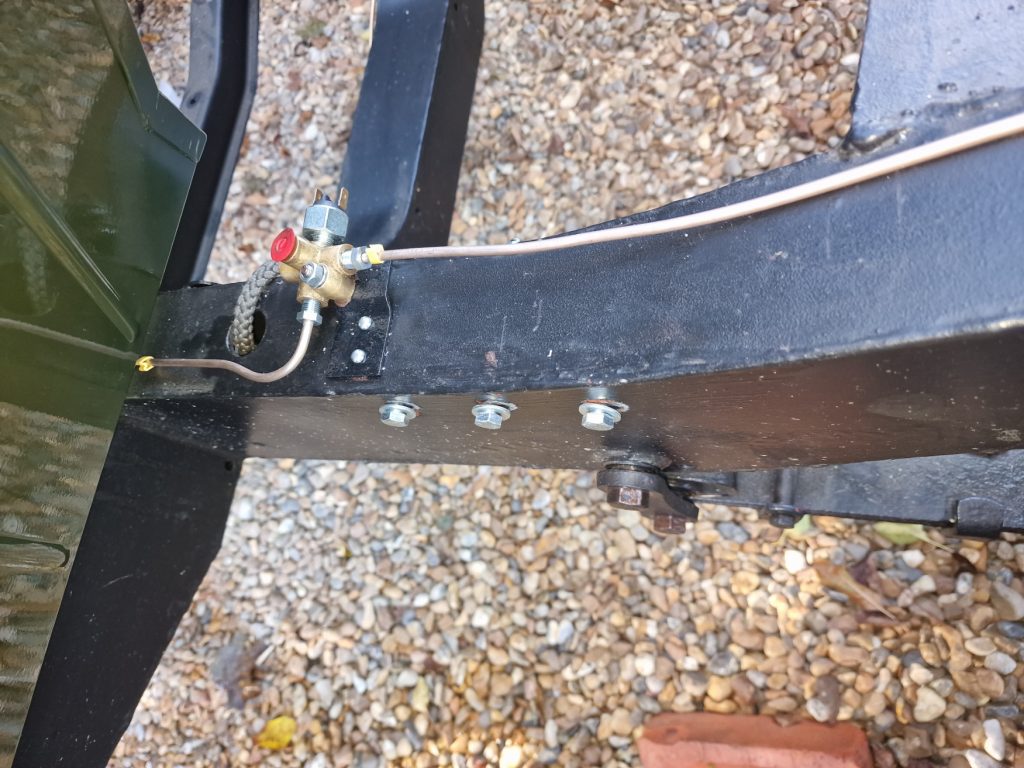
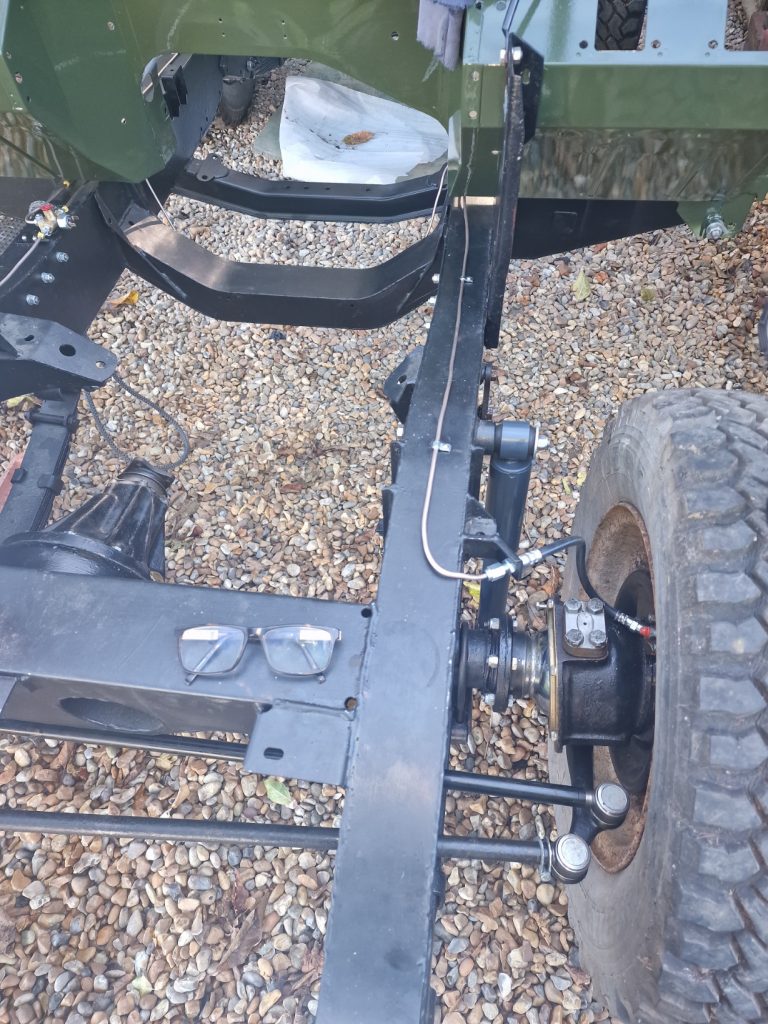
Next up, fix the 5-way bracket to the chassis, using the old chassis as a reference as to where to put it. Gently bent and shaped the front right pipe, and got that connected up. Bending them is pretty easy, just need to be super careful not to kink them.

Routed the next pipe to the rear axle, which was pretty easy. Added a number of clips to hold it firm on top of the chassis. Oh, here’s another thing that pissed me off, the price of these little clips, nearly £3 each!

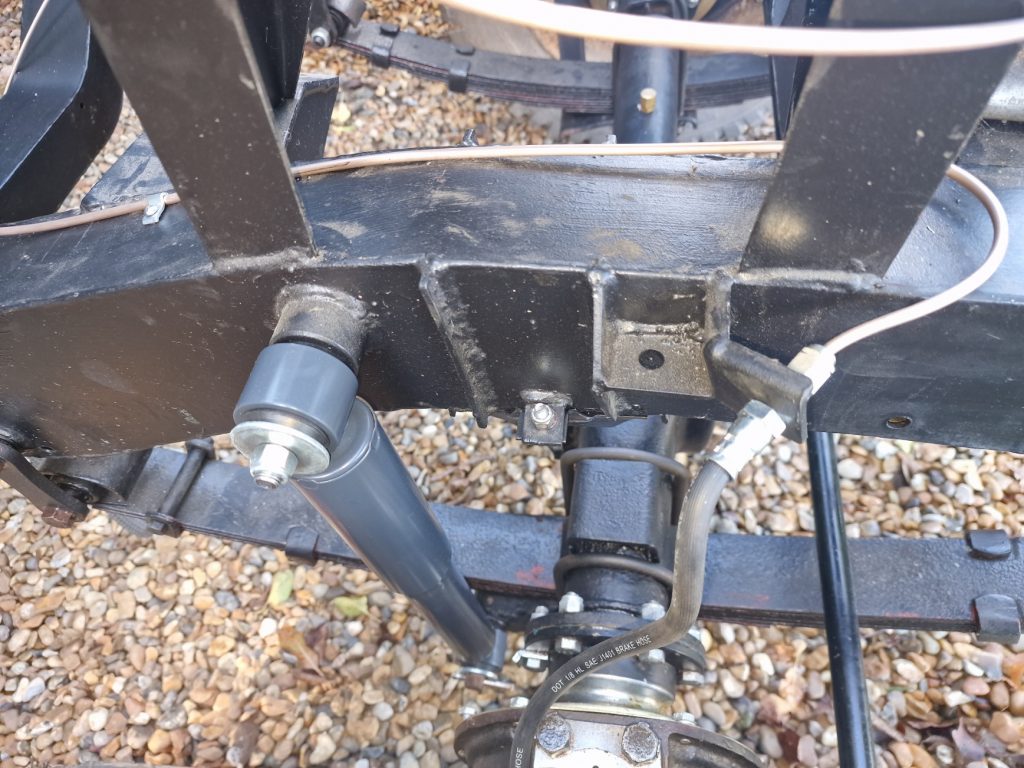
Final part was the left front, or Near side front. this one needs to head off towards the back, from the 5-way connector and then along the gearbox support up the other side and then to the front wheel. First time I did this, had it routed really nicely, but it was short!

Had to re-do it, which meant more small holes in the chassis (not ideal) and it not being as I would like it.

Ran out of time, so will come back to this and tidy the routing up a little. (you can just about see the pipes, not looking ideal).

Thats it, said it would be a short one. There are loads of other bits I have been doing, so will write those up as soon as they are finished (just waiting for some bits to come back to me, will be clearer about that when I do finish them).

All this effort is focused on clearing the decks of as many small, outstanding jobs as possible so I can start on the last (hopefully) big jobs, Gearbox and Engine.


Front & Rear Axles continued….

Last time I had spent lots of time repairing, preparing and painting the body panels, which the majority of them are now located in a spare room in the house….

This time, it;s all about taking another look at the Front Axle. If you read previous articles, you will know that the half shaft on the Near side front would not go in properly, without effort, and even when it was in it became stiff. Clearly that is not right. So I took another look.

First thing was to take it off Isobel, and strip it down.

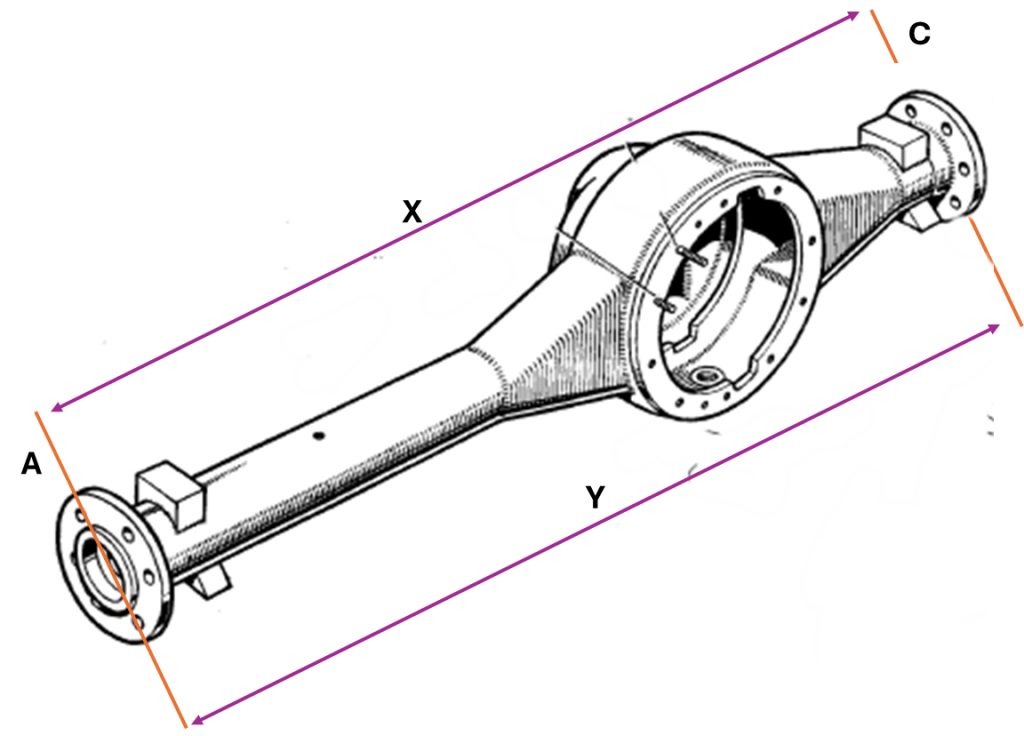
I then need to work out if is actually twisted or bent. So, bolted 2 pieces of wood, exactly the same length to each end (A & C (not sure what happend to B?). I then measured X and Y, in theory they should be the same.

But they were not, they were out by 5/10mm depending on which holes I bolted the battens to. So the conclusion is that the front Axle case is actually bent. Back to the Series 2 club trading place on the forum. “Anyone got a Series 2A front axle case for the 1965 SWB?” Again, it came up trumps, in-fact 2 people came back to me. The second one, didn’t actually have one, but will in a week or 2, so I reserved that one, but at the same time spoke to the first chap and we agreed a price and pickup. (my nephew and his wife were actually visiting family, about a mile away from where this guy was, so they kindly picked it up for me).

Got he Axle back, and tried the Diff, Swivels and importantly the Half shafts, and voila, it all went together perfectly. Only issue was it was for an earlier vehicle, and pretty sure for a 109, but it would work. Just as I was planning to clean it up and paint it, the other chap came back to me “I’ve got one now, and it looks in really good condition, and is the right age and one for my vehicle. So I arranged to go get that one as well. Just so happens, he is the Chairman of the Series 2 Club, which inevitably lead to a long conversation.

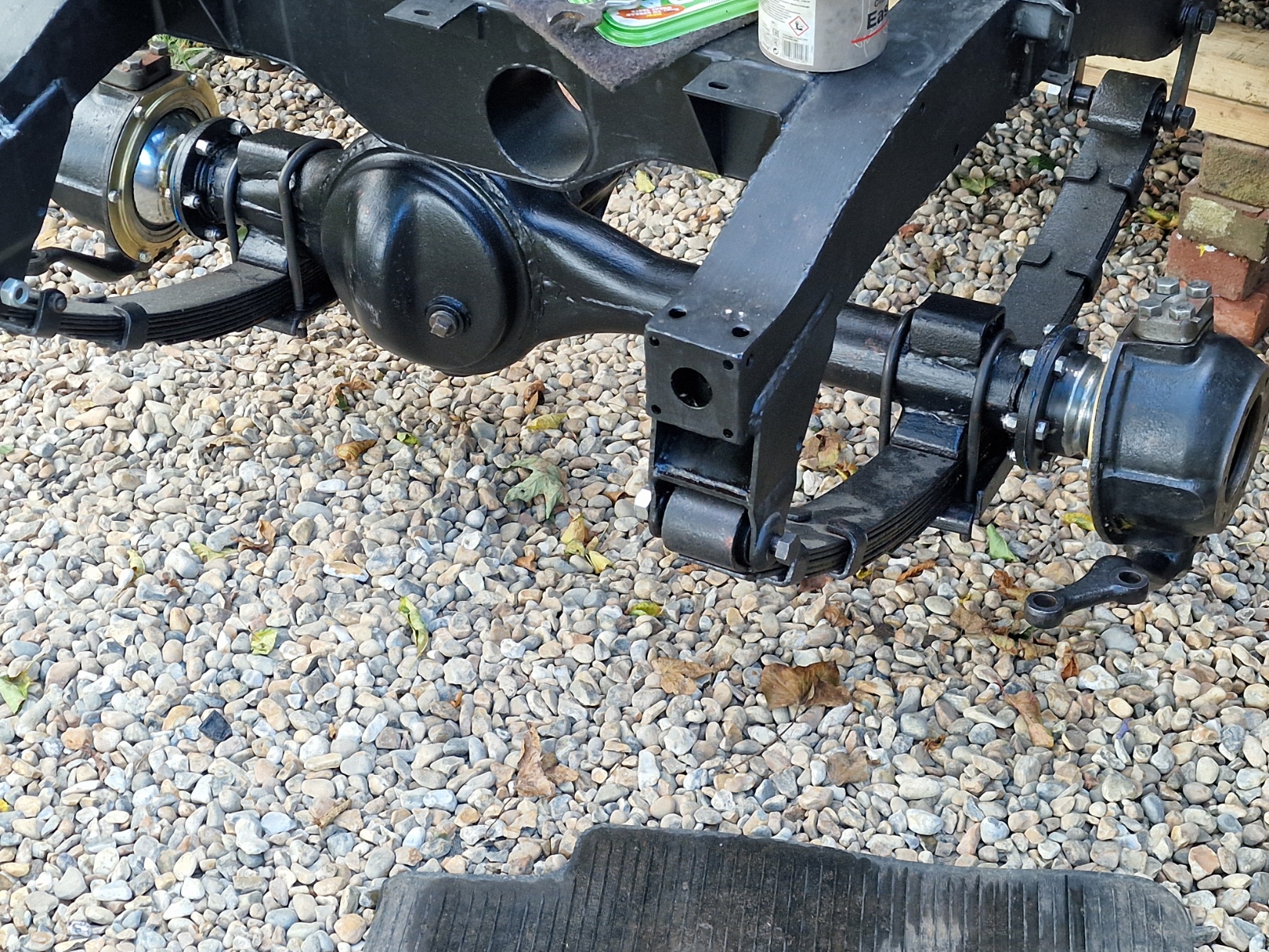
So in an attempt to keep this short, Cleaned it up a little (was pretty good anyway), and got it onto Isobel.

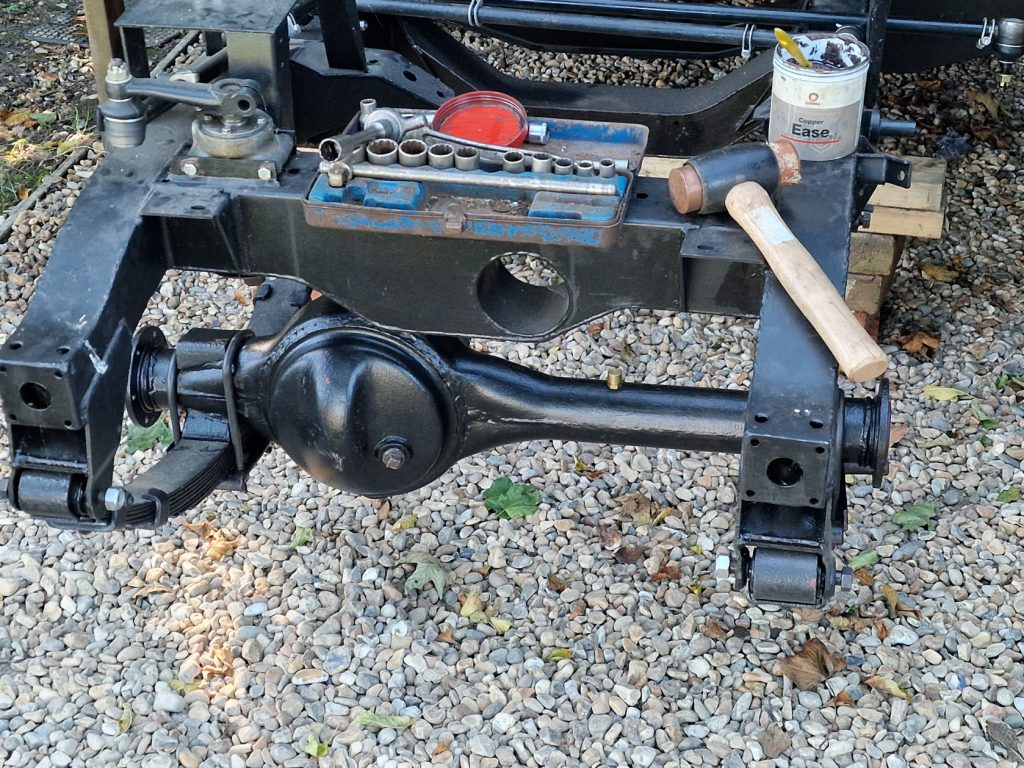
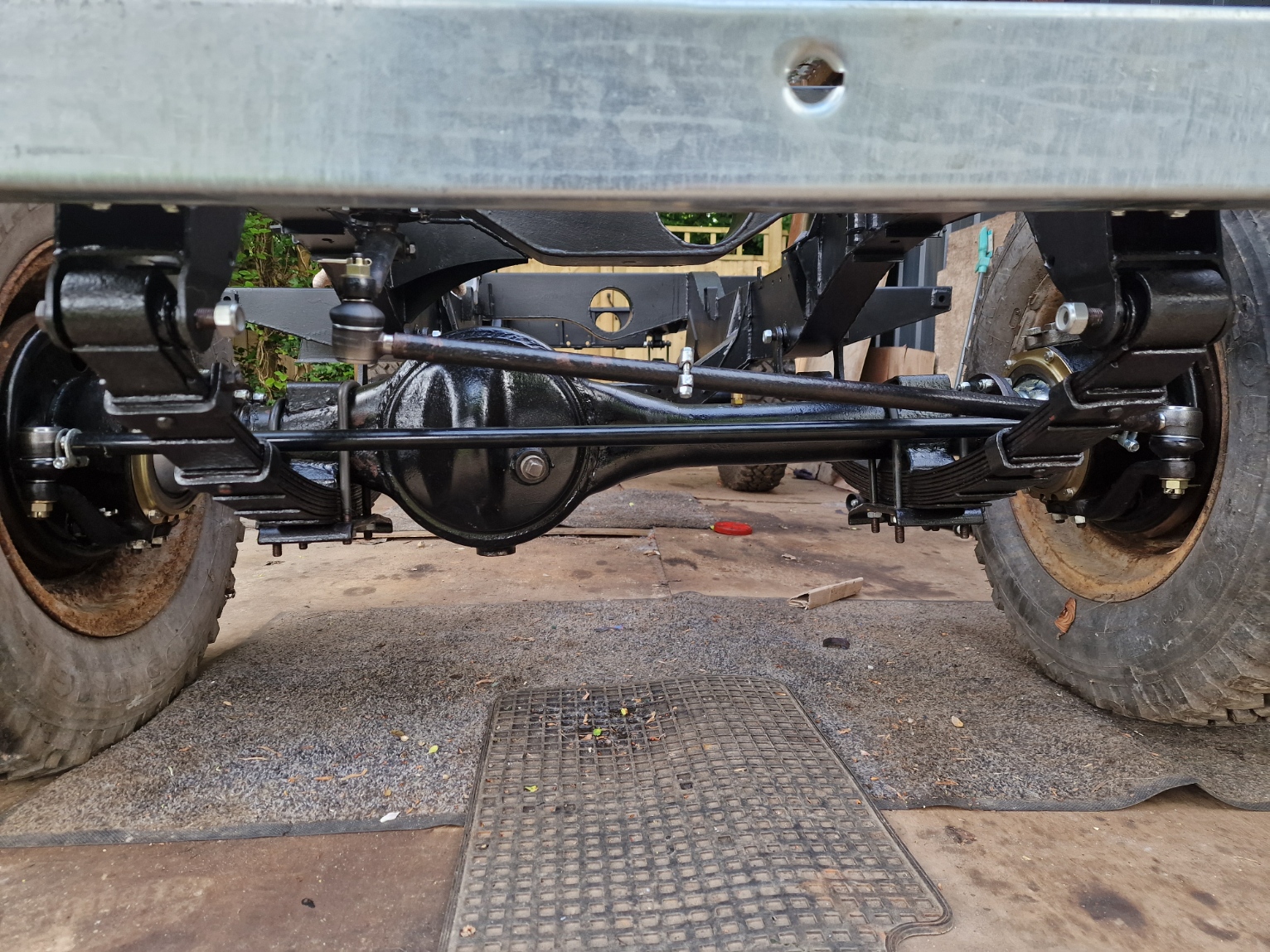
This time, rather than doing temporary fix’es of all the bits, did them all properly, Checked the swivels, wheel hub bearings, fitted the brake cylinder and torqued everything up. Including the Springs, which also allowed me to fit the shock absorbers.

Tightening the road springs is not just a case of tightening the bolts, they need to be set to a certain distance from the chassis.

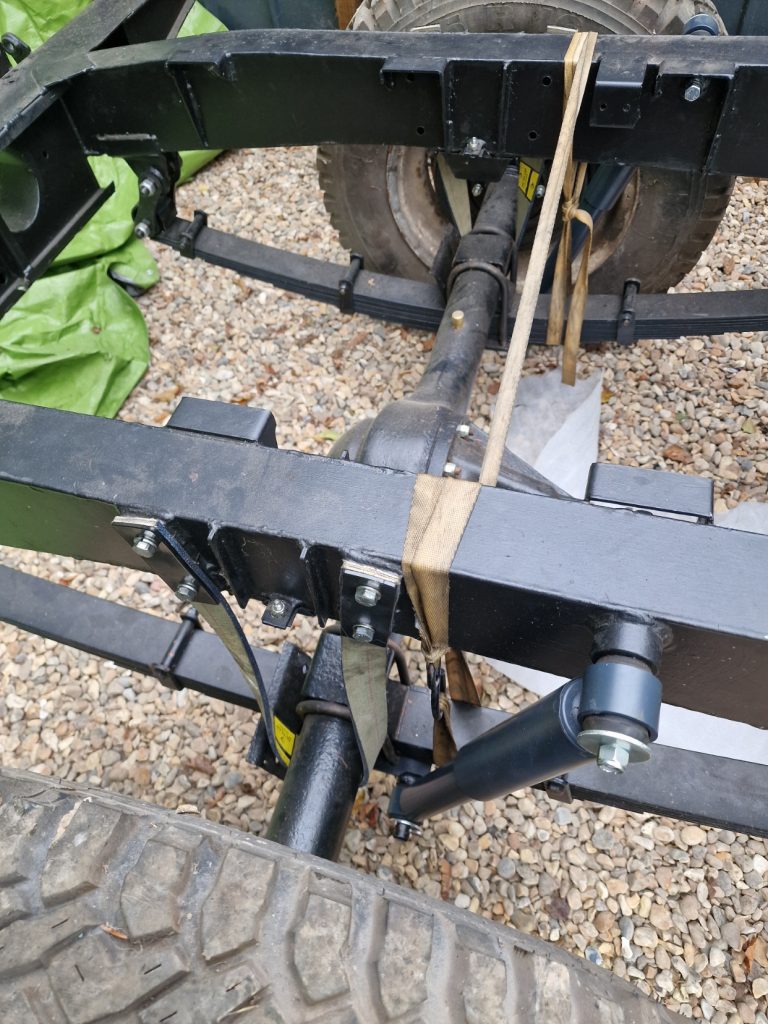
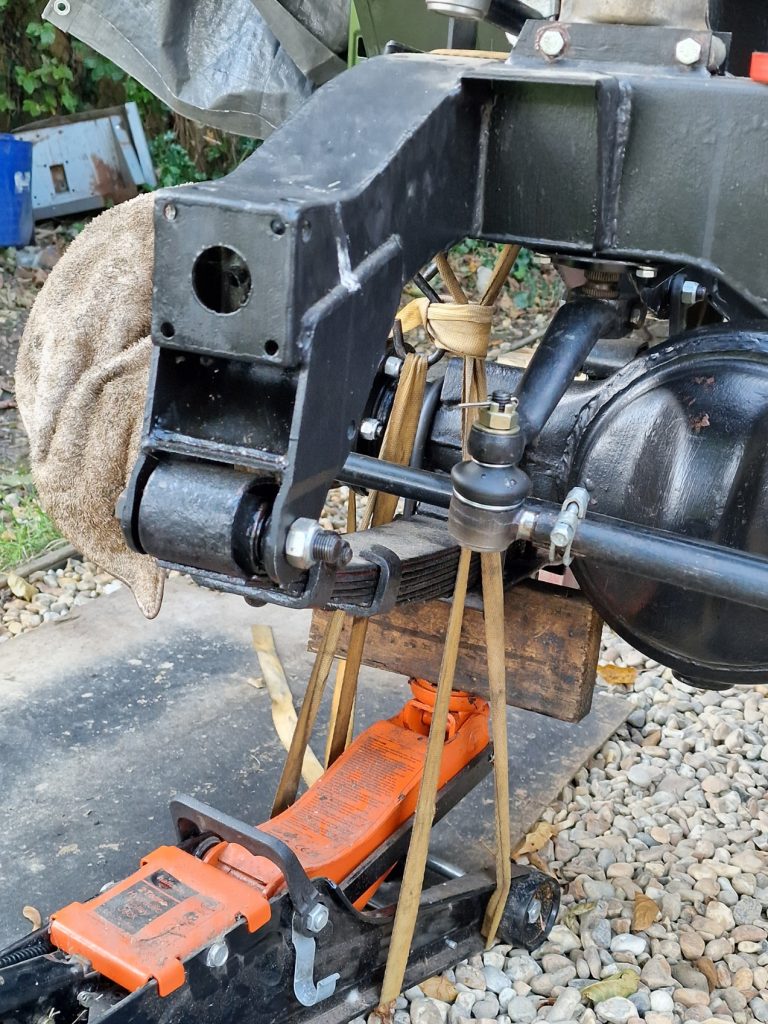
So, with a trolley jack, straps over the chassis, compressed the springs to the right distance before torqueing the bolts up.

Did this on all 4 corners, so the rear was also done at the same time.

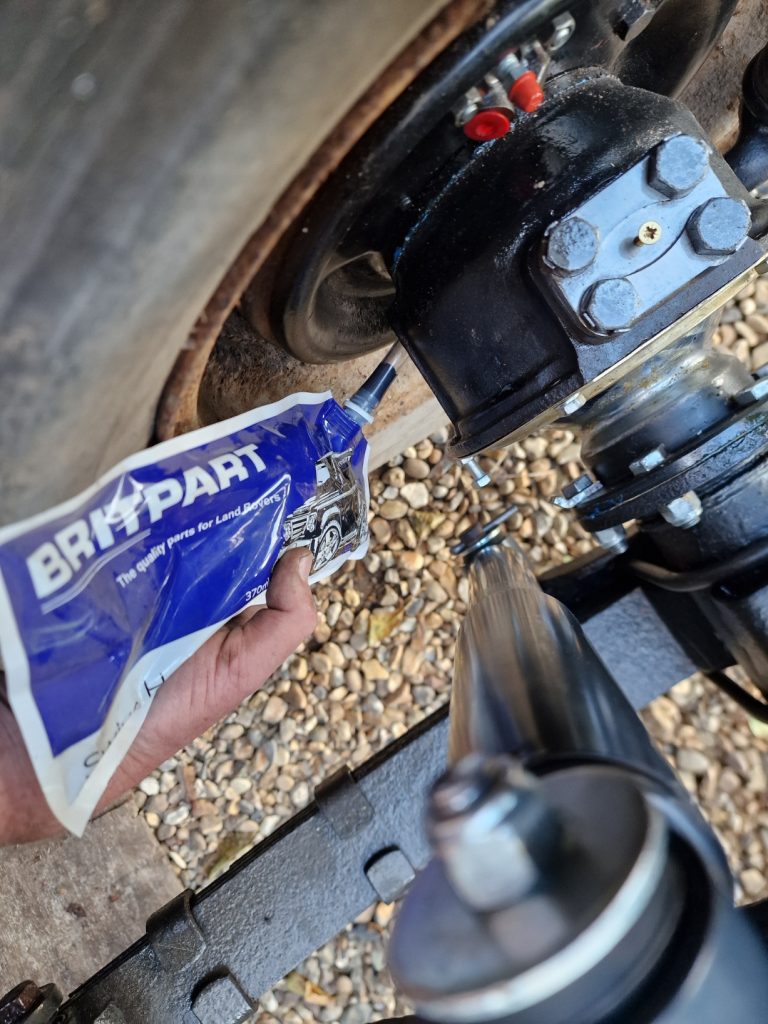
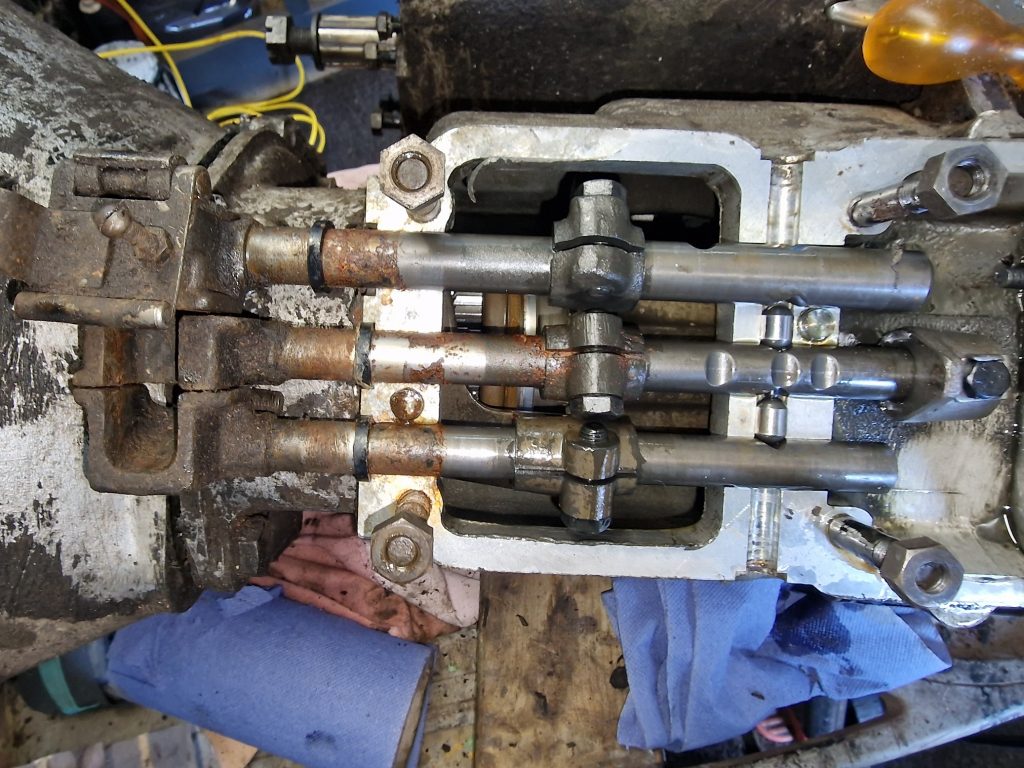
finally, and this will test my work, added some oil and grease to the Swivels (One Shot, which is a little thicker than oil, and should help stop oil leaks), and 1.75 Litres of EP 90 in each of the Diffs.

Will check back in a week or so to see if I have any leaks!

So thats the axles all done, finally… Oh, except for one thing, the U-bolt nuts. Which need to be torqued to about 60 lb ft. Did one, and it stripped the thread…. Not too worried, will get a replacement and tighten them over time as the UBolts do (apparently) stretch over time.

While all of this was going on, also got on with a few other bits and pieces. Need to clear the decks of outstanding jobs before starting on the next part.

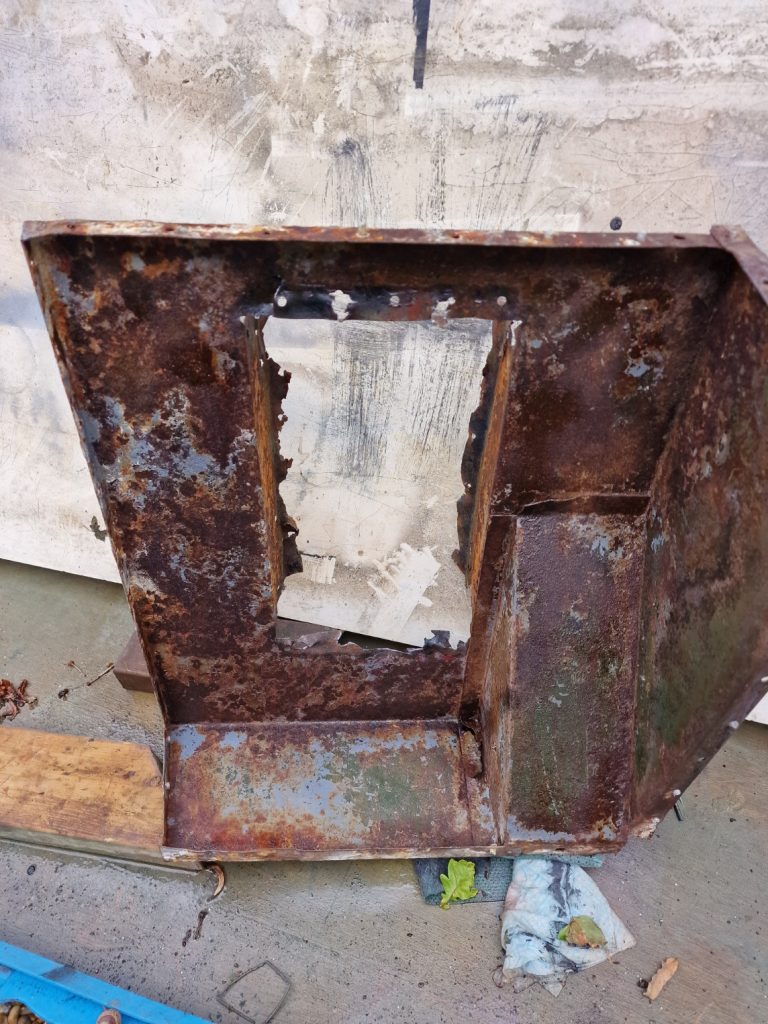
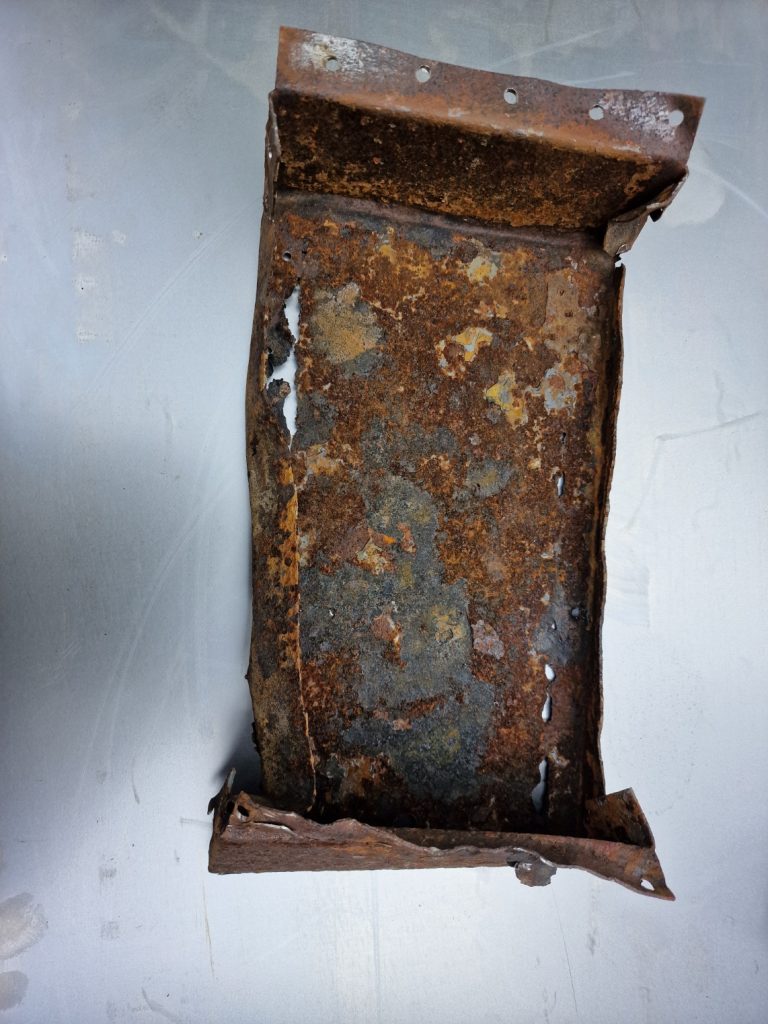
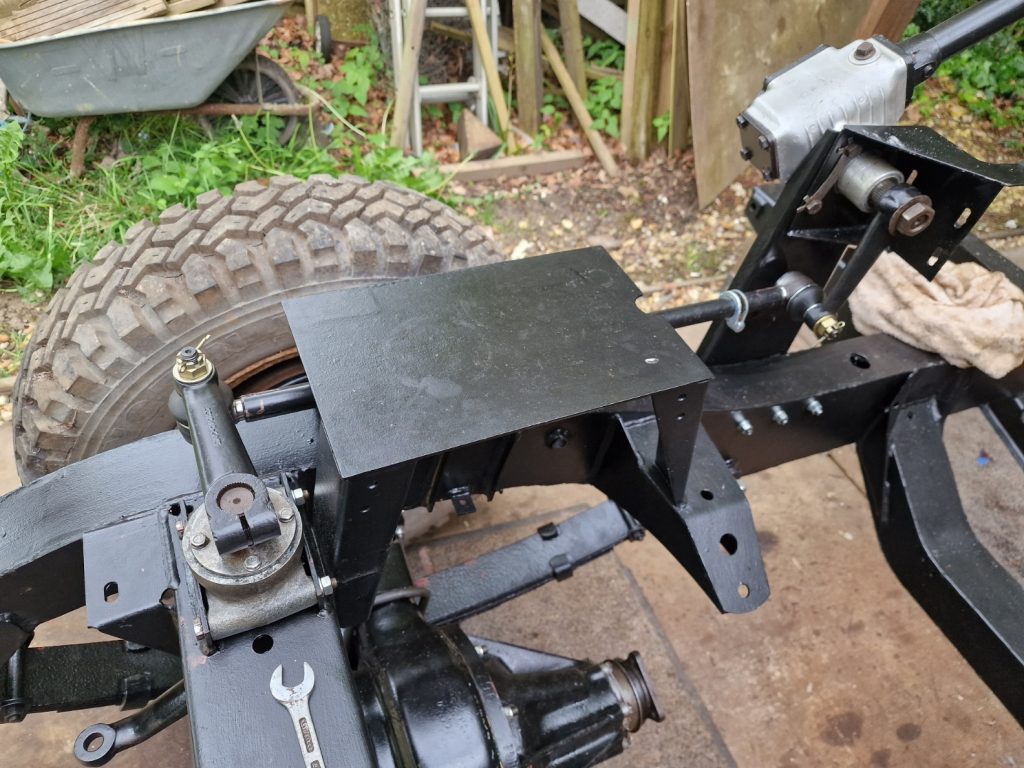
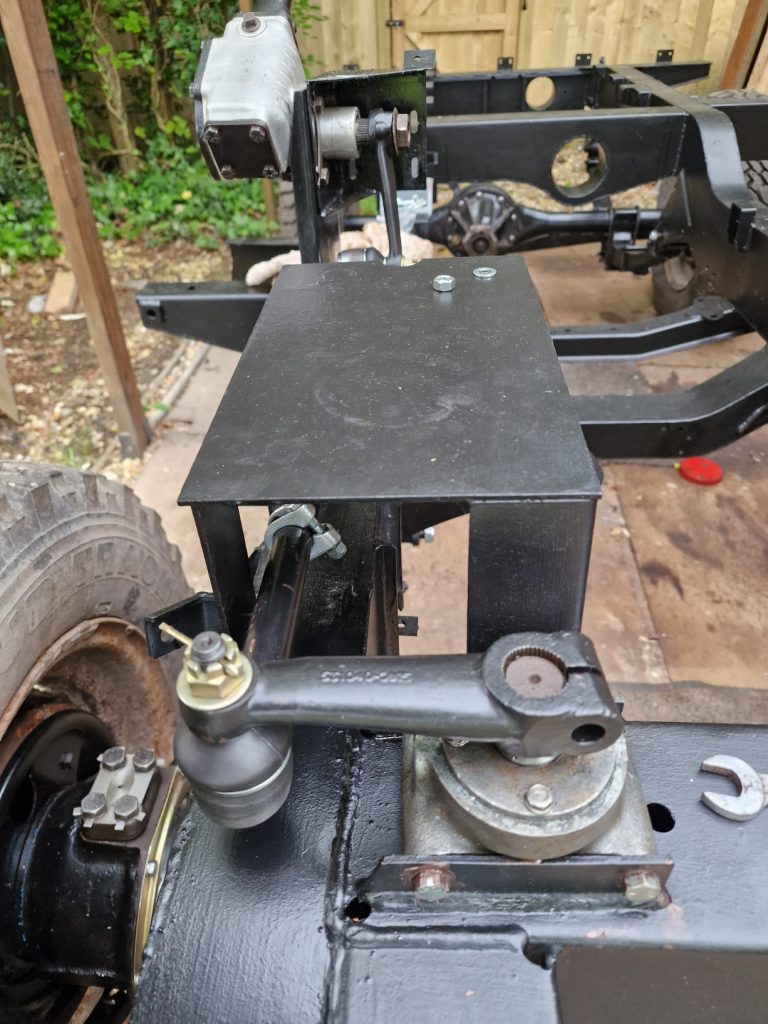
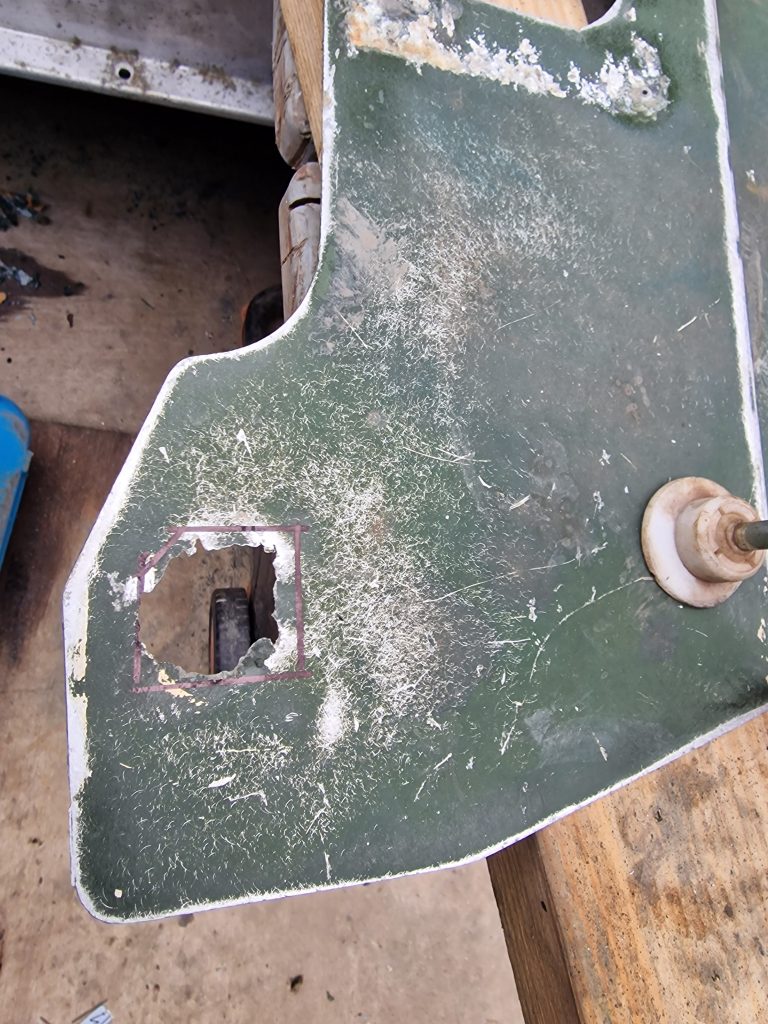
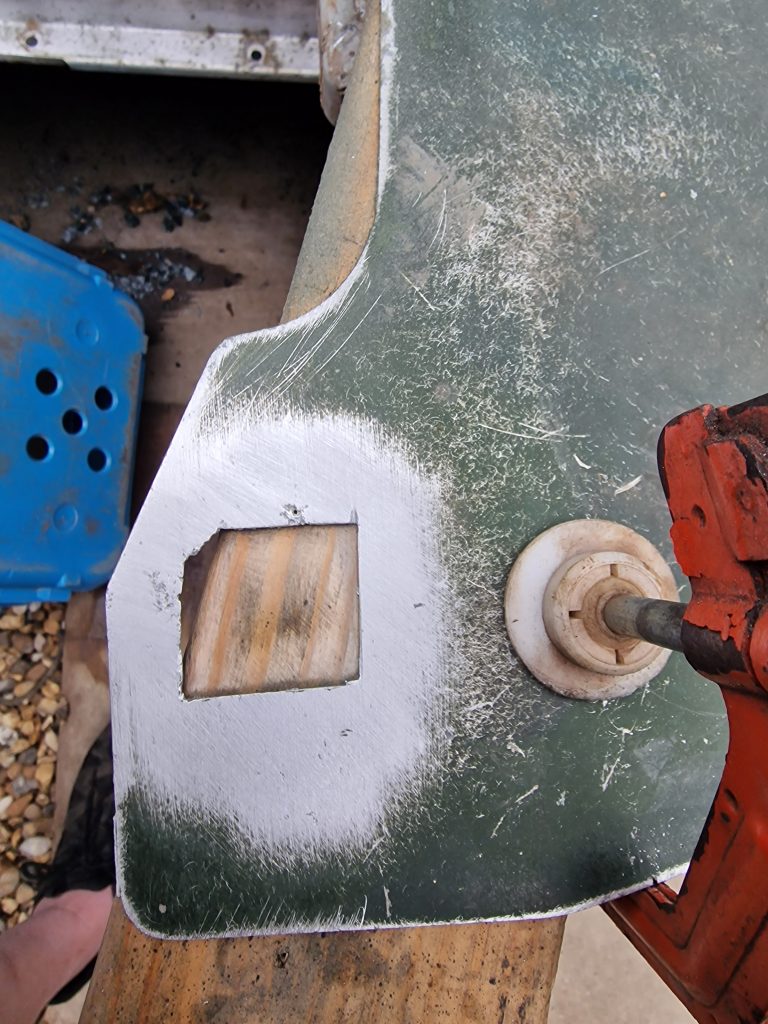
Seatbox tool tray / battery box. This was rotten, well parts of it, so decided to take the angle grinder to it to cut out the rot. I originally planned to make a new one, but bending steel, even mild steel is not so easy, to get nice straight bends.

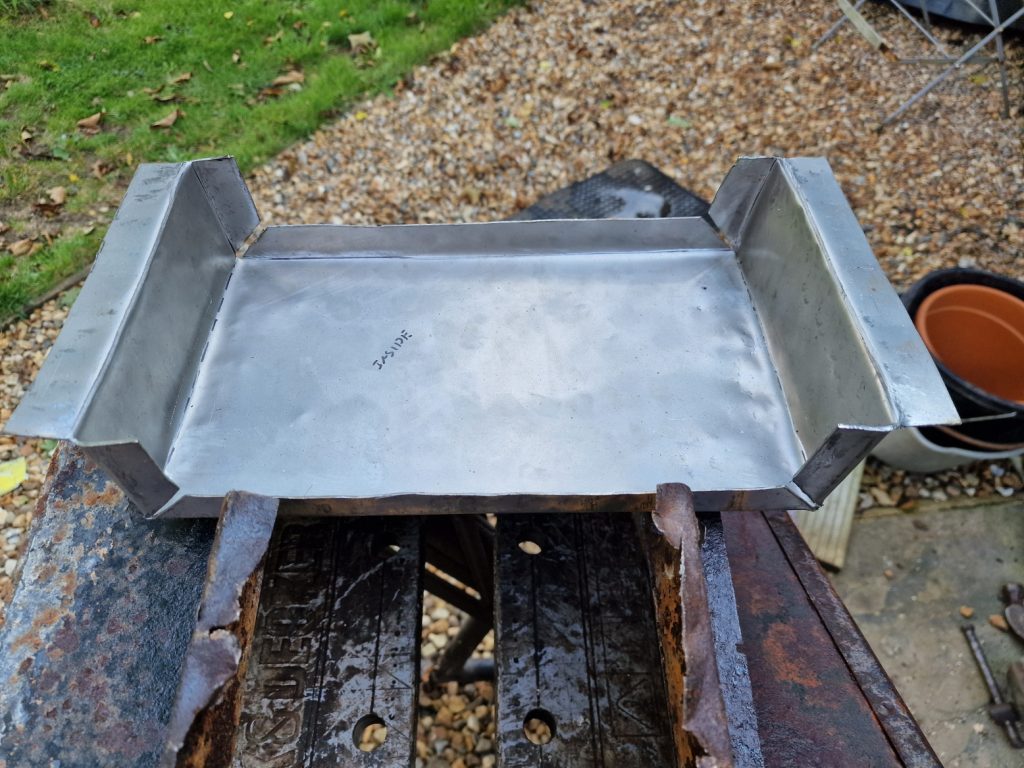
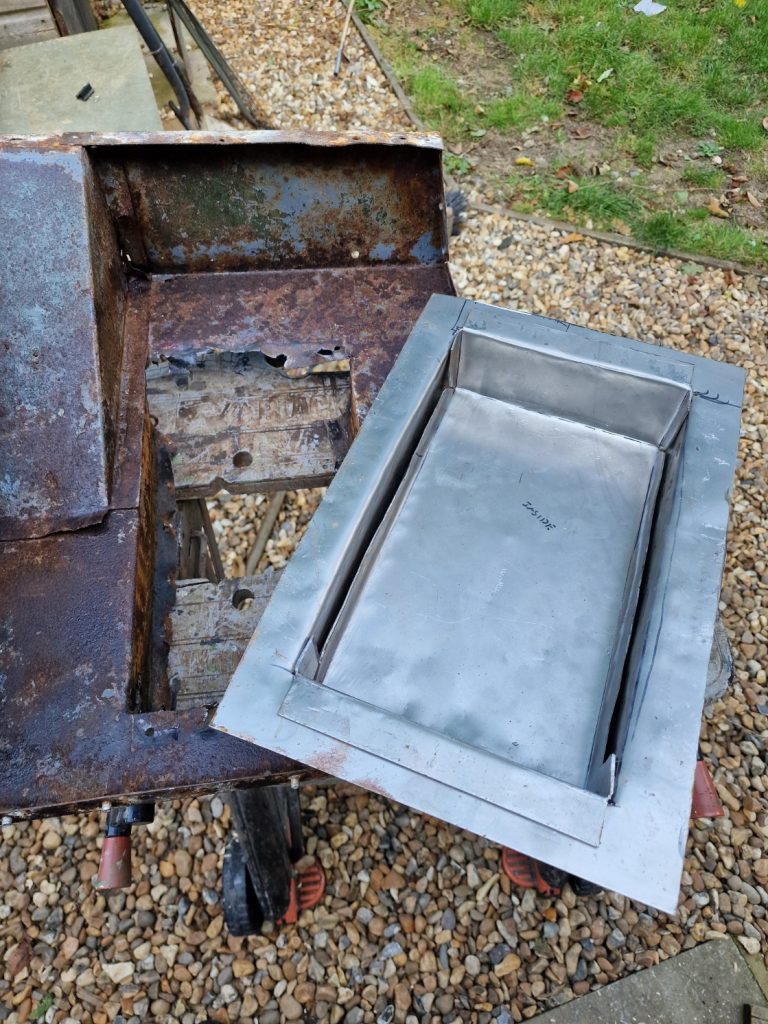
But, they do say it’s who you know not what you know. During a small get together at my brother In-laws, was chatting to his brother in-law who has an interest in cars, and showed him Isobel. Just happened to mention my plans for the Seat box tray, at which point he said, I’ve got a bender, you can have it if you would like! Ummm, Yes please, so exchanged it for a nice bottle of red. I cut out the shapes, and set about making replacement parts for the rotten bits.

Not too bad for yet another first, metal fabrication. Off they went to my Nephew Lee, who by the way has just gone out on his own as a Mobile Mechanic, LG Mobile Autos to be welded into whats left of the original box.

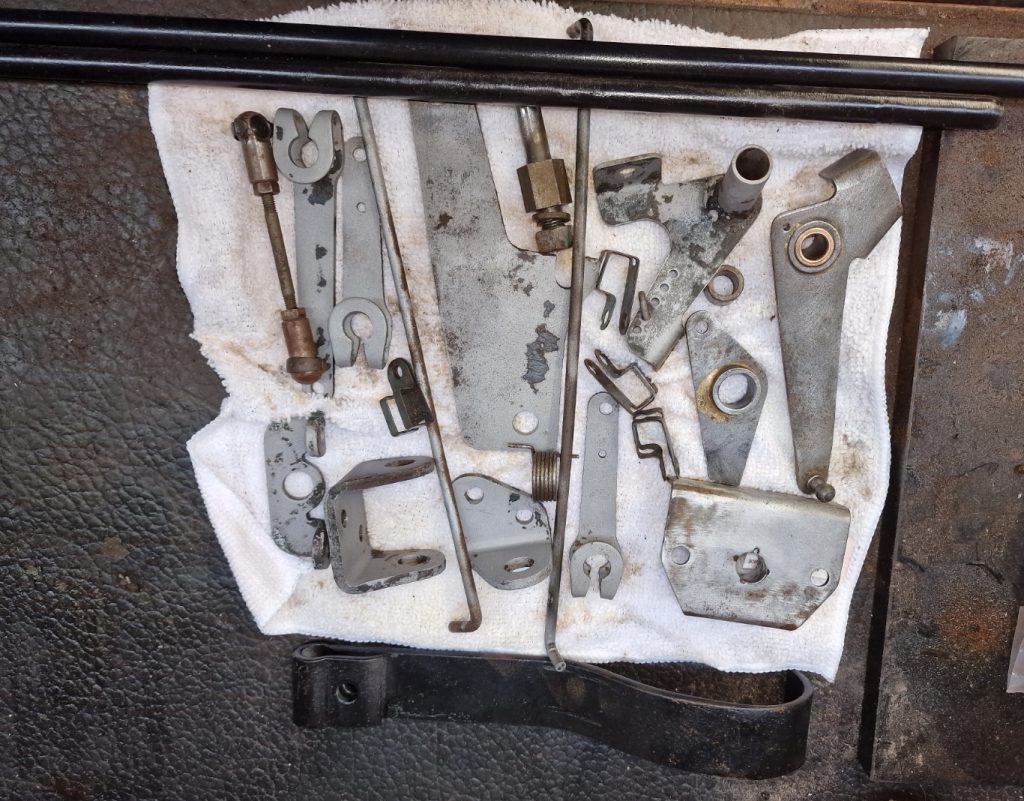
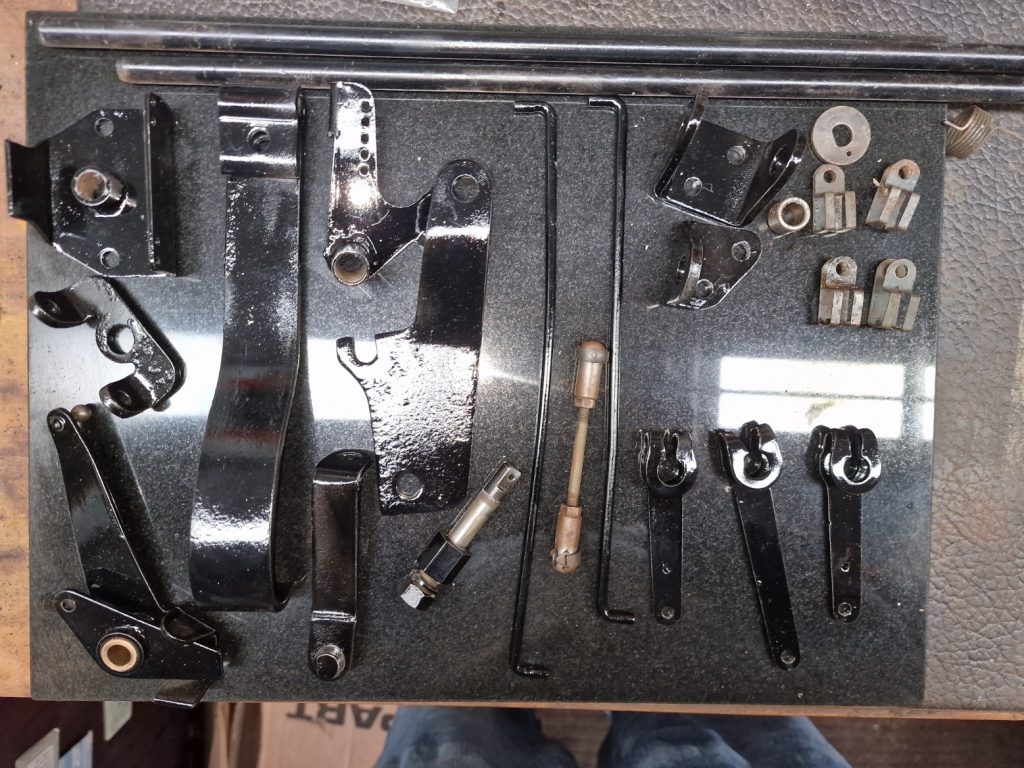
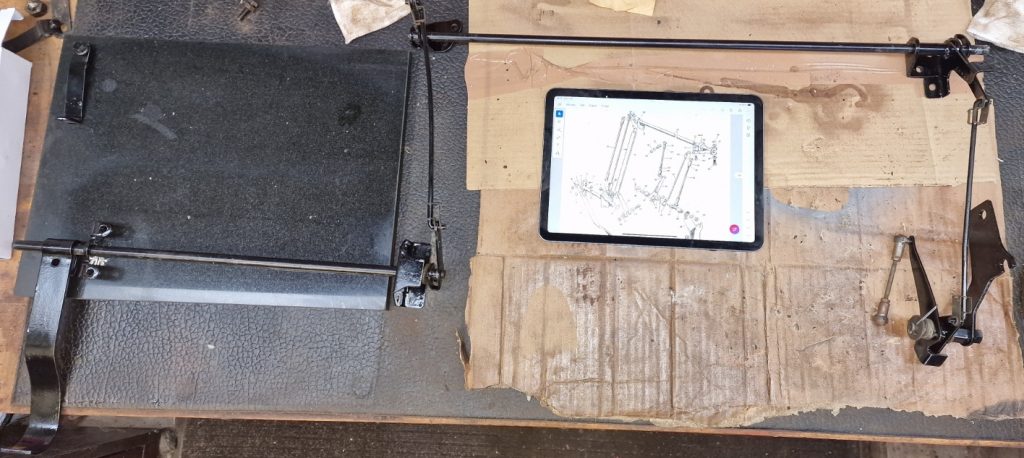
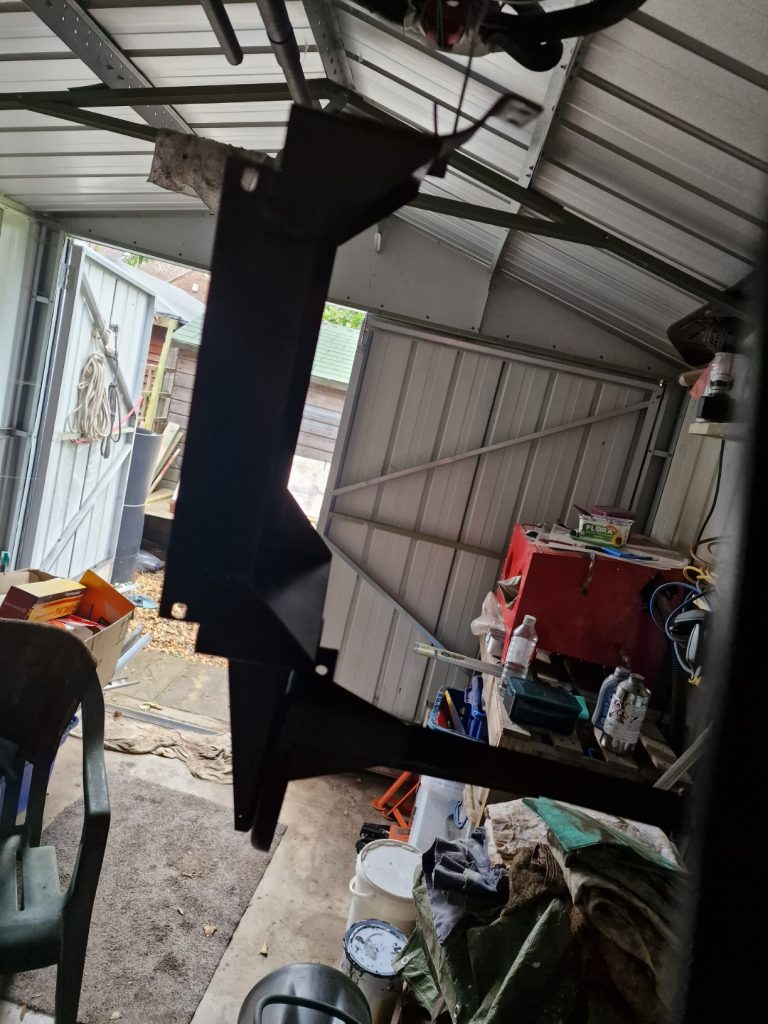
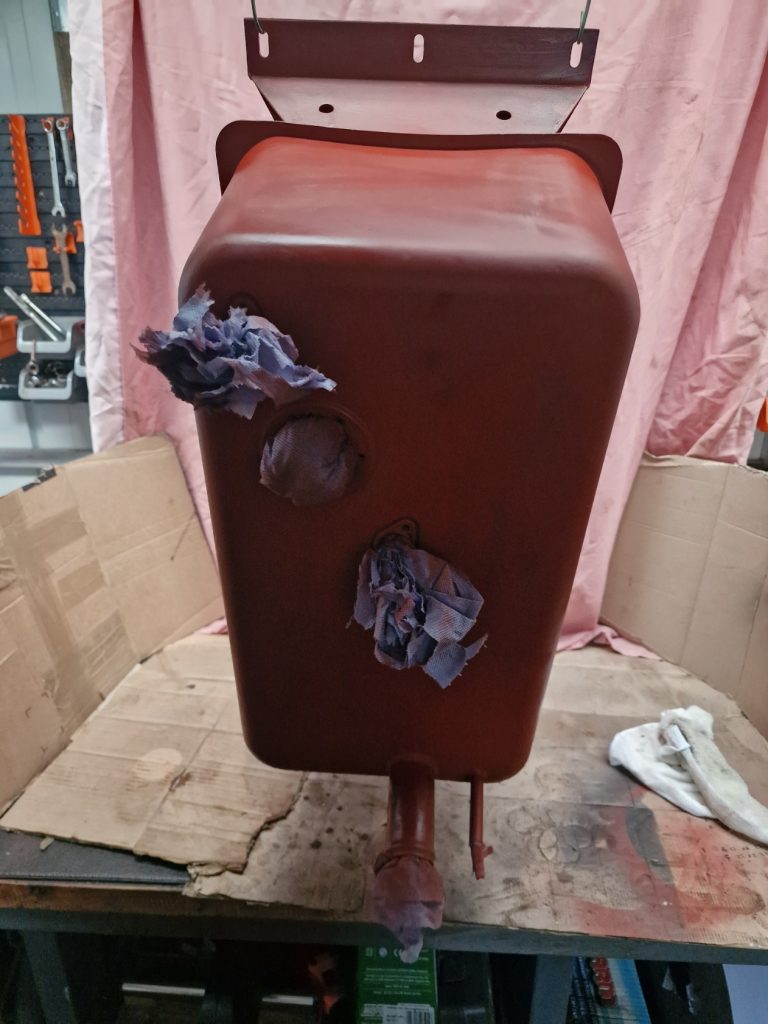
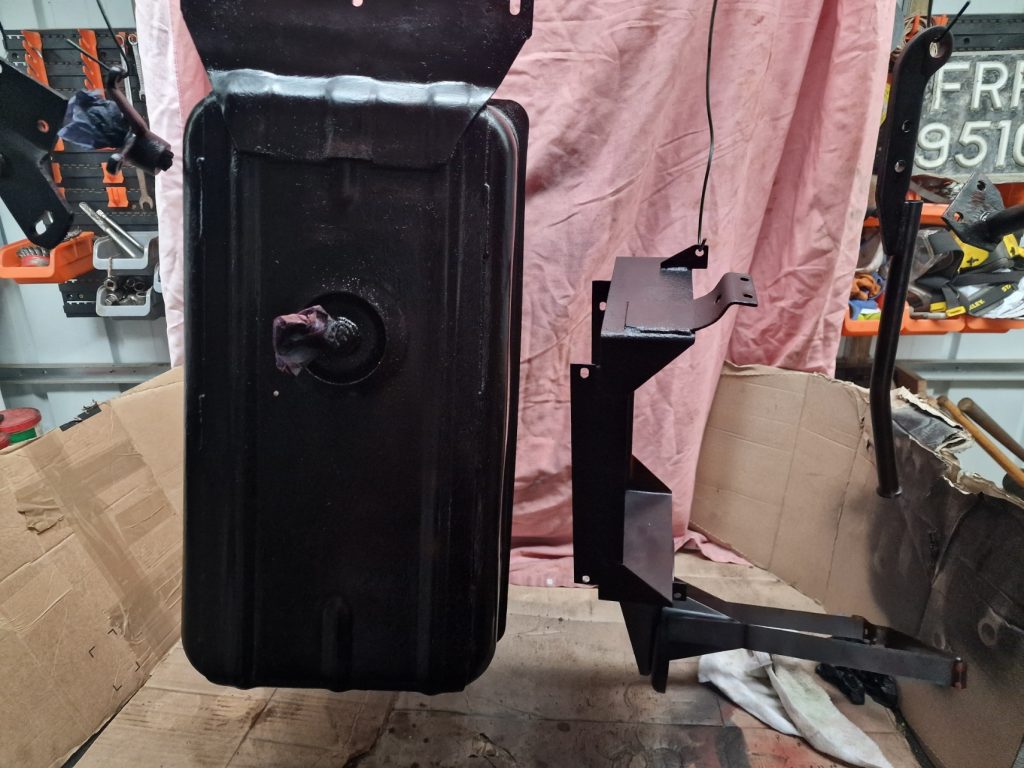
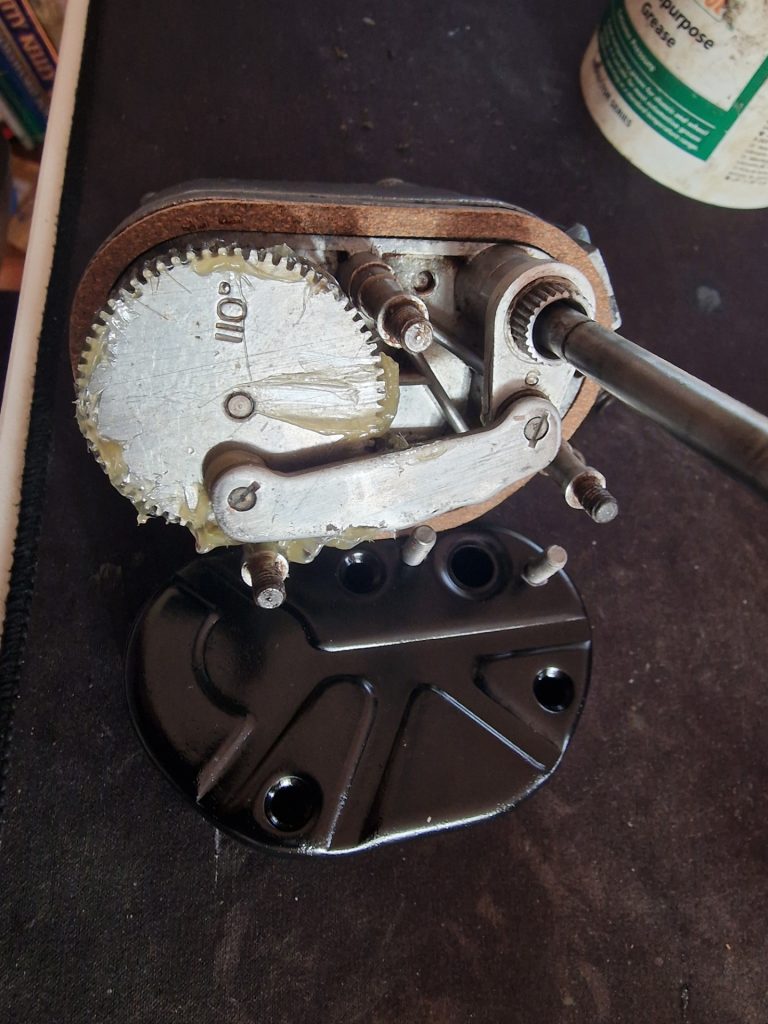
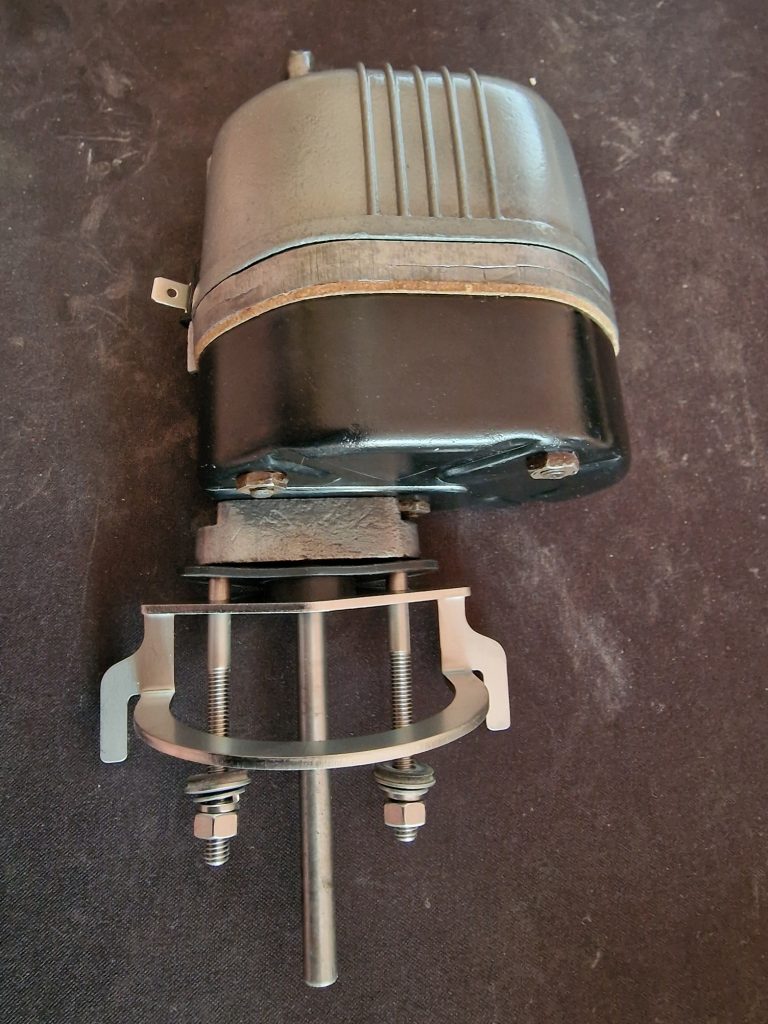
Also thought I would paint a few bits that have been sitting around for a while, Battery tray, Handbrake mechanism & Fuel tank. Also set about another tidy up of the workshop.

Nearly forgot, on the front axle, and other places there are a few exposed metal bits not painted. While I have been busy with other stuff, they had started to develop some surface rust. Not a good look, so cleaned them up and sprayed them with a clear, gloss, etch lacquer. Be interesting to see how they fair over the coming weeks.

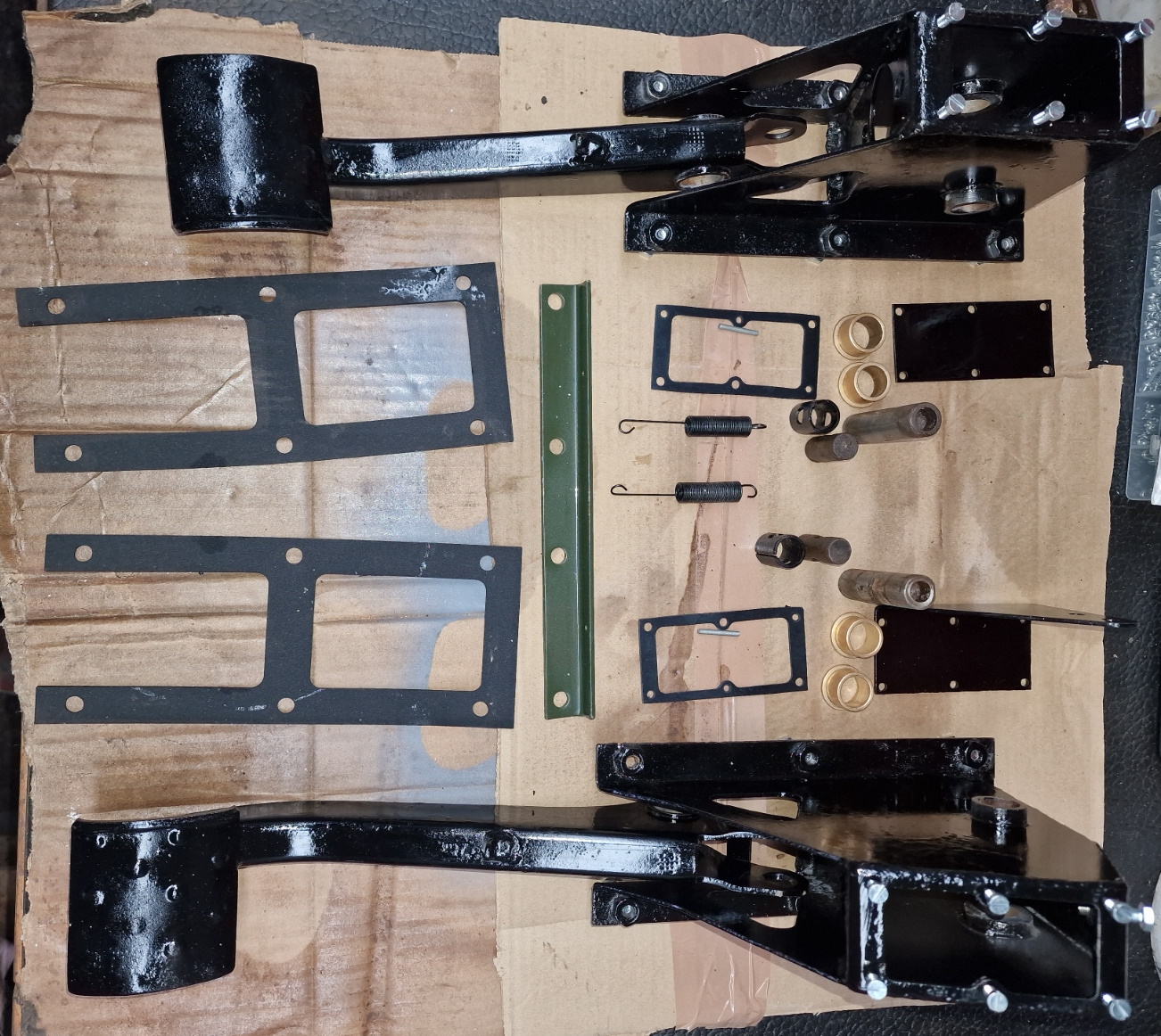
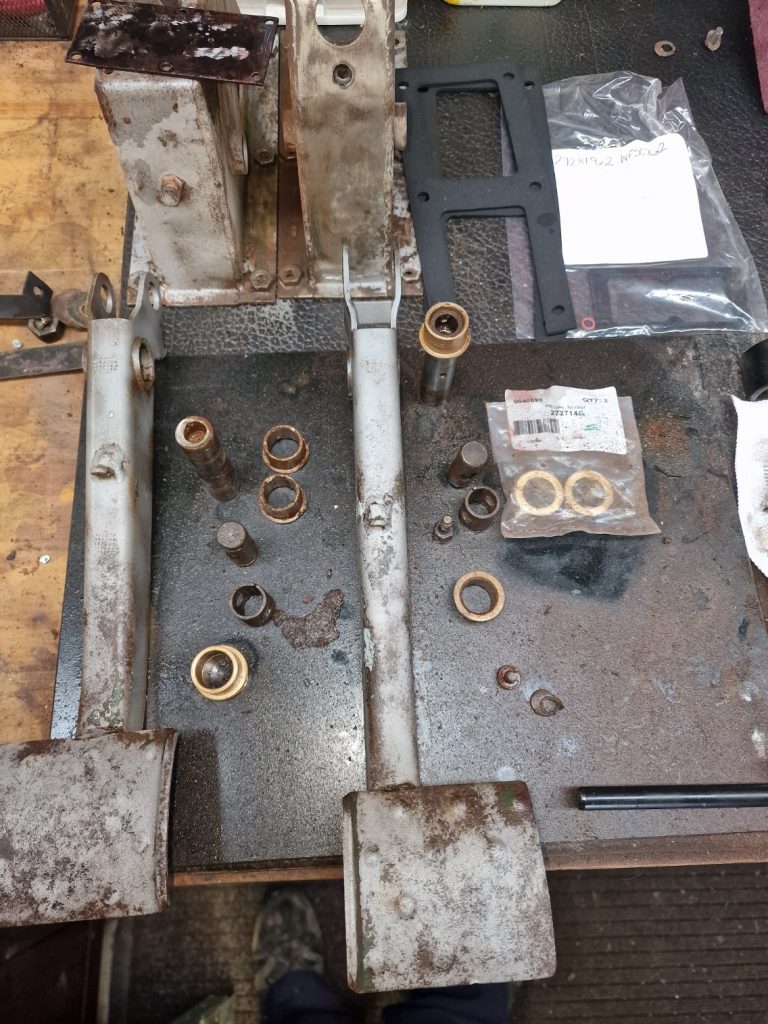
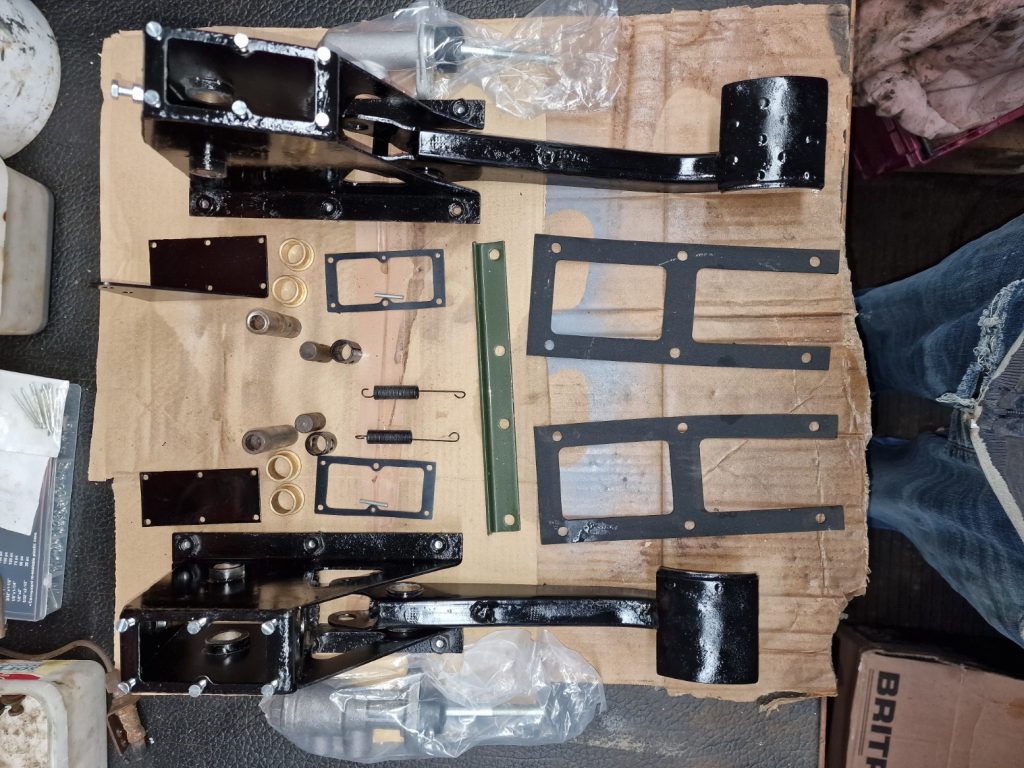
So thats it for another article, Will be finishing off some of the bits that still need finishing, like fitting the supports to the underside of the rear tub, trying to put in some solid domed rivets on the bonnet to secure the bonnet frame and take another look at the foot pedals, which need a bit of work.

But, the more exciting part will be a new shopping list to allow me to move to the next stage. This will include all of the brake pipes and fittings and also a new wiring loom or rather looms. Both of which need to get done before the rear tub can be put back on the chassis for good.

Again, hope you enjoyed the read, bit all over the place this time, but edging closer and closer to the next big jobs, Gearbox & Transfer box and the Engine.


Bodywork finishing

After working on the bodywork as best I can, its time to put some colour onto Isobel. I previously mentioned I knew what I wanted and where I would get it from. Most of that stayed true, except for 1 thing, the colour. When preparing the bodywork, it was clear there were two tones of green, so which to go for? one of the existing tones, or something new. I knew it would be green, but looking at Paintman Paints, the people I decided to buy the paint from have 26 different tones of green. On the registration documents it just says Bronze Green, so that makes it easy, yes? actually no, there are 2, Mid Bronze Green and Deep Bronze Green, also called Bronze Green and Ascot Green. I thought this part would be easy!!

I dont know which one you prefer, but I originally decided on Mid Bronze Green, until I started placing the order when I changed my mind to Deep Bronze Green. I will let you know if I think I made the right decision later in this, rather long article.

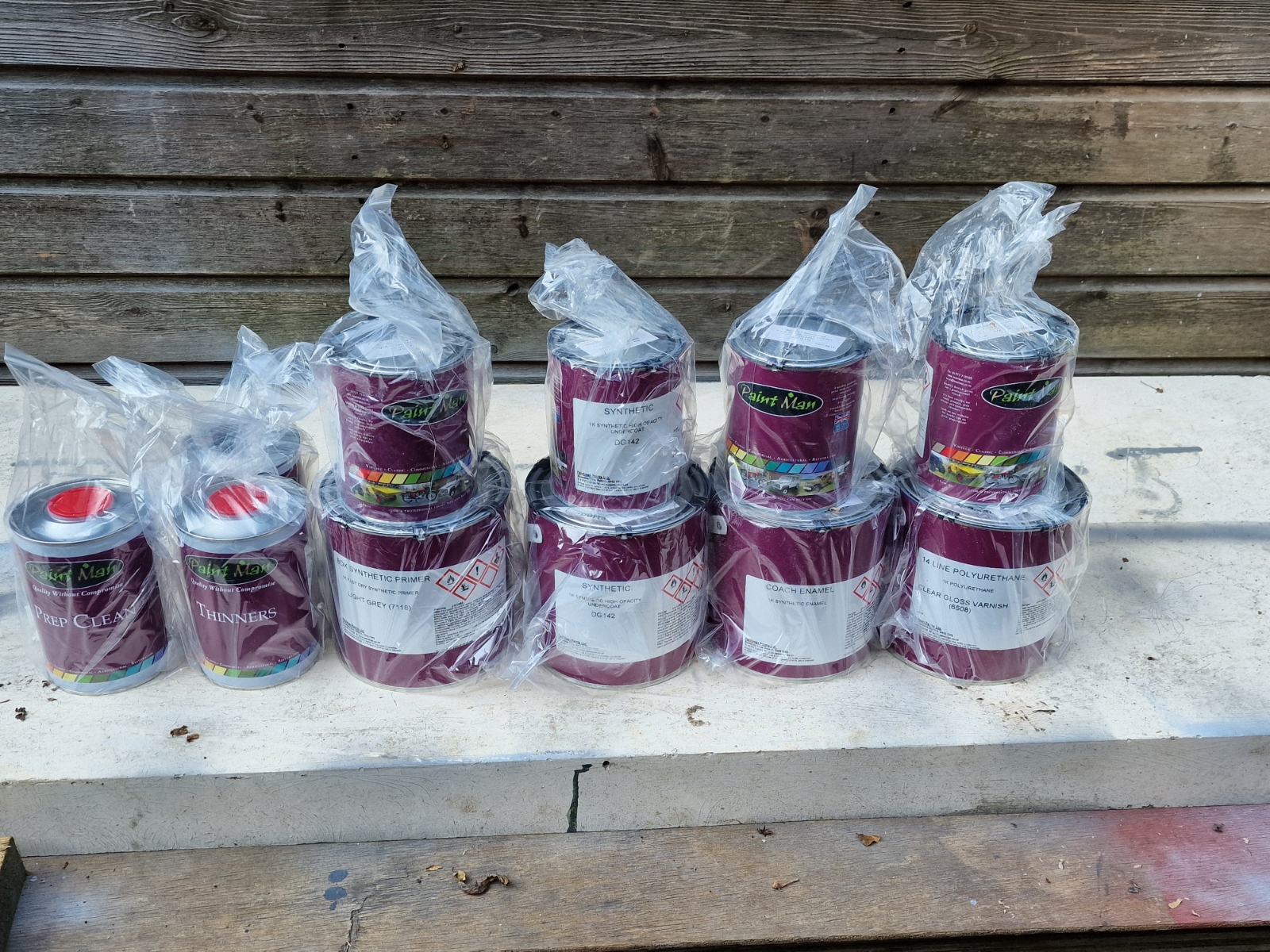
So what exactly did I order, well, in terms of money, quite a lot.

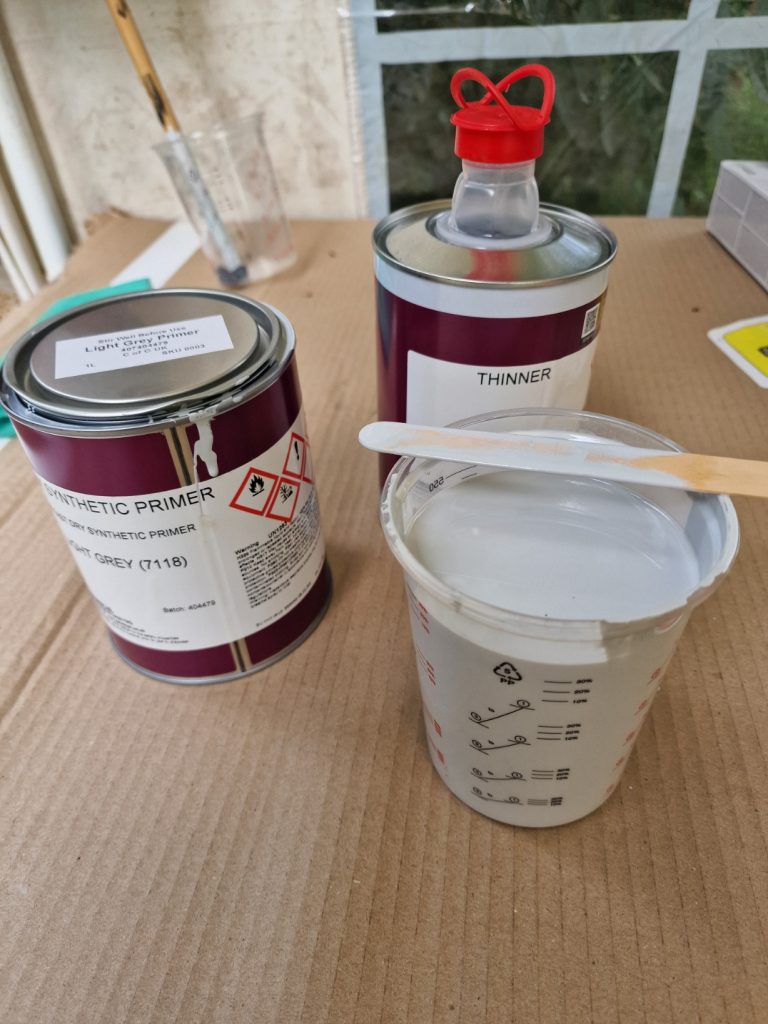
  • 3.5 Litres of Light Grey Coach Enamel Primer
  • 3.5 Litres of Green Undercoat
  • 3.5 Litres of Land Rover Deep Bronze Green LRC001. I actually ordered another 2.5 Litres afterwards. Better too much than not enough.
  • 3.5 Litres of Clear Coat (Kind of like a varnish)
  • 2 Litres of Thinners
  • 1 Litre of Prep Clean 2800 (to clean the surface before painting)
    That was all the paint, but also needed some other bits also.
  • Scotch bright pads
  • Various grades of sanding disks for my orbital sander (which I also bought)
  • 600 grit wet and dry
  • Tack Rags and finally some lint free cloths
  • Oh, one last thing a new LVLP (Low Volume, Low Pressure spray gun)
    I got this as I only have a 50Ltr, 14cfm compressor and anything other than a LVLP gun, It will struggle.
  • Respirator mask (Not my normal dust mask. The reason will be come clear later)
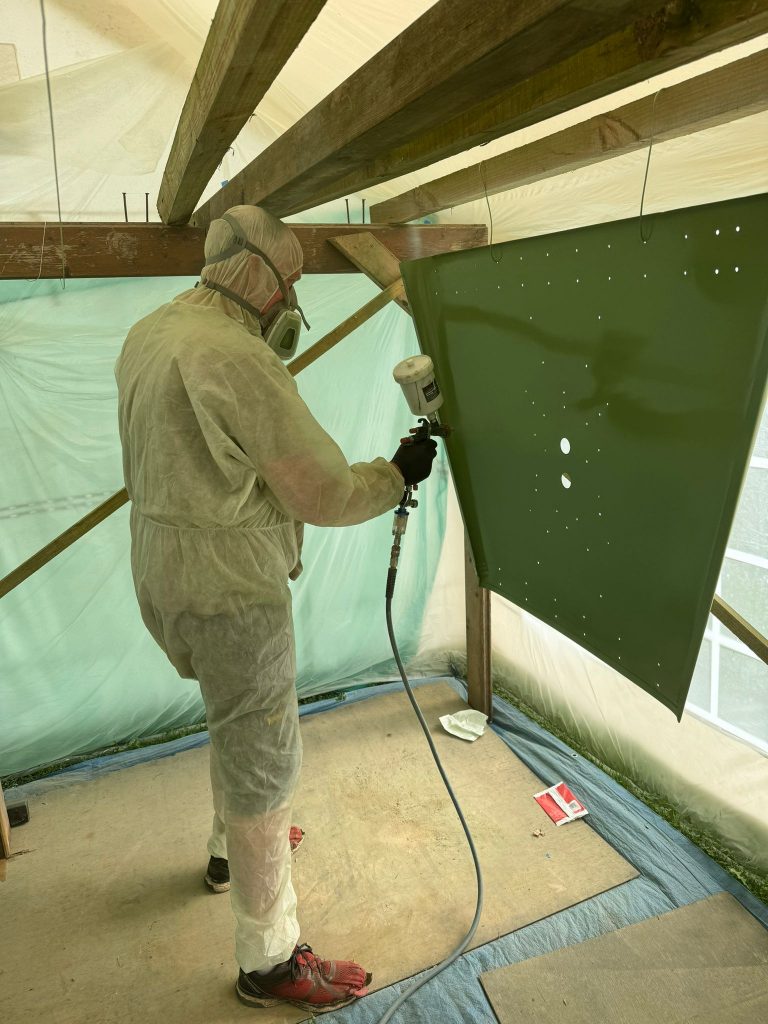
  • White disposable suite, that made me look like I was cooking up some illicit substance.

So, to plan the work, I watched loads of videos on how to spray a car, some of the best were from Paint Society on Youtube. There were many more but these were the best in my view. Now there is one big challenge with these videos, most if not all focus on modern painting techniques, using 2K paints, which as far as I can tell need some serious safety equipment. I didn’t buy 2K paint, I bought Coach Enamel, and most of the videos covering this type of paint are about painting by hand, which is the traditional way to paint Coach Enamel. I’m not going to paint by hand, I’m seriously not that good with a roller and brush just ask the wife! and certainly not good enough to paint a car, without any brush marks in the paint, which did actually prove to be true!

So armed with a little knowledge, lots of paint and equipment I booked 2 weeks off from work, and started praying to the weather gods for, wait for it, 2 weeks of not too hot, not too cold, not wet, not windy and not too humid weather. What are the chances? Well as it turned out apart from 1 day at the beginning being way too hot and a couple of the days at the end that were wet the weather gods were kind.

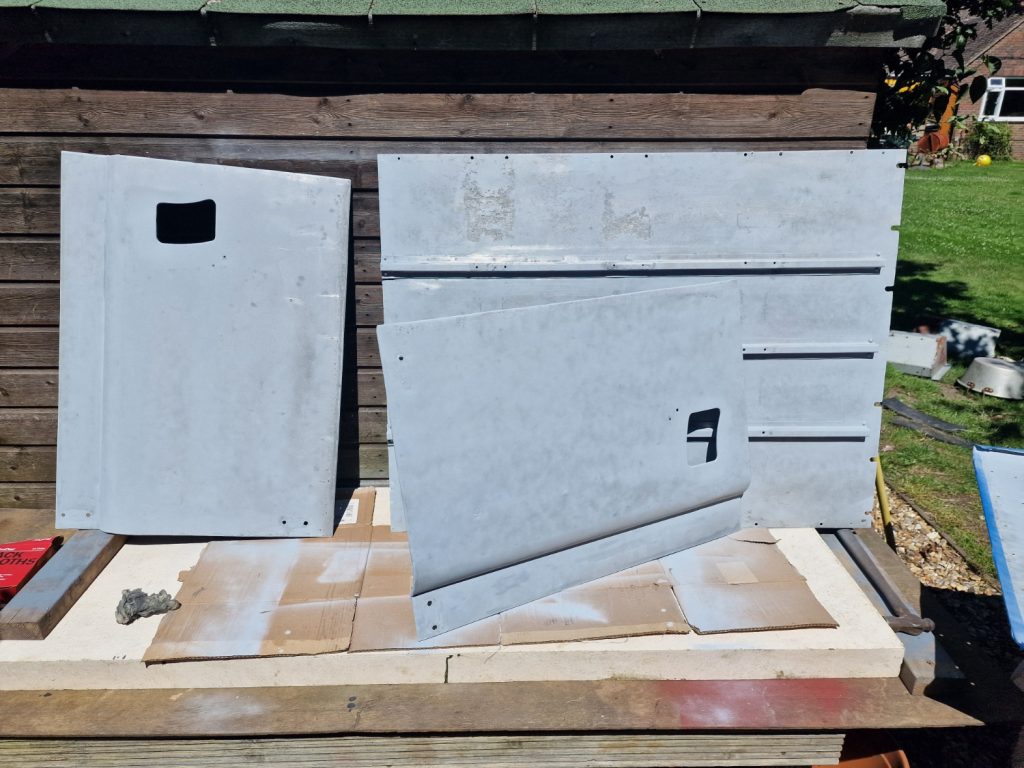
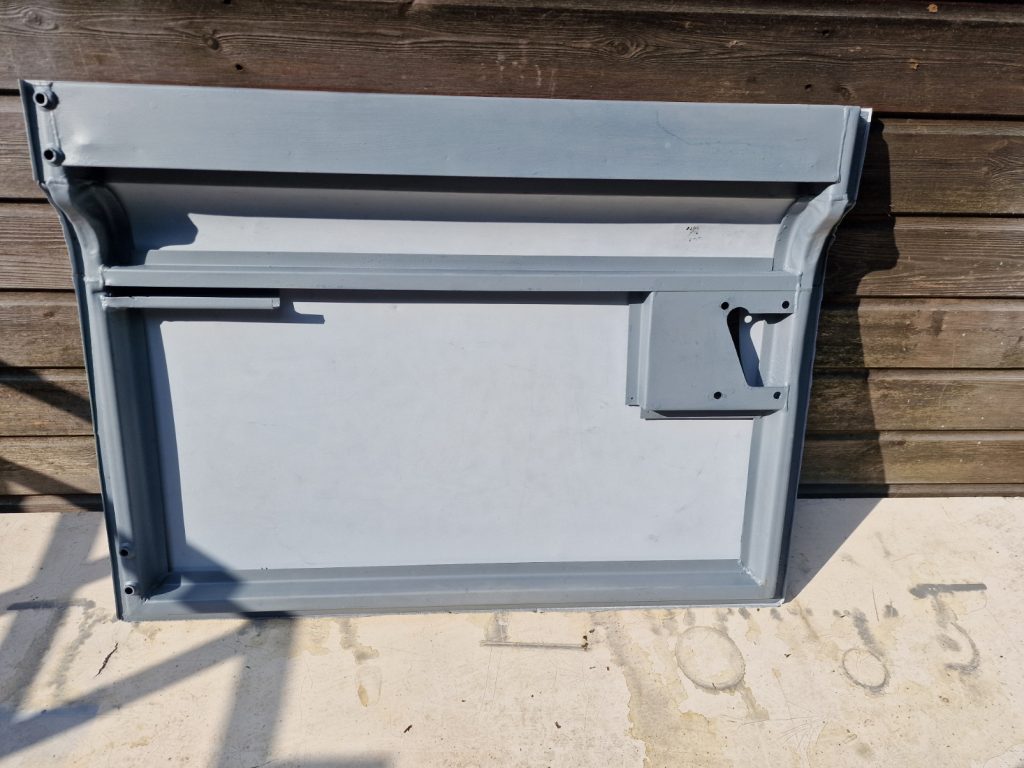
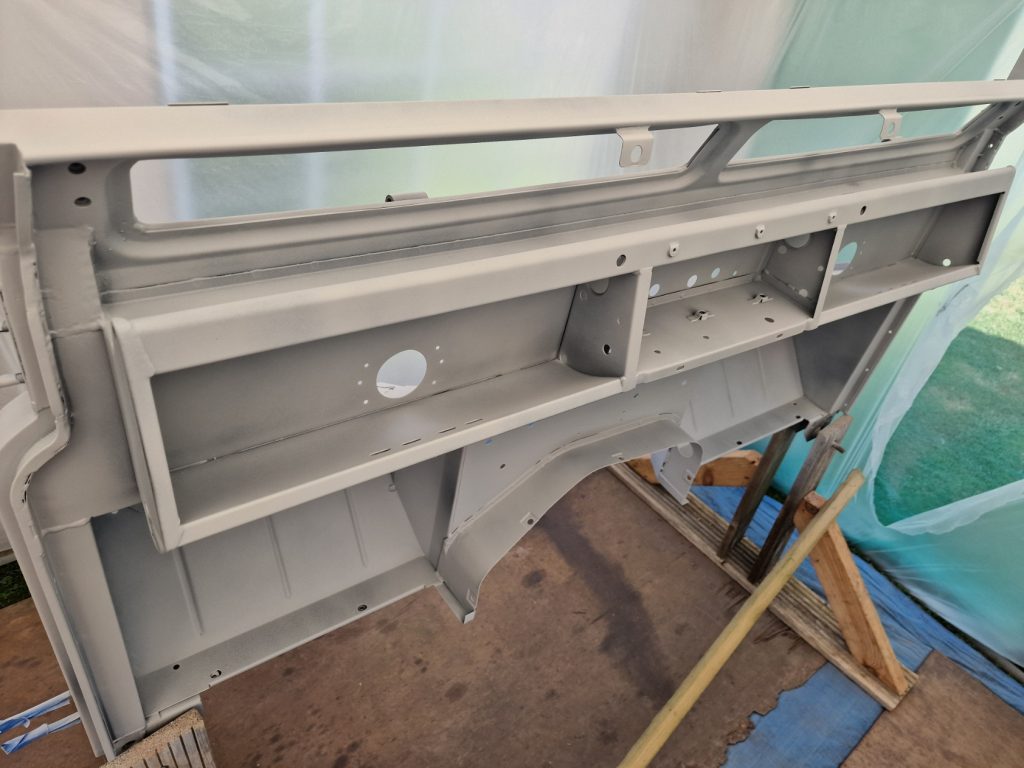
1st thing was to get all the panels sorted, lots and lots of sanding, a little bit of filler here and there and more sanding. These panels are never going to be perfectly straight, without more skills than I am never likely to have, so got them the best I could. Started by Etch Priming some of the panels where they had gone back to bare aluminium, put the door skins back on the frames with the help of a little PU sealer and adhesive and put the floor back into the tub with some adhesive and some new rivets.

Just quickly on the rivets front, much to the amusement of some of my newly found Land Rover friends, I bought pretty much a complete set of original rivets! Much more on those in later articles.

Onto the painting. The last car I painted, more than 40 Years ago, on my own was a mk1 ford escort in light blue and it has to be said, it was a disaster. The two previous cars, a Morris Minor and Ford Cortina Mk3 were much better, but then I had my Dad doing it.

So whats the routine, normal modern paints you spray, leave the paint to Flash Off, and then do another coat. With Coach Enamel, not so easy! Paint and then wait a minimum of 24 Hours before the next coat, so the plan will be Paint in the Morning, leave it until the afternoon the next day to sand back and then spray the next coat the morning of the following day. Now each coat, Primer, Undercoat, Topcoat and Clear Coat needs 2 coats of each. Do the math, 2 full days for each coat = 16 Days! thats pretty much my entire 2 weeks holiday accounted for. Will definitely need to make up for this with my family.

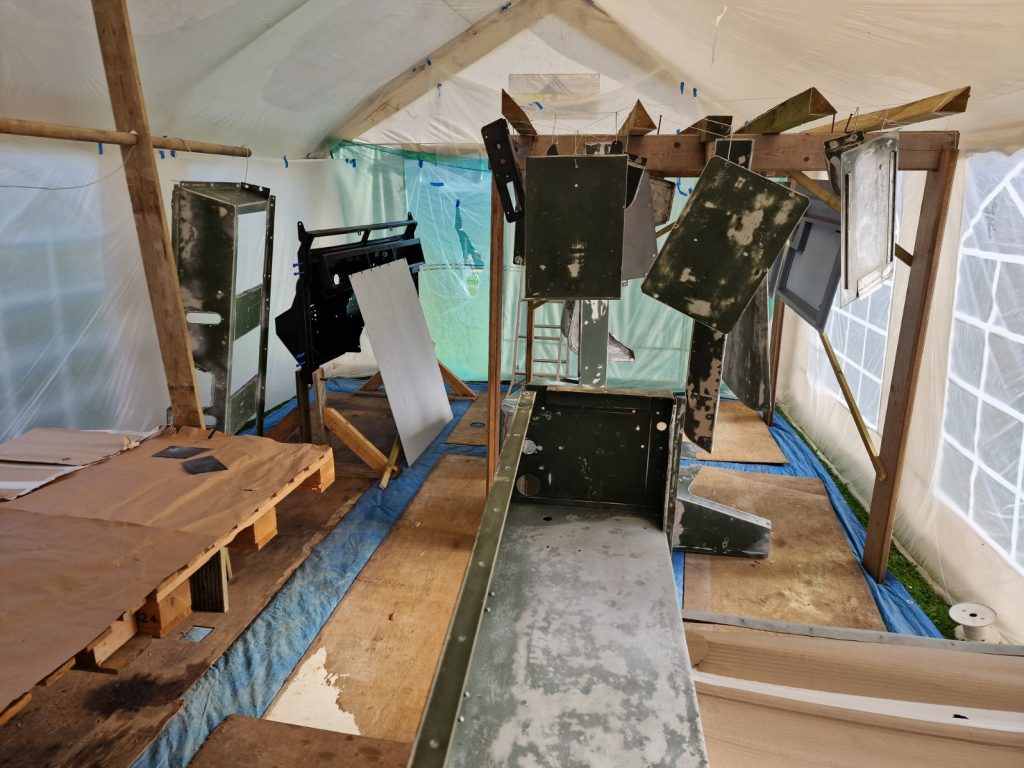
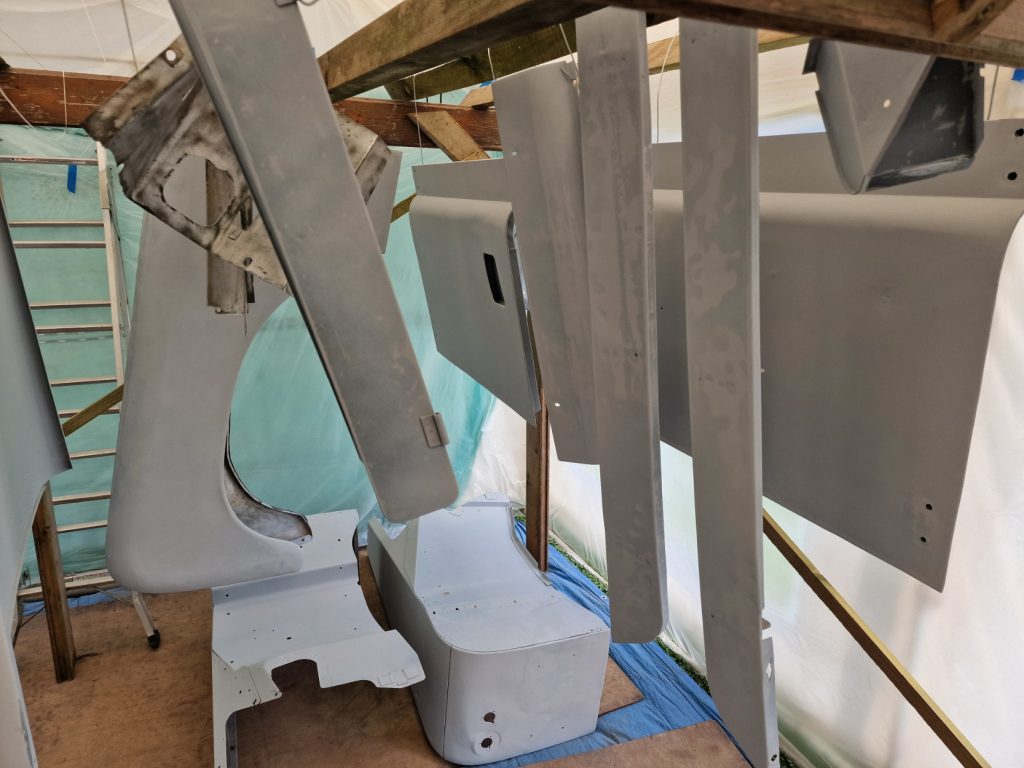
Now the other thing they say you need to spray a car, is a clean environment, well ventilated and temperature controlled. What do I have, well a rather large gazebo (8M X 4M). Spraying creates lots and lots of spray dust, well would if you do it properly, so lined the entire thing with plastic decorators sheets, and strategically placed a large fan at one end to try and extract lots of the lovely smelling fumes! Made a hanging thingy (used the same for the chassis) and a bench type thing to spray on.

Because I am spraying, the paint needs thinning. According to Paintman, anything between 5% and 10%, depending! Depending on what? seems everything, temperature, air pressure and and and. So I started at about 5%.

Loaded up the gun, with the Air pressure set to about 25psi cleaned all the panels with Prep Clean and tack clothed each one before painting, and off I go.

Oh, forgot to put the white suite on, didn’t forget after, I had paint dust everywhere!

1st coat on, looks ok but there were issues, the biggest being that it went on a little dry. Once it had dried off for 24 hours, rubbed it down and checked that it had stuck properly. Second coat went on much better after re-watching a number of videos about how to avoid dry paint. Seems there were two issues. Not thinned quite enough and spraying technique, i.e. being too far from the panels, allowing the paint to dry a little before it hits the panel.

5 Days later, its time to apply the undercoat. Exciting, its going to go green! This time I thinned the paint to about 10%, the weather is still perhaps a little warm, which is why the first primer went on a little dry. This worked so much better, but introduced some other issues.

One of the issues was that more paint went onto the panels. Thats a good thing, except it opens up the opportunity for runs and sags, and I had a couple.

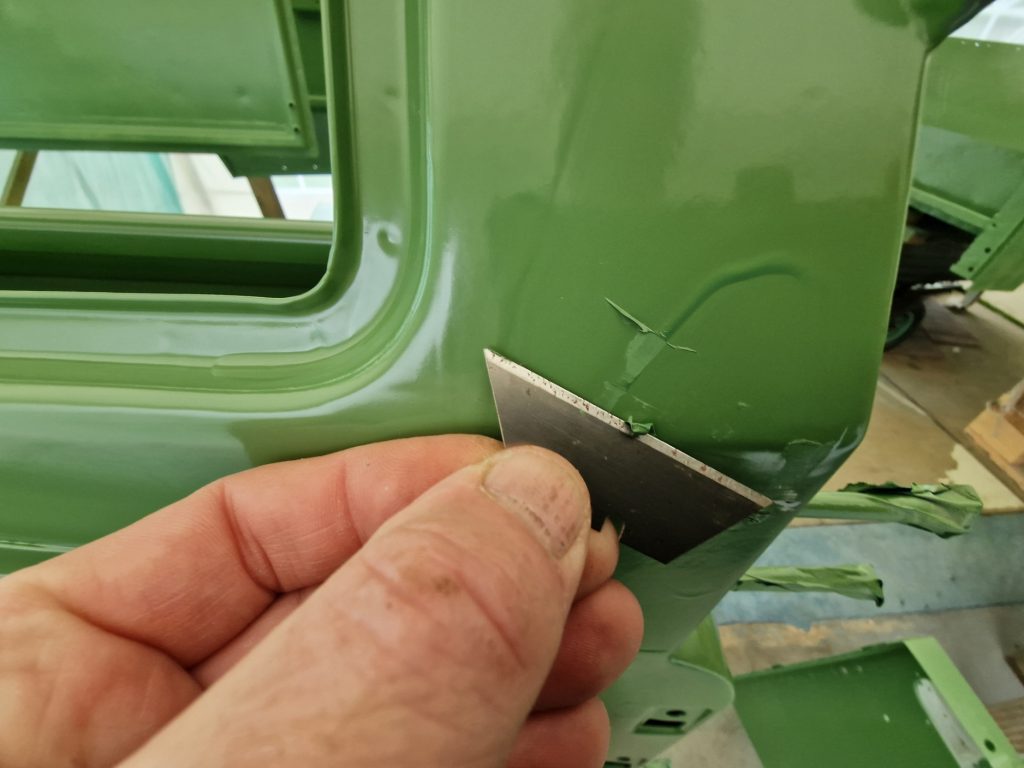
Waited for the surface to start going off, and then with a sharp blade very carefully took the top of the runs off, allowing the paint beneath to dry.

With a little wet and dry, plenty of patience I was able to remove them all, back to a nice smooth finish.

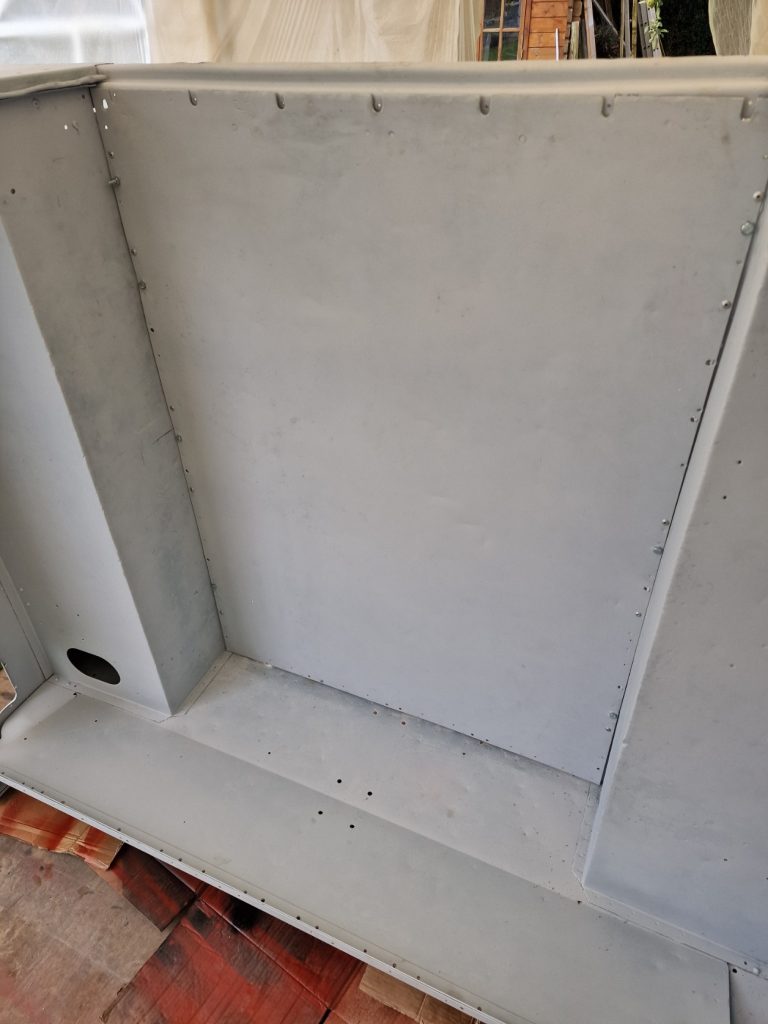
Thats 2 coats of primer, 2 coats of Undercoat and every little bit of every panel rubbed down, cleaned with prep clean and tack clothed off in-between every coat.

Onto Top coat. This is exciting. And while this article is becoming quite long, its not as long as the process took to get to this point!

Mixed up some paint and set about spraying, again Thinned to about 10% and increased Air Pressure, upto about 30psi at the gun.

Oh, look at that, it actually looks good and thats only the first coat.

As with the undercoat, had a few runs and sags so addressed them in the same way.

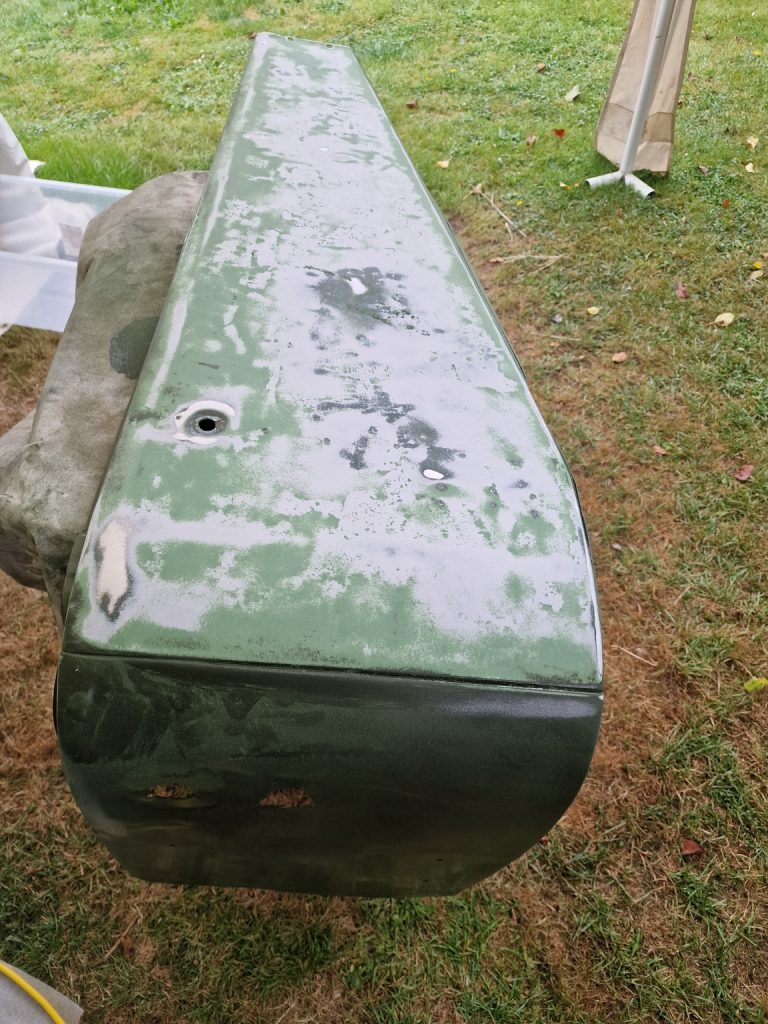
BUT! had another issue when I got to look at the results, the top of the front wings! Looked like absolute crap. Gloss paint shows up everything.

Clearly I had not done a good enough job with the old paint, it was patchy and lumpy.

Had to deal with this, as when people get to see the finished car, this will be the first place they run there hands over, and would inevitable lead to “Humm, thats a bit rough”

Sanded it back down and spent some time doing my best to make sure the lumps and bumps were all gone.

Not wanting to waste too much time, cleaned up the wings and hand painted some undercoat, and then sprayed a top coat.

All OK, except some brush marks are slightly visible on 1 wing, told you I cant hand paint properly. Will deal with them when I tackle the final top coat.

Onto the final top coat. I mentioned I had bought clear coat, this is like a varnish that is applied in a very similar way to the other coats, giving a deeper shine and providing some protection for the paint. The final colour coats are supposed to be high gloss, and this got me thinking, does the final top coat need sanding before applying the clear? I sent a message off to Paintman with that very question and the answer somewhat surprised me, which was no, leave it un-sanded but still allow the 24 hours before applying the clear coat. With modern paints they flash off in a few minutes and can then be re-coated, but Coach Enamel doesn’t work this way. The problem I see is if I paint clear over un-sanded top coat, will it actually stick properly, and if I do sand the top coat, with those scratches show through the clear?

What to do? I searched endless forums, watched endless more videos but didn’t really find an answer. It was then, purely by chance, Facebook showed me a group I might be interested in? Funny, isn’t it how apps know what you are even thinking about! Anyway, I looked at the group and applied to join. The group is a Coach Panting Old Cars group. Seemed a great place to ask the question, albeit with some apprehension as Coach Painting is painting by hand, not spraying, and wondered if my question would be frowned upon, given that I am not strictly Coach Painting.

Seems not, had some great answers, and was sent a few pics of what others have achieved using Paintman paints and clear coat. One answer got my attention, mostly because the picture he sent me was incredible, the car, an old Austin 7 looked absolutely amazing. So how did he do it? Well, according to him, mix the final top coat 50/50 with clear and thin as normal, really? will that work was what I was thinking.

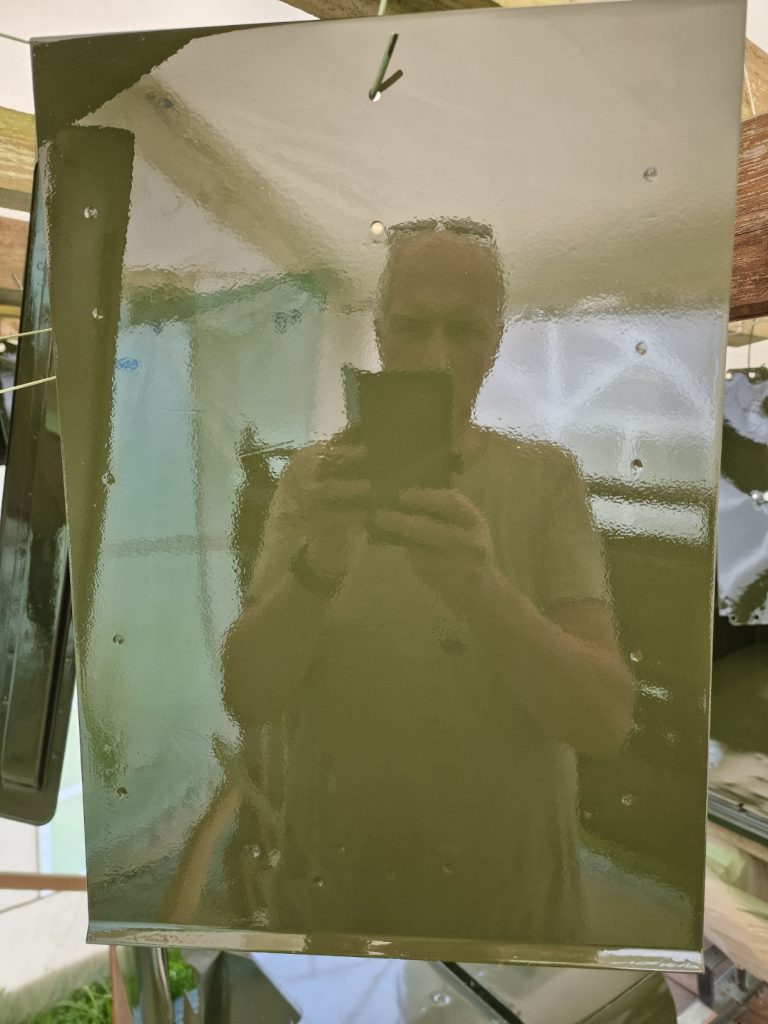
Well, does it work I think is answered with this picture!

Simple answer, yes it does, works an absolute treat. what you cant see from this picture is the colour, too shiny.

While it looks amazing, well I think so, there were some issues I had to deal with after the 1st top coat. In addition to thinning properly, technique I realised also that while my Air Compressor should keep up with the spraying, I do need to wait sometimes for it to top-up the air tank.

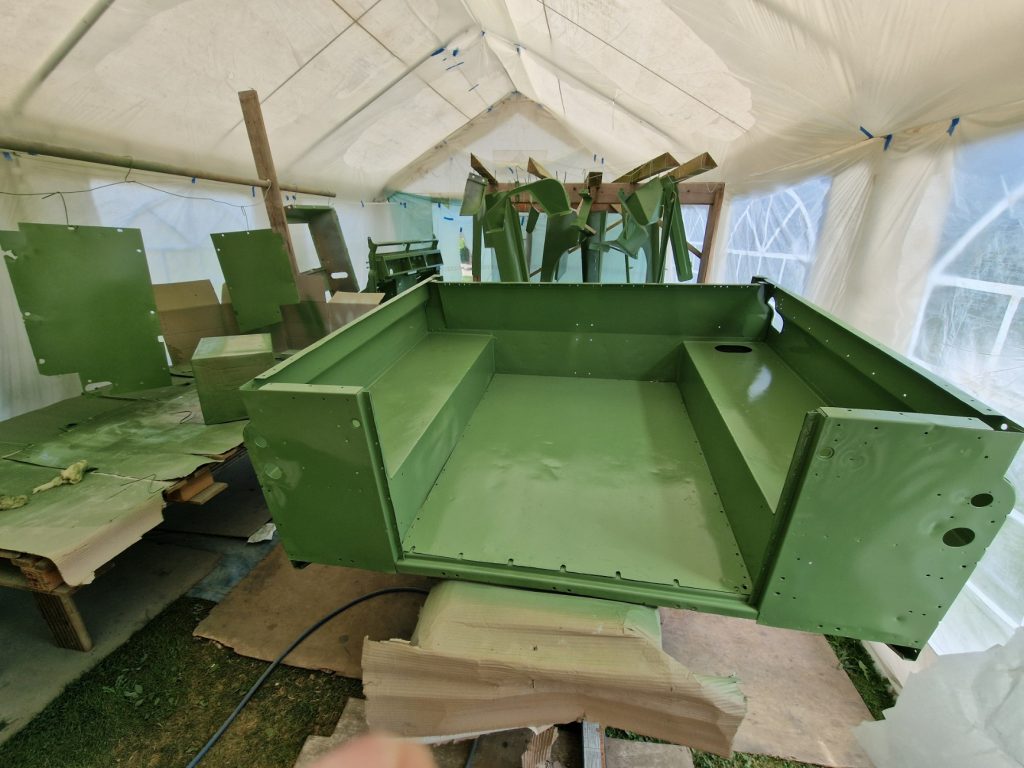
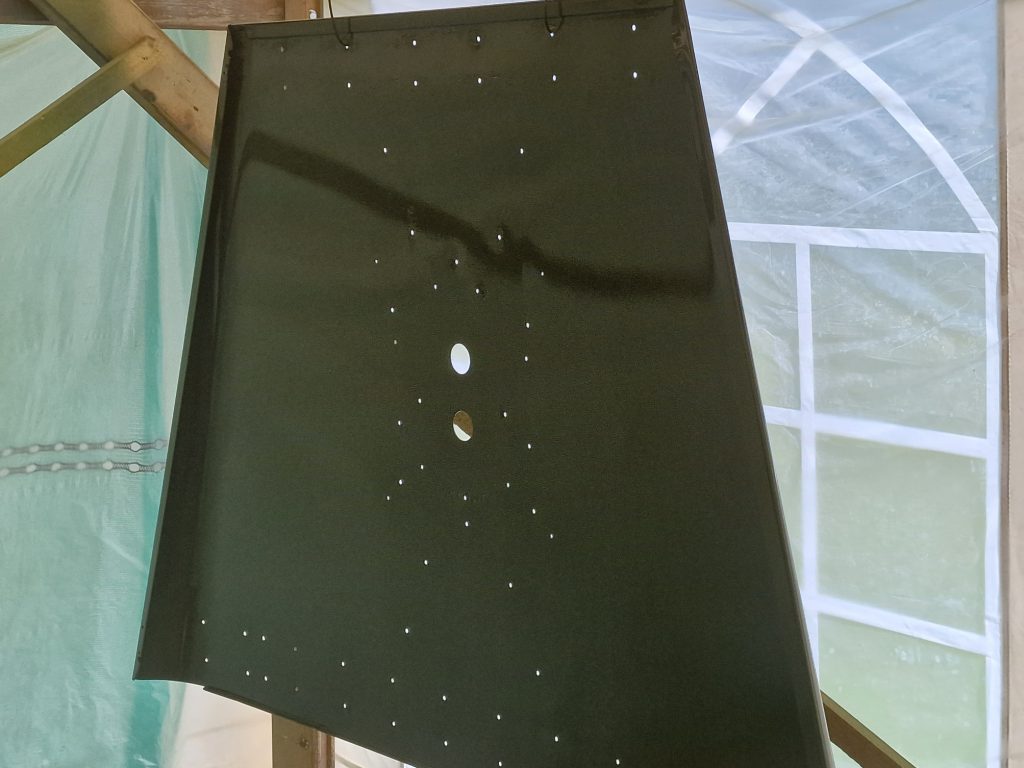
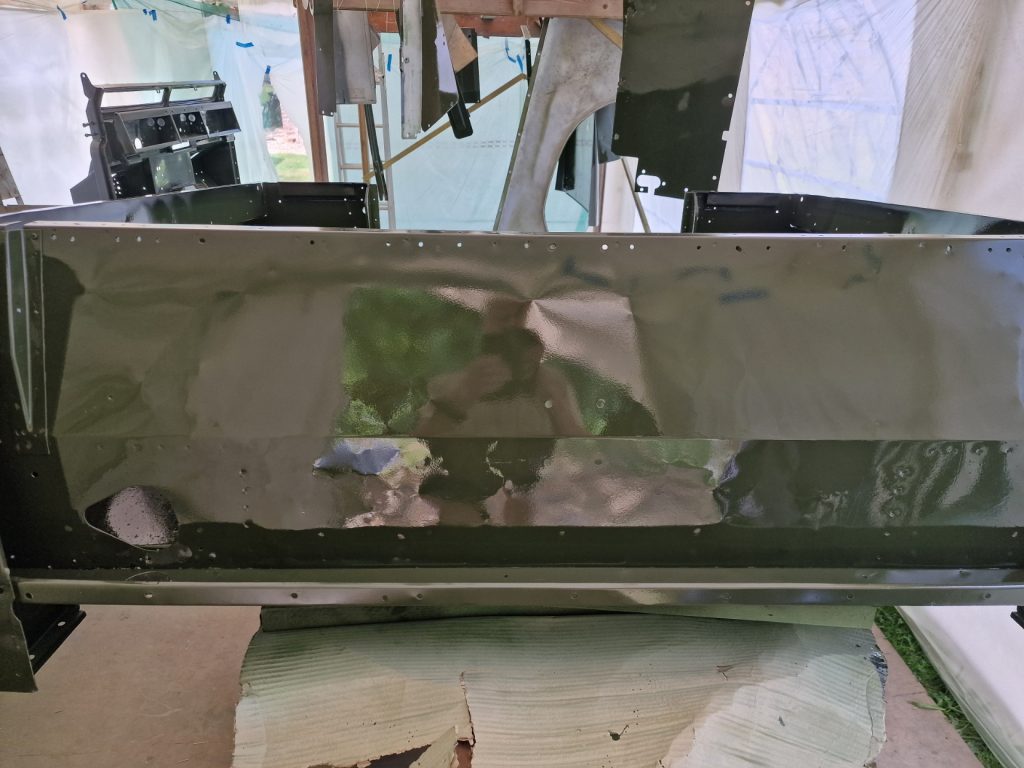
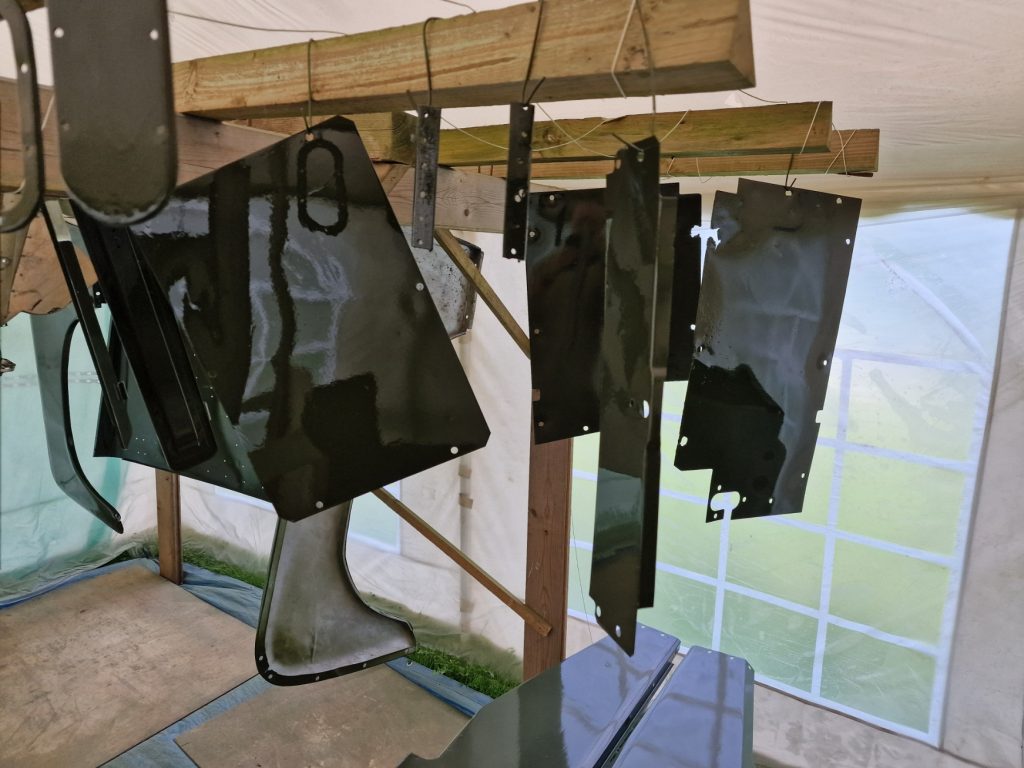
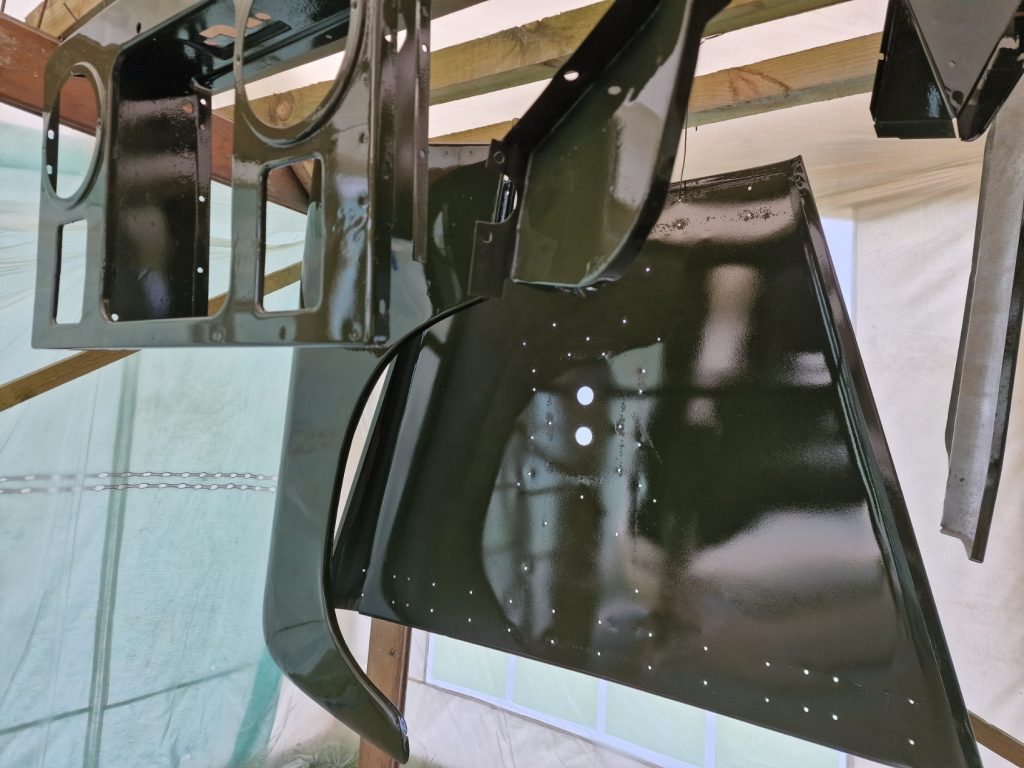
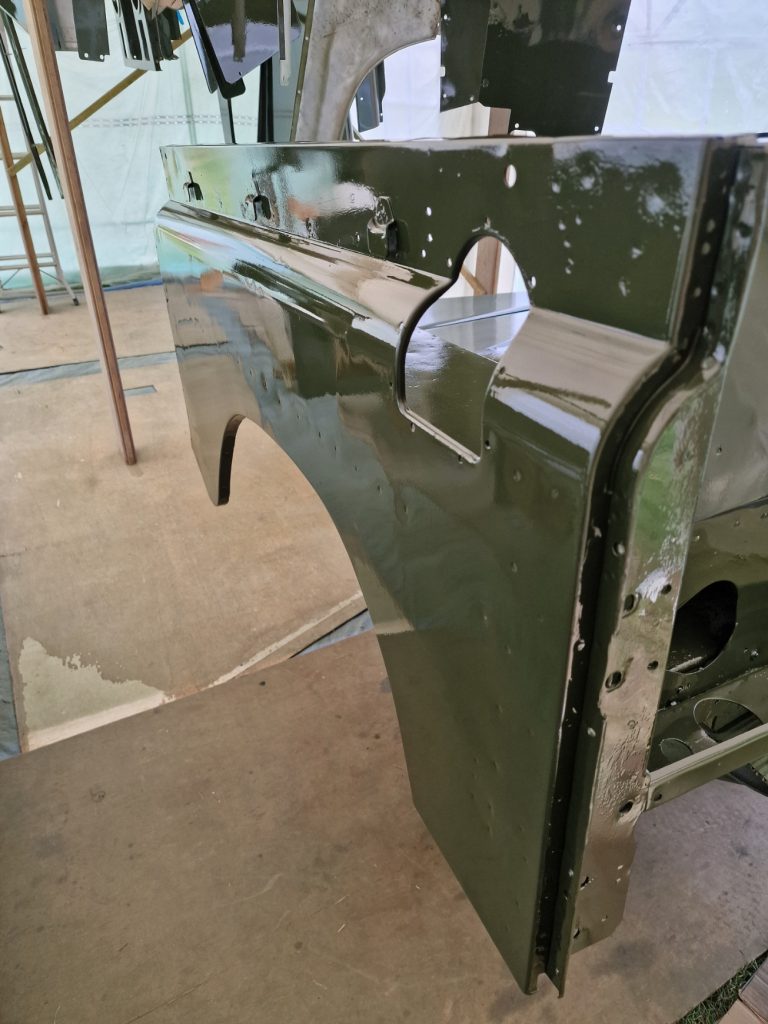
Also, if you look really closely, you can see some orange peel effect. Not so much I feel inclined to re-do another coat, I’m not a car sprayer, that is clearly an art form, but I’m super happy with it. And to that end some more of the finished panels.

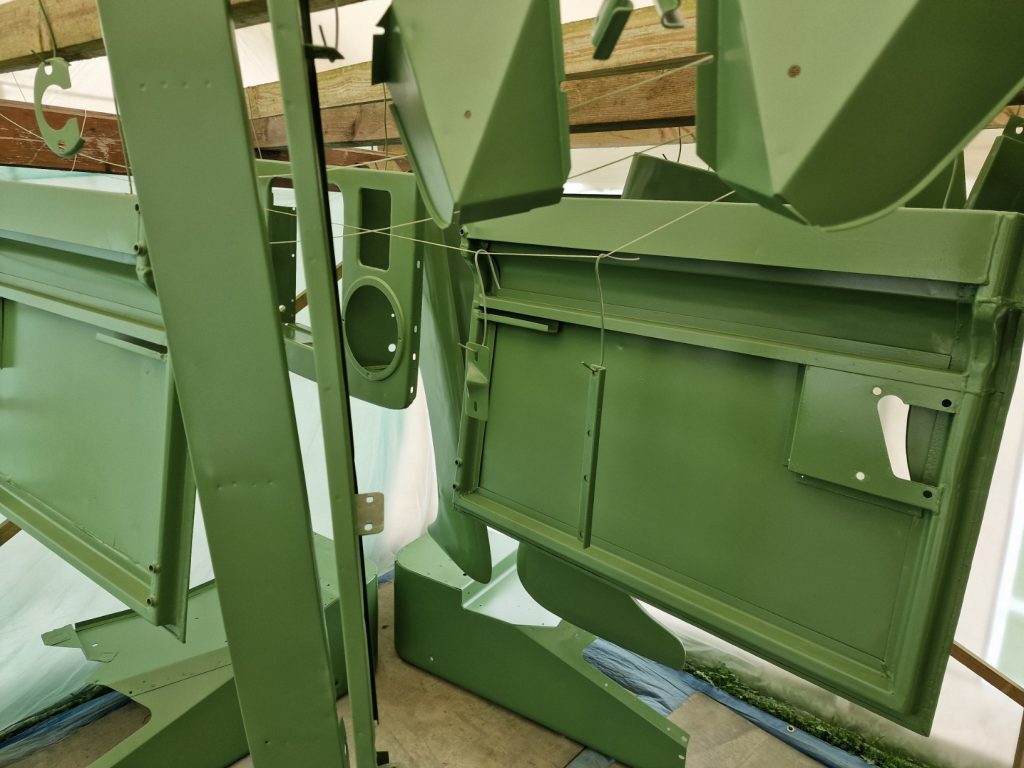
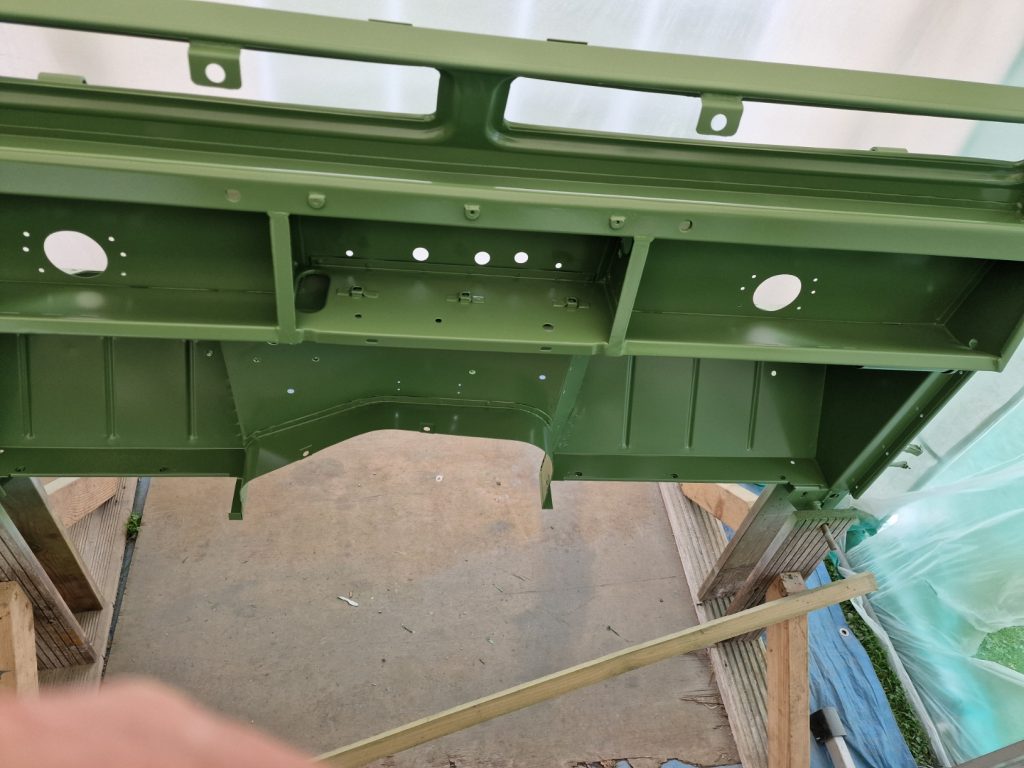
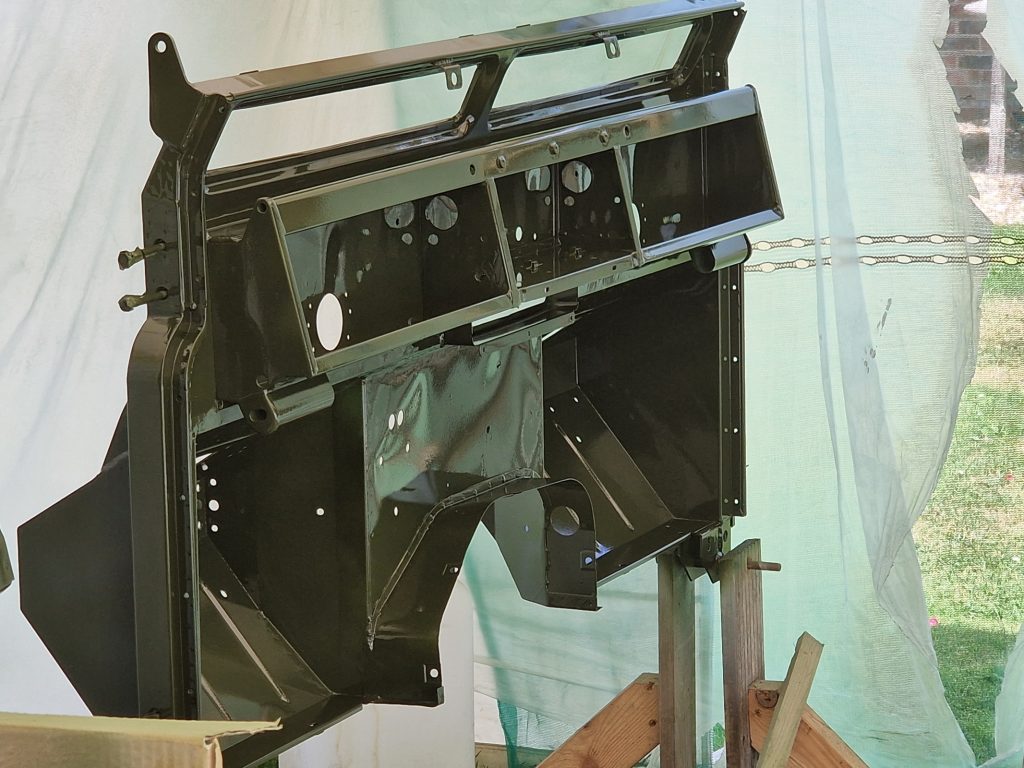
I think they look pretty good, and now you can see the colour I went for, Deep Bronze green, and I love it!

At the time of writing this, I am not completely finished, I still have the 2 wings to finish and paint, the bulkhead and the two doors, but we are expecting some crappy weather in the next day so, so I will get to those when thats passed.

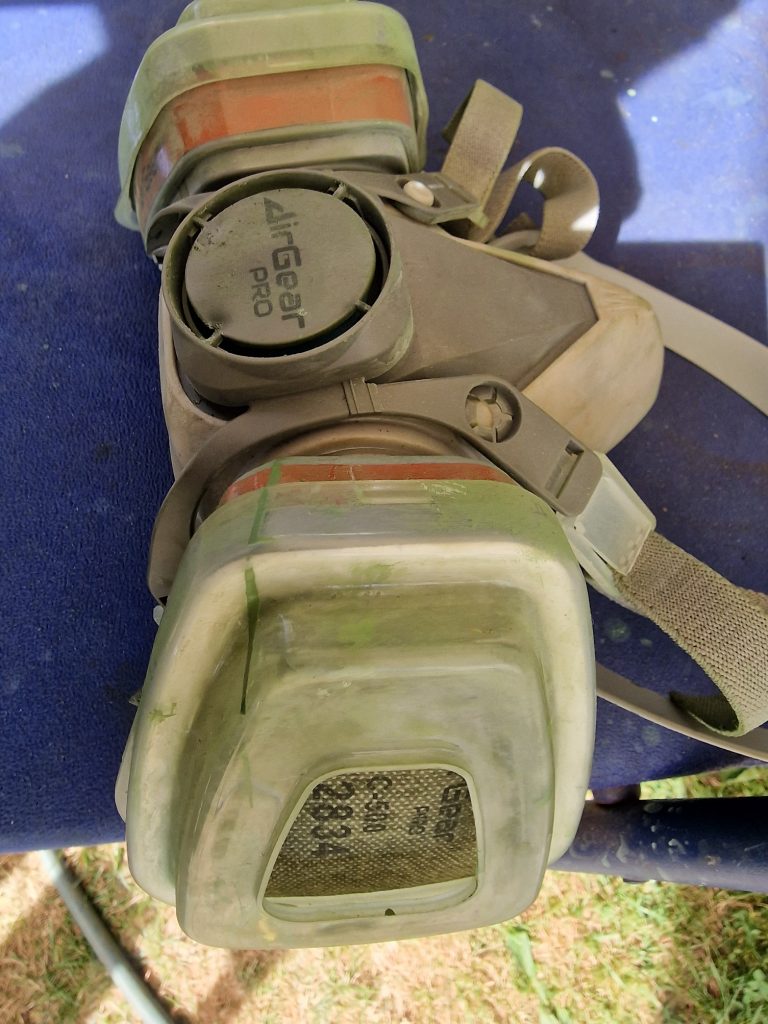
I mentioned my new respirator, well here it is, several filters later and after 2 coats of paint!

If not for this, all that green on the filter would be in my lungs! not the healthiest option I would say.

Oh, and my nice white suite, well thats now a rather pleasant shade of green! Certainly saved me turning into the same colour as the Hulk. Not a good look, same colour, but not the same body shape.

So, what next. Well this paint will need some time to cure properly, weeks, if not months so once it is hard on the surface, it will all get wrapped up and stored until it needs to be fitted, hopefully sometime next summer. All apart that is the bulkhead, that will need to go on as lots of stuff needs to be attached to it, such as pedals, electrics and a few other bits, so that will go onto the chassis in a week or 2, being super careful not to scratch it.

As for the project, taking break for a few weeks but when I get back to it I will be sorting out the troublesome front axle, suspension, torque up all the stuff thats already on the chassis and then move onto brake pipes, exhaust and over winter tackle the engine and gearbox with the plan to start to put Isobel back together during next year, drivable for her 60th Birthday.

Thanks for reading, hope you enjoyed it, maybe learned something and hopefully like what you see. Until next time, bye for now.


Bodywork repairs

In the last article, I looked at all the bodywork issues that I would need to look at. In this article, most of those challenges have been sorted, kind of! This is a really long one, so sorry for that!

Before continuing, let me be clear, there are certain skills needed that I dont posses, and also needed to be conscious of budget and to keep as much of the original as I reasonably can, to try to avoid more comments like “Its turning into Triggers Broom!”. So what does this mean in reality? we’ll some might say I have bodged certain parts of this process and would prefer to see things done in a different way, for example weld the body panels, but I cant weld and certainly cant weld aluminium, and dont know anyone that can, so took an alternative route! Hey Ho! have to work with what I’ve got. I have also never done any serious bodywork, yes, used filler in the past, and painted a few cars before, with varying results, but nothing like this will need.

So here goes, and please be kind!

Doors

first part to look at was the doors. there was two challenges here, a smallish dent in one of the doors, and the door frames of both doors rotted out at the bottom.

First thing was to separate the door panel from the frame, its not too difficult, you just need to unfold the edges of the panel away from the frame and prise the frame off. Being super careful, as the aluminium can split, and did in a couple of places.

First up the door frame. I bought 3 lengths of replacement frame from Paintman Panels.

These need welding on, so a quick phone call to my Nephew Lee, and off they go along with the Front Panel and the sills to be welded.

Lee is a quality mechanic, working partly in a garage and on on his own, mobile.

LG Mobile Autos FB Page here.

While the welding was being done, I cracked on with the rest of what is needed to be done.

Tried my best to gently beat the dent out of the door panel, and while not perfect, much better. Had to anneal the panel to make it workable, and used very gentle taps with the panel beating hammers and dollys.

I got a new panel beating kit for fathers day, uncanny how Caleb and Reuben knew exactly what Dad needs, even after a few weeks of very gentle, subtle and some times not so subtle hints.

Also, stripped all the paint off these panels, will talk about that in a later article.

I didn’t think I was making too much noise. But after bumping into a friend at the monthly Spur car meet, who lives opposite (Chris I know you waste plenty of time reading these, thank you 🙂 ), commented he could hear I was upto something! Humm, maybe got some not very happy neighbours now 🙁

Front Wings

Onto the front wings, which also needed some attention.

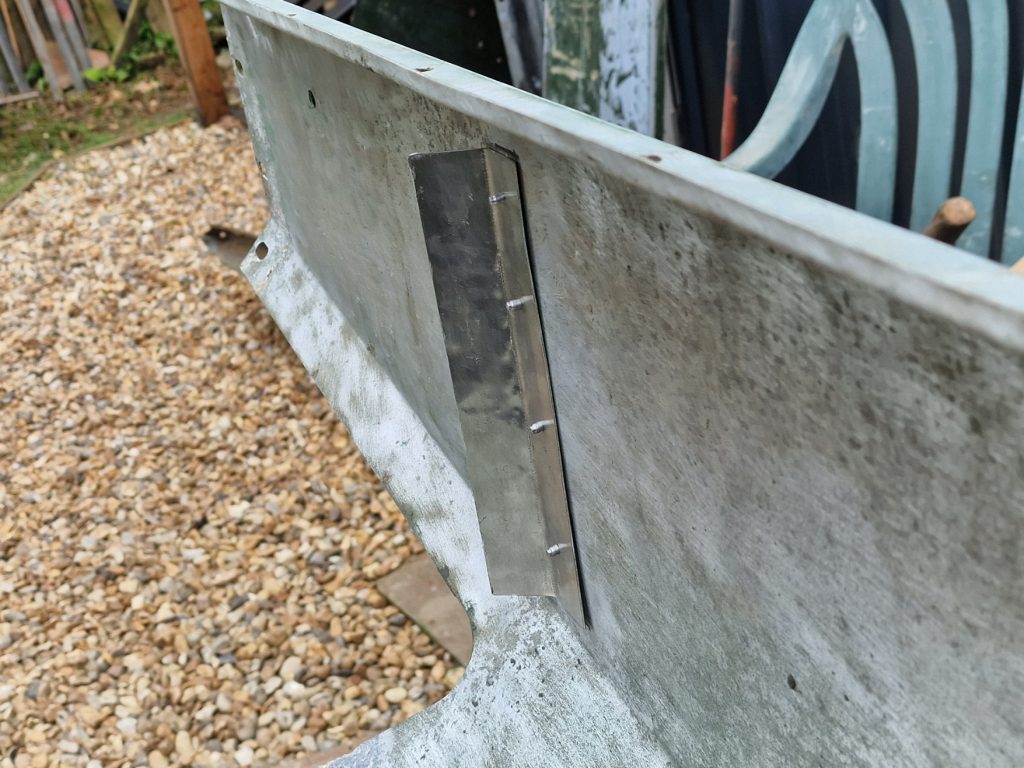
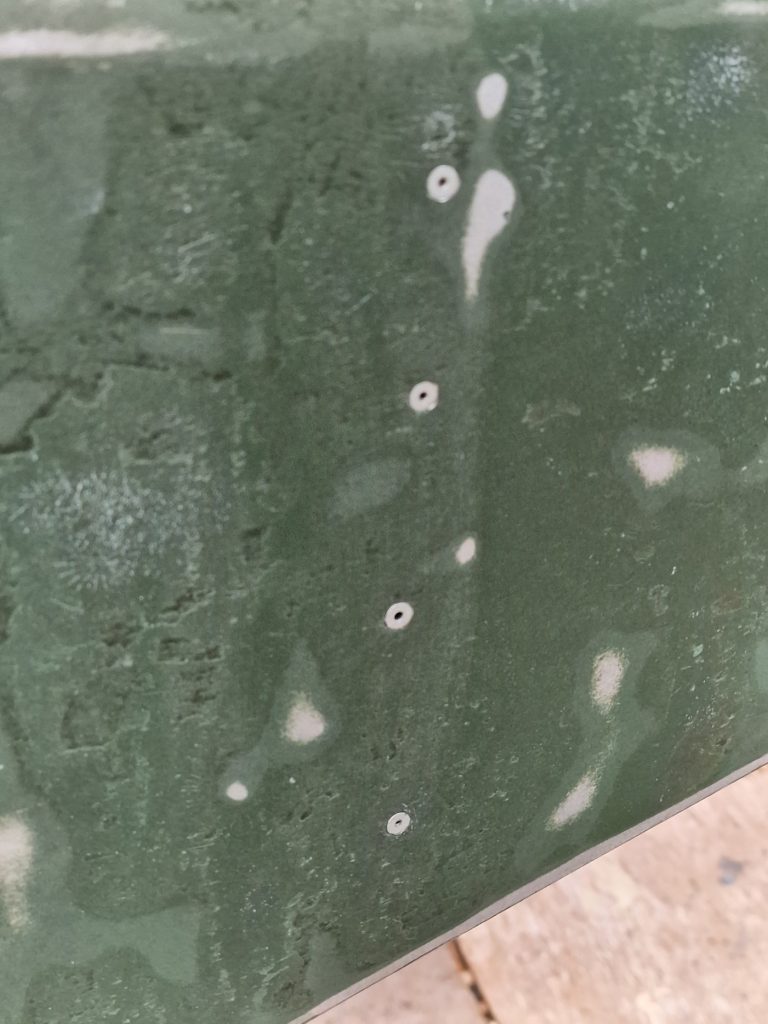
The mud guard brackets were completely rotten, due to galvanic corrosion between 2 different metals. Using a piece of 5251 grade aluminium, which is the closest grade to the original Birmabright aluminium, a new piece was cut out, with the original spot welds drilled out, all the way through. Counter sunk pop rivets and a little bit of JB-Weld, and a new bracket is in place, minus the holes needed to mount the mud guards, the holes will come later.
Bit of filler across the top and it will look like the original spot welds, until you look underneath.

Another issue with the wings were the other mud guard holes, they had rotted through also, so cut out the corrosion and formed a piece of 5251 to sit in the behind and in the holes, again JB-welded them in, will probably add a little filler to tidy them up a little.

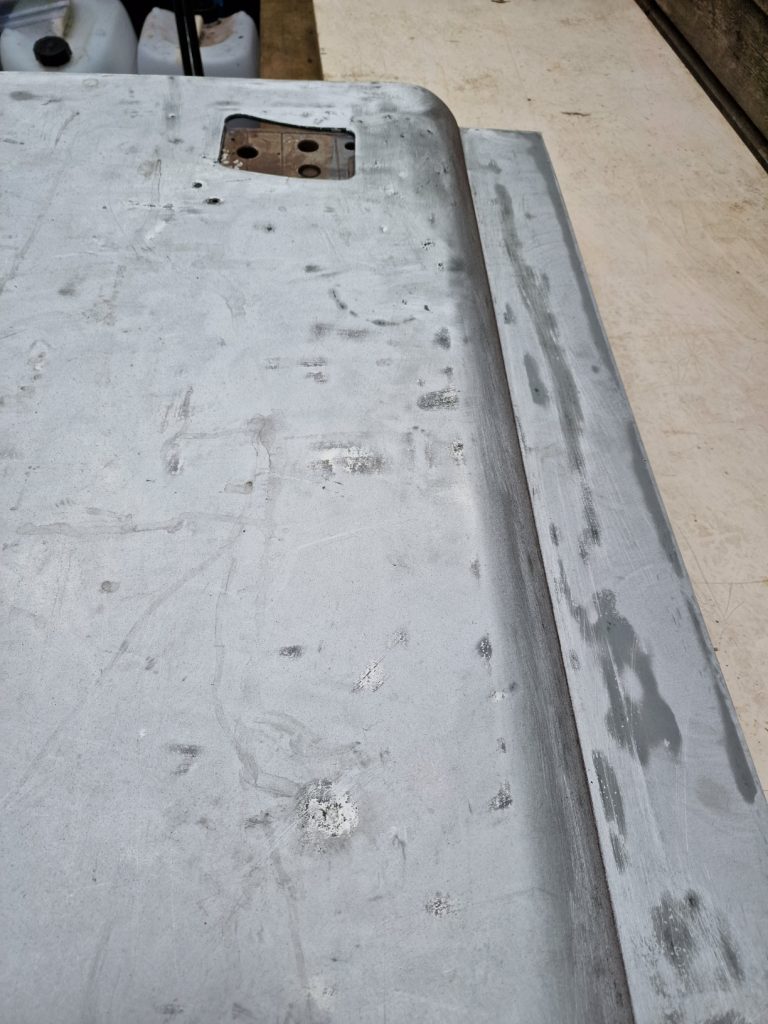
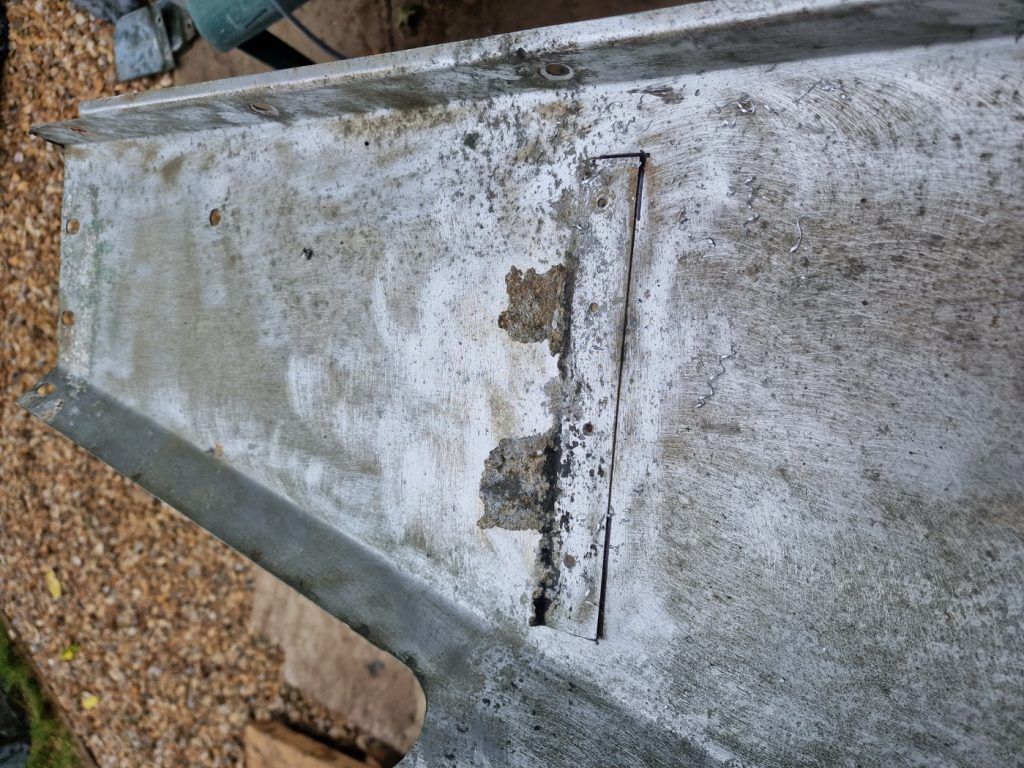
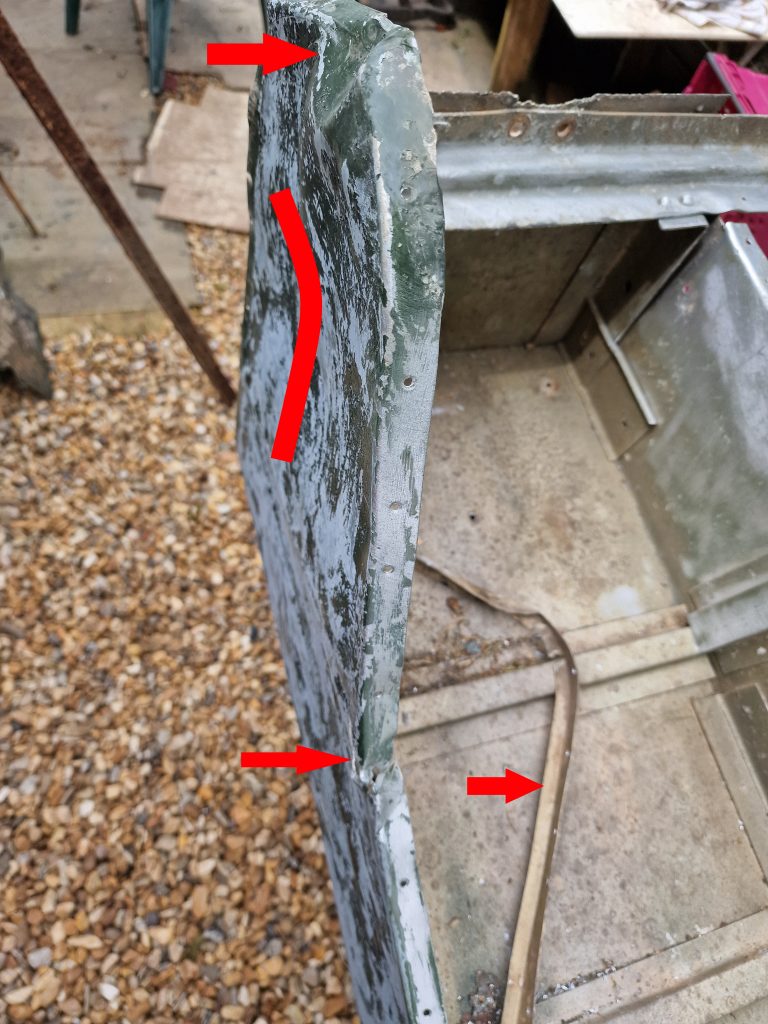
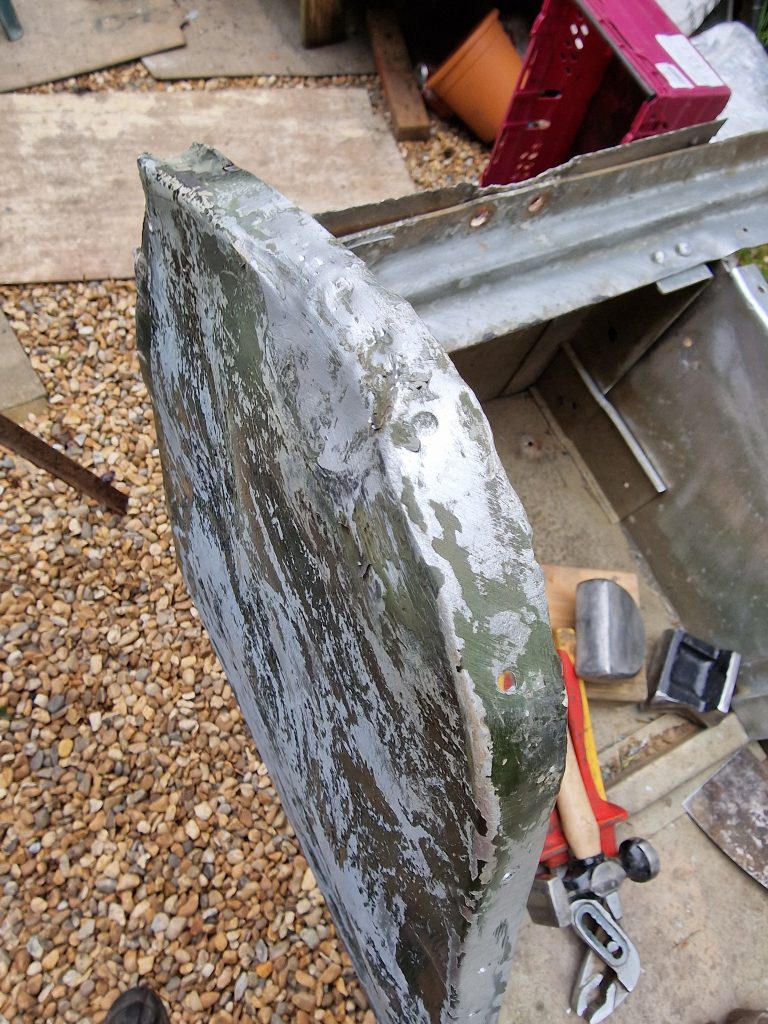
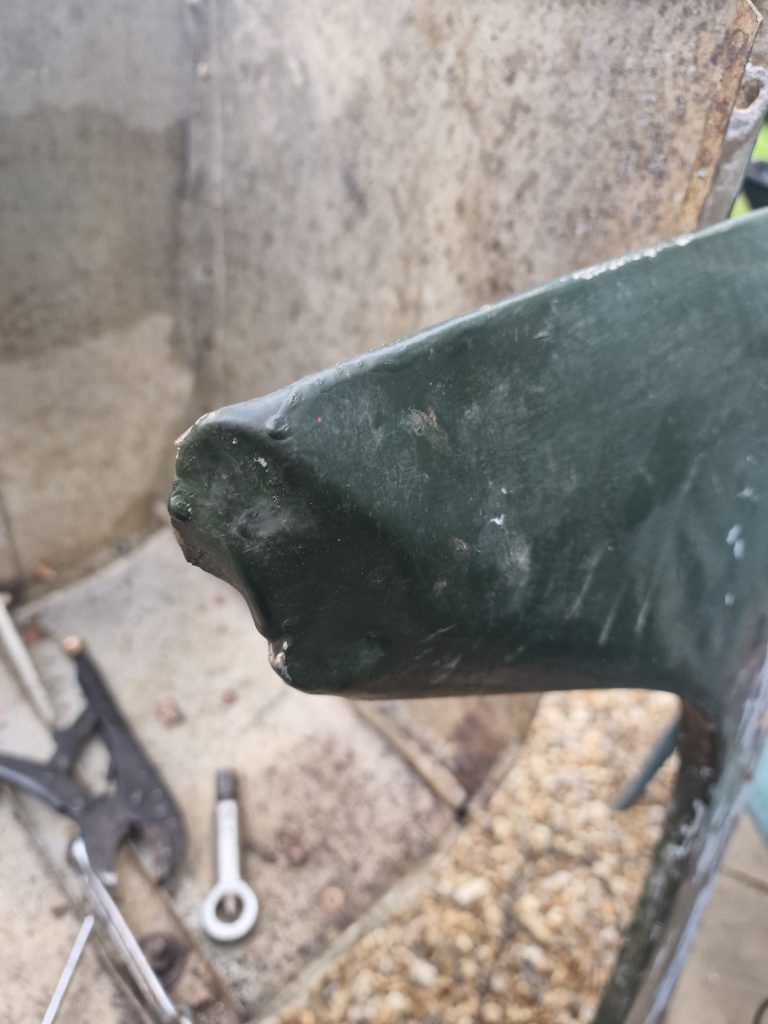
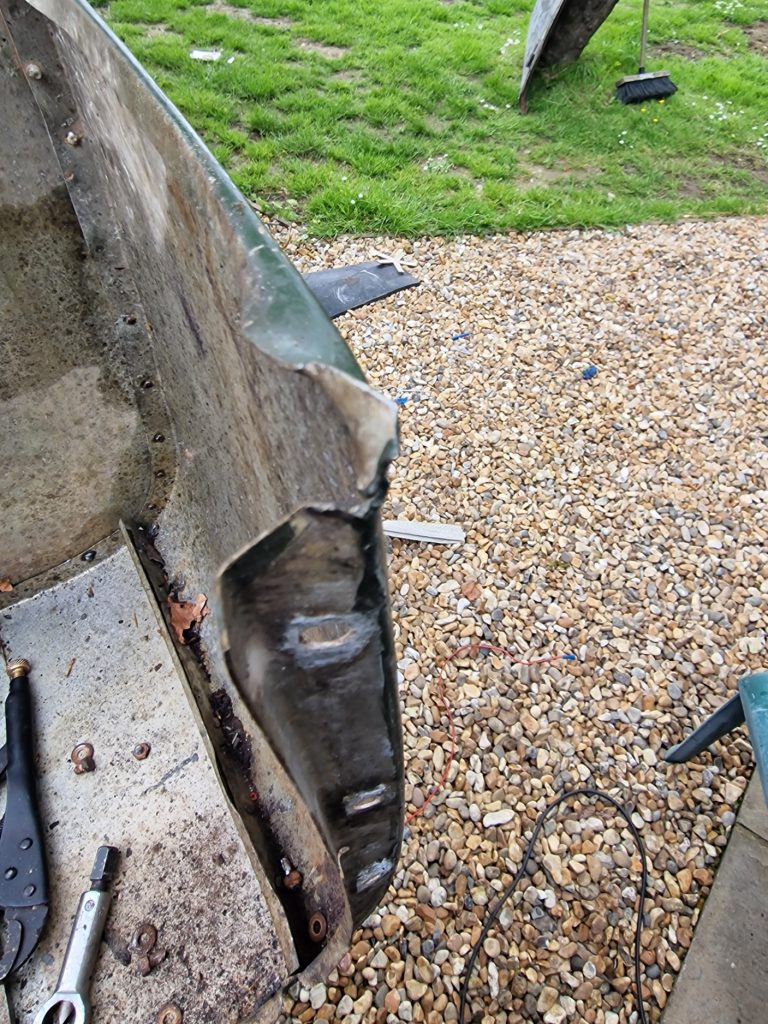
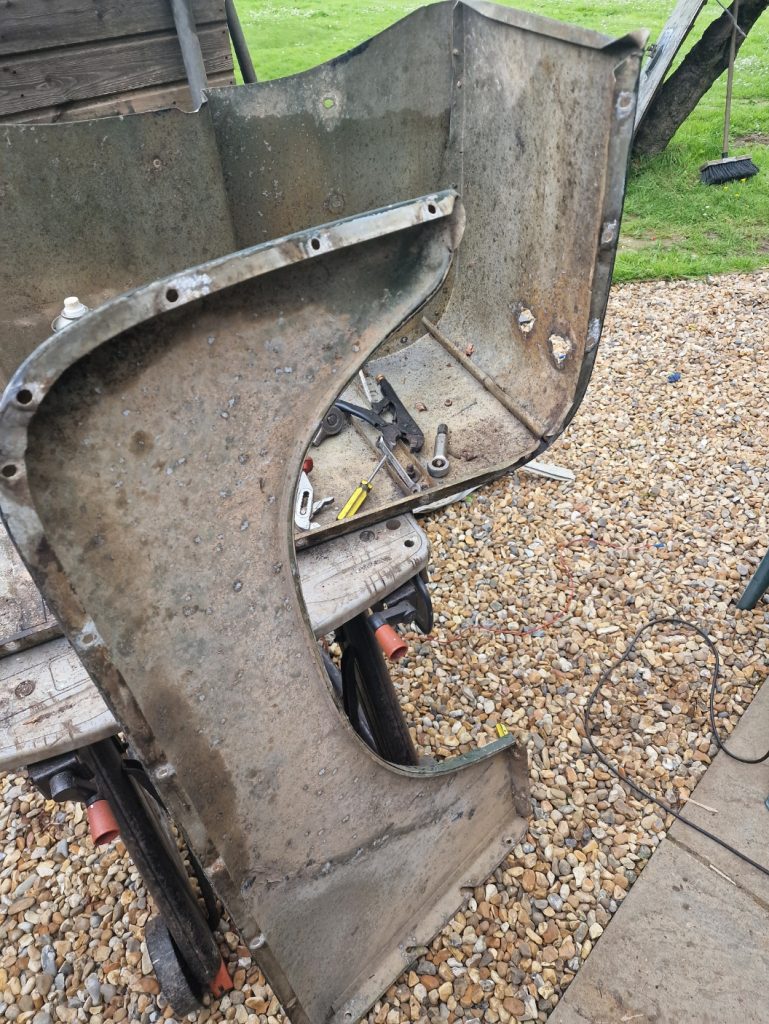
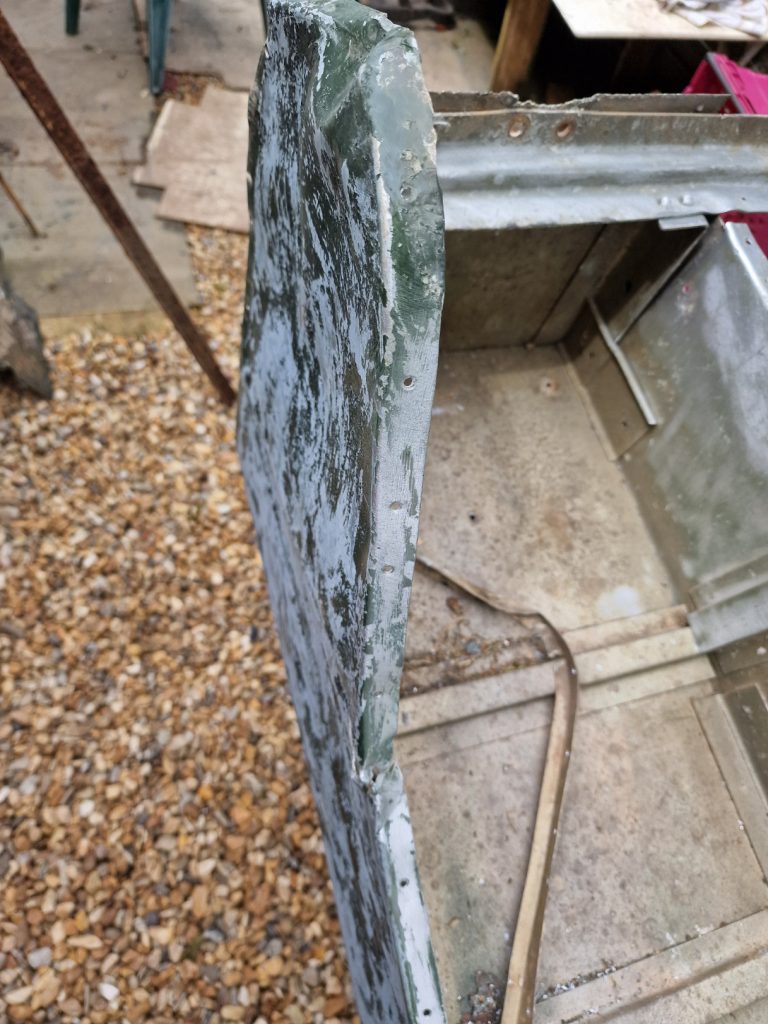
Finally, the last issue with the wings was damage to the outer wing panel, the bit everyone sees. Here there were two issues, 1 being the panel was quite badly bent, and second, a re-enforcing part on the inside of the wheel arch was damaged.

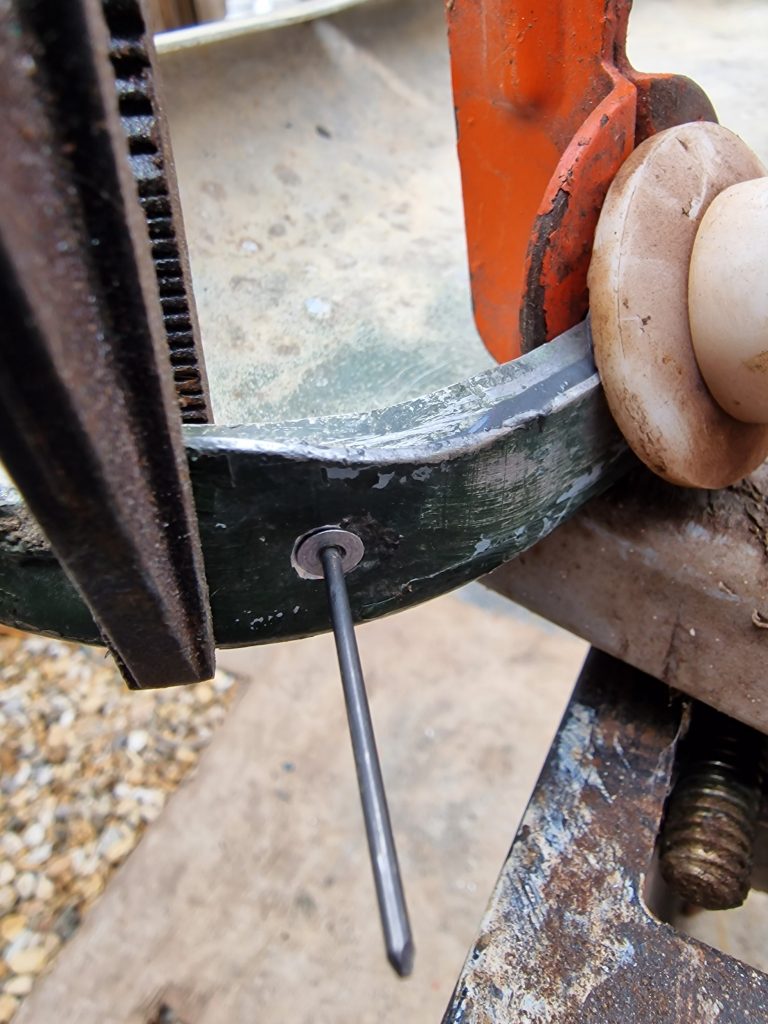
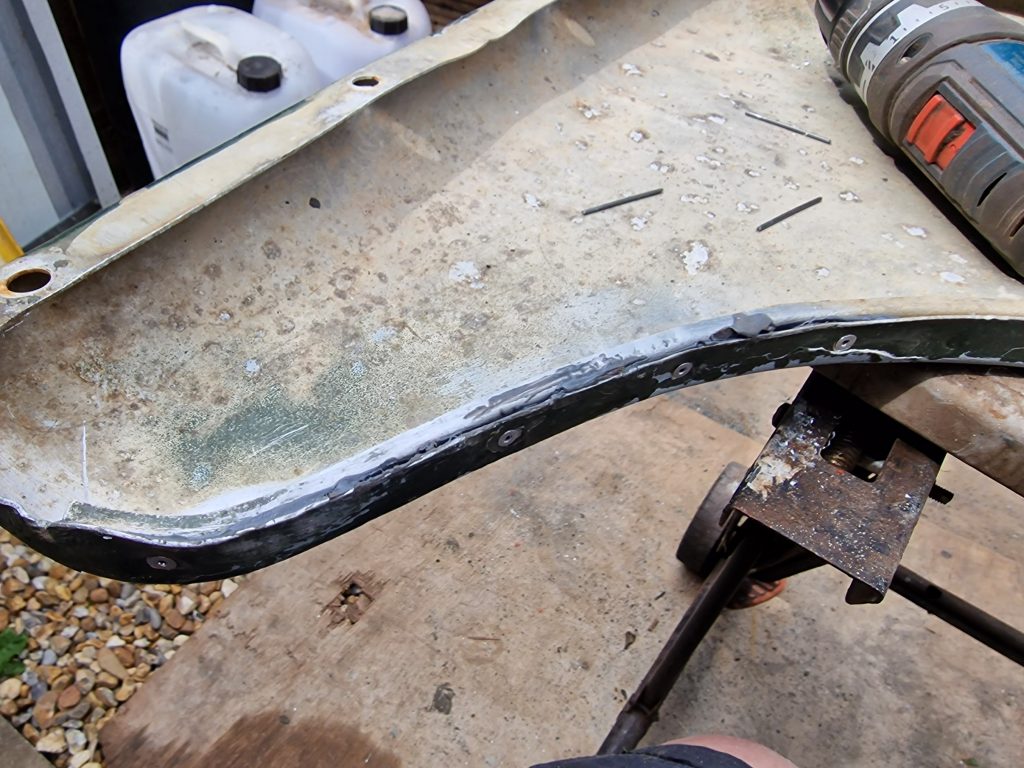
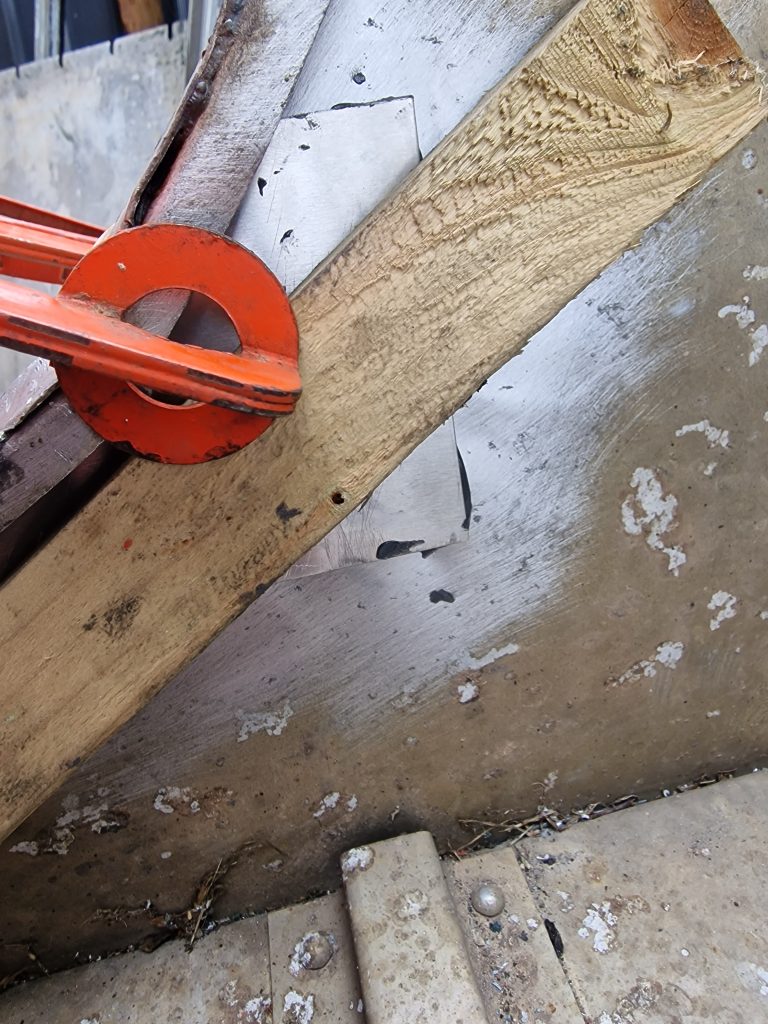
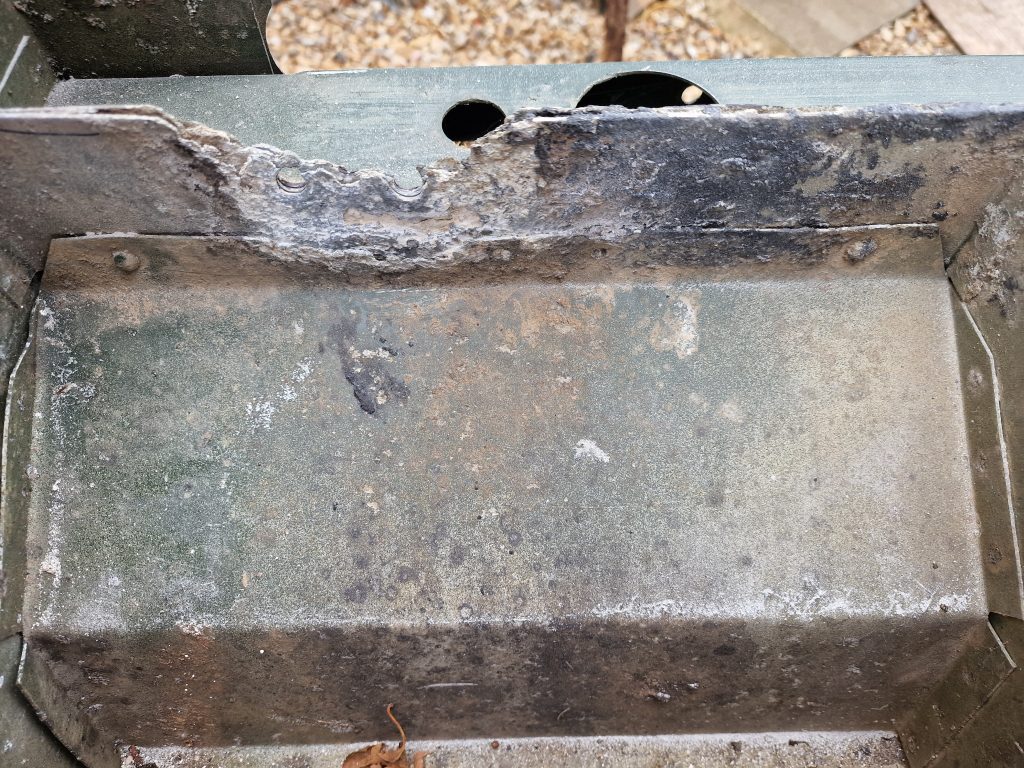
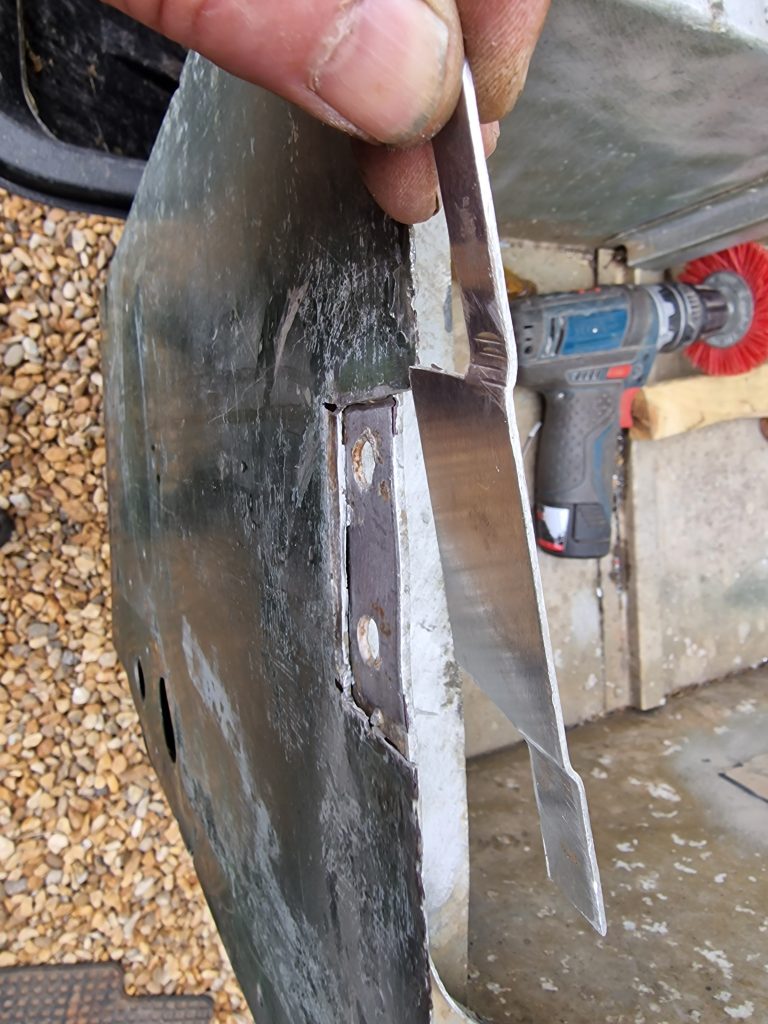
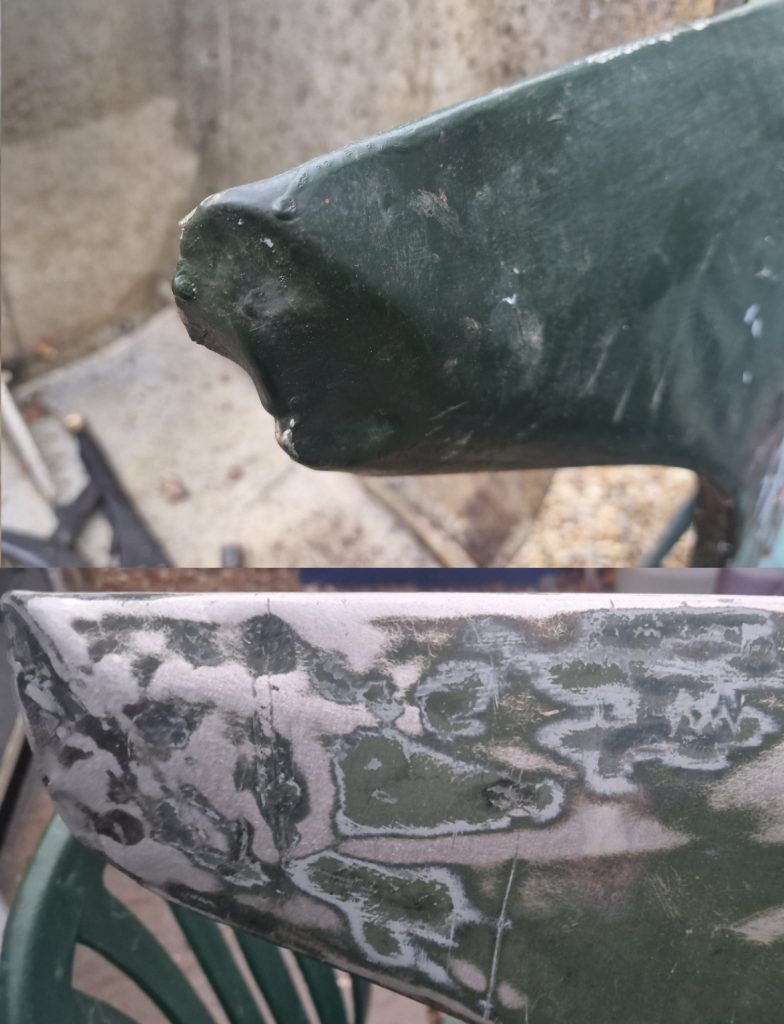
In the top part of the first image, you can see the damage, the bottom half of the image my “suspect” attempt at panel beating. Its along way from perfect, but it now resembles the shape it should be. The process for PB is not entirely straight forward. The Birmabright work hardens, so the more you work it, the more brittle it becomes, so needs to be annealed often, which means heating it up and allowing it to cool, beat some more and repeat. I could keep going with this but took the view I am more likely to make it worse rather than improve it significantly. The second and third images shows the re-enforcing bit, which had become bent and detached from the panel. This was re-shaped, spot welds drilled out and again, using JB-Weld and countersunk pop rivets re-attached.

Rear Tub

Seems every panel needs something doing!

The tub had a few issues, the rear quarter and also the fixings where the tub bolts onto the chassis.

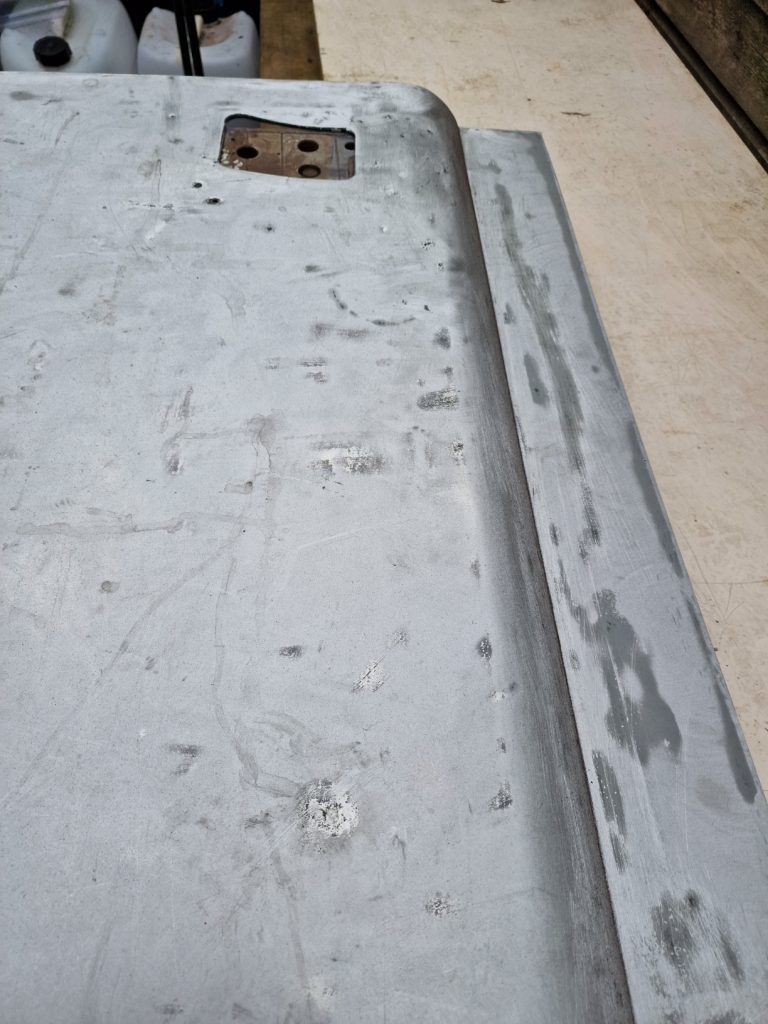
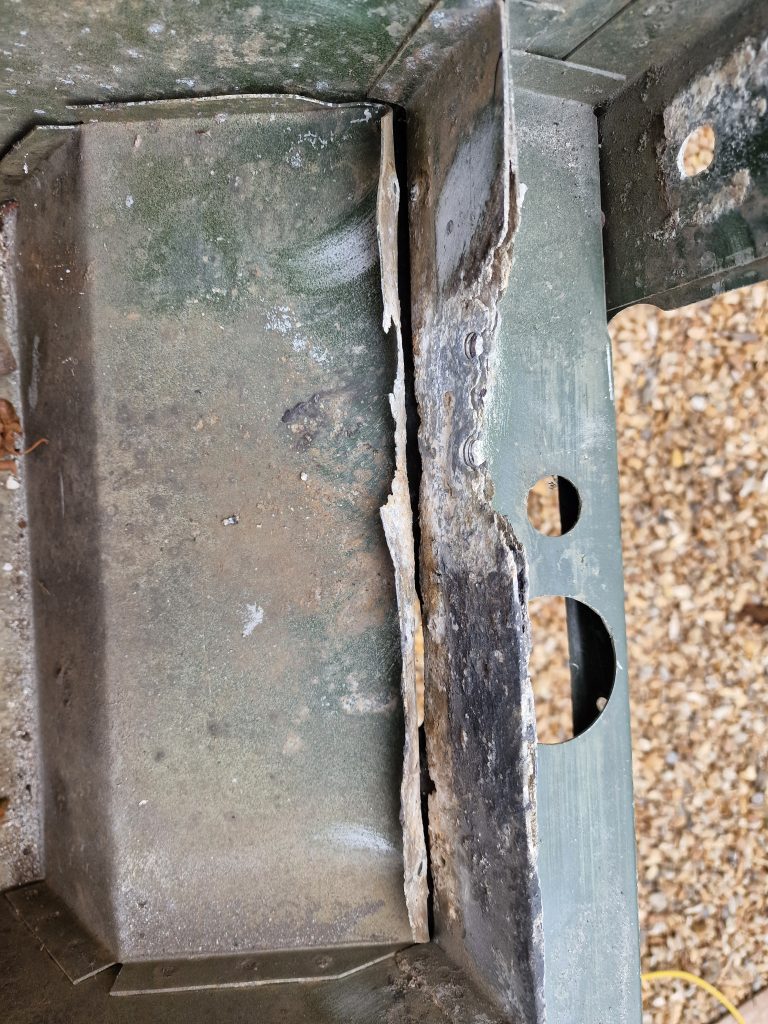
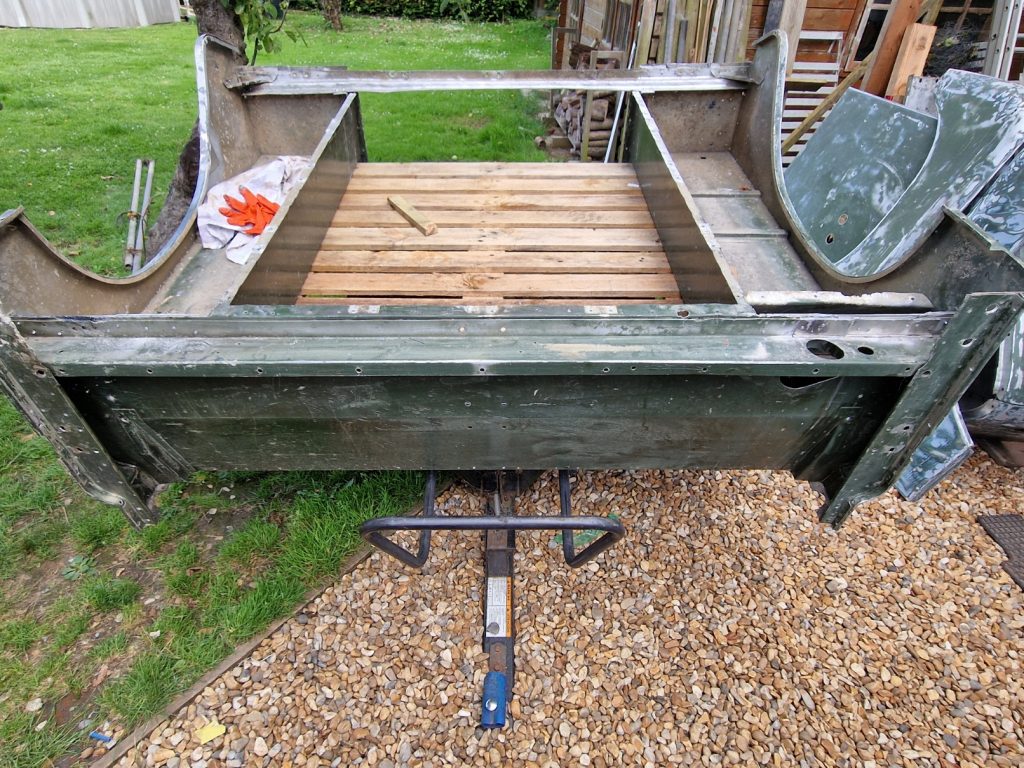
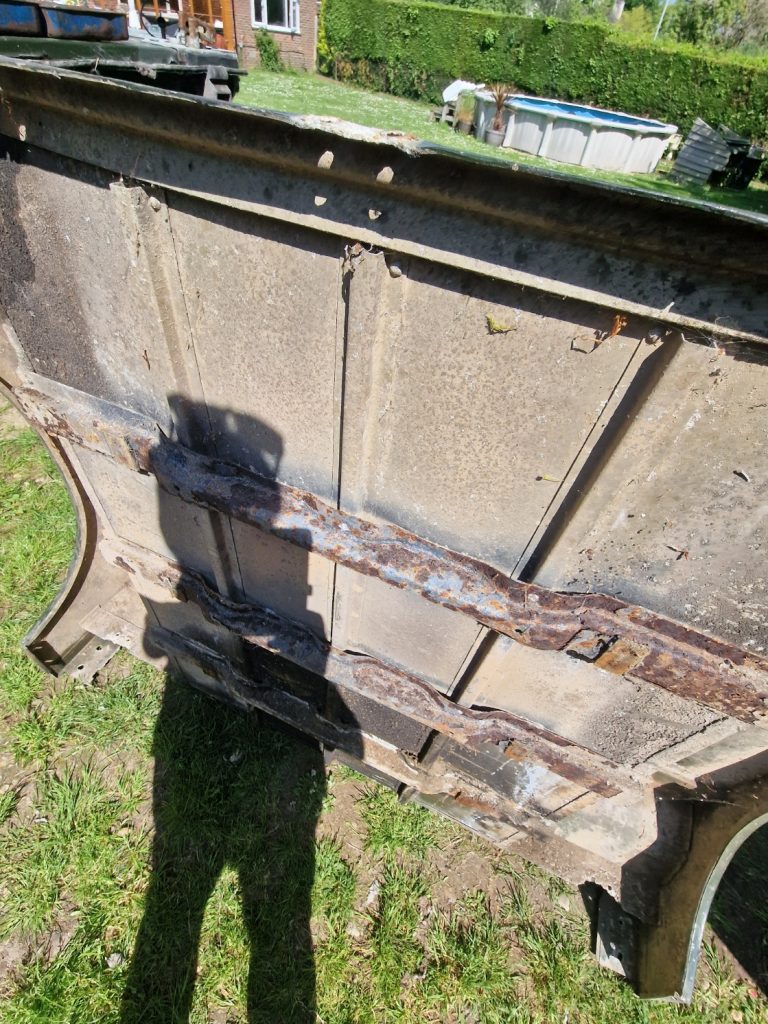
The rear quarter of the near side has clearly taken a whack at some point in its life, which has caused the panel to be creased, bent and stretched. The stretching can be seen by the panel bulging in one area and when pressed it pops in and out, the re-enforcing strip had also become badly bent and there was a small split in the wheel arch.

The bottom (top in the picture) profile was also badly bent, completely out of shape.

Beat the panel out to something that resembles the right shape, again, not perfect, but OK, I think.

Also JB-welded a patch behind the split after drilling a small hole at the end of the split to stop it splitting even more.

The only other options to doing this was to buy new tub panel… expensive, or get a proper panel beater, also very expensive, so will see how this turns out later when painted.

With the panel beating, I also had to try to solve the stretching of the panel. So, I tried my hand at shrinking the metal. Heat it up to not too far way from the melting point, beat around the stretch and then cool it rapidly with a wet cloth. To my surprise, no more, or much less bulging and no more Bing Bong of the panel, I would call that a result.

The next part was where the Tub attaches to the chassis, i.e. holds it in-place.

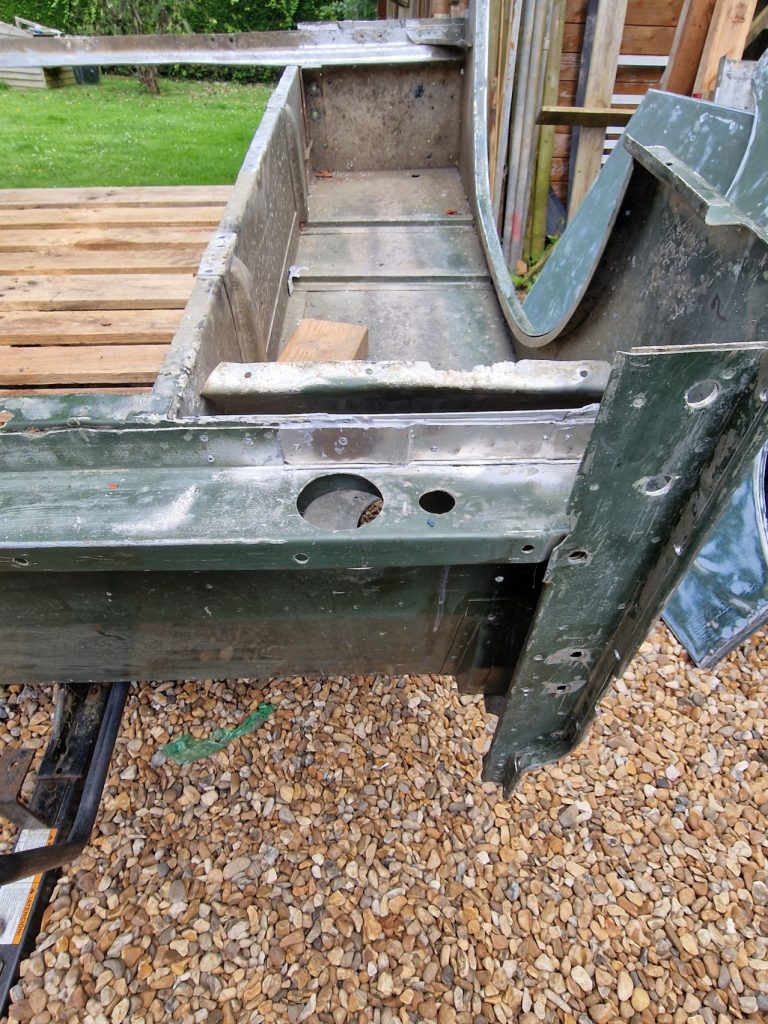
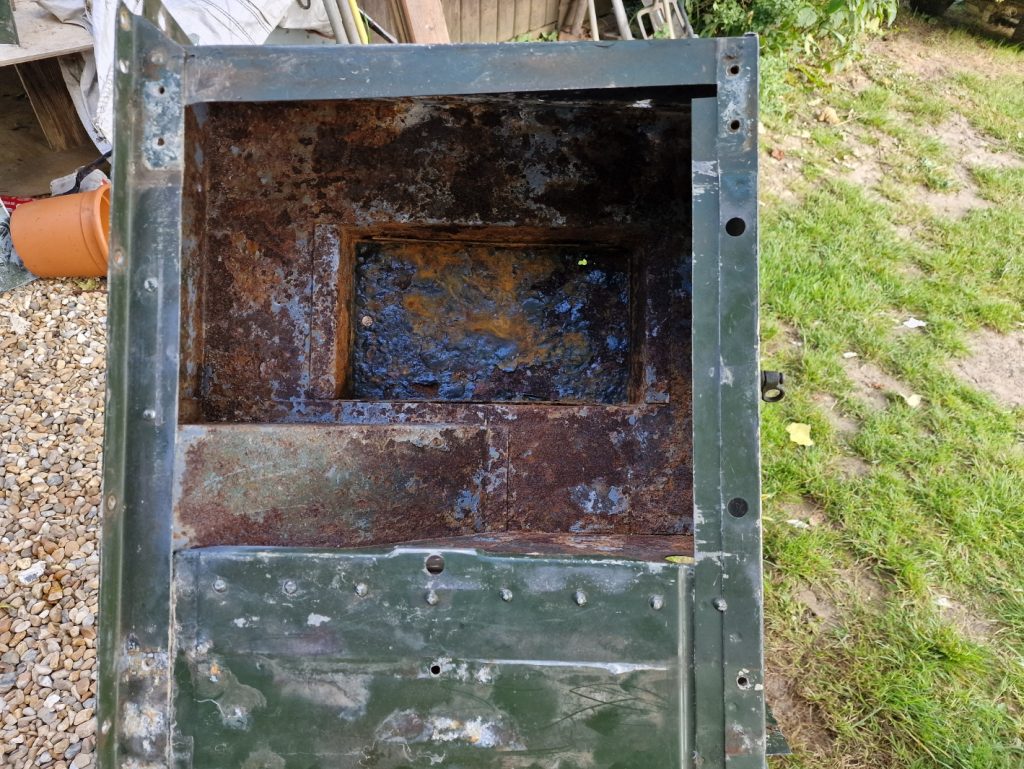
This is an example of what is there to be dealt with.

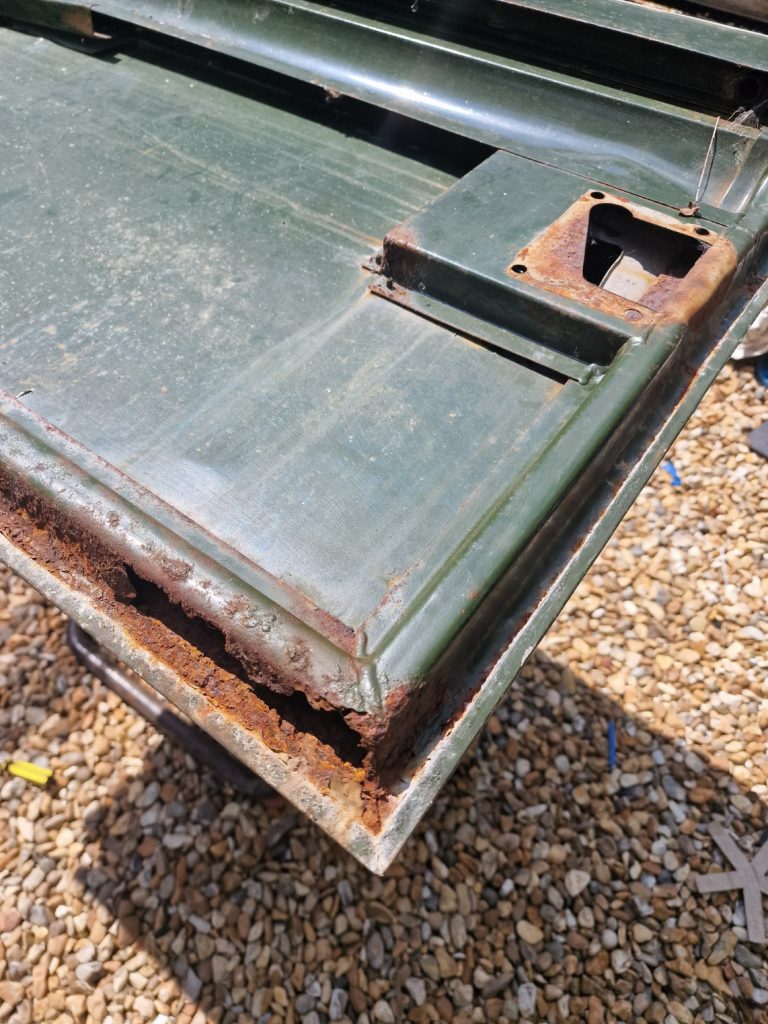
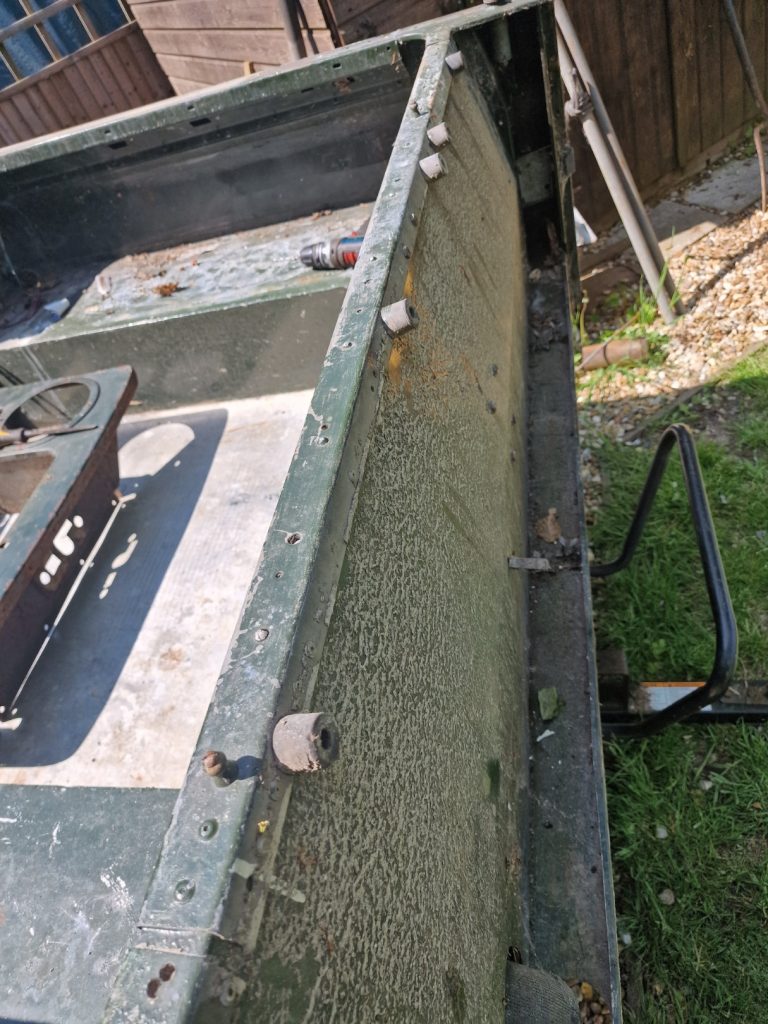
There are 2 points of attachment (to the chassis) at the front of the tub and 5 across the back. 2 of the back ones are also through the body work, which have corroded. basically, because these are aluminium and they are attached to steel they corrode.

I used the same basic process for both the front and back, only real difference the front ones (in the picture above) have three layers of ally, with one layer being thicker, 2mm, rather than the normal 1.2mm.

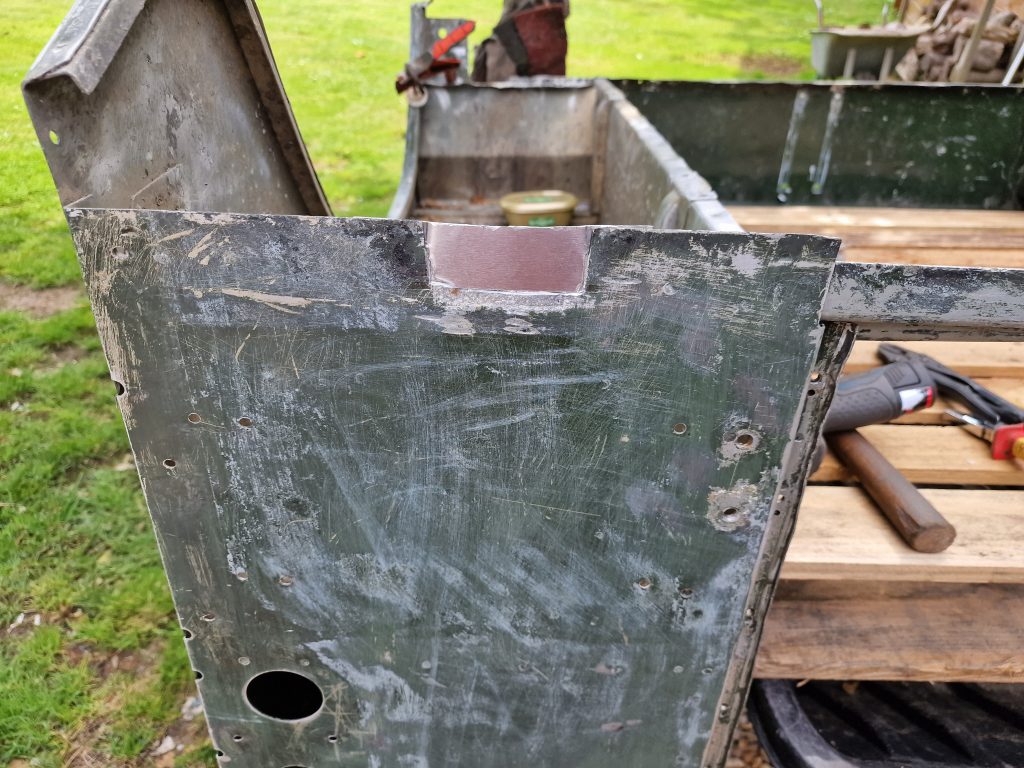
First, get rid of the corrosion, so it was all cut out and cleaned. I also read somewhere that soaking the corrosion area with white vinegar neutralises the corrosion. I guess we will see if that works in a few years time.

Excuse the finger nails, need a trip to the Nail shop to get them sorted. Anyway, for the rear two, created a patch to slot into the cut out area, and sit behind the panel. These were cold welded in, not rivets as they are visible.

For the front, did the same thing with the thicker material and also for one side inserted two other pieces where they were corroded. Also, the front two were riveted for added strength.

I would love to have the skill to weld these in, but I just dont, and need to keep an eye on budgets. While many I am sure will cringe at this, I’m pretty happy with the results. I guess there is an argument to make to make repairs visible, its a part of the character and history of the vehicle. I’m convinced by the argument, and the repairs will be mostly invisible unless you look underneath.

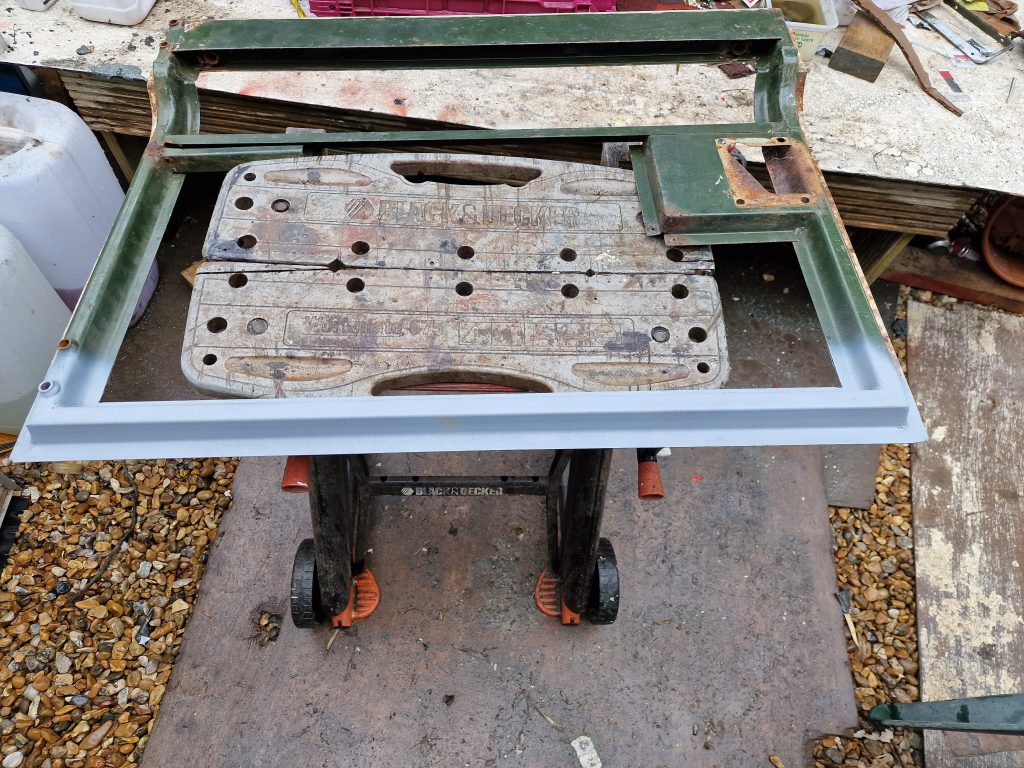
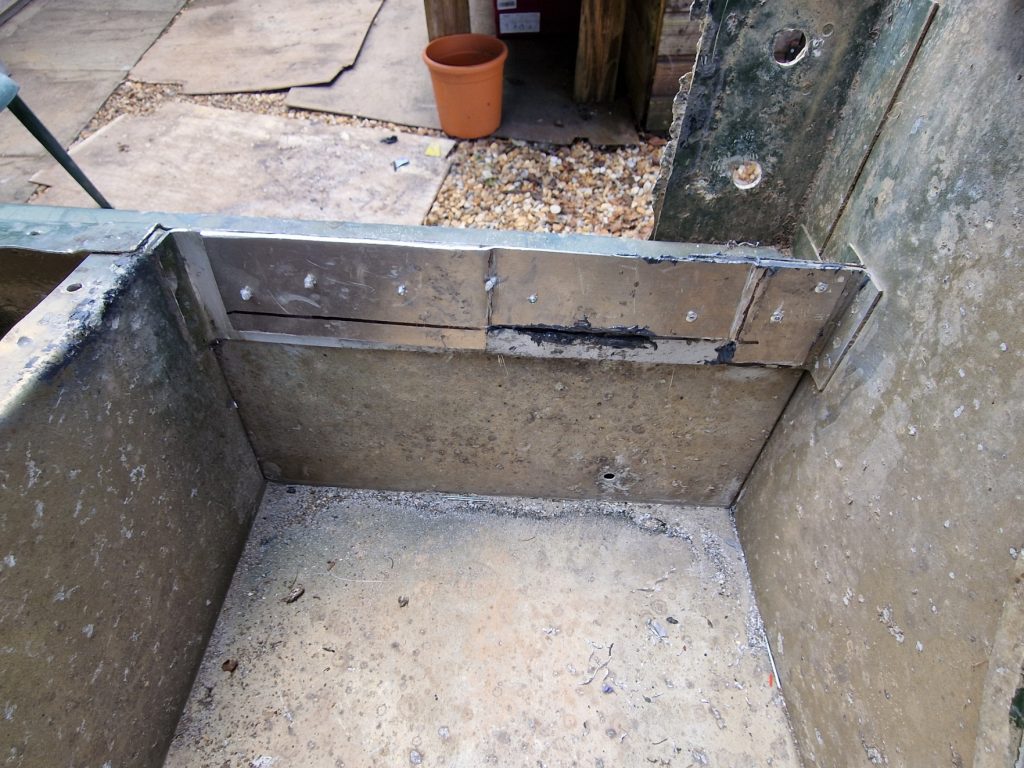
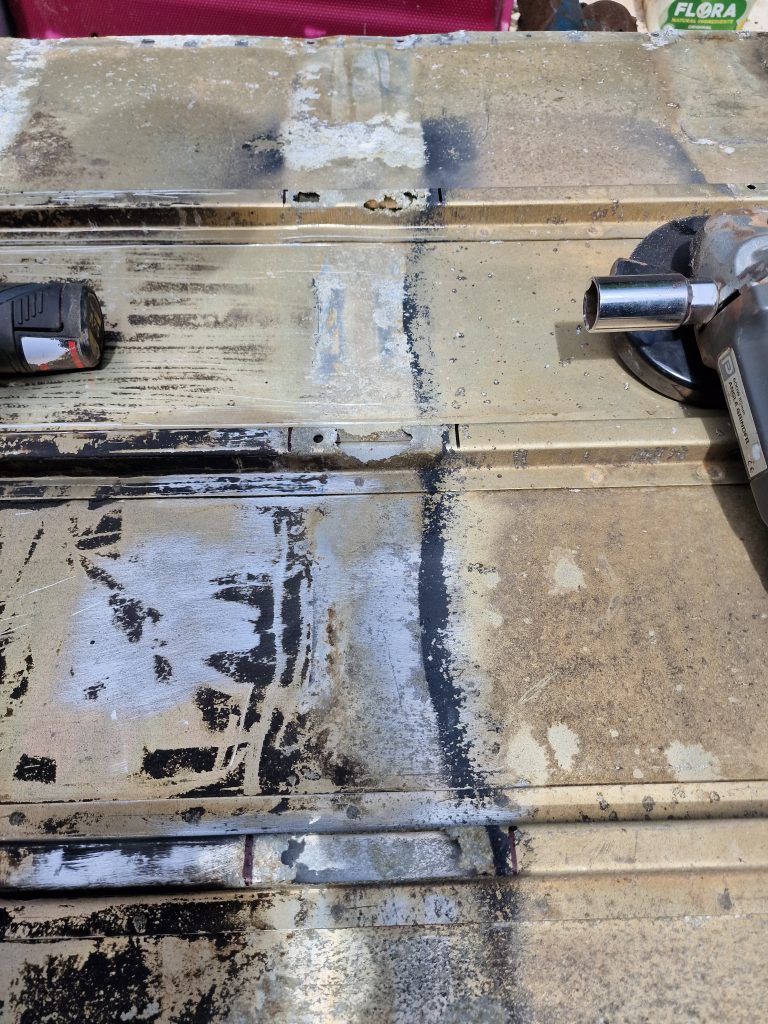
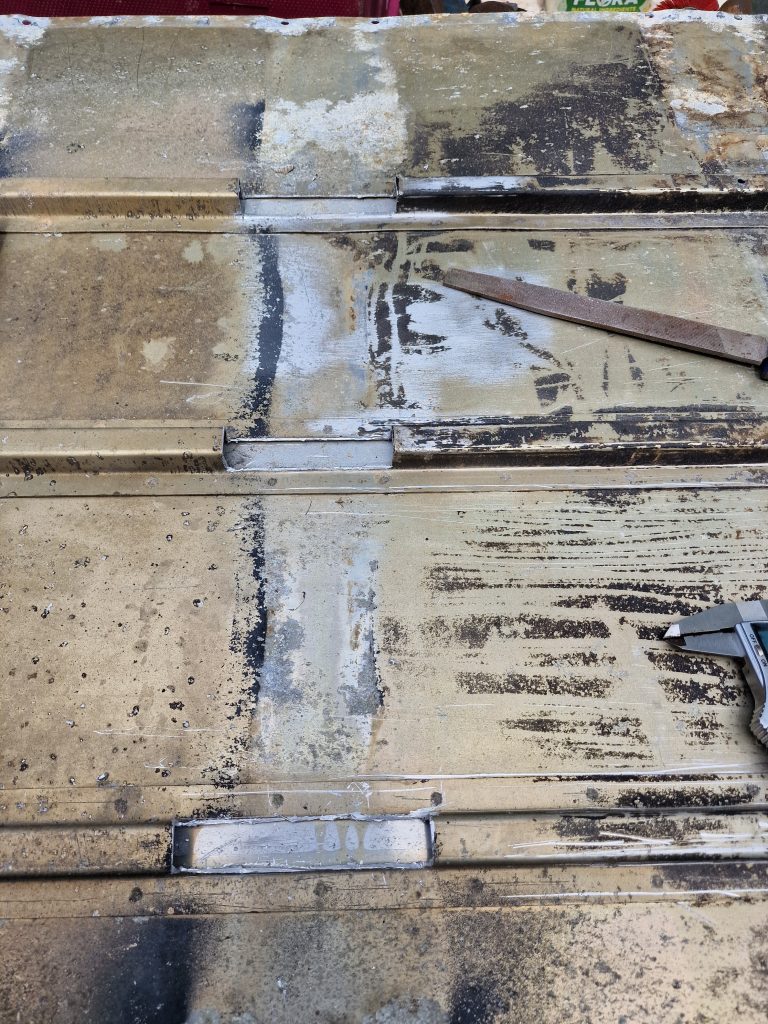
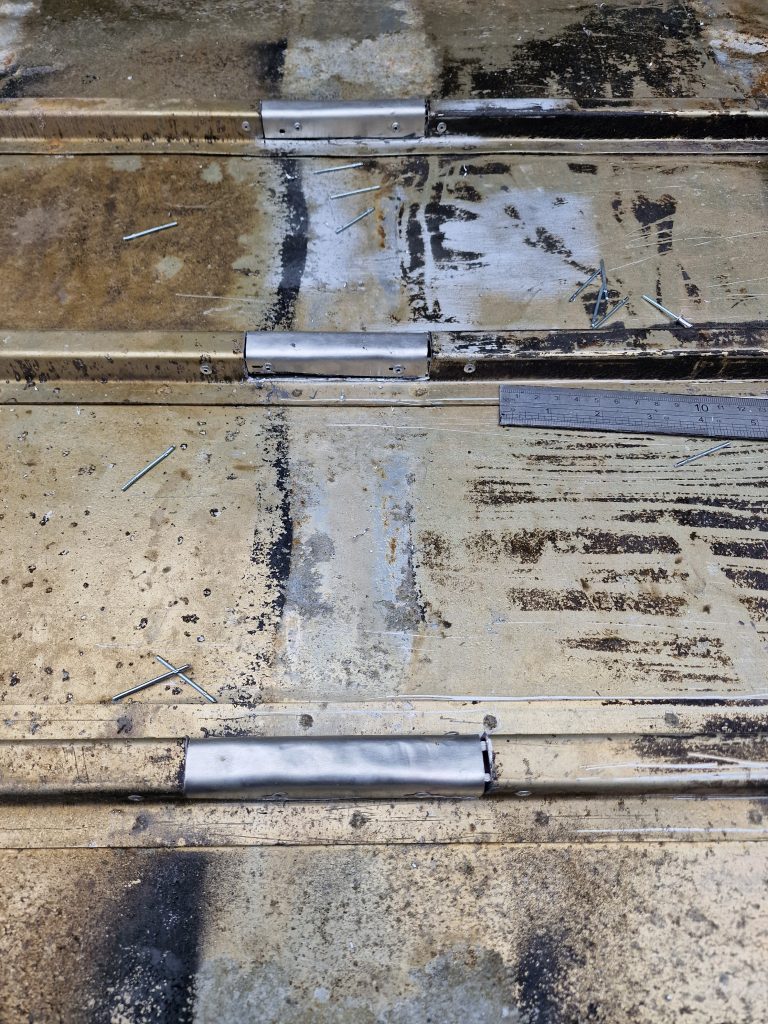
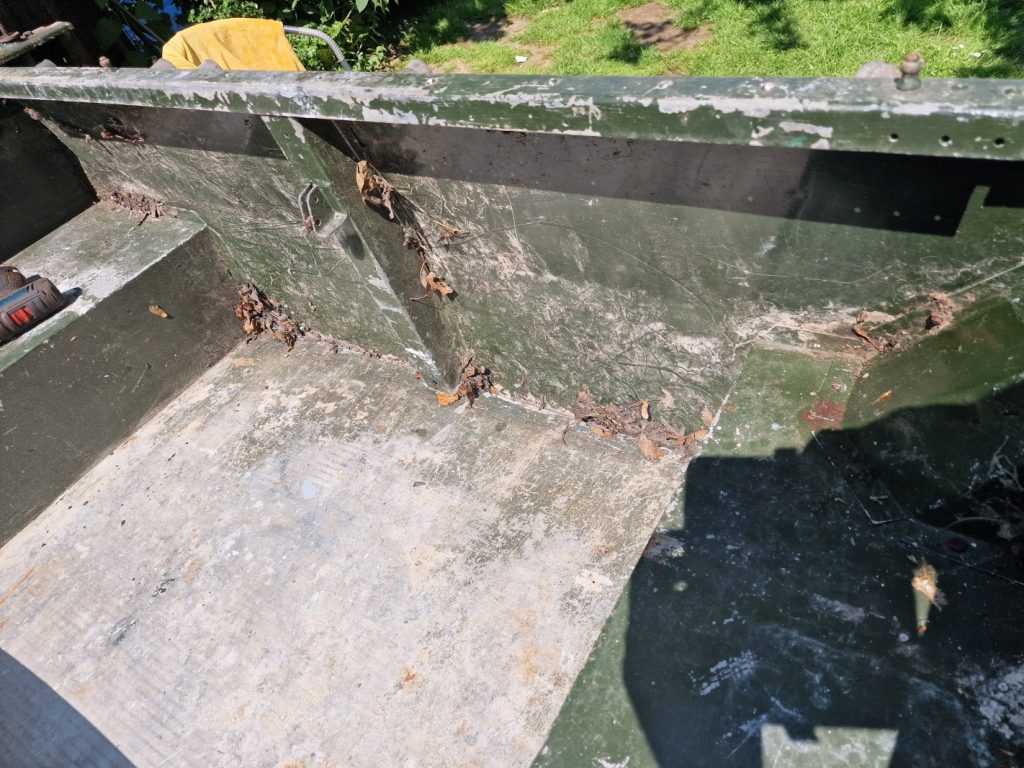
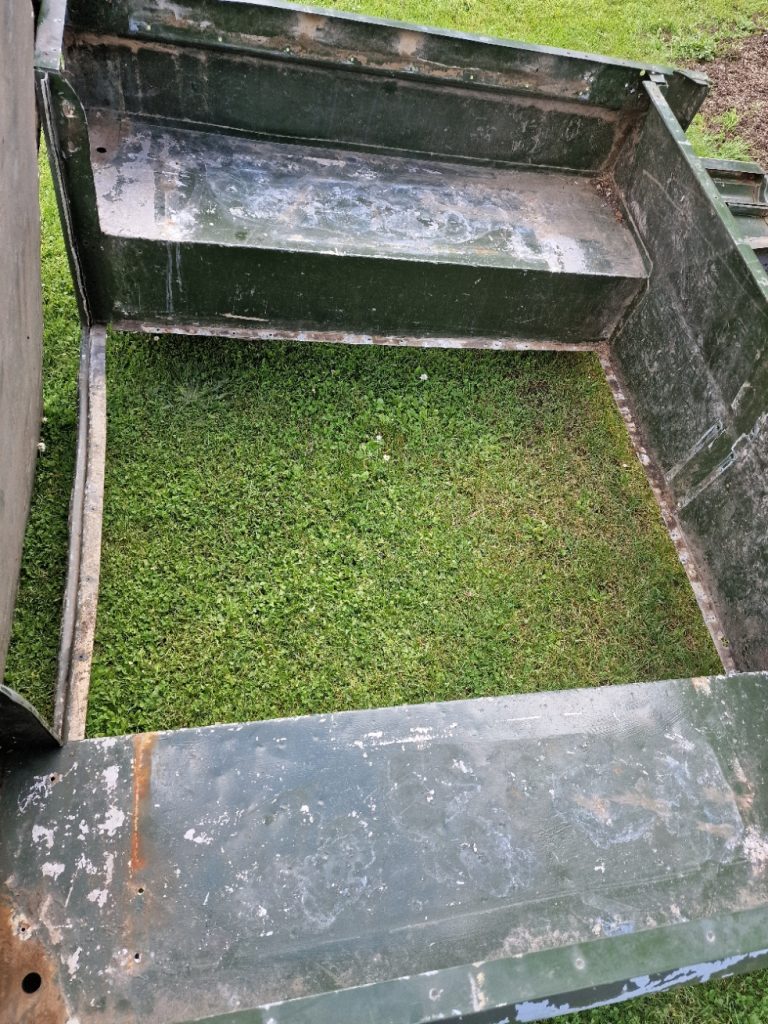
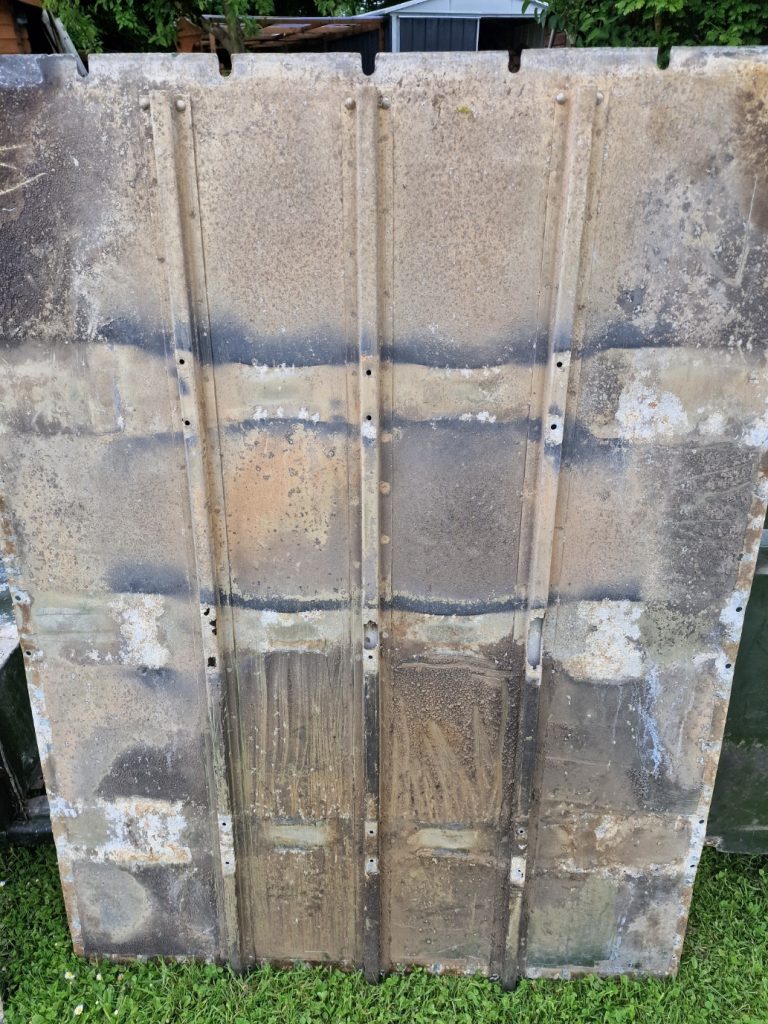
Last issue with the tub, for now was the floor. Will keep this one simple. basically there are 3 supports that help support the floor, These supports are steel, the floor is aluminium, hence the corrosion of the middle support. the corrosion was cut out, strips of aluminium were cold-welded and riveted in and a piece formed to sit over the top, which was also cold welded and riveted on.

Nearly there. In fact, will keep these final 2 parts shorter and sweeter.

Bonnet

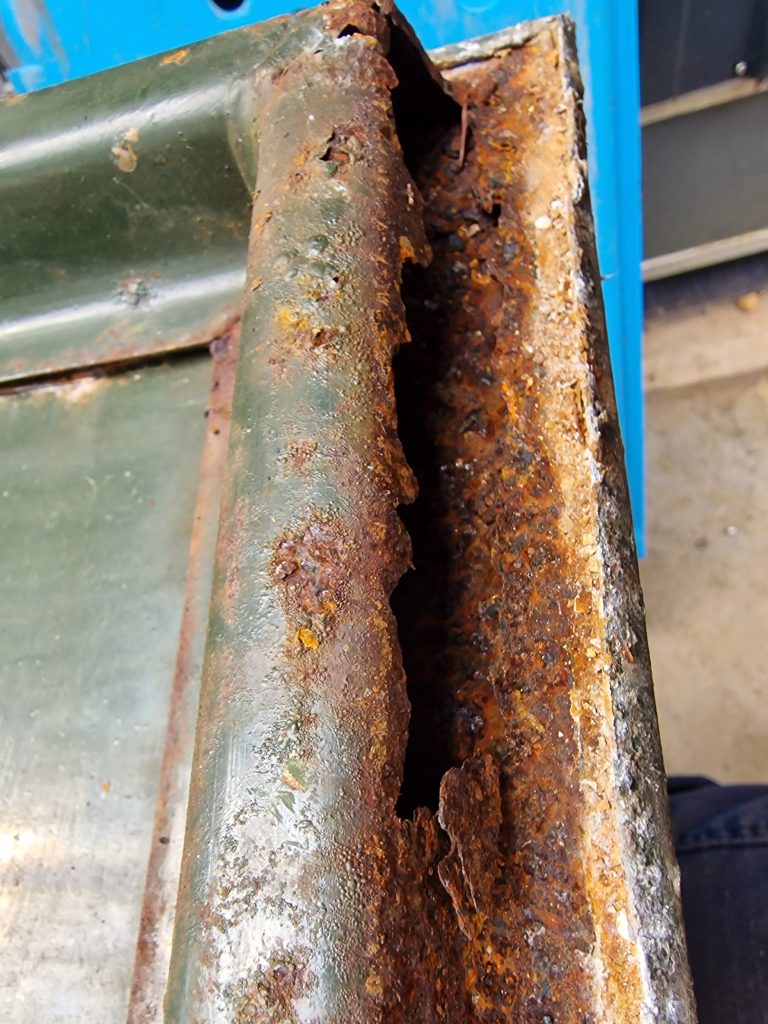
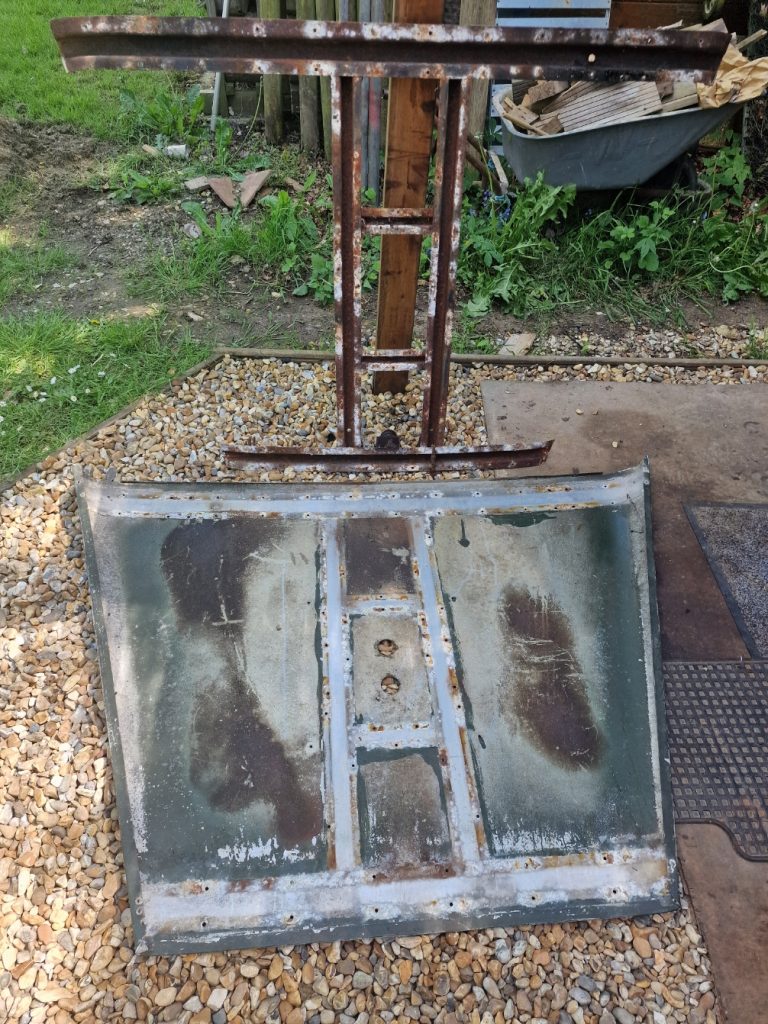
The bonnet is pretty simple, much like the doors, it is made up of a skin and a frame that sits underneath. I decided, thankfully, to take the frame off the skin to clean it up, which revealed lots of little holes. I considered a couple of options here, but you can only, as far as I know buy a replacement H section, not the two end parts, one of which was like a piece of holey cheese. The other option was to buy a complete bonnet and hope the frame was in better condition. I considered asking Nephew Lee to weld it up, but to cut out all the rust and corrosion would leave nothing left. So, what I did, and please dont ridicule or judge me, was to form some pieces of mild steel to sit inside the frame and cold weld them in. I did this after taking off as much rust as I could and treating it with rust converter. The fix, you wont see when its all back together.

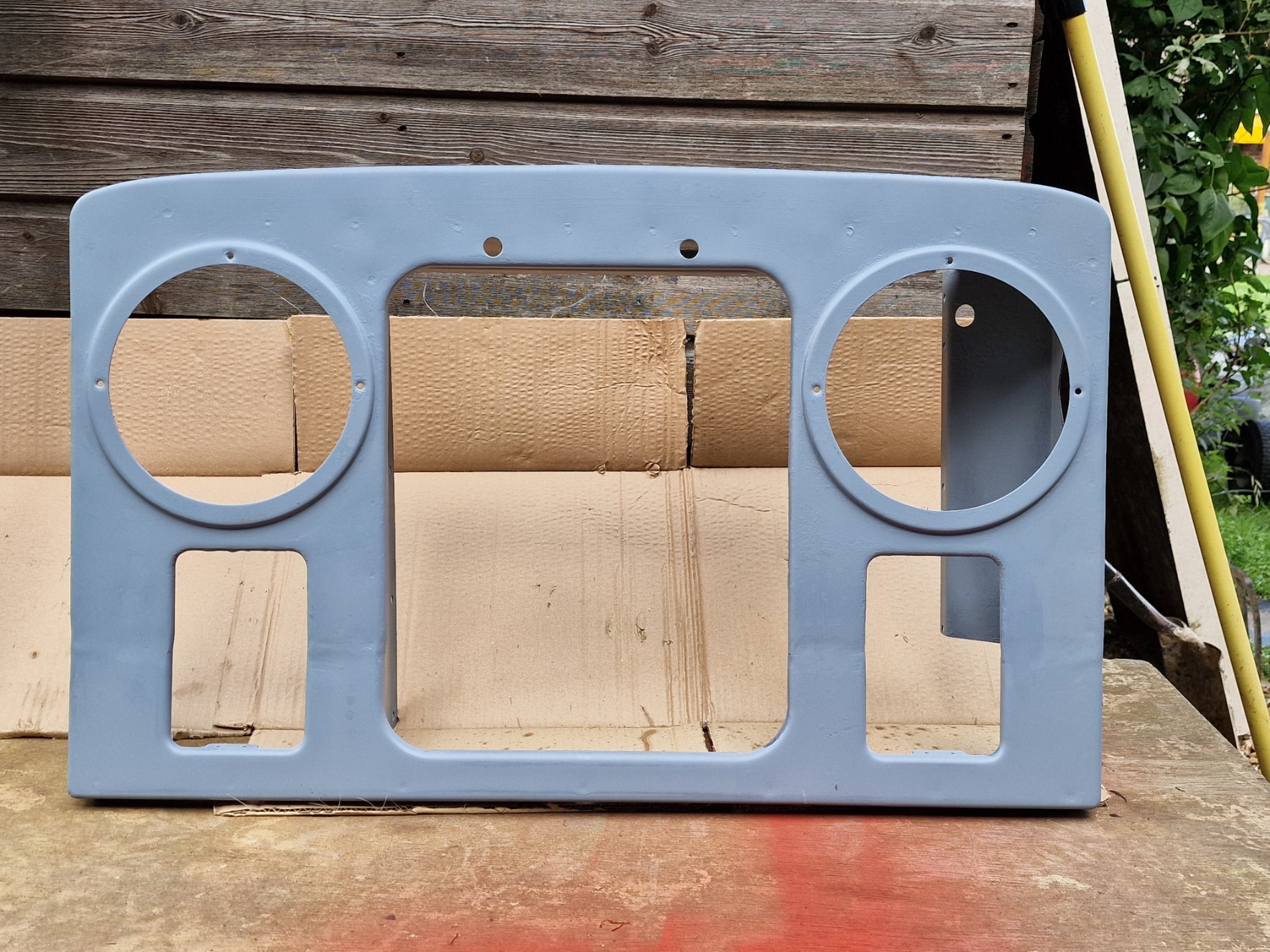
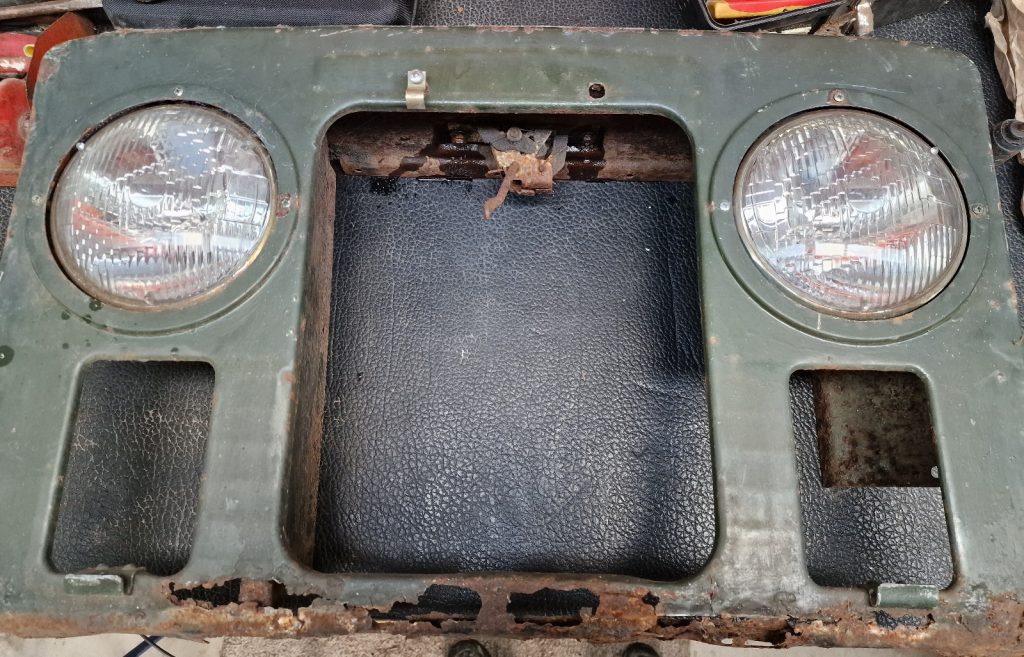
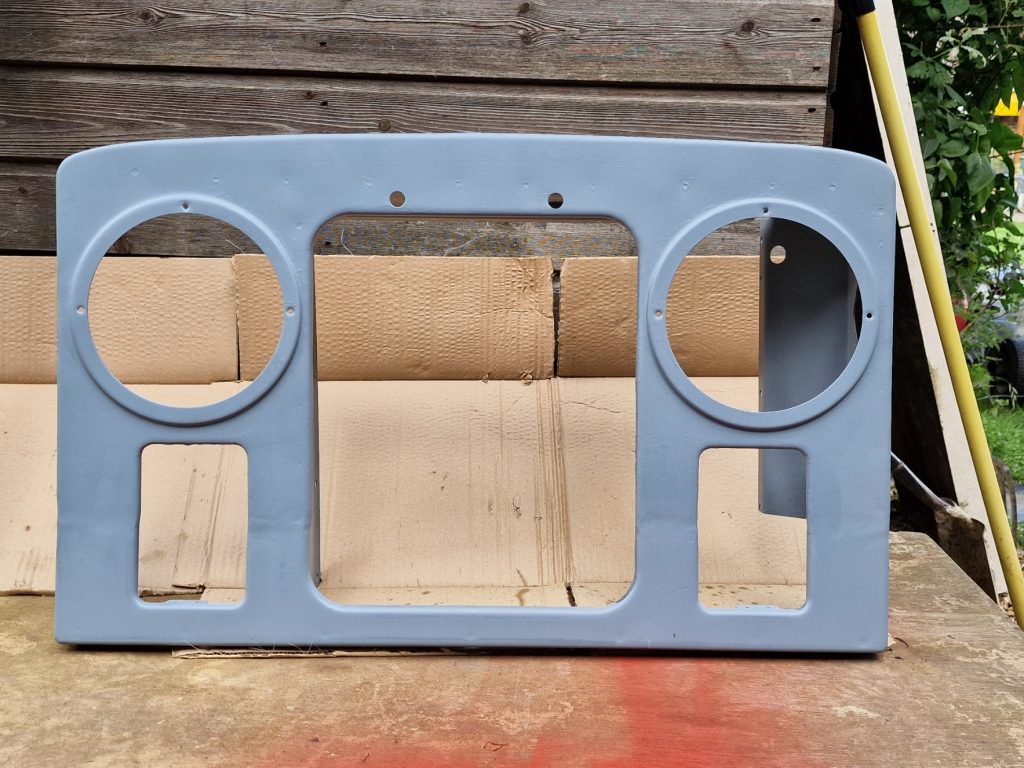
So final part, the front grill. This is the part, when Isobel is on the road, most people will see in their rear view mirror. The bottom of the panel was basically falling apart. Another repair panel from Paintman Panels, off to Lee to have the rot cut off and new panel welded in, really happy with the results. Little bit of fettling to make the welds invisible as much as I can, but a massive improvement.

Ok, so a really long one this time, if you get here well done, and thank you.

Next up there will be lots of sanding, cleaning and perhaps a little filler (but not much I hope). All with the goal of getting everything ready for some paint at the end of August 2024.

Now I have painted 3 cars in my life, 2 with my Dad, a Morris Minor and a Cortina Mk3, which turned out pretty good and one by myself an Escort Mk2, outside, down the side of the house with a rather suspect compressor which to be fair, was a really crap job! So hoping for a much better result when I tackle this one with a newly purchased LVLP spray gun.

So, I have the list of paint and stuff I need, I know where I am getting it from, I know what it will cost me, all I need now is a bit of good weather, a bit of luck and you might, just might, be seeing some nice shinny, Mid Bronze Green body work in the next article.

Thanks for reading and as mentioned, with a little good fortune, some decent weather Isobel might have a body to be proud of.


Bodywork review

If you look at the Plan, I was supposed to do the Engine and Gearbox first, which seemed to make sense when I wrote it. But I also say, the Plan can change but the goal stays the same, well the plan has chaned.

I will “try” to get as much of the body work cleaned, prep’d, repaired and painted before the end of summer 2024, so I can focus on the Engine, Gearbox and other bits over the winter. So, lets get started.

First thing was to strip down all the final bits of the body work, Number plates, Lights and all the galvanised capping’s and other galvanised bits, they will go off to be re-galvanised at some point.

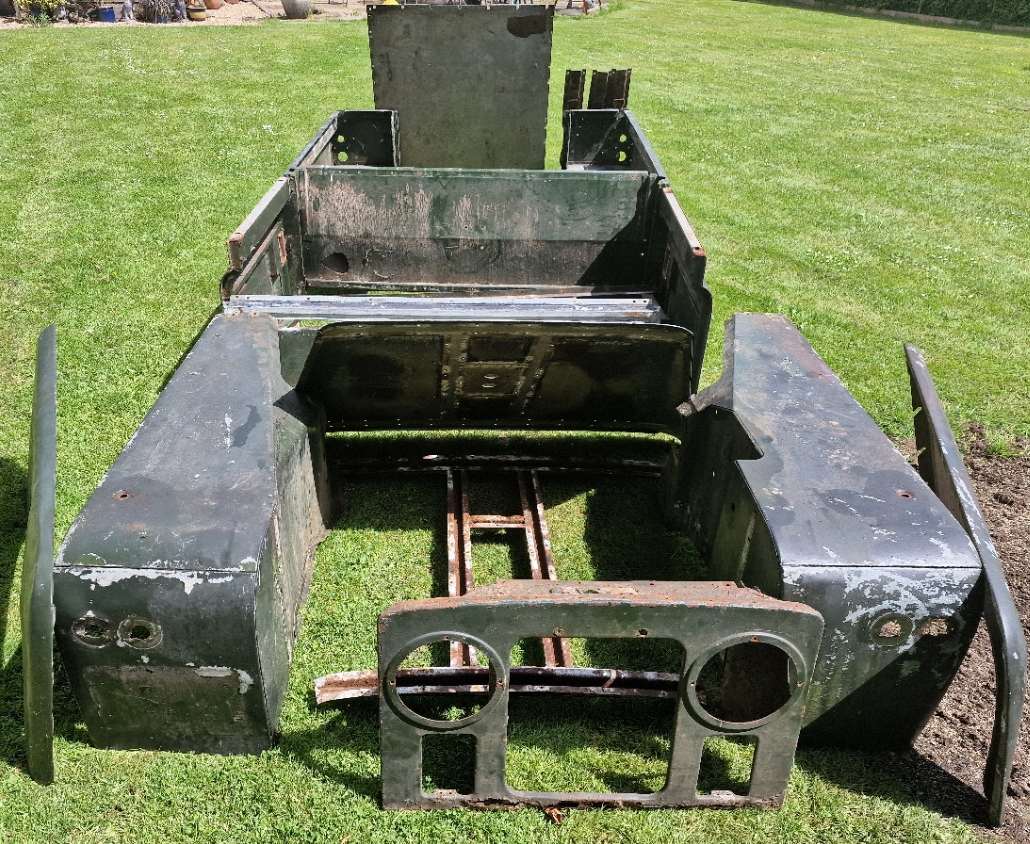
Next step, get everything together, give it all a good jet wash and take a proper look at what needs doing.

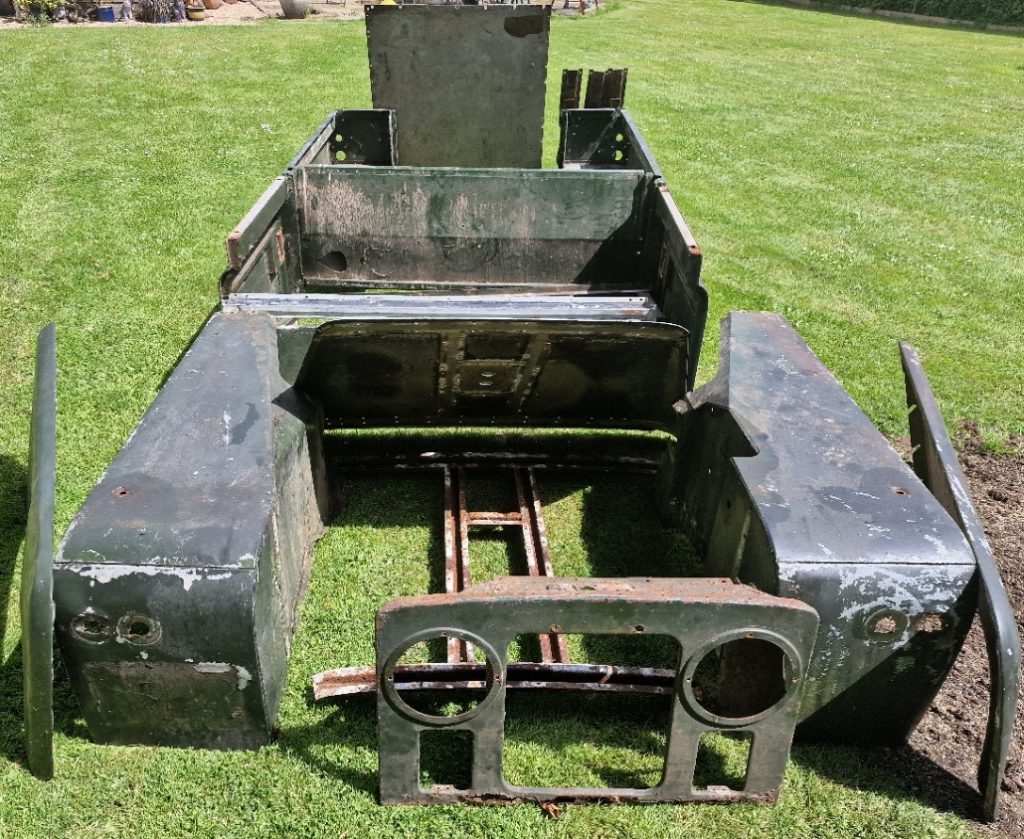
Onto the examination, which soon made it apparent I had a shed load of work to do to get this into a reasonable state. As I have said before, this will not be a concours restoration, but I want it to look good, even with a few blemishes. So what needs to be looked at?

Looking at each part in turn, starting with the doors, but in the picture above, the front grill needs a new piece at the bottom, bought one of those, and that, along with other bits have gone off to be welded on.

Couple of things here, the door frames are rotten at the bottom, both doors, so the frames needs to come off the door skin, which helped with the next problem, there is a big dent in one of the doors.

It is hard to believe sometimes, but there is a huge market for Land Rover spares, so purchased new pieces of frame to weld in. I cant weld, so that went off to someone, will talk about that more later.
Next part is the wings, and as with the doors, a few bits to look at.

Mud guard supports, rotten.
Bit of panel beating.
More panel beating needed.
Wing outers removed

First, mud guard supports have corroded. The body panels are made out of Birmabright, which is a type of Aluminium. Aluminium doesn’t rot/rust! But… when in contact with another type of metal it does corrode as can be seen. They need fixing.

Bottom of one of the wing outers is quite badly miss-shaped / bent. This will need sorting.

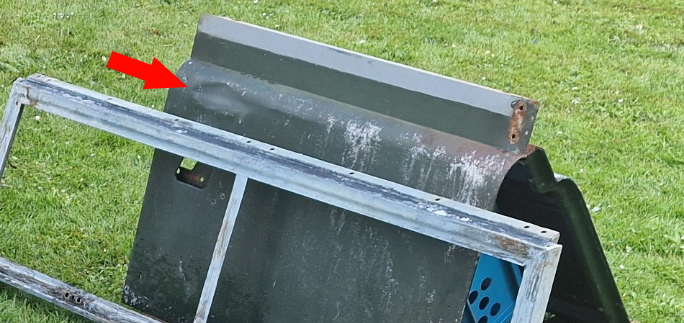
One of the wind outer panels is a little bumpy, worth a look, but will probably need more skills in panel beating than I have, we’ll see.

Best way to do all of this I think is to take the wing outers off, will be easier to work with.

Seat box! mostly OK, but needed to remove a few more bits and pieces and looking at the tool tray, which is steel, not aluminium its pretty nasty, so that comes out.

The plan at the moment is to make a new one, so ordered some mild steel for when I feel like giving that a go.

The bonnet is in pretty good shape, so only intended to remove the spare wheel carrier on the top, which I did, but when I looked at the framing underneath and started to clean it up a little, lots of holes appeared, so that comes off to be repaired.

One thing to think about, taking off all these bits is that there will be a shed load of rivets to put back in, Pop Rivets as well as solid rivets, that’ll be fun and also gives me something to think about, like rivet before painting, rivet after so they stay aluminium colour or more likely a combination of both.

Final part to look at is the Rear Tub.

A few things with the tub. Took the floor out and the braces off, which showed up some corrosion in the floor supports, that will need sorting. the Offside rear quarter of the tub is badly bent, and has several small splits so that will also need sorting. Finally the areas where the tub bolts to the chassis is also badly corroded, they need cutting out and repairing.

All in all, there is loads to do, which is why I have decided to write this part up separately. Next one will be about the repairs. What I wont cover is my failed attempt to strip the paint off. Used some strong paint stripper “professional use only”, which took the top layer off, but noting else, so sanding will be the way.

Next we’ll look at some of the repairs, where a myriad of new skills will be needed. Panel Beating, Annealing, Shrinking, Riveting, Gluing and maybe even a little aluminium welding/brazing.


Steering

Short one this time.

Got the Rear and Front axles on, with some challenges still to sort, the last part is to get the steering on. As with the axles, I had done some work previously on the steering components, I talked earlier about the steering arms and the drop arm on the steering box being a bit of a challenge, which are now sorted. I did have to buy a new drag link arm, the old one where the Ball Joint would not come out turns out that the thread in one end was a little knackered.

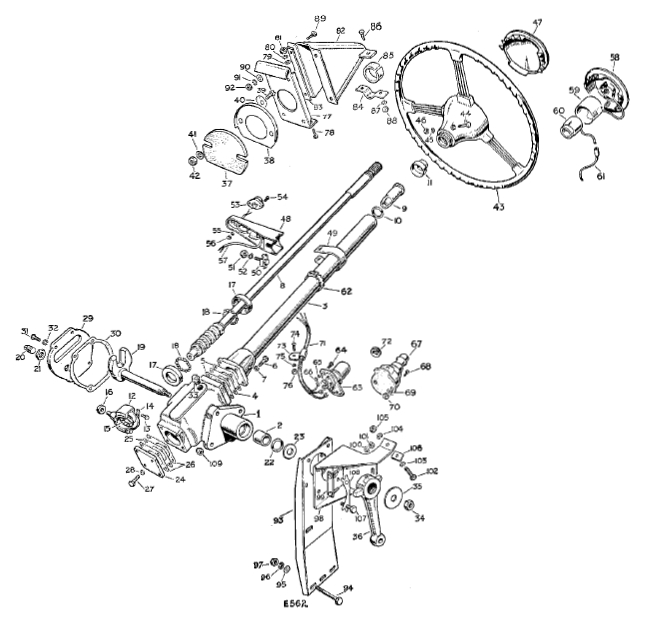
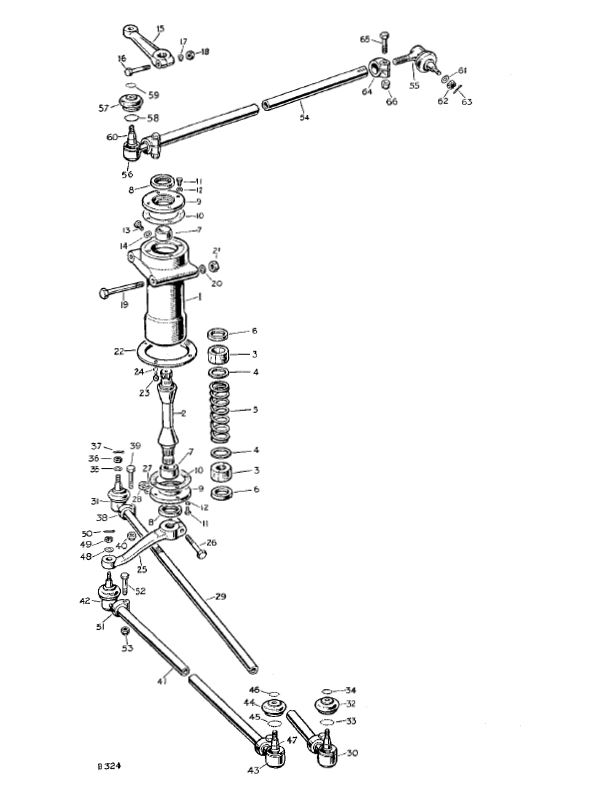
There are three main parts to the steering, the Steering Box, Steering Relay and the Steering Arms.

Now I have not done everything on the steering just yet, but did re-build the steering box and did do some work on the steering relay.

The relay has a huge spring in the middle, and I have read many many stories about this coming out at speed. Even in the Land Rover Green Books (workshop manual and repair and operation manual) they suggest putting a sock over the end to catch it as it escapes.

I didn’t fancy doing this at all for two reasons, 1, while not having the prettiest face in the world, want to keep what little looks I have ideally without the imprint of a spring on my face and 2, more importantly when we got Isobel, the steering all felt pretty solid.

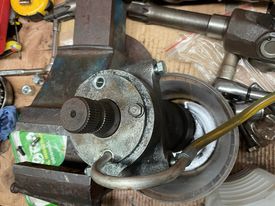
I did however change the seals and gaskets and re-filled it with fresh EP90 oil, which took forever.

If you look closely you can see the little bubble coming out of the top hole. Just had to keep feeding oil over a couple of days until no more air came out.

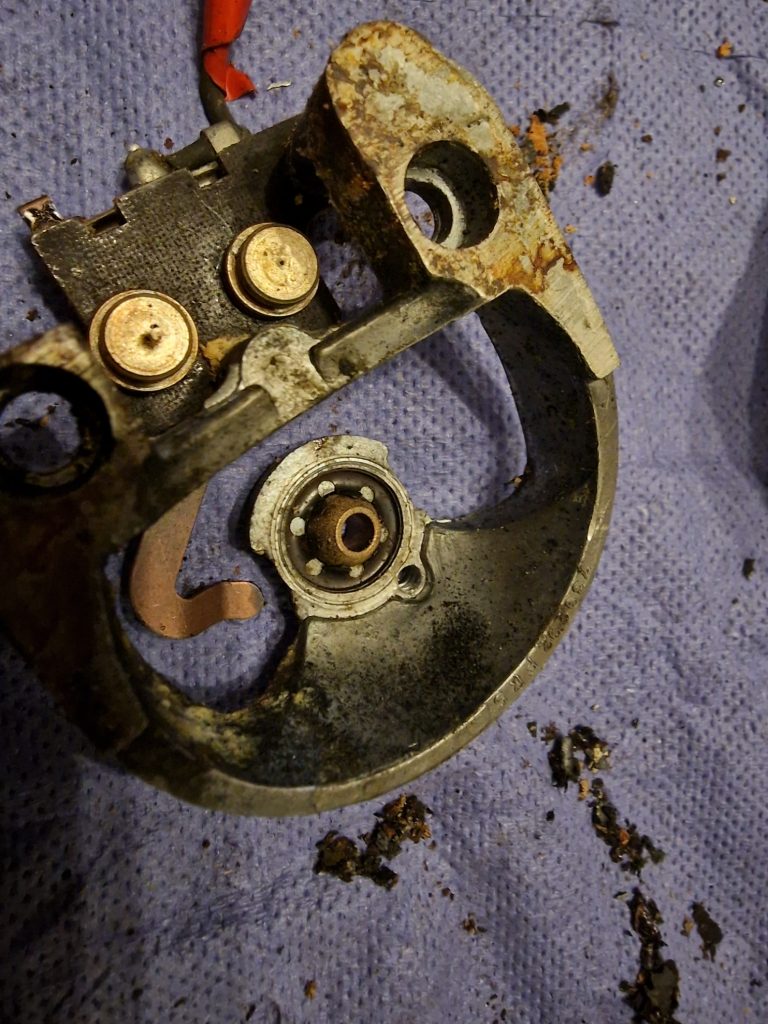
Other than cleaning up the case, painting the bottom support that was pretty much all I did with the relay.

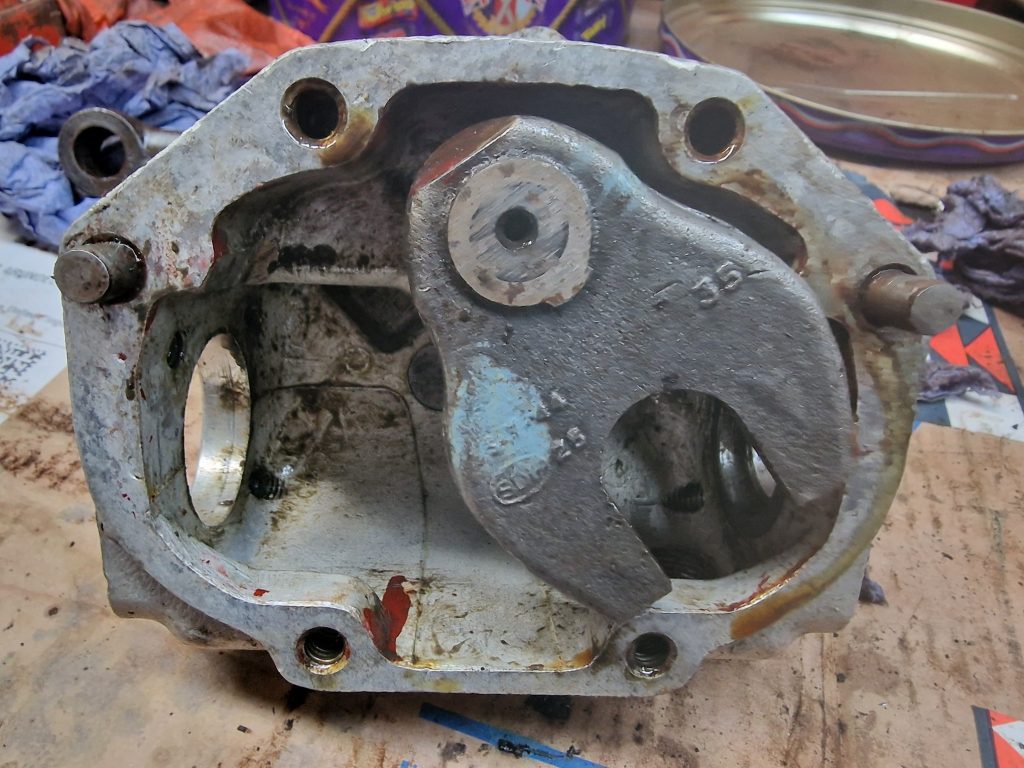
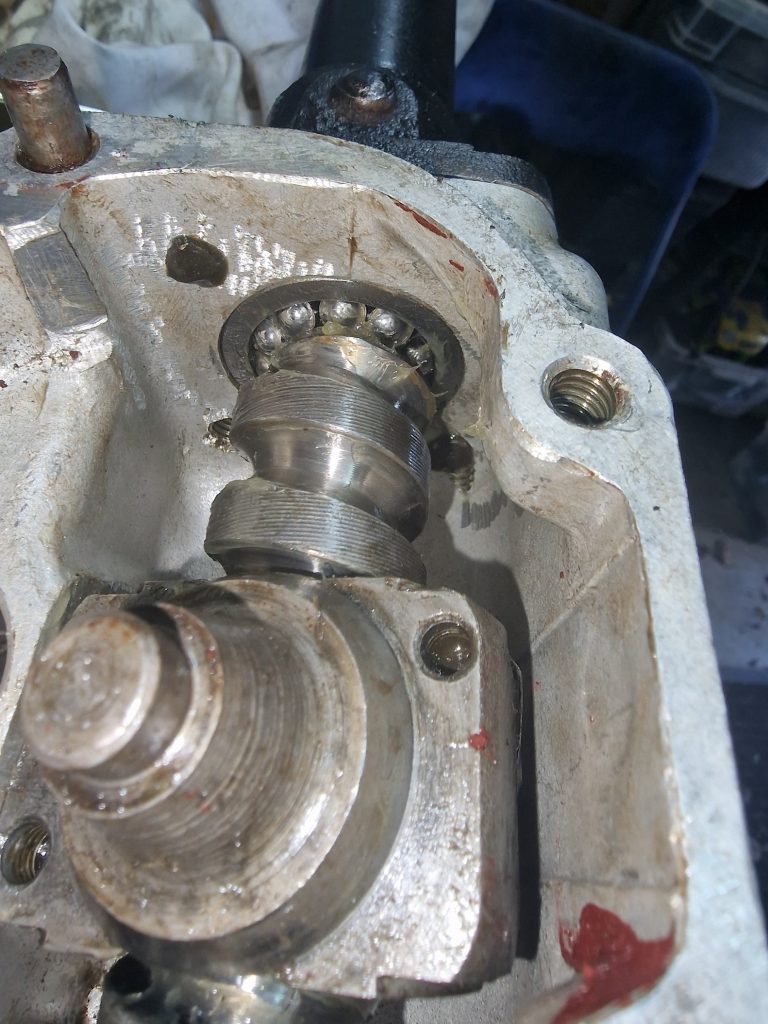
The Steering box on the other hand, I did a full re-build. This was pretty straight forward.

New Bearings, Bearing Races top bottom and new Bearings in the bit that sits on the worm, seals and gaskets fitted. The only challenge was the bearings top and bottom, really fiddly to get them in, and keep them in while everything else goes together.

The final part was to add shims on the bottom plate to ensure that the steering arm turned nicely without any end float. As I say, all pretty straight forward.

Last part was to fit the brackets to the chassis, install the steering box and relay and connect up all the drag links and steering arms.

All this went pretty well, other than buying the wrong length bolts to fix the steering box bracket to the chassis.

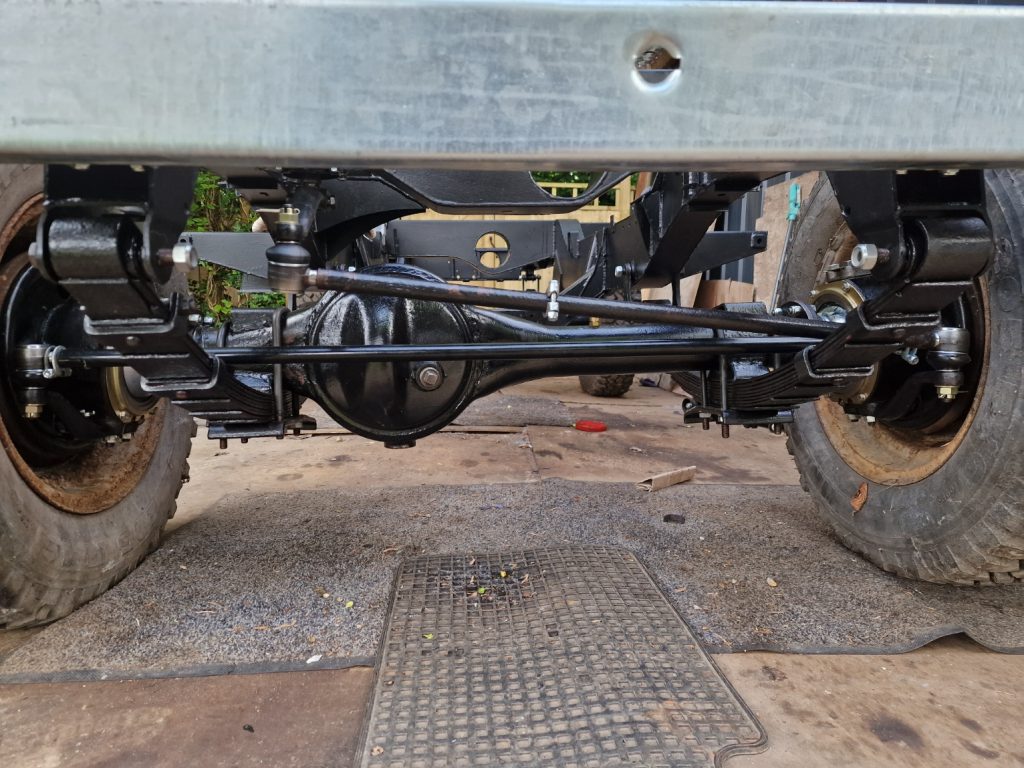
Not only does Isobel have wheels now, can move with a bit of a push and pull, she can now also go round corners.

This pretty much brings this part to a conclusion, there is lots of stuff to finish, everything needs tightening up properly, but this is enough for now. So what next? Well, I should probably look at the engine and gearbox, but what I’m thinking is that I start on the body work. If I can get that sorted, and by sorted I mean stripped, fixed and painted by the end of the summer, I can work on the engine, gearbox and other bits over the winter, but lets see, plans can and do change.

I am guessing it will be some time before the next proper article but am contemplating a To Do list, lets see.


Front Axle

Last time I installed the Rear Axle, this time focusing on the Front Axle and a bit of the steering. so after writing this, left the steering for another one.

Firstly, this was not as straight forward as I was hoping for, and had to reach out to people way more knowledgeable than me.

So before we get to installing the Axle onto the Chassis, things had to be taken apart, cleaned up, painted and re-built. First thing is to install the Bearings into the new Swivels and a new Railko bush in the top of the swivel, the picture on the left shows the new Swivel ready to go, the picture on the right, the old swivel and the new one with the bearings and Railko bush fitted. Its a pretty straight forward process, bearing driver tool, copper hammer and some gentle persuasion.

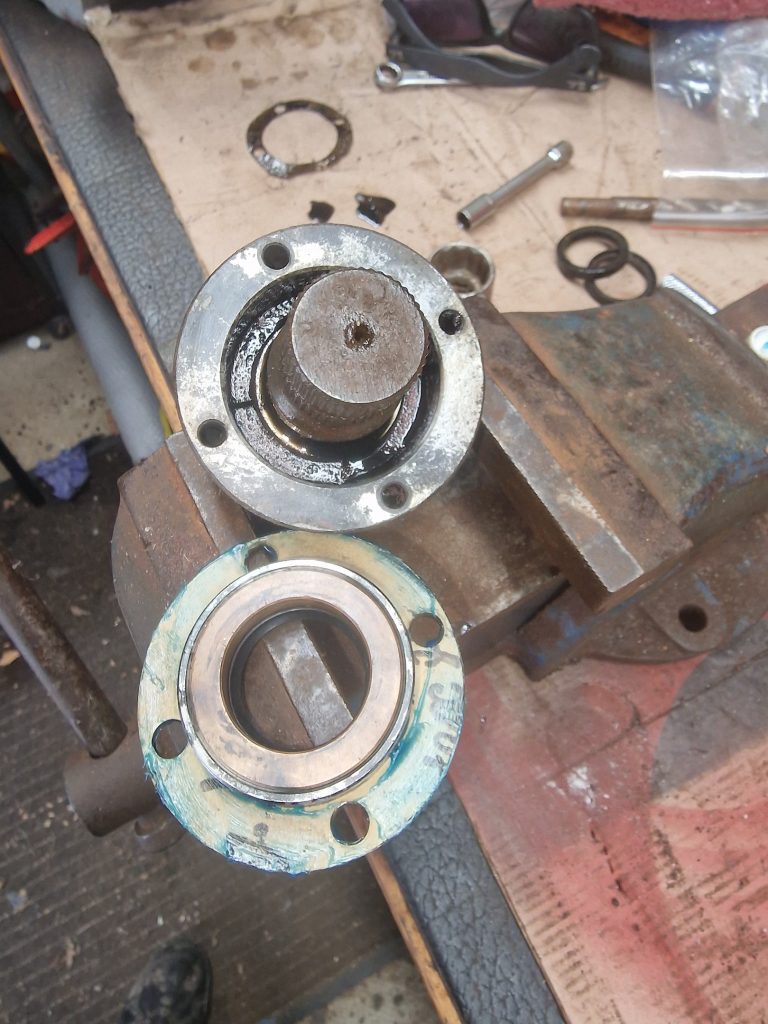
Next bit is the half shaft. This is the part that gets the power from the Differential to the wheels. Inside the Swivel, is a universal joint separating the half shaft into 2 pieces allowing the front wheels to drive and steer, pretty important as it goes!

First thing is to install the Cone distance piece, Bearing Race (for the big bearing in the back of the swivel. picture above) and the final part, the bit that sits in the seal which is installed into the axle (no picture of that). The Bearing race and the other bit are a tight push fit, so heat them and drop the half shaft onto a scaffold pole to drive them home. The cone distance piece is a slide on fit so no need for heat.

The Universal Joints are pretty easy to fit. The only real challenge was making sure all the roller bearings stay in place, oh, and when you decide to buy a new half shaft part as one of yours is showing some wear and the circlips wont go into the grooves, annoying, so have to use the old one.

OK, so that’s all the bits ready to be assembled. Not going to cover the axle casing, its pretty much same as the rear one, just shorter. So, first thing, get the re-furbished springs on. This is the same as the rears pretty much, just shorter and lighter, thankfully.

Next up, put the axle in-place. Now, I started to assemble the axle in the workshop, but pretty soon realised this thing is getting really heavy, so called Reuben (Son No# 3) for some help to carry it to the chassis and place it onto the springs. Even that was not easy, but we got it there.

Got the Axle on, springs loosely bolted to the chassis and the axle secured to the springs with new ubolts on and lightly tightened up.

Looking good! Yep, just a shame about what happened next. Now I would love to leave you in suspense, but cant be arsed, so here goes, sorry its a bit long.

With the Axle on, swivel housings on, the next step is to slide the half shafts trough the swivel housing, into the axle case and locate the splines into the Differential. Simple, well one side was, the other side is where it started to go horribly wrong. I could not get the half shaft to sit centrally in the axle case, no matter what I did, so much so that I ended up breaking a rubber seal that is in the end of the axle.

I tried everything, took everything of the axle, swivels, differential to see what was wrong, nothing! all looks perfect and everything fits together perfectly when off the axle case. Cut a long story short, I asked the Series 2 club forum, which while helpful started to make me think that my axle case might actually be bent.

Now, my brother Martin, works for a wire supply company so he popped over to have a look at the wiring loom to see if it is worth making a new one and while here I tried the half shaft again, and guess what!! it went straight in and was perfect!! Bloody hell if only everything else was on that needed to be so I didn’t need to take it out again. Also, My eldest son, who knows Josh at the Spur pub, who did my wheel hub studs knows someone who is a Land Rover geek, who my Son happened to meet one evening. Fergi, the LR guru said to Daniel, if you’re Dad every needs help get him to call me….. So no time like the present I did and Fergi kindly offered to pop round to take a look.

By the time he arrived, I had taken it all apart, fitted all the bits that needed to be there and guess what, it wont go back in properly again. FFS!! Even Fergi, Oh, who turned up in an amazing Land Rover defender (wont elaborate any more on that) had a go, and was as confused as me. Only good thing, I was not being a total idiot and not done something stupid. While somewhat baffled, Fergi took the “phone a friend” option who I assume made a suggestion which finally got it back in again, trouble was, we had taken all the other bits off again 🙂

Anyway, later that day I replicated what Fergi did and got it fitted with some success.

This picture is not the troublesome side, didn’t bother taking a picture of that one, was too pissed off with it.

It looks the same as this, just the other way around.

At this stage, was all good, half shaft turned nicely, it all looked good and I was feeling confident it was sorted.

So, onto the other parts, pretty much a repeat of the rear axle now, Stub Axle with the brake back plate and then the Wheel Hub. All easy peasy….. So, lesson learned, never ever assume something with a 59 year old land rover that’s not moved in the last 20 years is going to be straight forward and easy, in my very limited experience its not.

Because!!! guess what, after getting everything on that side the half shaft went tight again, not so tight it wont turn, but certainly tighter that all the other corners.

Anyway, that’s it, will have to re-visit this at some point but for now its good enough to move on. What I ended up with, is something that kinda resembles a Land Rover that moves! Which actually will allow me to try something Fergi suggested with the troublesome corner, which is to try the Long Rear half shaft in the front as a test. Someone on the Series 2 Club forum also suggested this to make sure everything is straight.

She has Wheels
Unnecessary, but also has a front bumper

You can see I also have some of the steering parts fitted, but not covering that here, will write a short (er) one on that in a bit.

As always, thanks for reading, hope you enjoy it and its not putting you off doing something similar. With all the frustration, it is worth it, it is great fun and not only that you get to meet some amazing people along the way.


Rear Axle

Told you it was a little out of order!

Now the chassis is ready, I can start to think about adding stuff to it. The first of these will be the Rear Axle and Rear Suspension.

I did this some time ago, but the Rear Axle has been completely re-built, new Bearings, seals and gaskets and distance pieces. These are small collars that sit on the Hub Bearing sleeve, they are a press fit and normally put on with a press, which I dont have.

So, I boiled the new distance pieces in old oil, metal expands when hot yes? well yes it does and by leaving it to cook for long enough they went on without any issue at all.

Another new skill to add!

Next was to fit new bearings into each of the Hubs. I had purchased complete OEM bearing kits, that have everything I needed, and some good quality bearings so didn’t want to mess this up.

Using a combination of a Bearing tool and old bearing races I got them all in, two in each hub and without too much hassle, also got to use my new copper hammer, which is bloody expensive and probably too big for the job, never mind.. Size does matter.

So now its just a case of putting it all together, Hub Bearing Sleeve onto the axle, and break back plates bolted on, with nice new BZP bolts (which I had forgotten to order in my previous nut and bolt order) and locked in place with spring washers and locking plates.

I chose not to fit any of the new brake parts just yet, Isobel is not going anywhere for a while, so would leave them in their boxes until later.
Next was to slide on the newly re-furbished hubs with new bearings, bearing nuts and various washers and locking washers.

And finally set the end float, which I got pretty much sorted.

What I didn’t do was to bend the lock washer, I will re-set the bearing end float when the axles are all on the chassis.

In with the axle shaft and on with the drive member. I should have put a felt washer in the end of this and torqued everything up properly, but as with the bearing end float will re do all this when the axles are all done.
So, have one completed Axle, apart from the brakes, and new brake drums. Will use the old drums for now, no point getting the new ones rusty.

So, next… Get it on the chassis. Now I said this was out of order, I did this axle before the chassis had even arrived, but seems to make sense in this order!

Now, I had done this part before, before I realised I needed to change the bushes, so this time it went a little easier.
Basic process, hang the springs from one end, slide in the axle and then with a jack holding up the chassis, drop the chassis down until the other end of the springs can be attached.
Once the springs are on, can then bolt the axle to the springs with the U-Bolts and bottom plate, with original lockers on the nuts rather than nylocs.

Did get the wheels on for a short while, but there is other stuff to do, before its all ready to be tightened.

  • Put shock absorbers on
  • Set the springs (Distance from axle to chassis)
  • Torque all the hanger bolts & U-Bolts.
  • Put the Check Straps on
  • and of course, when ready install all the brake stuff (must remember not to forget that part 🙂 ).

So that’s it, rear axle on. Not finished, but enough to move on with the Front Axle, which I have not re-built yet.


Land Rover Series Chassis

New Richards Chassis

Were going to go a little out of sequence now, in terms if what has been worked on and the order I write about them.

So the re-build properly starts, and it starts with the Chassis that I purchased from Richards Chassis, which was delivered on time and looked great.

Now while I am expecting it to be pretty much perfect, I know from reading that a little bit of work is needed to tidy it up.

Chassis Preparation

To start with, the Galvanize process can leave little bits sticking out, some rough patches that need some tidying.

My Chassis had a few of these, the biggest one was on the rear cross member, which is perhaps the only part on permanent show.

Some very gentle sanding with a disk, without going all the way through the Galv and have it all nice and smooth.

Chassis Painting

Next step was to paint it. I’ve been asked why, when it is protected by Galvanize? The answer is simple, I like the look of them in black and it also provides another layer of protection, want this one to last longer than the one that came off.

First had to find a way to paint it all over, so concocted a frame thingy to hang it from.

A little bit of a bodge, and some handy rope work from Ex-Navy son Daniel and help from the other boys we got it suspended inside a marquee so I could get on with it regardless of the crappy weather we are having.

1st thing was to degrease it, so used FX Degreaser from Buzzweld, who I also got the paint from.

The paint I used was from Buzzweld, called GIO (Glav in One). The normal process, as I understand for painting Galz is a several step process, Degrease, T-Wash, Prime and then paint.

This GIO stuff, is supposed to go straight on, after degteasing. Asked on one of the many forums for other peoples experience, loads came back as gave a thumbs up, so that’s what I used.

I wanted to spray it, which I tried but had mixed success, nothing to do with the paint, more that I probably didn’t thin it properly, it was too cold and/or the gun not setup properly.

Ended up hand painting it, and after several coats was pretty happy with the results.

Didn’t just paint the outside, did the inside aswell.

The original chassis rusted from the inside out probably due to the number of holes and the intended use of a Land Rover, water, mud and in my Land Rovers case, case straw all gets inside the chassis and rots it from the inside out.

Not Buzzweld this time, but Dinitrol cavity wax. Loads of the stuff injected into the chassis using various methods, each as equally messy as the next, but got loads in and a good sign, loads dripping out onto the floor, but should now be nicely coated.

Chassis Bushes

The final challenge with the chassis was the Bushes, it came supplied with Poly Bushes as opposed to the Metal bushes that are original. Now, that’s not an issue except that I have new rear springs with Metal Bushes and refurbished the front springs with new Metal bushes, and they cant be mixed.

So decision made, poly bushes will come out and replaced with metal ones, not only does that mean I dont need to change the spring bushes and buy loads of extra poly bushes, it is more original, and didn’t like the bright yellow of the ones supplied

Now, getting the poly bushes out is not a big deal, however getting the metal ones in can be a bit of a challenge as they are a very tight fit and because of the way they work.

There is an outer metal sleeve, with rubber glued in and another metal sleeve on the inside to take the bolts. This inner sleeve is slightly wider that the outer one, can cannot have pressure applied as it will break the bonded rubber.
So, a tool needed, this time instead of spending money, well lots of money anyway, I made one. One of the other parts I have worked on is the steering box which has two bearing races in, which I have replaced, so have two old ones (will show that in a later article), these fitted perfectly over the inner sleeve and sat on the outer sleeve. So with a bit of M12 threaded bar, some nuts and plate washers, made a tool to pull them in.

Even with this tool, which worked really well, it took an hour for each of the two front ones, and 30 minutes for each of the the rear two, but they are in after copious amounts of copper grease and a F Off Great big extension bar in the socket, 3 snapped threaded rods and many many knackered nuts later, all sorted.

I probably should have done this before painting, but didn’t realise it was a problem until I tried to fit the rear springs, hey ho, bit of touching up of the paint, I now have a chassis ready to build everything up on.


Axles, Steering and Suspension

When I started writing this blog, I added a quote, “Plans can change but the goal stays the same” and that has surely proven true.

My original plan was to complete the rear axle, move onto the front and other stuff. As things stand the Axles are still both in bits, albeit with a shelf full of new parts. I have changed the plan a little partly due to circumstance, but mostly procrastination and in-decision on my part. What couldn’t I decide on, well however stupid it sounds, the Nuts and Bolts. Should I clean and zinc plate the ones I have, should I buy new, and if I bough new which ones do I need, BSF, BSW, UNC, UNF? seems I have a selection of all.

So decision finally made, will buy mostly new and re-use some of the more special ones which I will Zinc plate. I purchased a selection of BSF, BSF, UNF, UNC nuts & bolts, in various sizes so I could make sure I knew exactly what I had, and after some time getting a list of all the ones I should have, placed and order with Namrick, an online store with a shop not far from me, in Hove. Waiting on those to arrive.

ItemQuantityItemQuantity
1/4″ BSF x 1″ H.T. Bolt BZP23/8″ UNF ‘P’ Type Nyloc Nut – Pack of 10..BZP1
3/8″ BSF x 1-1/4″ H.T. Bolt BZP101/4″ UNF Full Nut – Pack of 10..BZP2
3/8″ BSF x 1-1/2″ H.T. Bolt BZP105/16″ UNF ‘P’ Type Nyloc Nut – Pack of 10..BZP5
1/4″ UNF x 1″ H.T. Bolt BZP105/16″ UNF Full Nut – Pack of 10..BZP2
5/16″ UNF x 1-1/2″ H.T. Bolt BZP203/8″ UNF Full Nut – Pack of 10..BZP1
5/16″ UNF x 3-1/4″ H.T. Bolt BZP107/16″ UNF Full Nut – Pack of 10..BZP1
3/8″ UNF x 4″ H.T. Bolt BZP27/16″ UNF ‘P’ Type Nyloc Nut – Pack of 10..BZP1
5/16″ UNF x 3-1/2″ H.T. Bolt BZP21/4″ UNF ‘P’ Type Nyloc Nut – Pack of 10..BZP1
7/16″ UNF x 2-1/4″ H.T. Bolt BZP21/4″ BSF x 3/8″ H.T. Hex Set BZP10
5/16″ BSF Nyloc Nut BZP103/8″ BSF x 1″ H.T. Hex Set BZP24
1/4″ BSF Nyloc Nut BZP101/4″ UNF x 5/8″ H.T. Set Screw BZP10
1/4″ BSF Half Nut BZP23/8″ UNF x 3/4″ H.T. Set Screw BZP10
3/8″ BSF Full Nut BZP23Mixed Imperial Spring Washers Rect Sect. BZP1
Mixed Imperial Plain Washers ‘T’3 Hvy BZP2

While waiting for the nuts, bolts, washers to arrive I have decided to revise the plan.

I am now going to prepare everything I need to build a completely re-furbished running chassis, including Axles, Suspension and Steering. So, I started looking at some other bits to start working on. Starting with the Front Axles.

Now, the Front axles have a universal join that sits inside the swivel’s. These shafts also have a bearing inner race and a bearing retaining collar, which also acts as an Oil seal.

First thing is to take out the UJ, to separate the shafts. Pretty straight forward.

Now I am pleased I bought new bearings and collars for this, looking at them they dont look in the best condition (red arrows).

First off, the retaining collar. I have done this before on the front and rear stub axles. It means splitting it with a cold chisel around the outside until it starts to move.
Being carful not to mark the shaft.

Next, the bearing inner race. This I found was a little harder, literarily harder, the cold chisel didn’t even make a mark. Didn’t get a picture of this part but basically it meant taking an angle grinder to it, both weakening it and heating it at the same time. Little nervously, finally got them both off.

That’s all I did with the axles, they are now ready to be re-assembled.

Next part then, the steering arms. There are three of them, one from the steering box to the steering relay, one from the relay to a wheel, and one between both wheels.

Better with pictures I think! Oh, now I’ve added it maybe not.

The three bars have Ball joints, one at each end, one with a right hand thread, one with a left hand thread and they are secured with little clamps around the bar.

Now, all the ball joints came out except 2. After 3 weeks of feeding the threads with WD40, other releasing agents, applying heat, using a hammer they finally came out, after loads of grief and a broken ring spanner I was using as a lever.

But they are out, the bars are cleaned up with a nice fresh coat of paint, ready for re-assembly. Haven’t taken a picture of the painted versions yet, but trust me they are shiny black.

Next job, onto the steering box and steering relay box. The relay box I have already talked about, the steering box will be easy. OMG, made that mistake again, its never easy, especially if you think it will be.

The steering box has what’s called a drop arm on it, and after many attempts to get it off, a quick google search realised that a special tool is needed, and even then it may not come off. Now at £90 for some online, I was not going to pay that for something that might not actually do the job. So, eBay, £30, and I get the tool, and 2 minutes later off came the arm. Anyone want to buy a drop arm removal tool? will likely never use it again.

Cleaned up the steering box, degreased all the metal work, flappy wheeled the bits too big the blast cabinet, sand blasted the rest and got a coat of oxide and black paint on.

So that’s the steering column and steering box pretty much ready to be re-built.

Final part to get everything ready for the re-build is the suspension. Now, the rear leaf springs were horrible, broken springs, really rusty so they will be replaced. the front ones however didn’t look too bad, apart from the little nick from the angle grinder when I took them off, so decided to have a go a re-furbishing them.

So took them apart, spent ages cleaning them up, removing the bushes, a coat of rust converter and a coat of oxide on, ready to be re-assembled. Now I will use these to start but will likely replace them before Isobel is actually on the road.

So I have ended up with a load of partially re-furbished, partly finished bits, trust me, its part of the newly revised plan. Now that last picture shows the leaf springs resting on the Old Chassis, which as it turns out is the original.

This brings me to the final part of this article (its been a long one) and the plan. What I have done is spend a small shed load of money on another, well a few new parts orders, along with the biggest purchase to-date, a Brand Spanking New Galvanised Chassis from Richards, which should be arriving in 4 weeks or so, and because I could show I had cut off the original dumb iron, with the VIN number on, and I have the V5, they will stamp the new chassis with the same VIN. That’s cool.

The other orders are for parts to re-furbish all the bits I have been working on and replace some parts (rear leaf springs) that are too far gone. I went to my preferred supplier first, Paddock Spares, and for a few bits they didn’t seem to have, John Craddock Spares.

So this is what I purchased from Craddock Spares

ItemQuantityItemQuantity
Dowel for 9 Leaf Front Spring. (243131)2JC3 Lock Washer – for U Bolts 1952-64. (234734)4
Spring and Shackle Bush Series Vehicles (548205)4JC3 Plate for Check Strap. (219574)4

And from Paddock Spare, a little bit more.

ItemQuantityItemQuantity
Steering ArmsU Bolt (Front Axle) (562641)1
Ball Joint Assembly (R.H. Thread) (608464)3U Bolt (Front Axle) (562637)3
Ball Joint Assembly (L.H. Thread) (320902)3U Bolt (Rear Axle) (242127)4
Steering Relay BoxCheck Strap for L.H. (237100)1
Oil Seal for shaft (213340)2Check Strap for R.H. (274469)1
Joint washer for retainer (90624436)2Rubber Buffer for Axles (241380)4
Steering BoxRear Spring (Off Side) (517588G)1
Steering Box Service Kit (DA1236)1Rear Spring (Near Side) (517589G)1
SuspensionShock Absorber Front (RTC4230)2
Shackle Plate Tapped (537687)1Shock Absorber Rear (RTC4232)2
Shackle Plate Plain (270520)1Shock absorber top bolt and nut (NRC7064)4
Shackle Pin Front end of Front Spring (537741)2Washer (243022)4
Shackle Pin Rear end of Front Spring (537742)4Split Pin (4063)4
Shackle Pin Rear end of Rear Spring (537740)4Plain Washer (264024)10
Shackle Pin Front end of Rear Spring (537741)2Bottom Plate for Rear Spring (LH) (NRC3898)1

Now with that on order I should have everything I need to re-build everything to give me a running chassis, with Axles, Steering and Suspension. As I re-build bits, they will go straight onto the new chassis, after the chassis has been painted.

To finish off, I mentioned before I had bought a Zinc Plating kit, originally for nuts and bolts, but as mentioned I have ordered new. However, there are many other bits that would look good Zinc Plated. So with the weather being crap, and waiting on all the new stuff to arrive I had a go.

The picture on the left, shows one of the steering arm clamps after I cleaned it, and on the right, after my first attempt at plating. Not perfect, but actually pretty good.

This is the Zinc plating setup. I purchased a 5L kit from Gateros Plating and some extra bits form Amazon, 10L tubs, fish tank heaters (Solutions need to be around 20oC to work) and 25L of distilled water, need some more of that already (my maths let me down a little).

While pleased with the first result, some lessons learned. Wait till the weather is warmer, took ages to get the solutions upto temperature, should have bought a 10L kit, and should have bought 4 fish tank heaters instead of 3. Oh, and the final thing, as everyone says, make sure the parts to be plated are super clean.

That I guess brings this article to a conclusion. Lots been going on, but now need to wait for all the parts to be delivered, along with the new chassis and ideally some warmer weather so I can spray the chassis and give all the painted parts another coat of paint.

As always, thanks for reading, sorry this one was a long one. Will be a while until the next, which according to the revised plan should be a good one. Till then, bye for now.