Articles

Electrics continued….

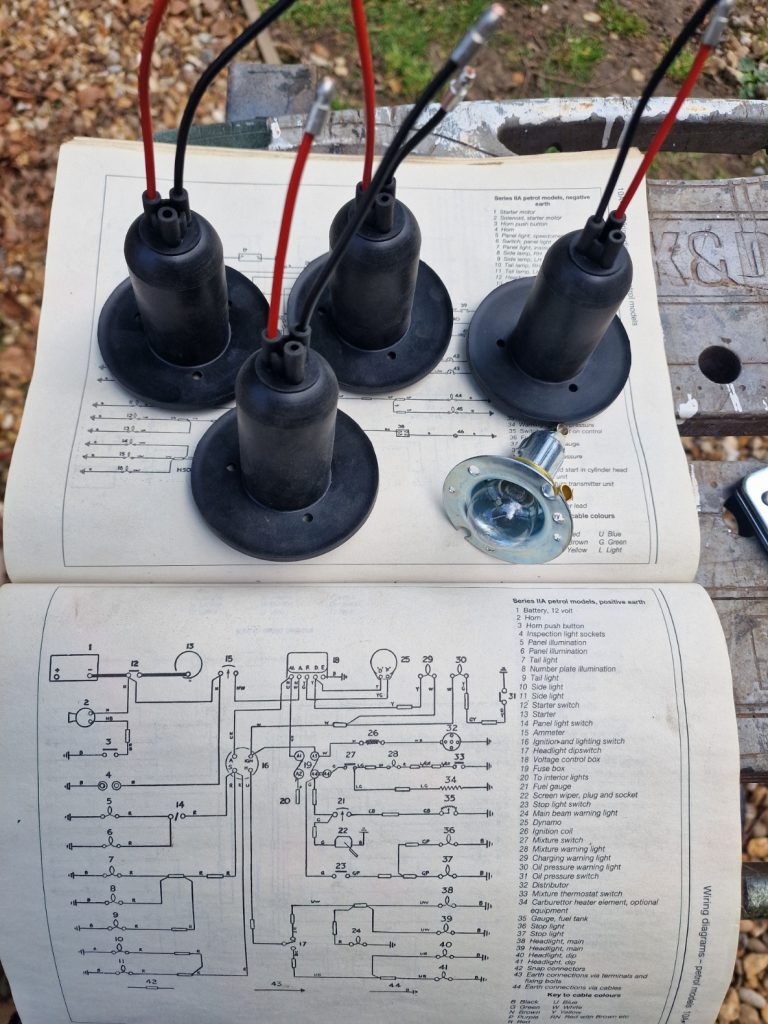
When I say continued, maybe I should say it will continue.. I started looking at the wiring loom today, partly to make sure I position the components, Voltage Regulator Fuse Holder and Ignition Coil in the right places, but also to start to understand where everything goes. That was of course after I took the wife and 2 remaining “kids” at home out for Breakfast, which I think we have found our new favorite breakfast haunt, Swanborne Lake Cafe in Arundel.

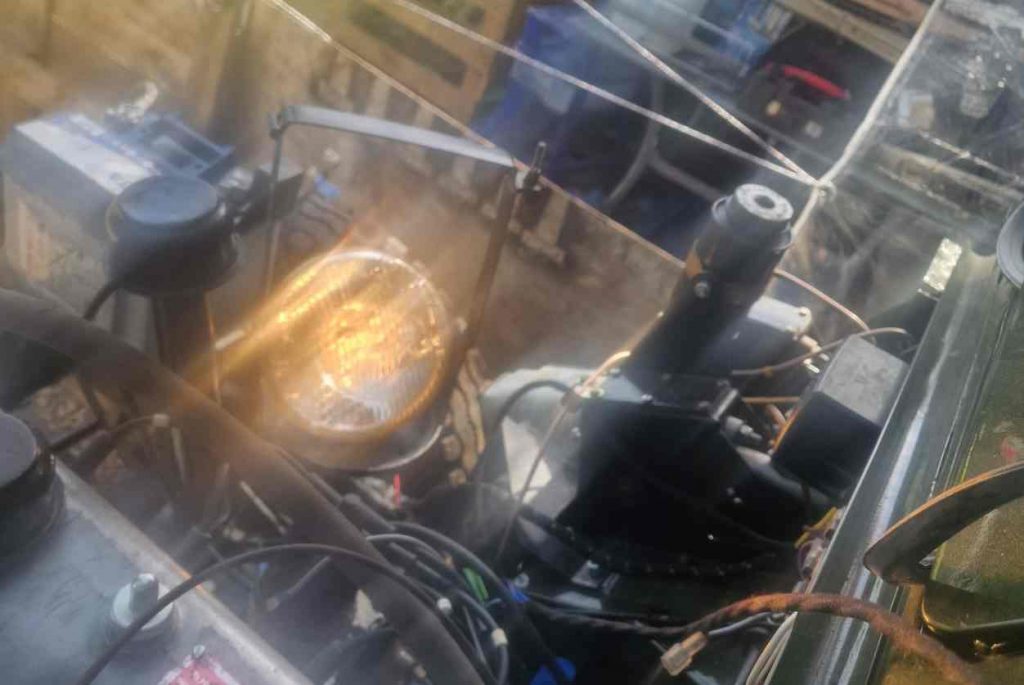
BUT!! before I get into all of that. I did mention I “might” try to see if the engine turnsover. Well I did, and while not very exciting for most… was a great moment of relief for me, to know that at the very least, it does turnover on the starter motor.

I did remove the spark plugs and also removed the rocker cover before trying, and I also squirted a bit of oil into the piston bores and over the rocker, just made me feel better.

Guess what? it sounds like an old engine turning over. Hopefully next time I try this, it fires up and goes brumm brumm, and does not sound like an old engine.

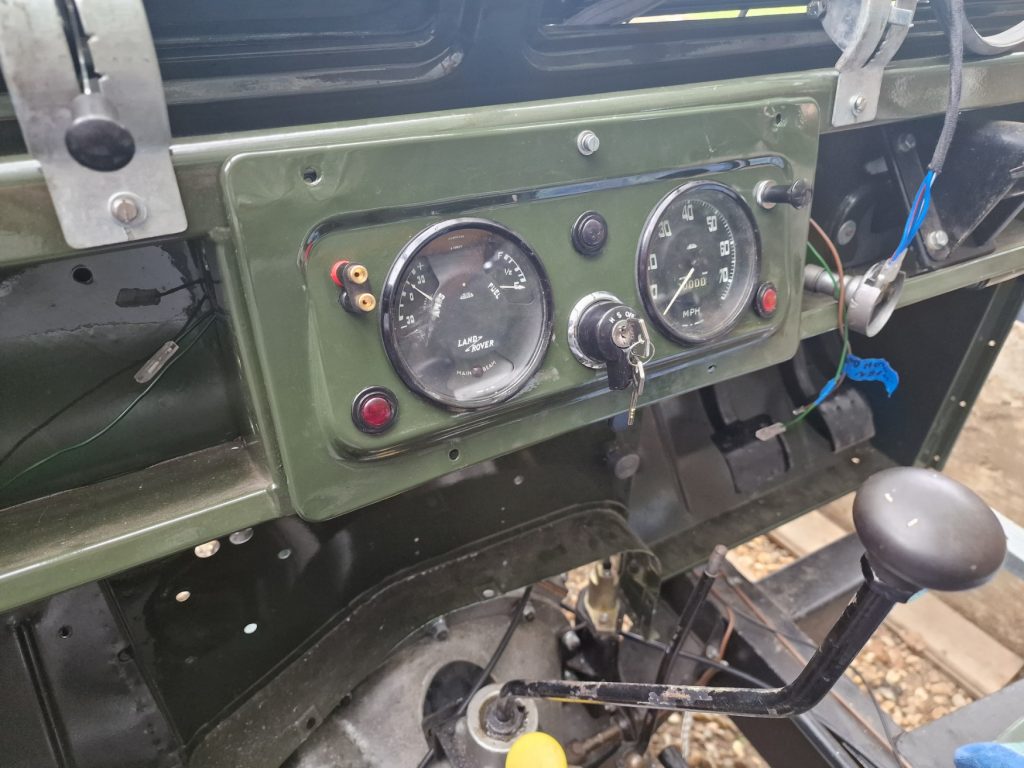
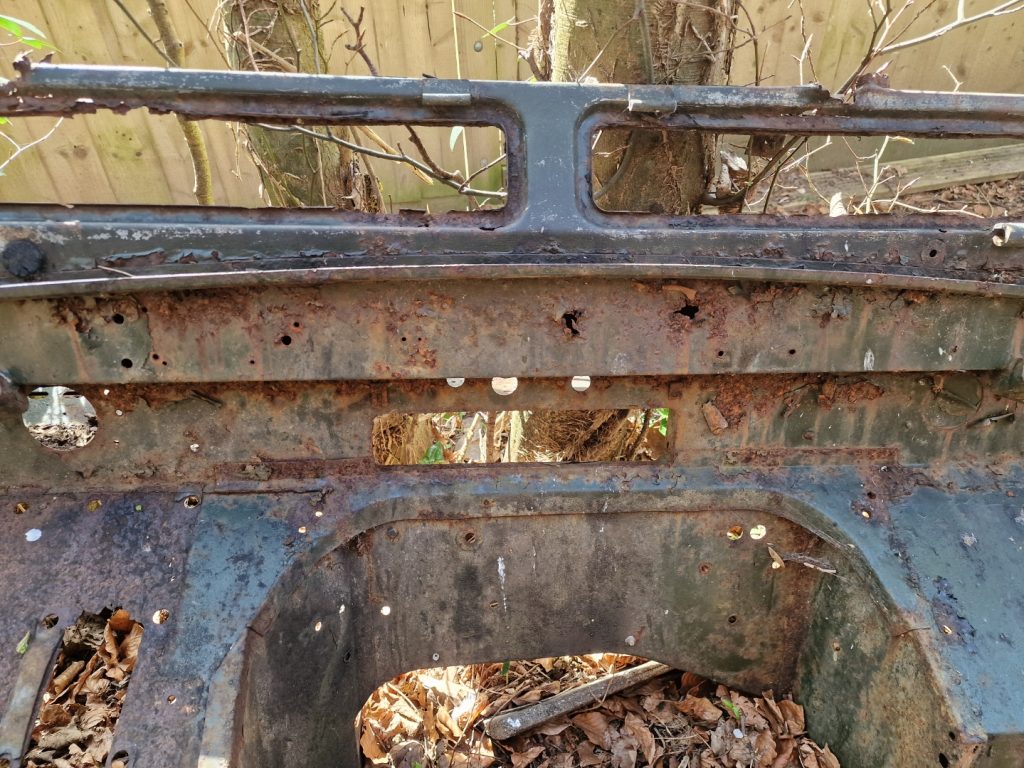
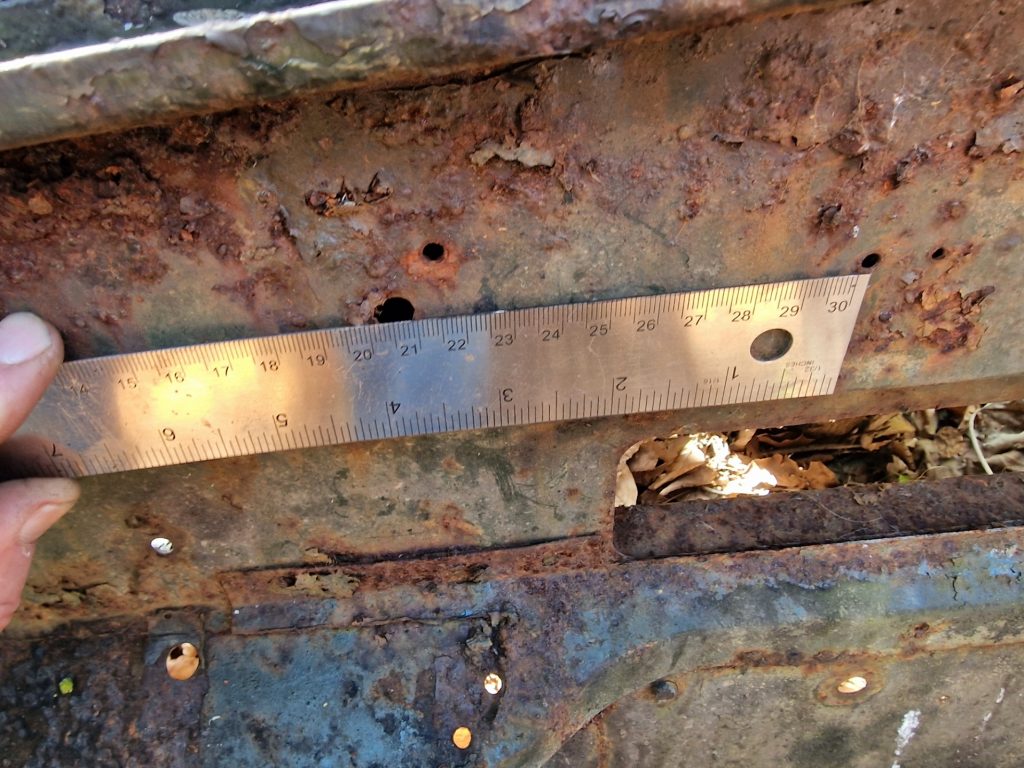
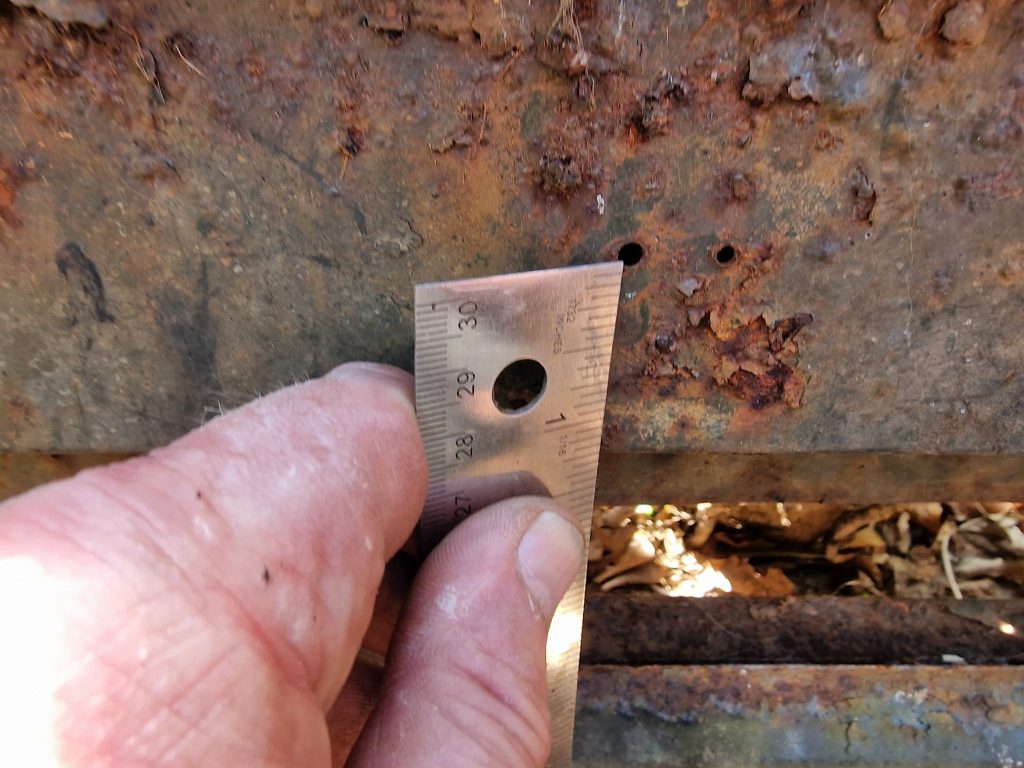
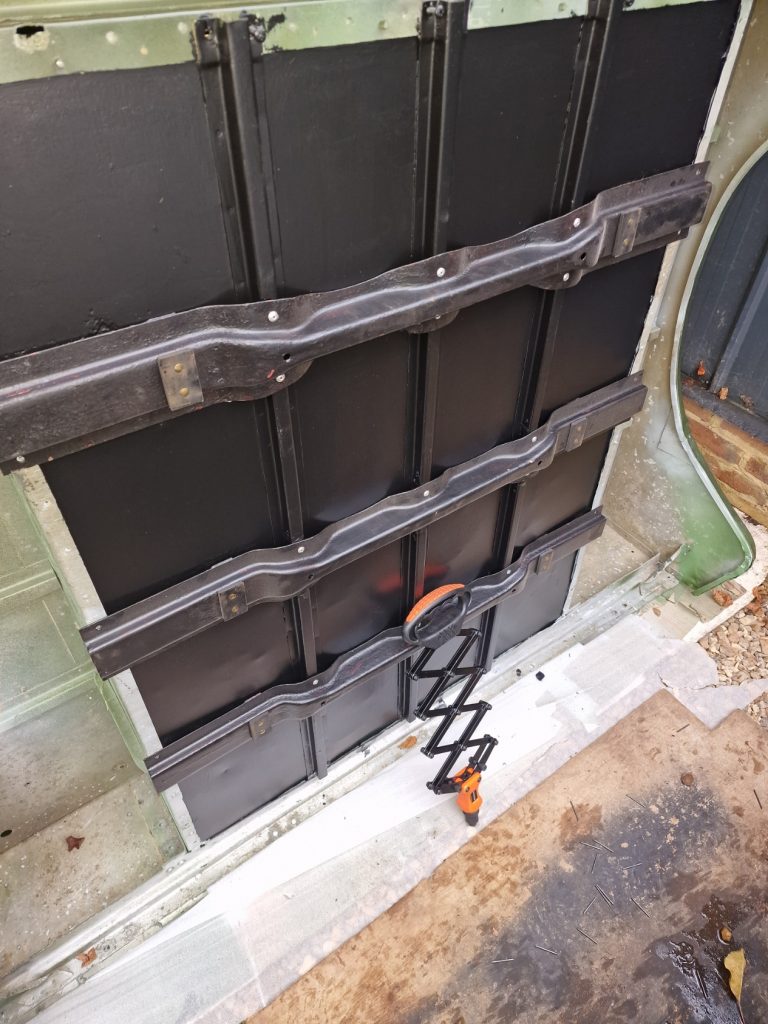
As well as looking at the loom to figure out the locations, I also took a look at my old rotting bulkhead to see if that helps. It did a little, so took some rough measurements.

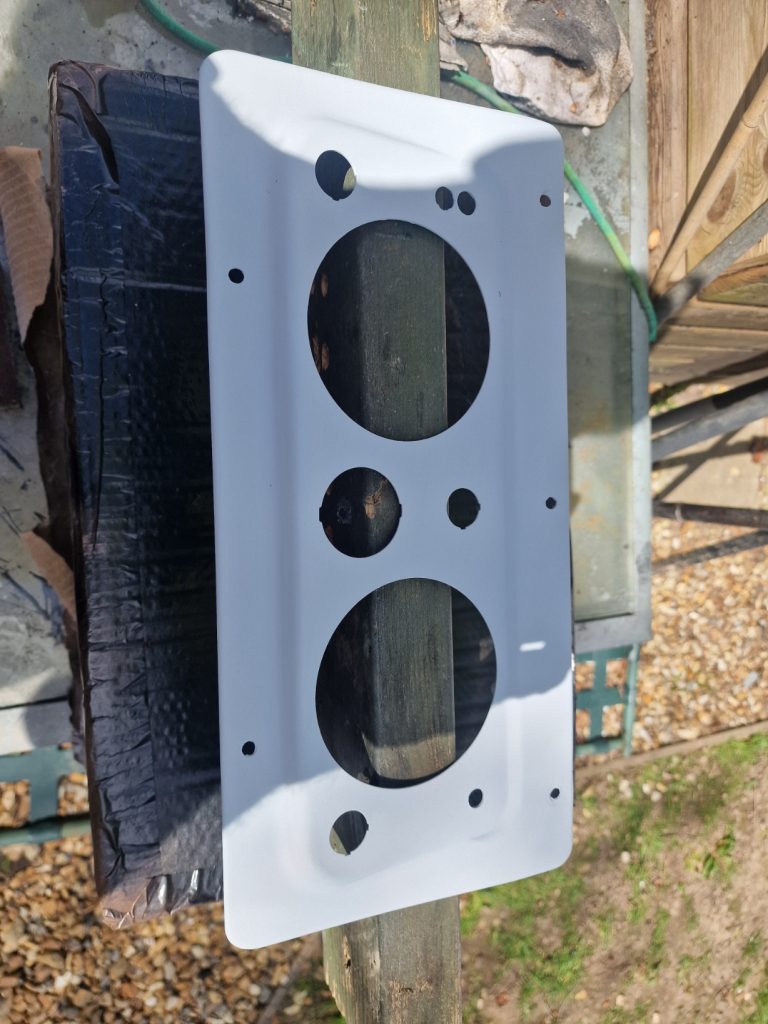
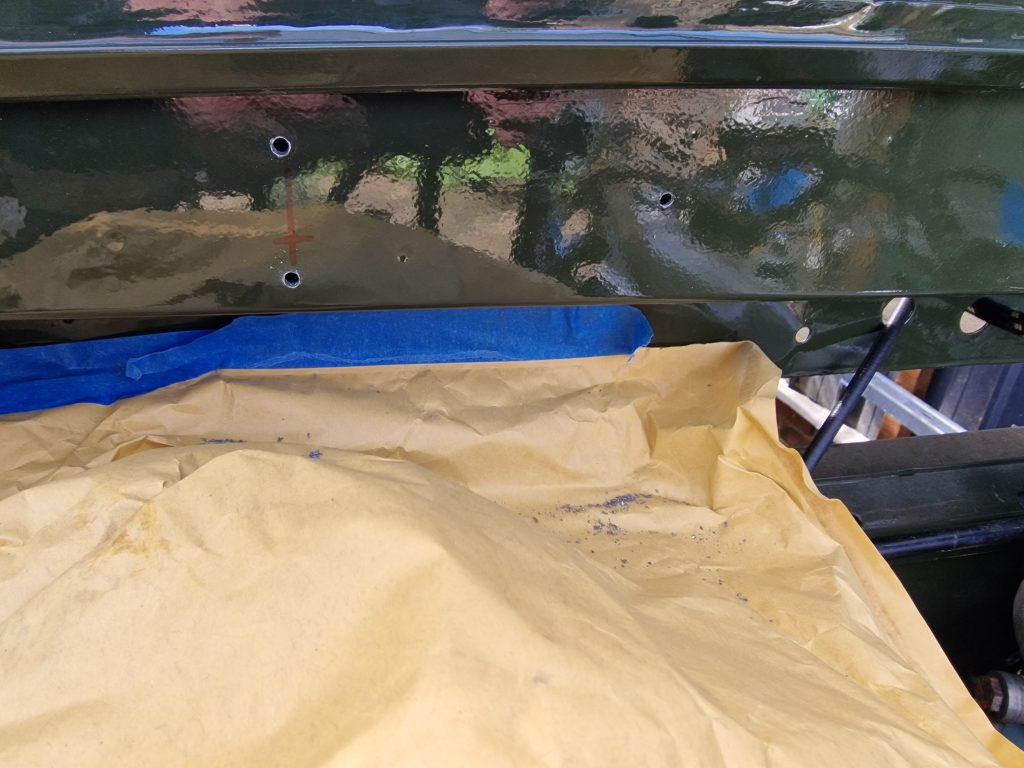
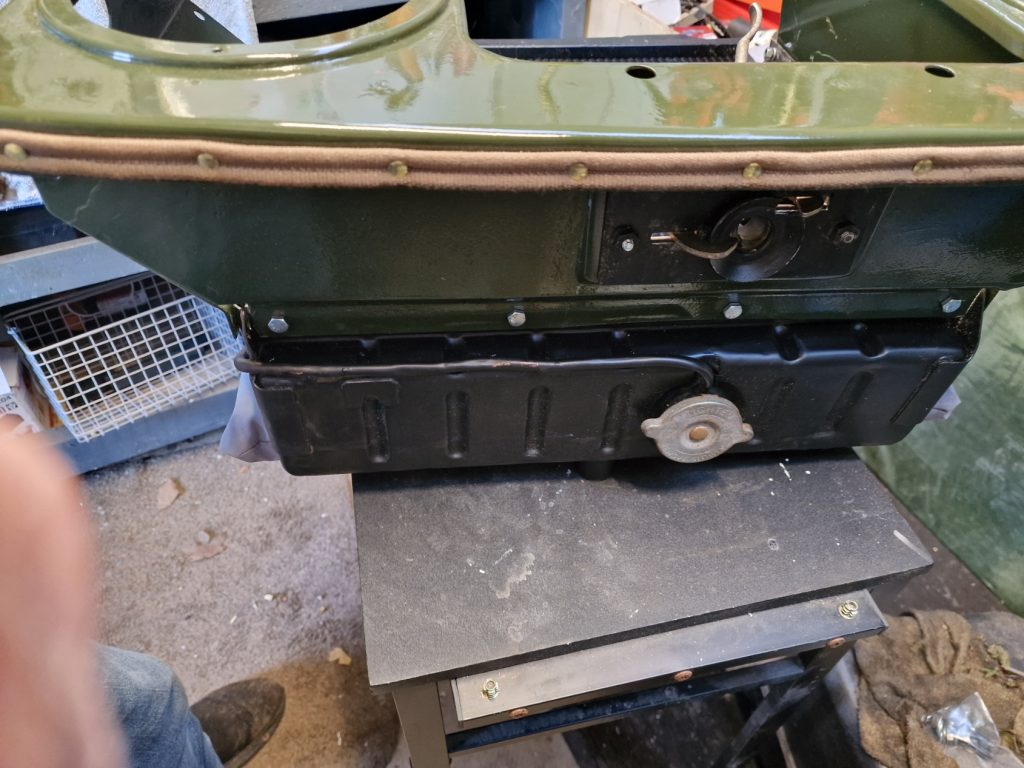
What this did mean, which bothered me a bit, is that I need to drill some new holes in my nice new, painted bulkhead. HeyHo, they have got to be fixed somehow.

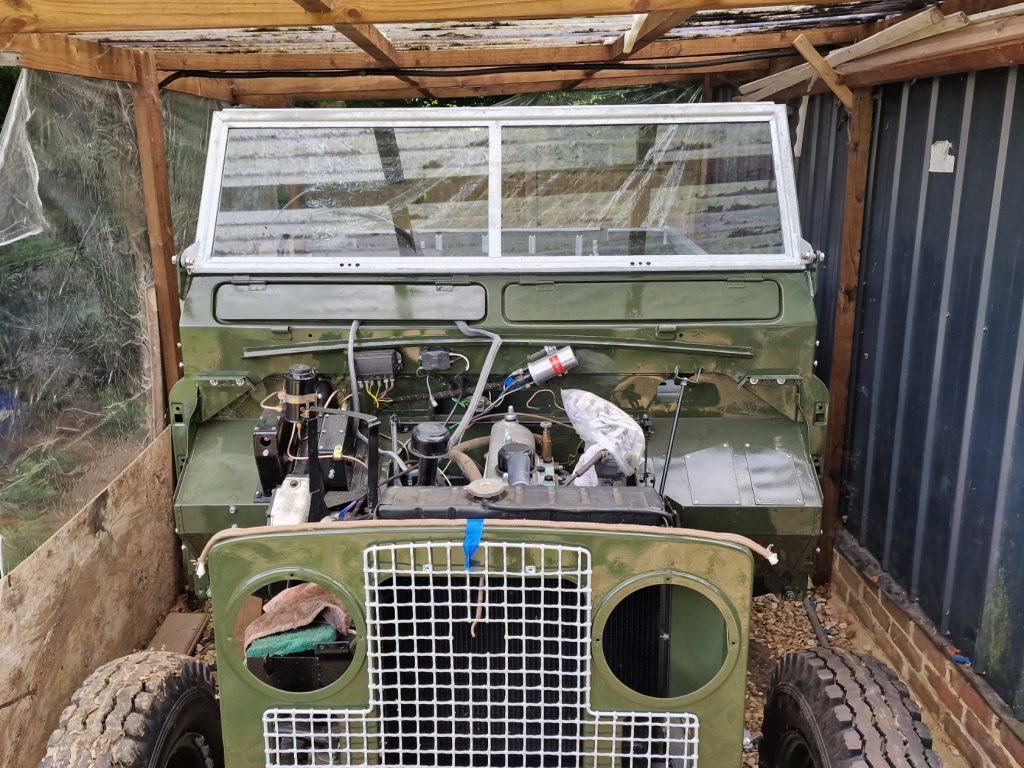
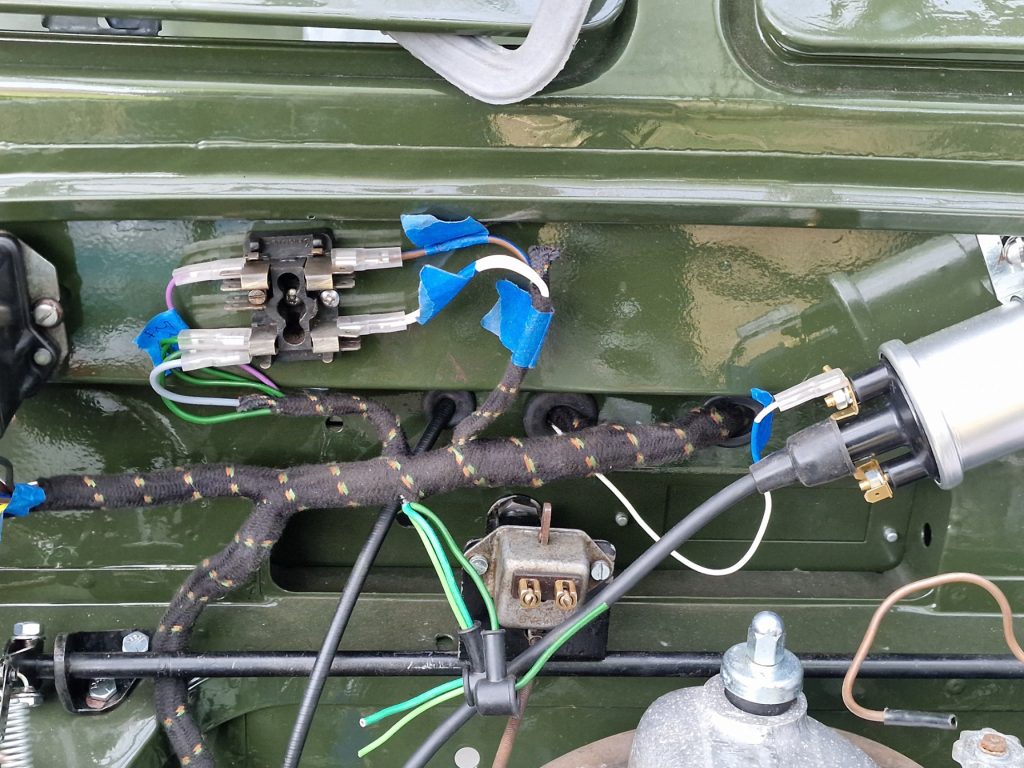
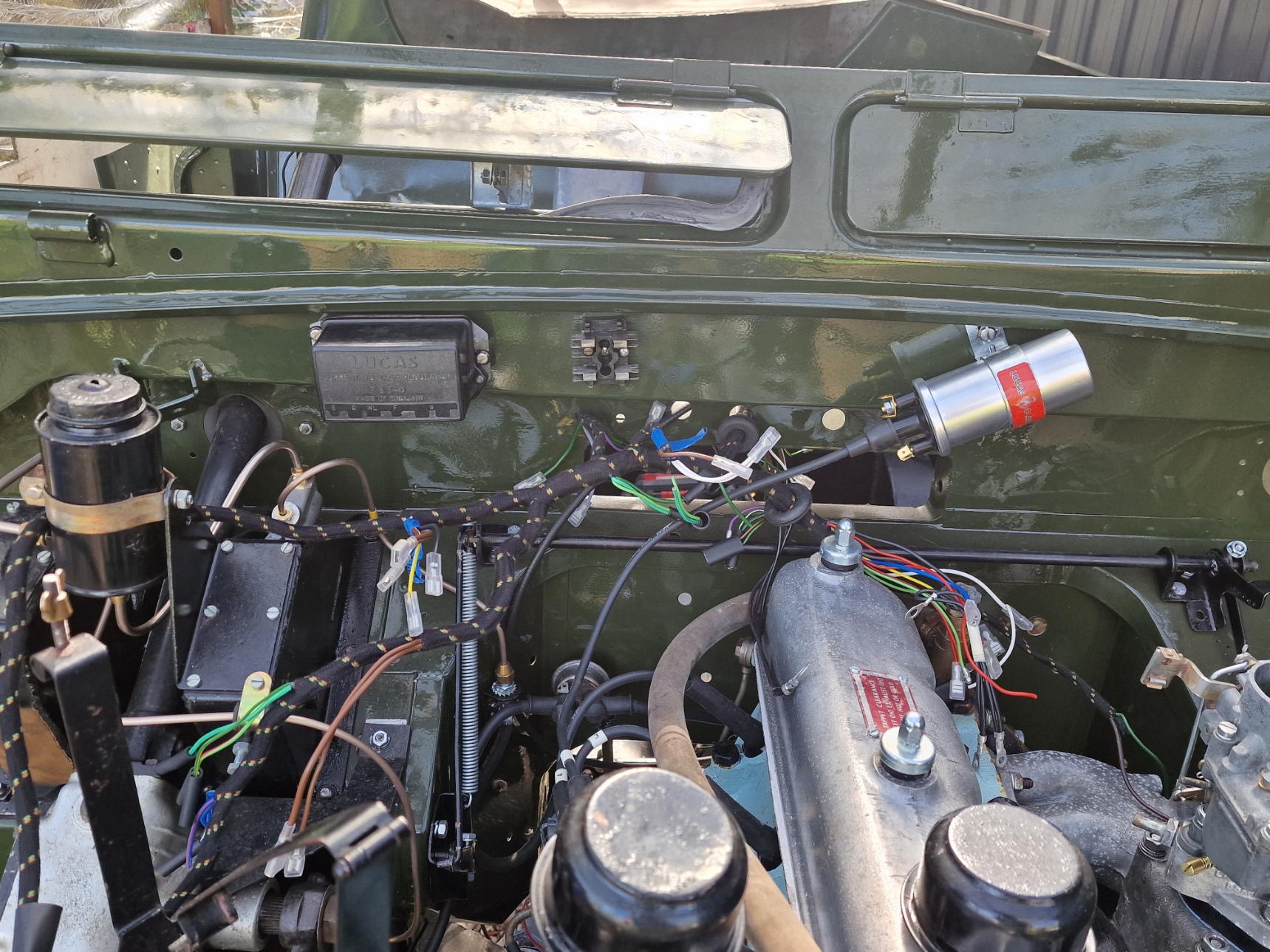
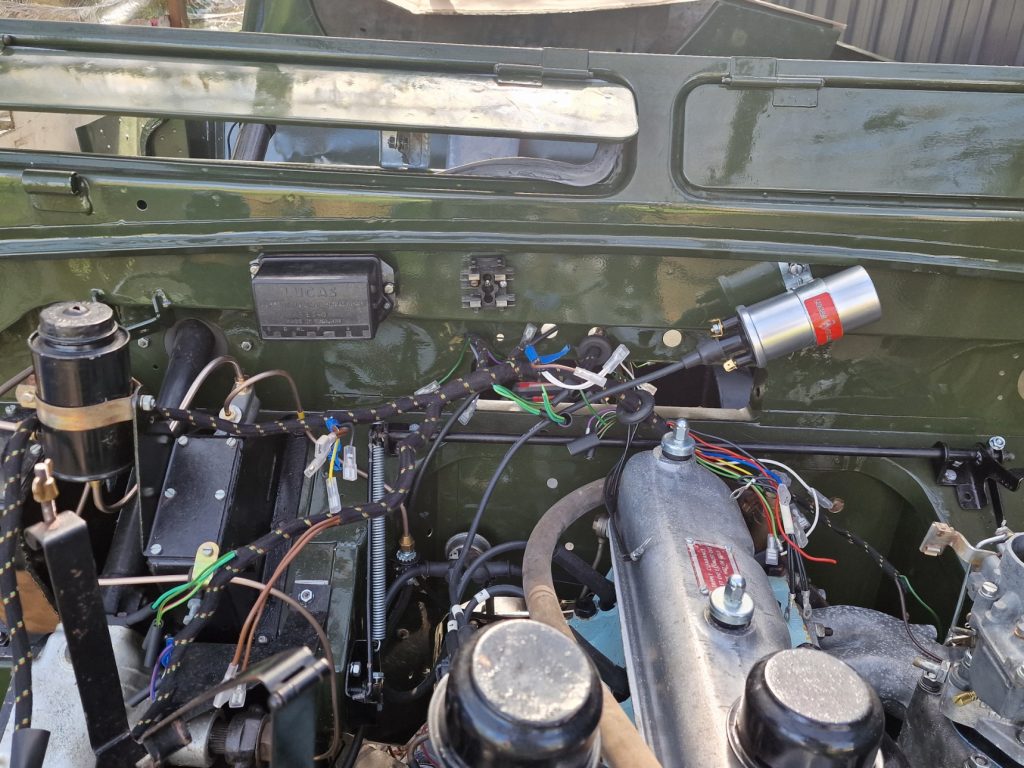
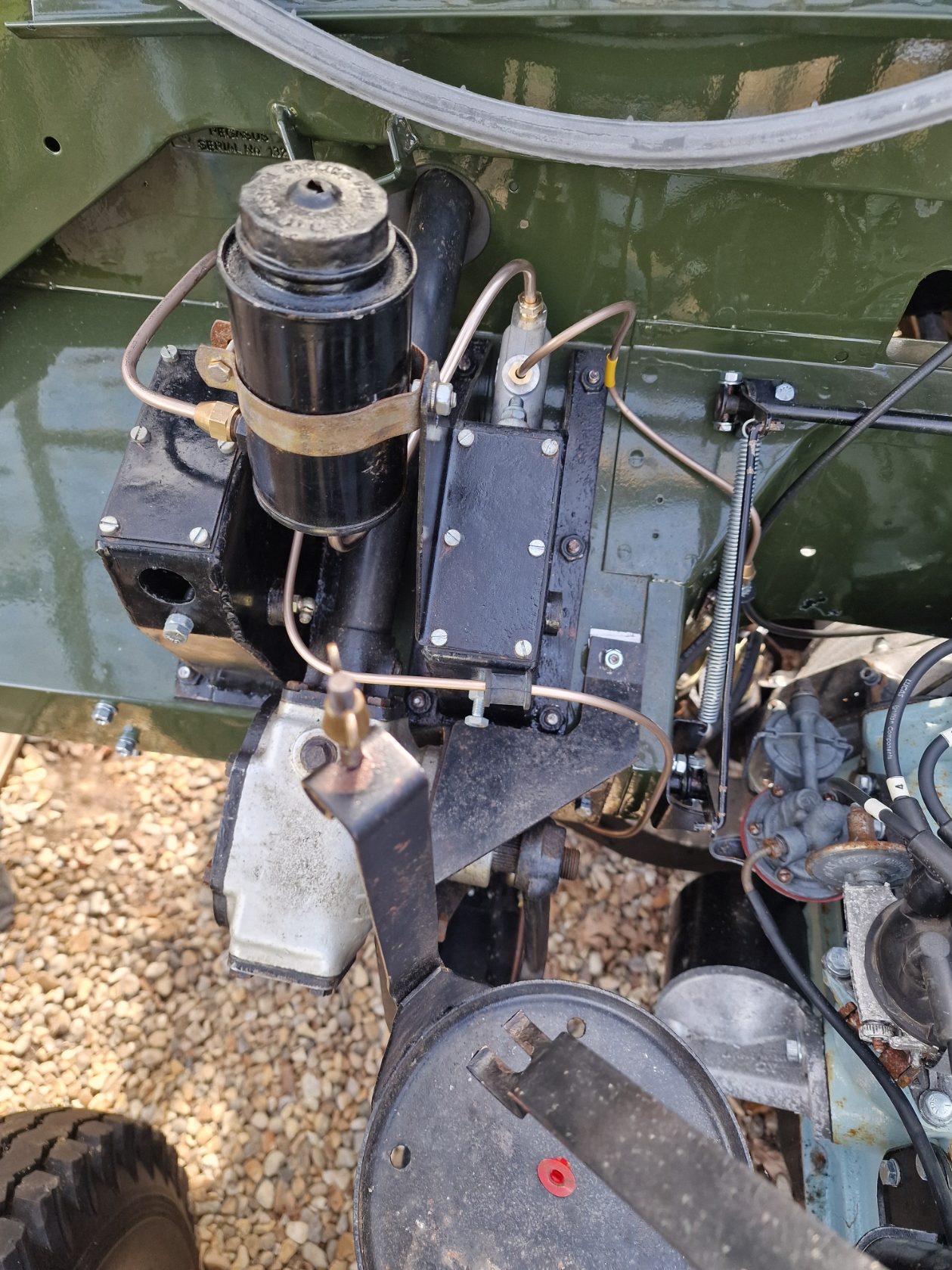
Sorry for the large, not very intresting picture of, well holes and a padded envelope to catch the metal bits :-). When I did screw the parts on, I did cover them in copper ease, hopefully to stop the freshly exposed metal rusting. Here goes, another large picture, bit more interesting this time, showing the bits fitted.

From left to right:

  • Voltage regulator
  • Fuse Holder, oh, yes, this car as 2 fuses… everything else relies on well, a little bit of luck and good fortune to not catch fire.
  • My new Ignition Coil, as I had no idea if the old one ws any good.
  • and scattered over the engine, my main loom

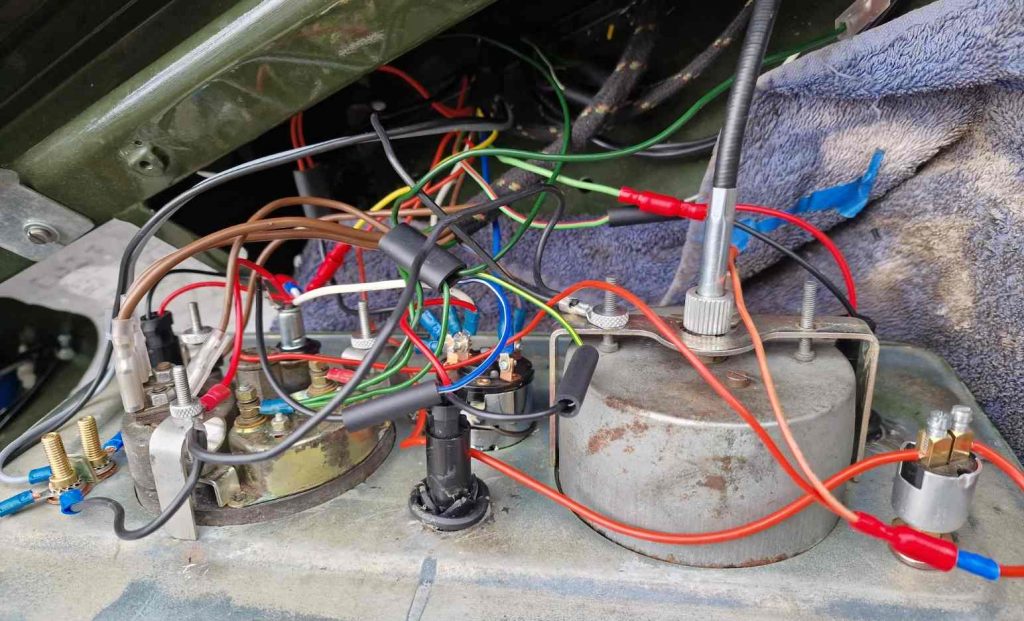
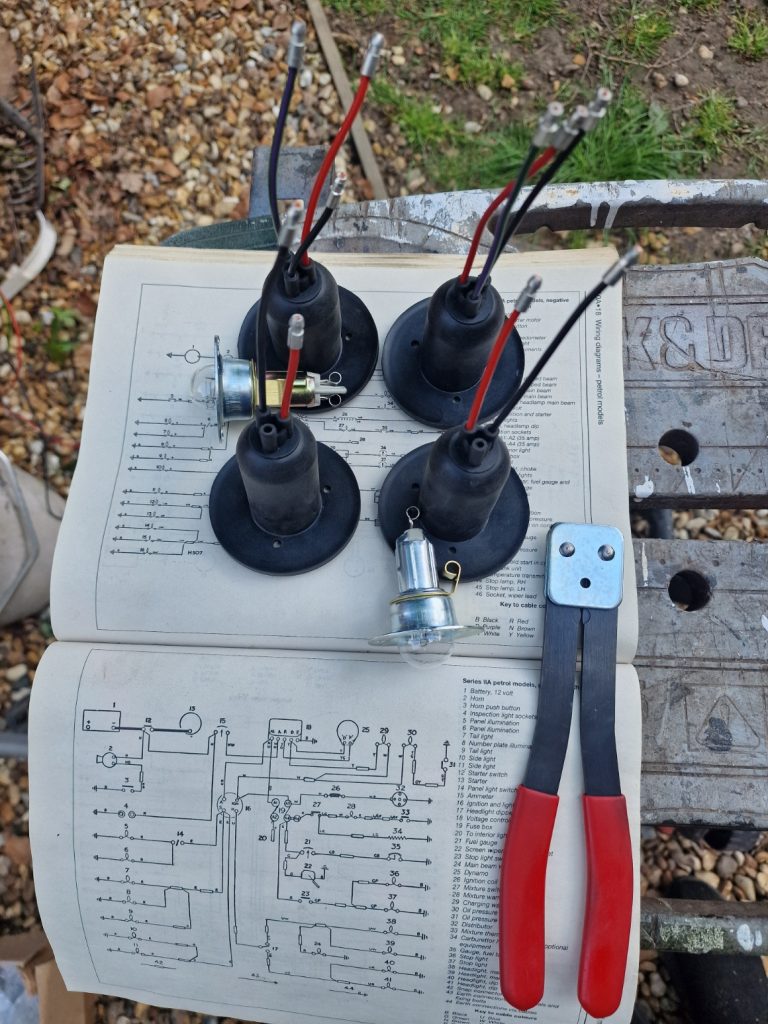
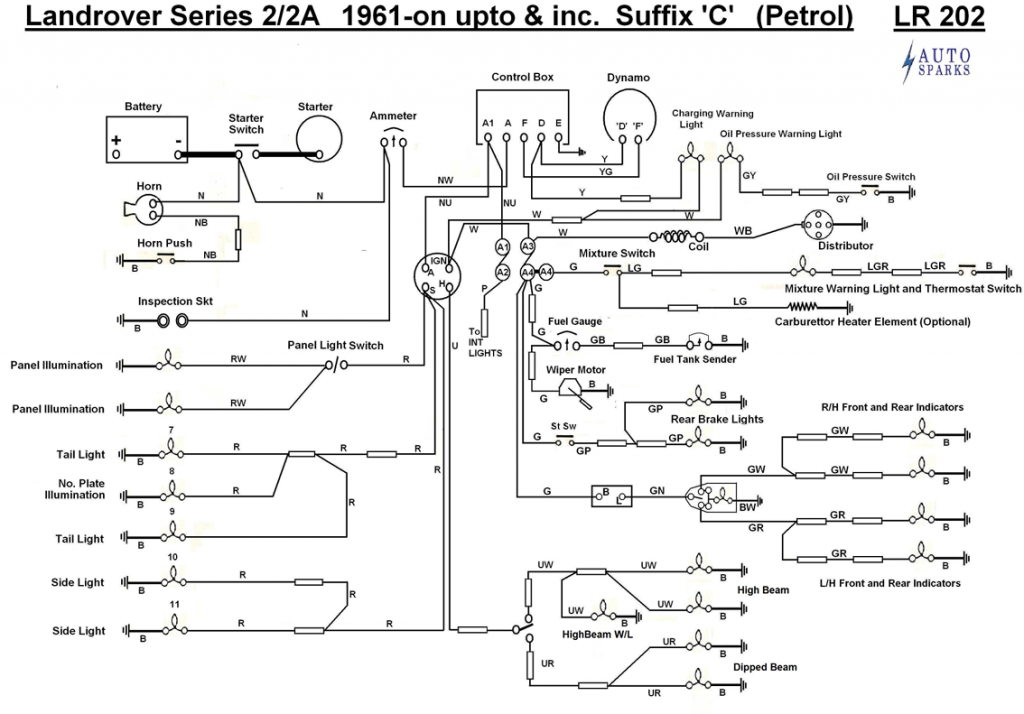
Thats pretty much it, I did spend quite alot of time staring at my wiring loom, and then more time trying to match it up to the diagrams online, in the haynes manual and my land rover workshop manual. I even turned to AI, and asked if it could find me a definitive diagram (the others should really have been enough) and it did, it found an autosparks one.

Here is a snip of the Autosparks one. (Sorry Autosparks, if you dont want this here, let me know, I’ll remove it)

Anyway, the full file can be found here: https://www.autosparks.co.uk/media/pdf/LR202.pdf

I am sure there are more, but I’m only interrested in this one. It can be found when navigating to the loom your interested in, and clicking Further Product Information

I will look to see if tey have more of the ancillary looms also.

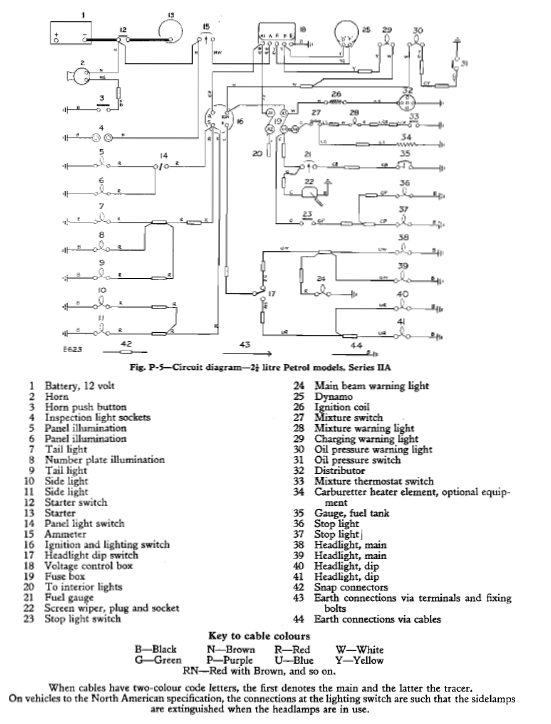
For completness, heres a snippet from the workshop manual. Bit difficult to read this one. Pretty sure is from a scanned copy of the manual, but even my purchased manual is not easy to read, so the autosparks one could be useful.

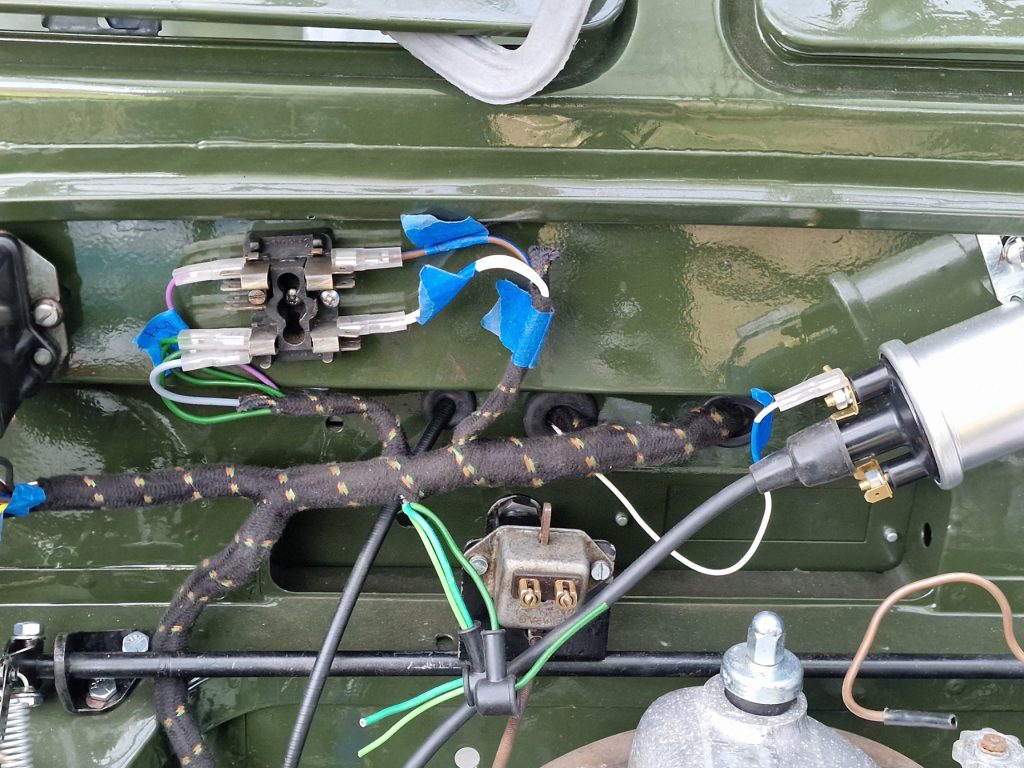
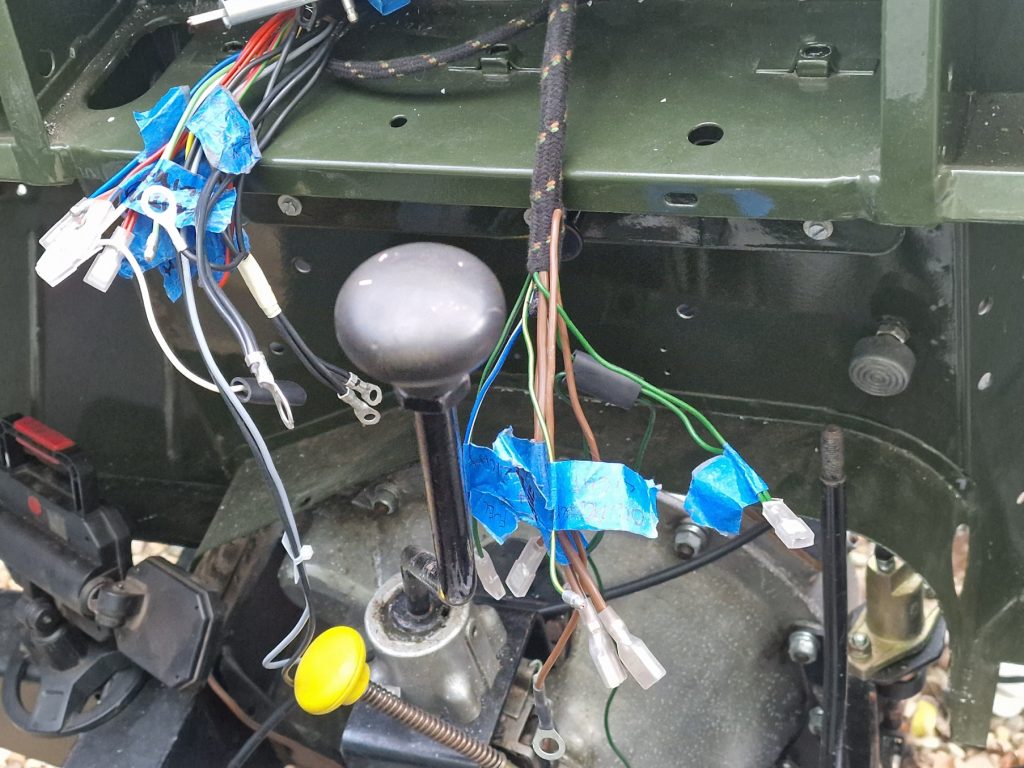
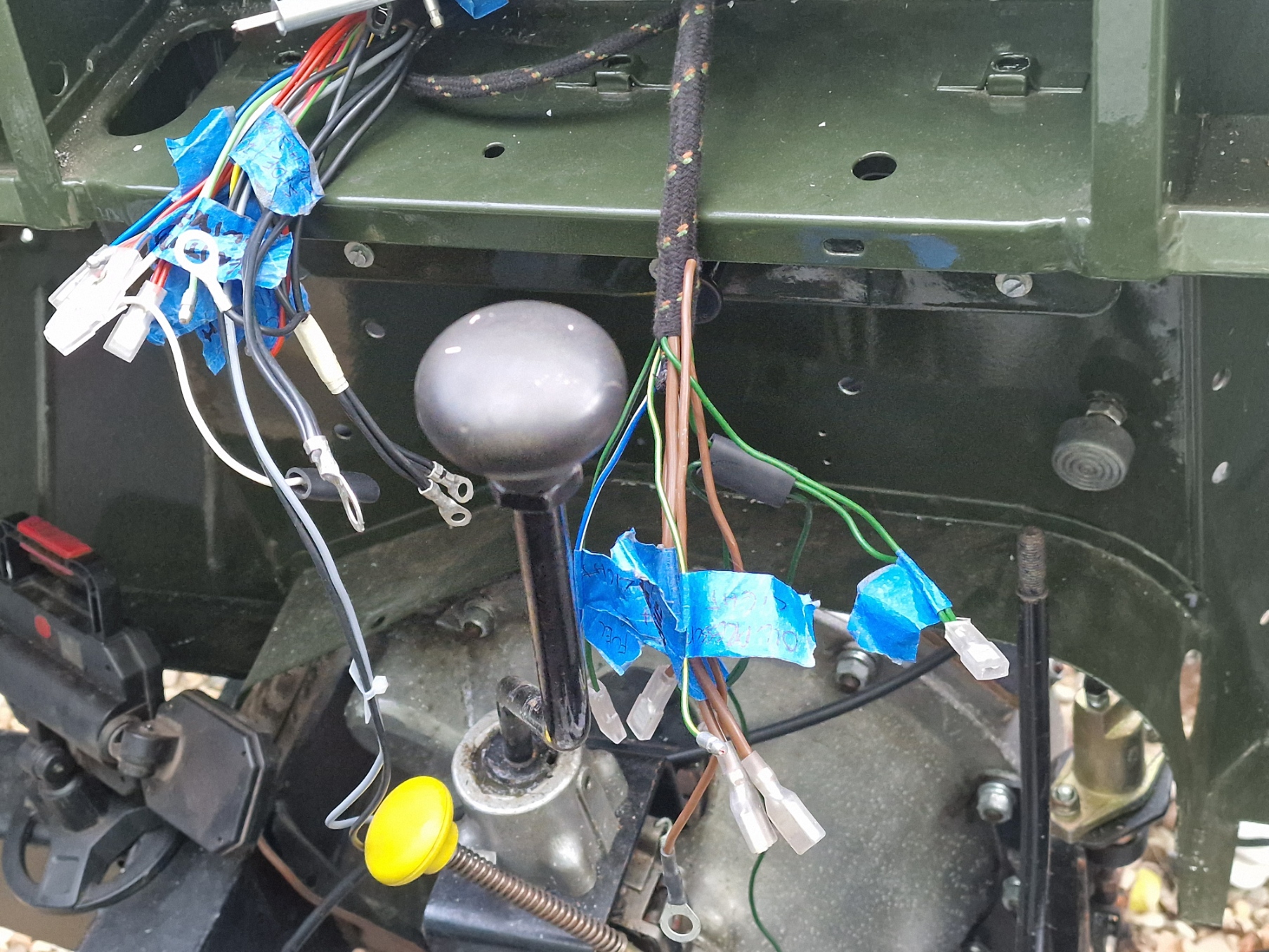
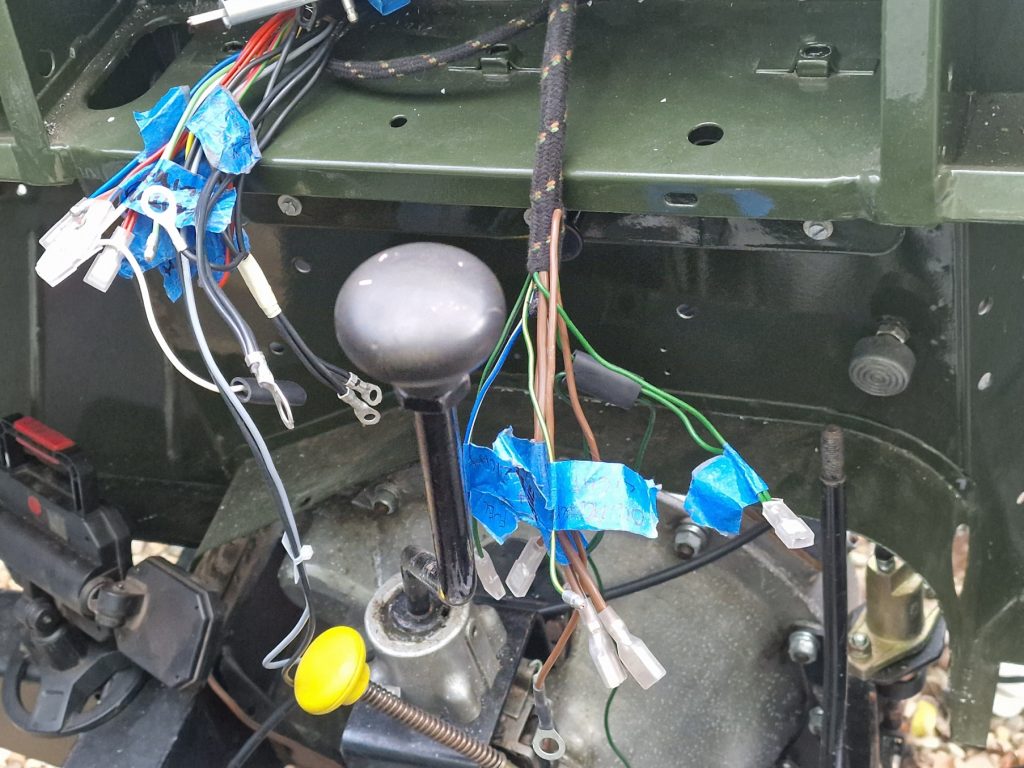
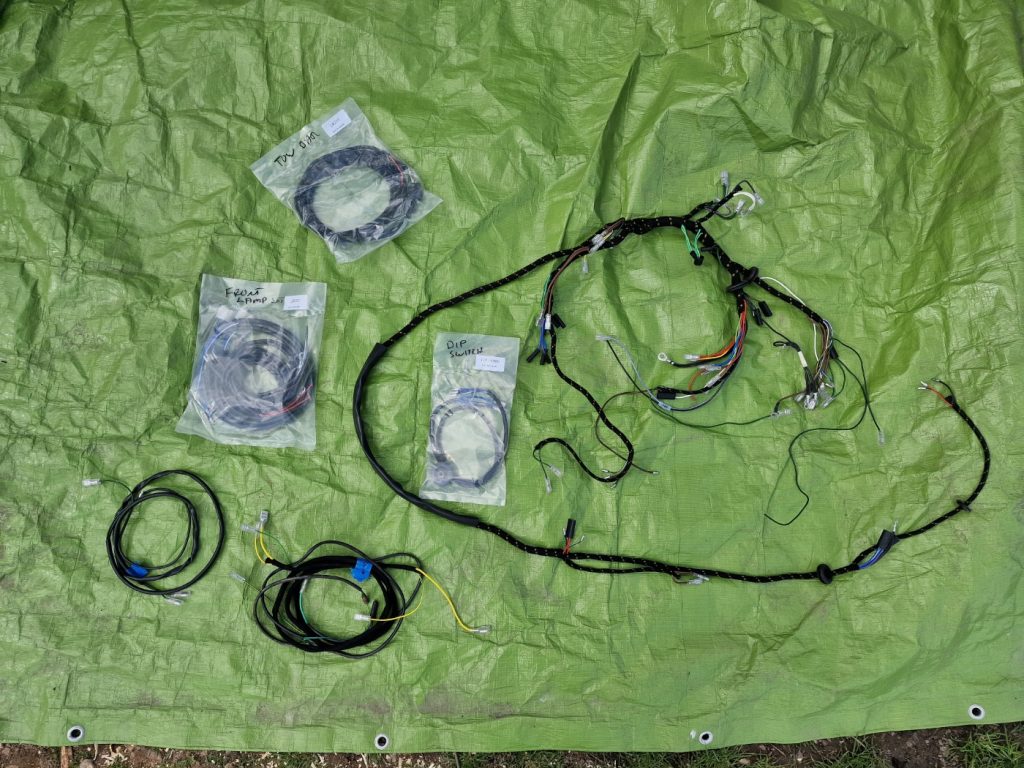
Anyway, heres my main loom and acillary looms.

I’ve decided to take the loom back into the house, and as soon as I am done writing this, then spending more time correcting spelling errors (or not if I cant be bothered) , I will see if I can start labeling it up.

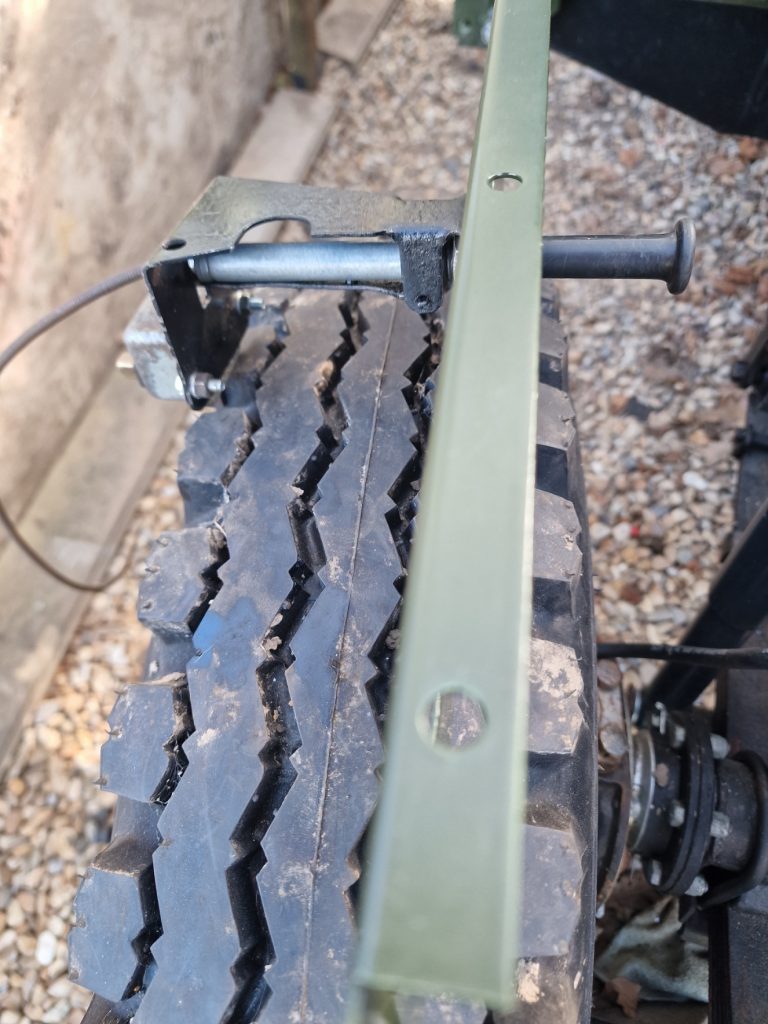
I finihsed up the day, putting the choke mechanisum back together and fitting it to the lower dash panel.

Sorry, forgot to take pictures of that before I covered isobel back up for the week, so will add some next time.

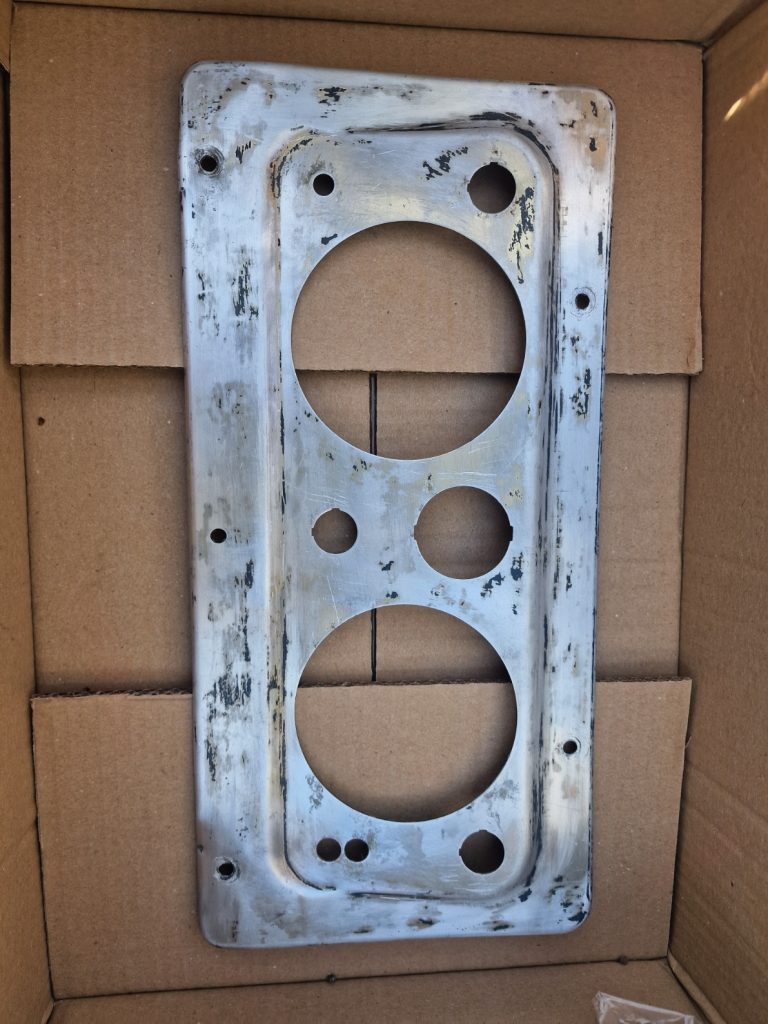
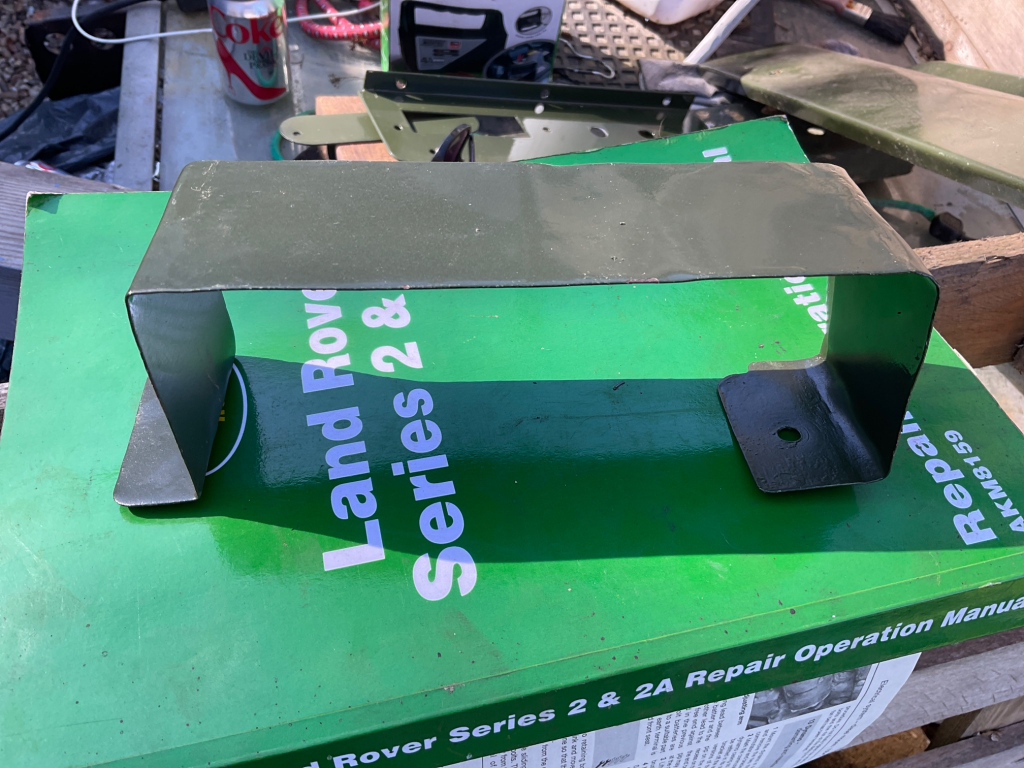
Lastly, I have a bit of what I think is dash panel, but have no idea where it goes. It does kind of fit behind the lower dash, but then it would interfear with the choke mechanisum, so not sure, anyone have an idea let me know.

Thats it, actually a little longer than I thought. Back to work tomorrow, and hopefully through the week I can make sense of the wiring loom and start properly fitting it next weekend.


Electrics – Earth and Battery Cables

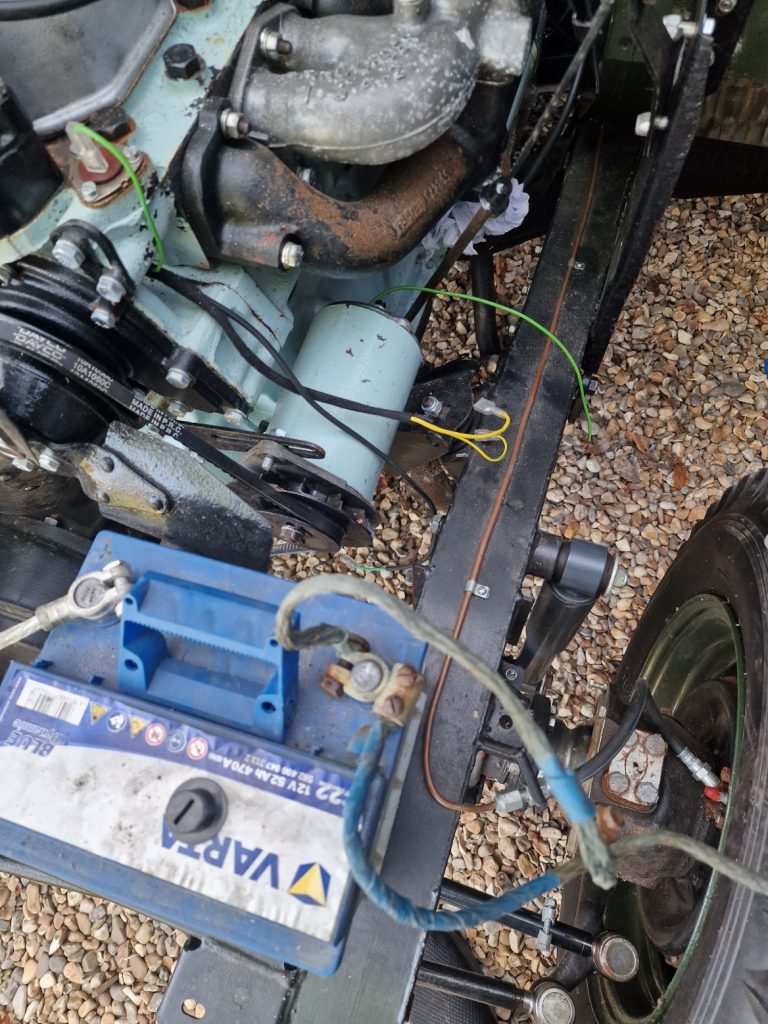
I mentioned in the last one, that it leads nicely onto this one. Well no in terms of topic, but in terms of Isobel moving under her own steam. Well, to do this Isoble needs some electrics. So, started today to fit parts of the new Autosparks wiring loom, namely the earth straps, battery and starter cables.

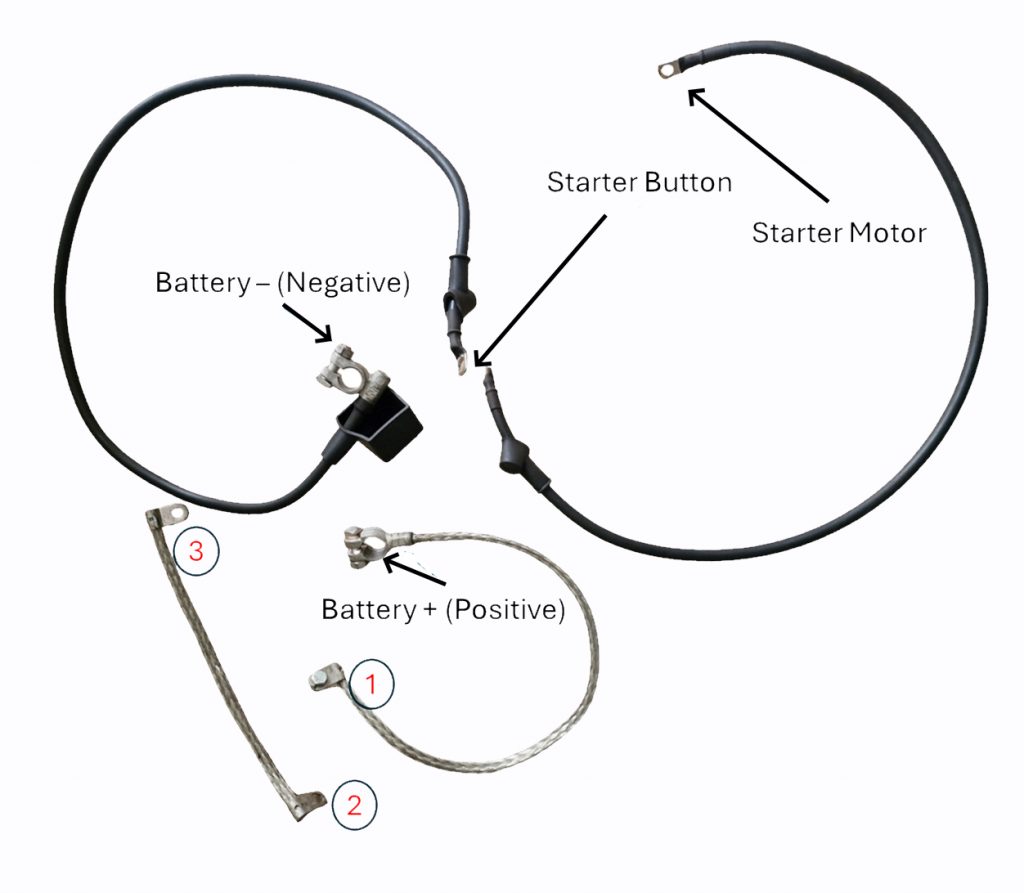
These are the cables in question.

I created this image, to share on the Series 2 club forum. I was pretty sure I knew where most of it went, but wanted to check the earth straps.

And as per usual, clear and concise answer came in pretty much directly. Series2a club costs me a little money every year, but worth every single penny.

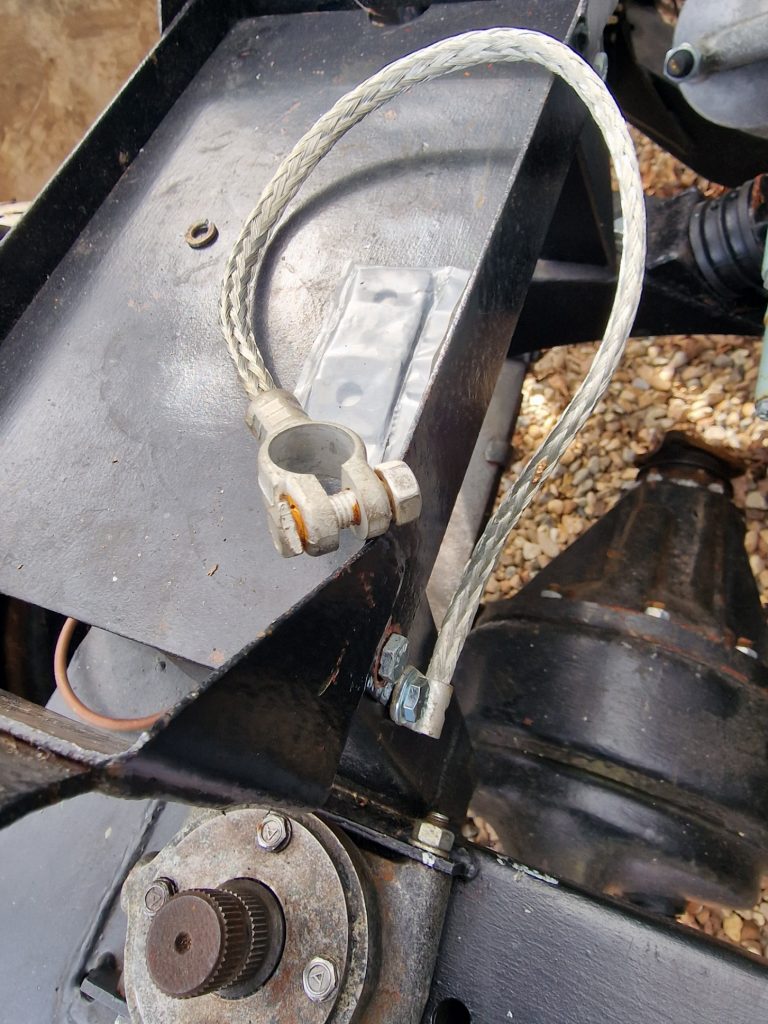
The first one to go on, was a strap between the chassis and transfer box. Now, this is a positve earth system I’m installing here, as per original, but in any case earthing is a critical aspect of the wiring, because without it, nothing will work. The principal is that the battery (in this case + terminal) is connected to the chassis, and then this strap, connects the gearbox, engine and accessories like the starter motor to the chassis.

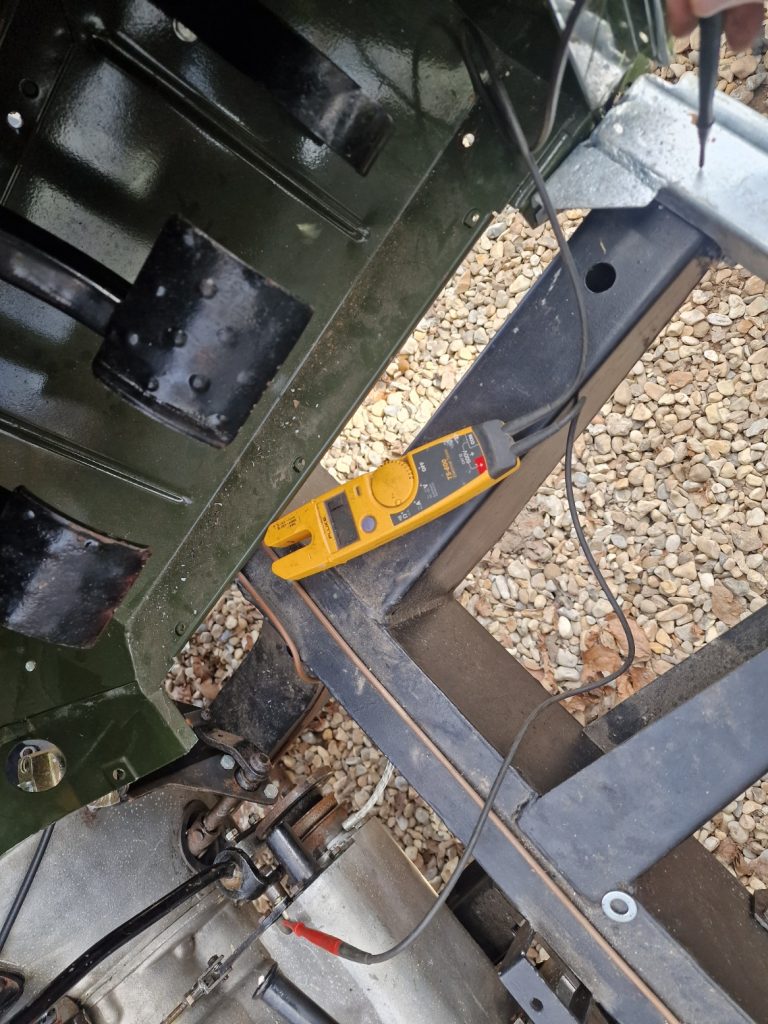
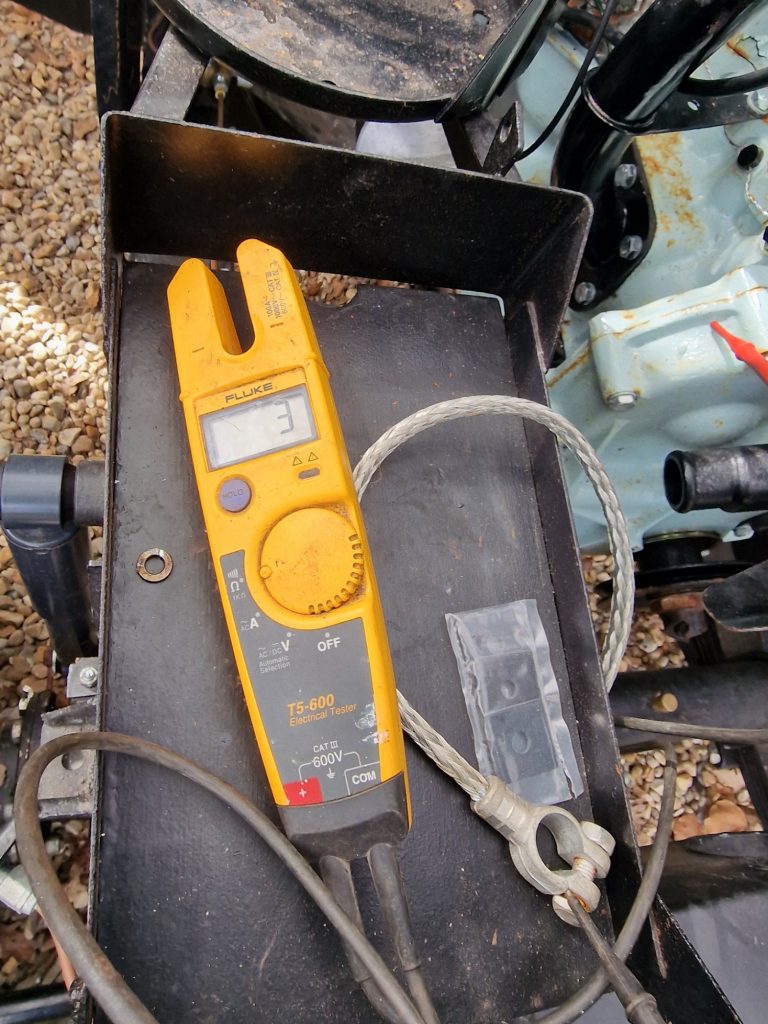
What I did do is check for continuity between said items, and it was really good, very little resistence.

I will be adding another earth strap (when I buy one) between the chassis and engine.

The reason, the starter motor will draw alot of current, and the more straps the better, otherwise the current might just try other routes, like the clutch cable and speedo cable.

I then fitted the battery earth strap.

This is conected to the battery tray leg, so cleaned up the paint, and bolted the strap on.

Again, checked continuty between this cable and various bolts on the engine and again had very little resitence.

Next up was the starter motor leads.

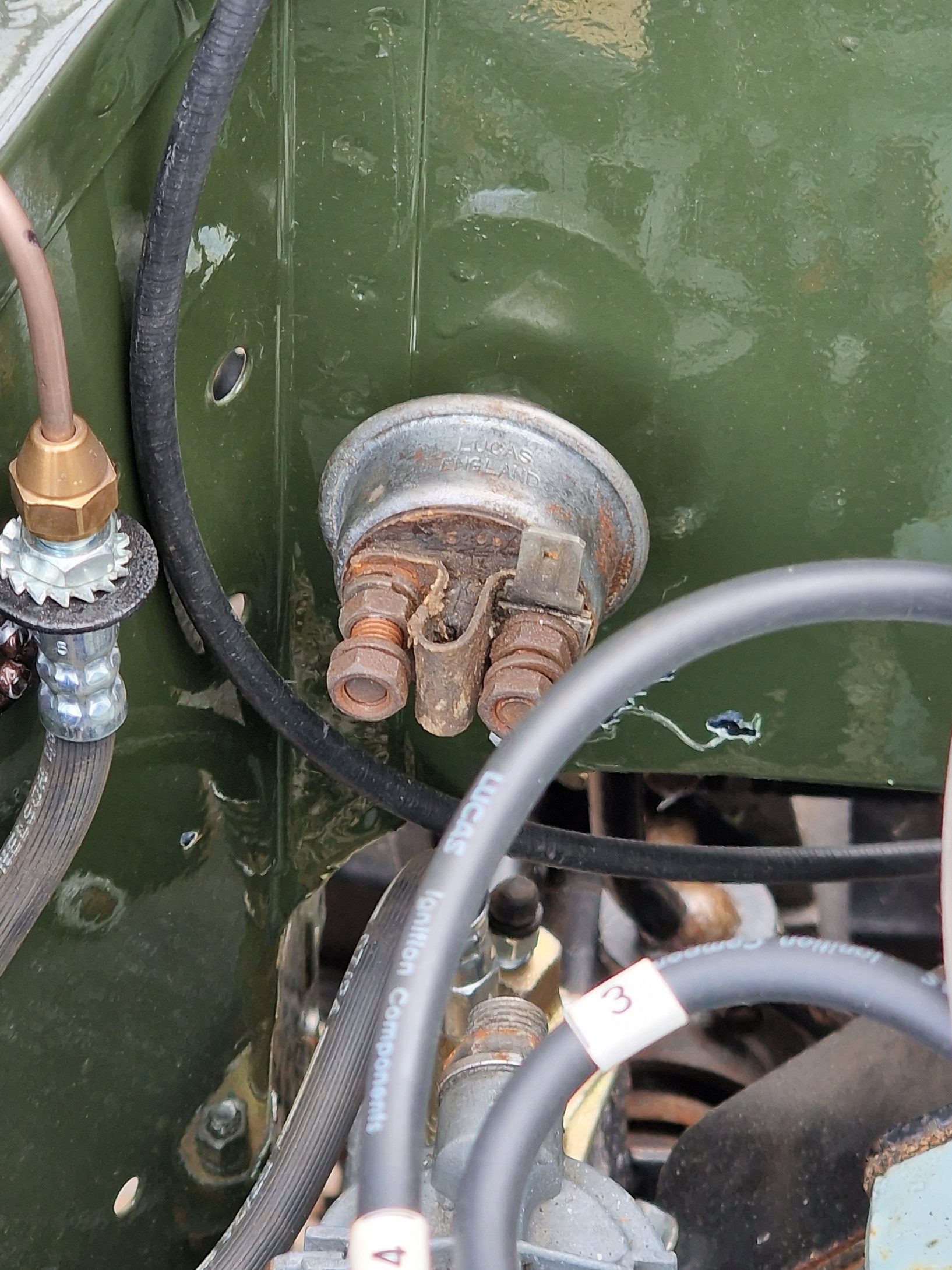
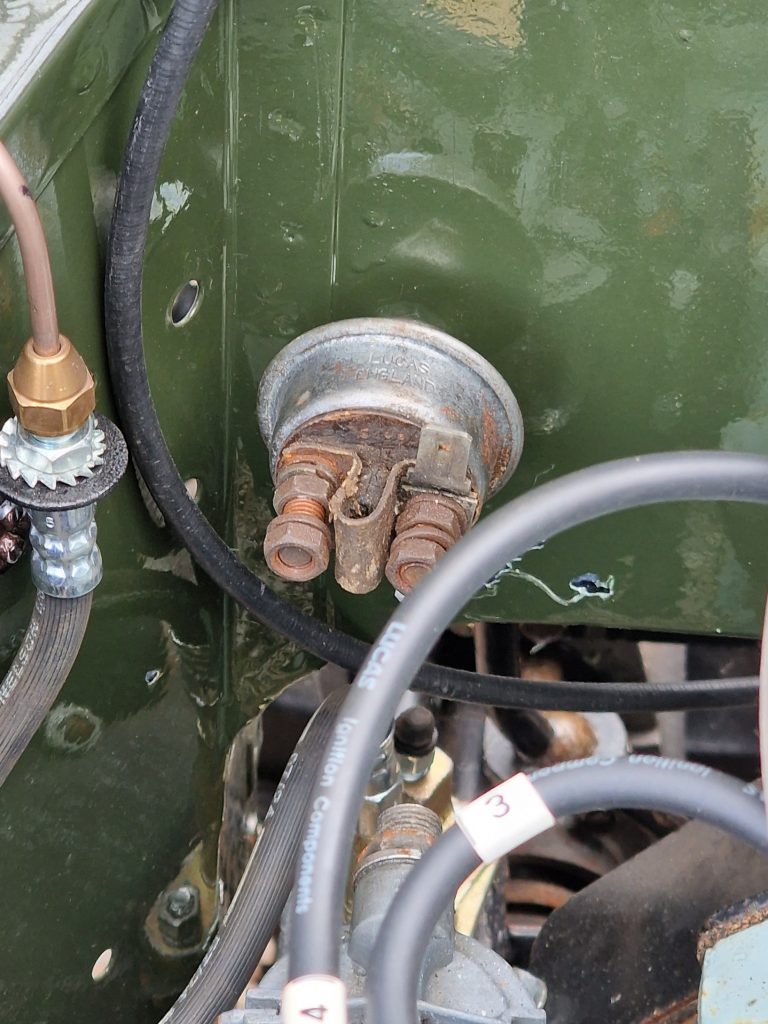
Before doing that I fitted the starter button.

You can see from the picture, there is a bit of folded card, to seperate the terminals. This was acually broken, so I removed it, as the new cables have rubber covers, which will serve the same purpose.

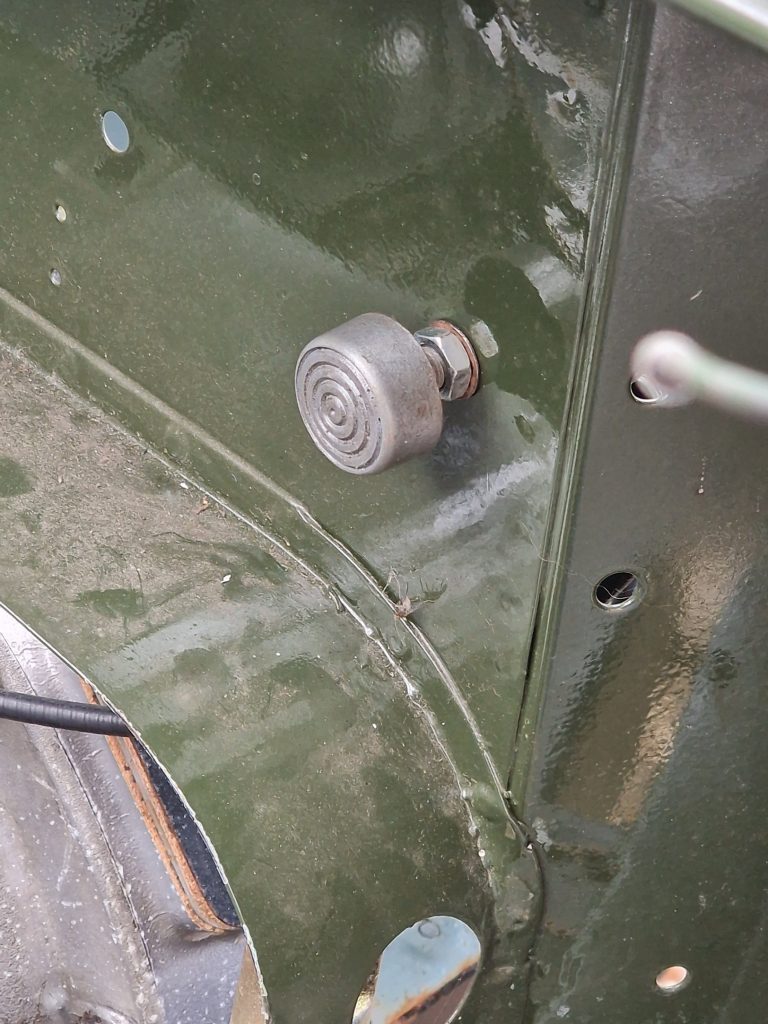
This is the button inside the cab.

I have actually owned a car that had this same setup before, so its not that unusual for me.

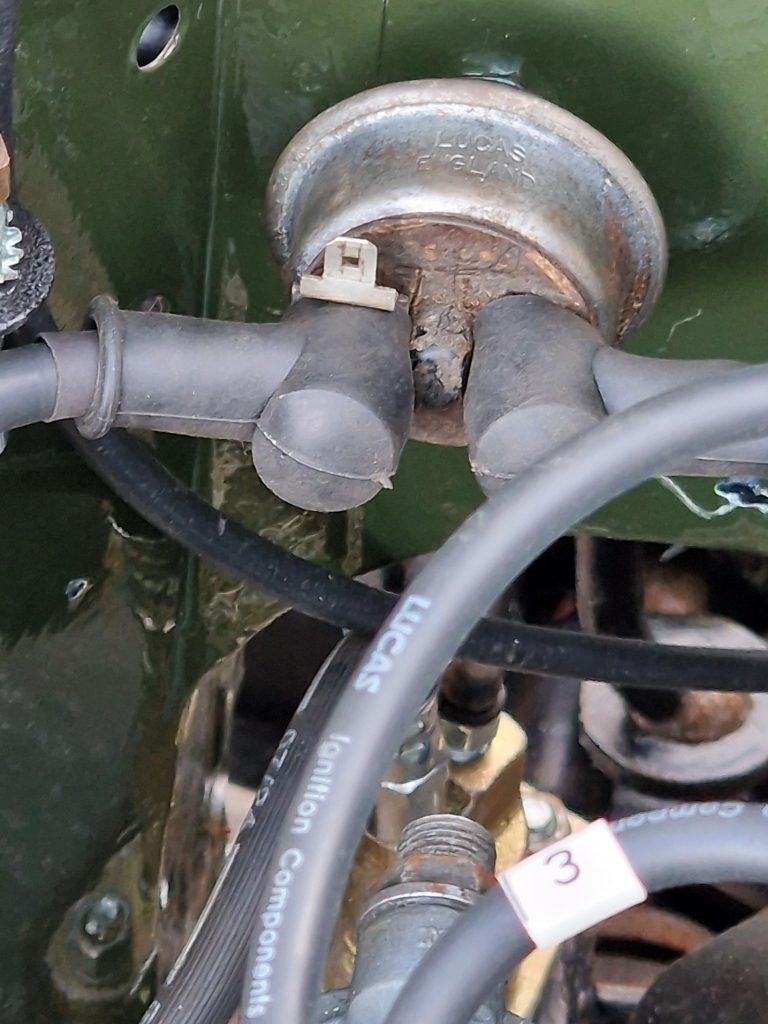
This is the final connections with both cables on. The one on the left coming from the battery, the one on the right straight to the starter motor, with the supplied rubber boots.

So thats it, the starter motor is now connected, the starter button is in-place, all I need is a battery and I can think about turning over the engine. Might do that tomorrow, will see how I feel becuase that will be the first real test of my engine rebuild.

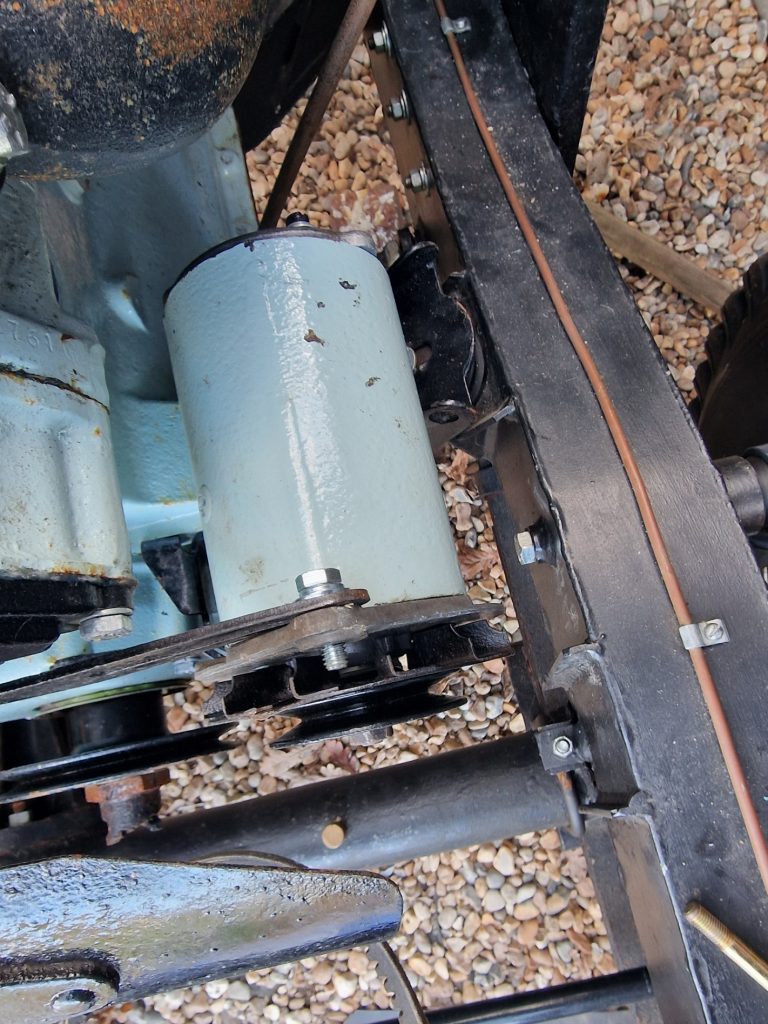
To finish up, I fitted the dynamo.

Now this was bloody awkward, and I am not sure that the arm you see at the top should be on that side of the dynamo, but fitting it on the other side seemed less right, and by placing a straight edge from the crank pully and the water pump pully, it seems to be perfectly in-line.

So I will leave it like this until someone says to me, what the f have you done there.

I did go to fit the fan belt, but have bought the wrong one, way too short, so quickly ordered another one.

Thats it pretty much for the day, although I did take the doors off, to make access a little easier into the cab, took the front grill off, again for ease of access, and re-fitted the steering column brackets that I had to remove to align the bulkhead, so all in all, a pretty successful day.

More to come tomorow I hope, maybe even a little video of the engine turning over on the starter, if I can get some charge into an old battery, which will be both exciting and nerveracking at the same time, that is after I have taken on some sustinance, in the form of a full english breakfast with Kim, Caleb and Reuben.


Brake Pipes – Part 2

Easter Weekend, and the plan was for a full 4 days on Isobel. But…. Scuppered by the weather again, wasn’t too bad but damp, windy and chilly. So sat indoors Friday and most of Saturday, working on another little project, nothing to do with Isobel, but exciting nevertheless, more news on that when the time is right, ay GV :-).

Anyway, back on topic. This will be a fairly short one. Sometime ago I fitted the brake pipes to each of the 4 wheels, and more recently fitted the pedals, including Brake and Clutch with new master cylinders and for the clutch a new slave cylinder.

So, its time to start mopping up some of the jobs that have been playing on my mind for some time.

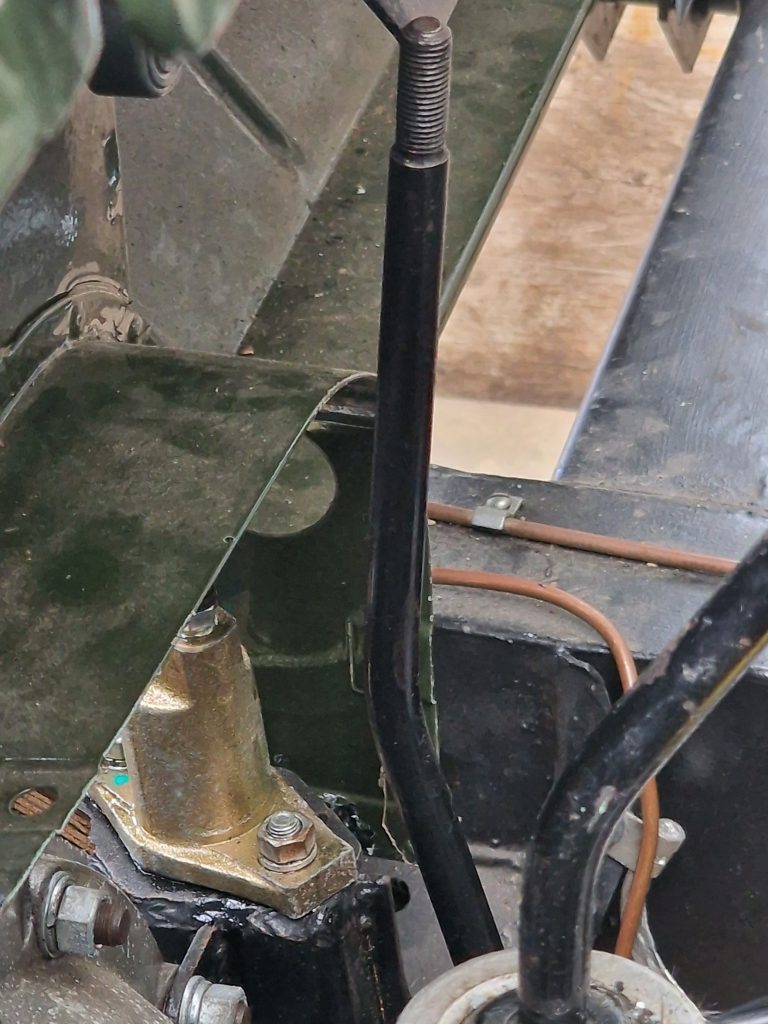
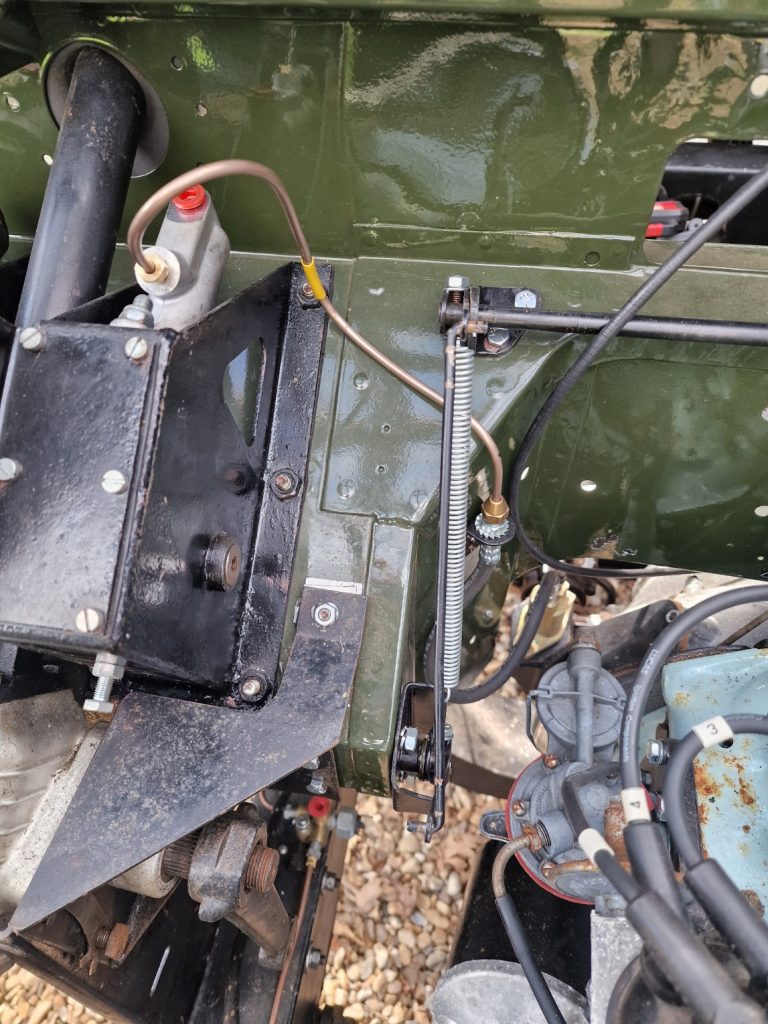
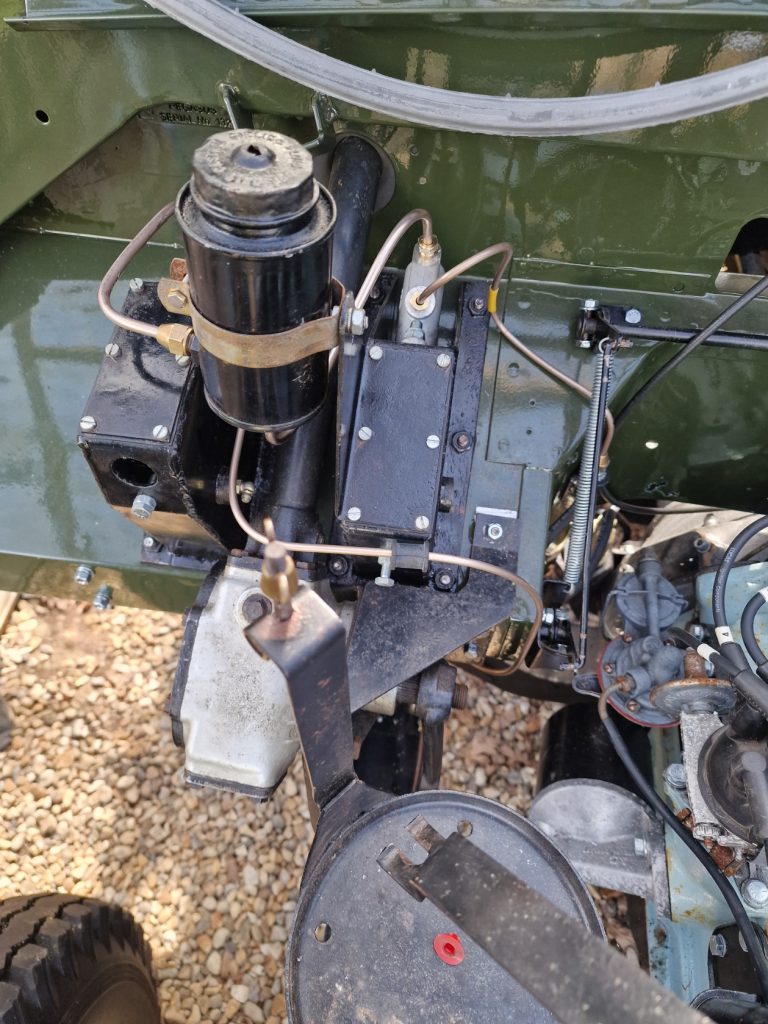
So started connecting the clutch master cylinder to the salve, this required a small bracket being attached to the bulkhead, and a flexible pipe from the bracket down to the slave cylinder.

The bracket was pop riveted to the bulkhead.

Then gently bent (using round pipes of various diameter) the copper pipe from the bracket to the Front port on the Master Cylinder.

This will carry, hopefully, brake fluid to the clutch.

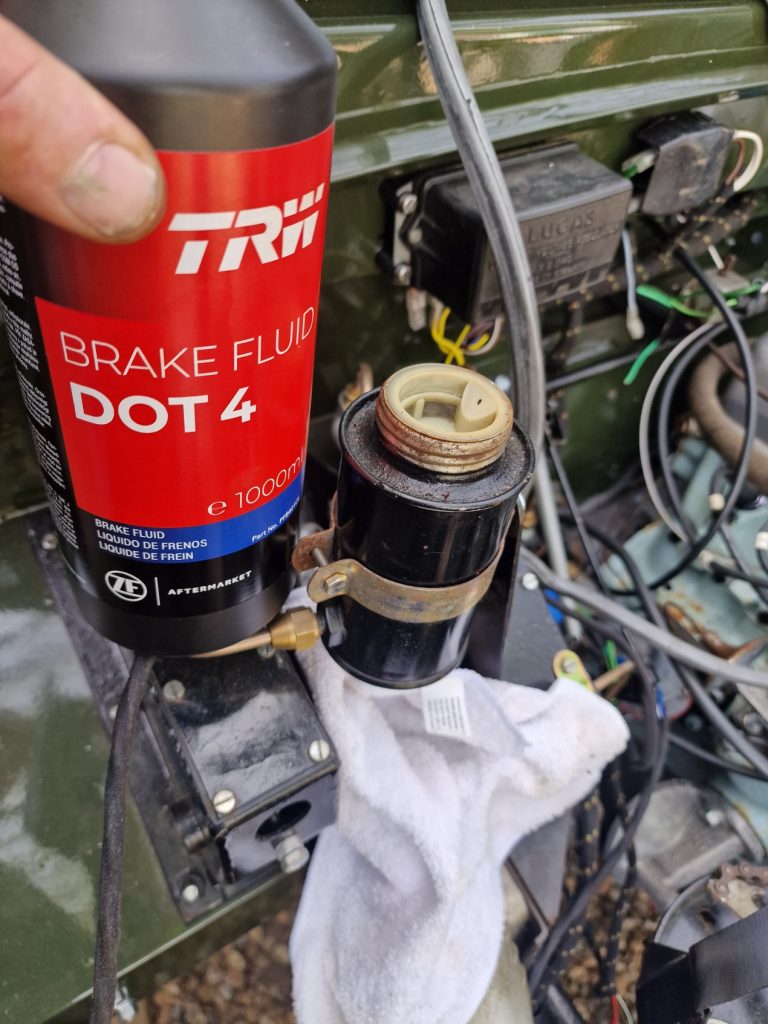
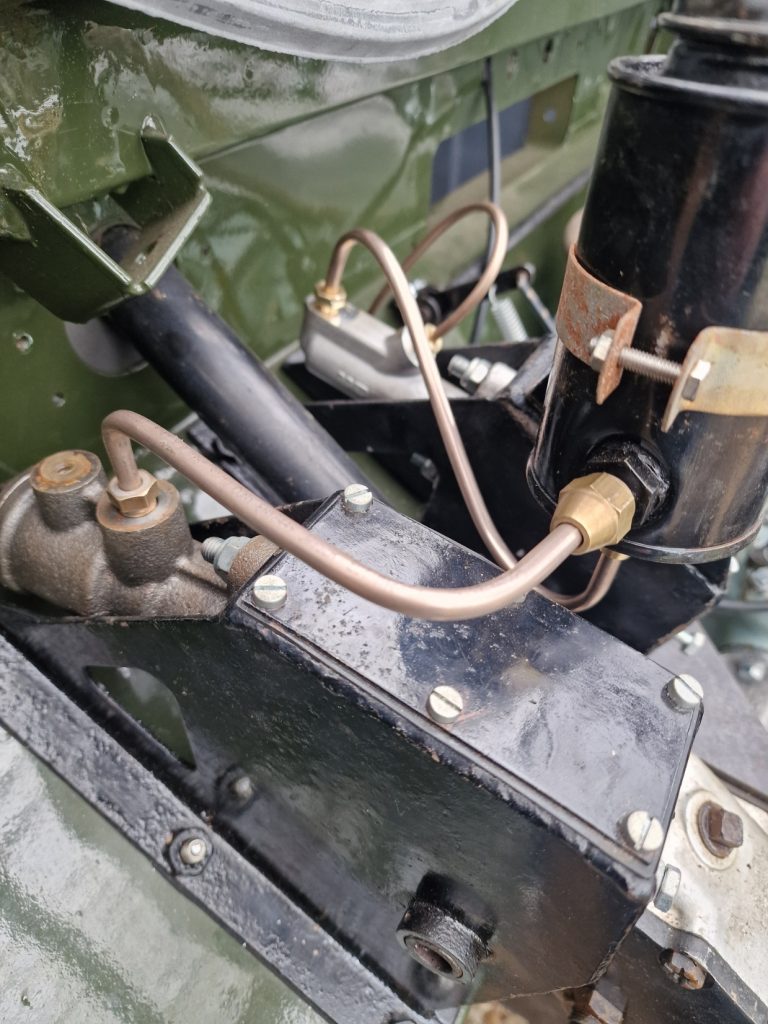
Then onto the Brake pipe from the master cylinder to the fluid reservoir. I kept all the old pipes, so used them as a pattern. I checked online for the correct routing, and this seems the best, most common, and in any case, I had already started bending the pipe’s a while ago.

Now the observant among you, will notice this pipe goes to the front port as well!

This had me stumped at first, as I assumed it would be the same for both cylinders, BUT, its not. The Clutch cylinder is a AC type, the Brake is a CB type, which is more original, but an older design.

Anyway, I am pretty sure its right.

Fast forward, I thought I took more pictures, but seems not.

In this picture, is also the pipe from the clutch cylinder to the reservoir tank, and also the brake pipe that goes down to the 4 way connector located on the chassis. This was added when I did all the pipes.

I think it looks pretty good, all the pipes have nice bends, they are out of the way, and “think” attached properly.

Next part on the brakes of course will be the brake pads and new brake drums, but dont plan on doing that until later, and as such cannot start adding fluid just yet. That also poses me the next big challenge with all this. Setting it all up, and then of course bleeding the brakes, which by all accounts is a right dog to do, especially with the CB type brake master cylinder. Will worry about that when Isobel can actually move under her own steam.

And that, leads nicely onto the next chapter in this saga.


March 2026 – Bulkhead and Tub Fitting

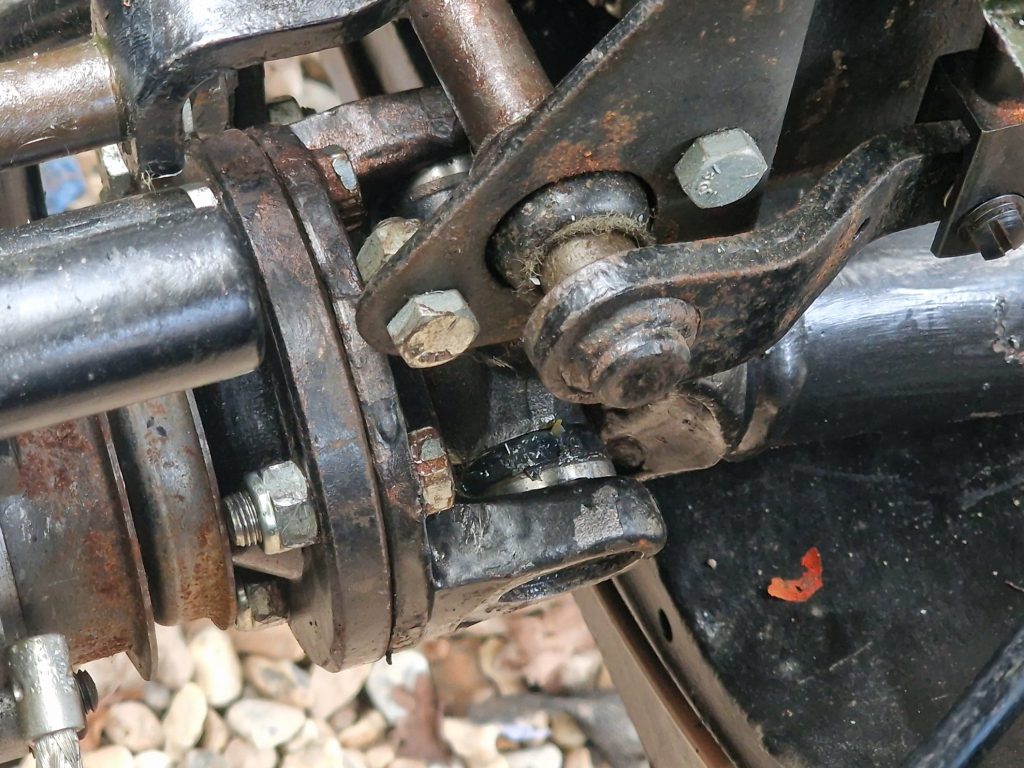
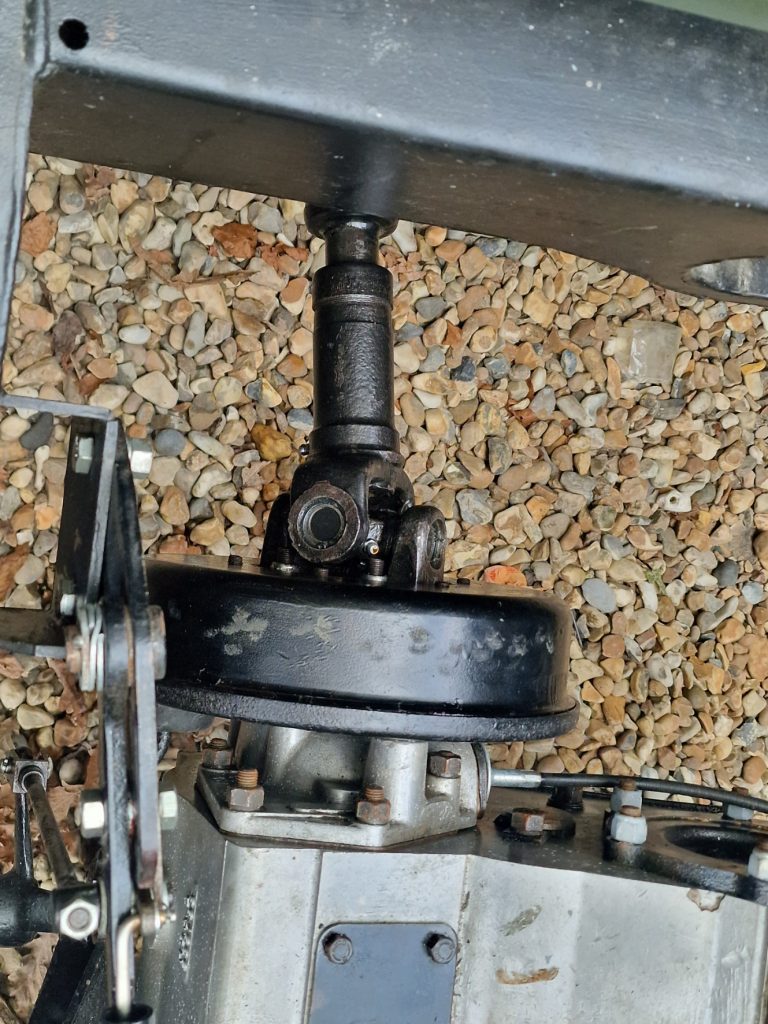
The last time I wrote about Isobel, was back in December 2025, where I talked about the Propshafts and some other bits and pieces. So lets catch up on that first. Propshafts, well I started fitting the new UJ’s, but ran into a frustrating problem. When I got them in on one prop, the UJ’s went really tight, I’m not entirely sure why so have parked that job for now, until I top up my UJ stock, and will probably pay my Nephew Lee a visit so he can oversee what I do.
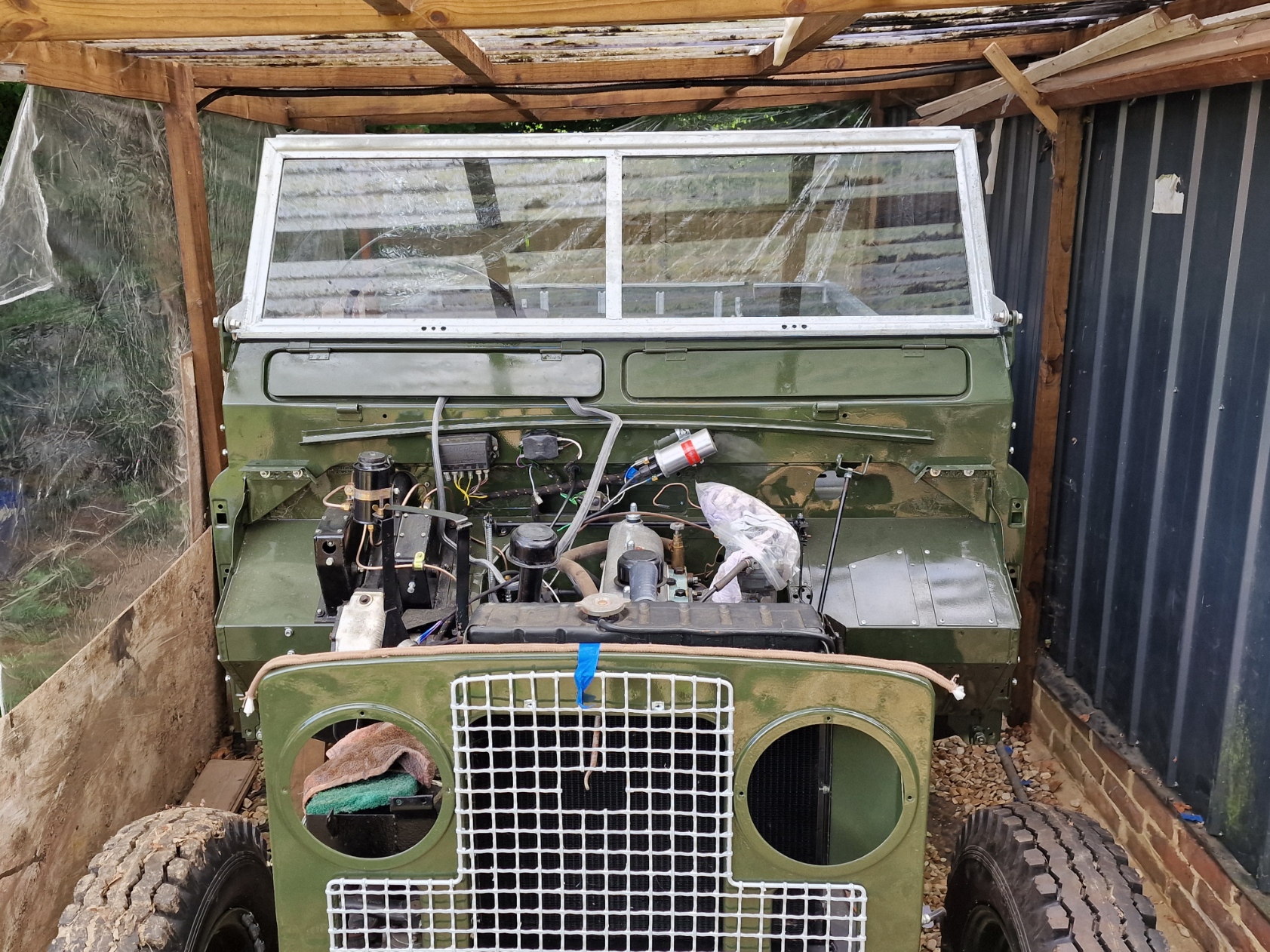
OK, so onto March 2026. I have been staring longingly down the bottom of the garden where Isobel is, week after week, frustrated that the weather has been absolutely crap, and loads of other things going on meaning I had to postpone anymore work until now. But, weather has turned (for now), and other things are on the back burner for now so cracked on with the next jobs.

My plan (Ha, not sure what revision I’m on), is to fit the tub, align the bulkhead and then move onto adding all the other bits to the bulkhead to finally try and get the engine started.

Apparently, which does make sense, is to start at the back of the Land Rover, fixing the back of the tub to the Chassis. Its done this way, as that is an immovable position, and sets the position of the tub.

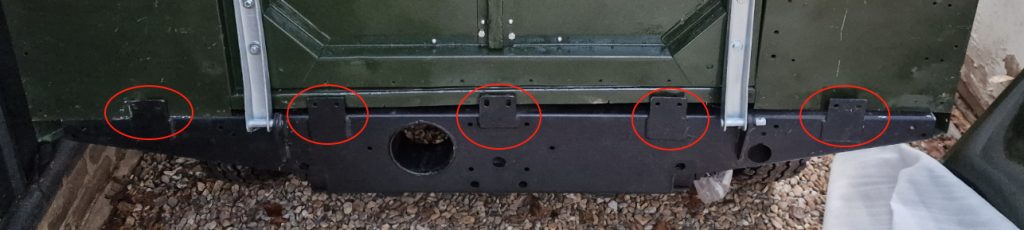
10 Bolts, with star washers on the back secure the Tub to the chassis. (I actually did this over Christmas).

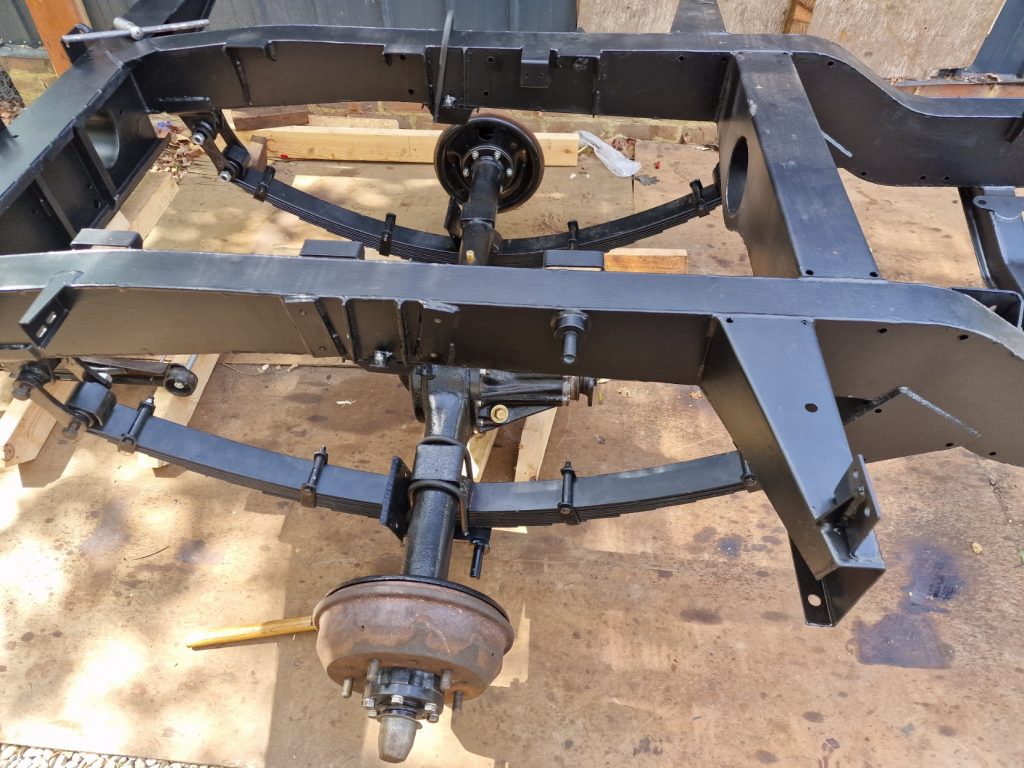
When they are on, the tub is pretty much in its fixed position. The only adjustment is at the front of the tub, which has a little up and down movement but not much, and another thing to consider is the tub supports, which are intended to sit on the chassis, so not a lot of movement available.

The image on the left, you can see 2 of the supports, and the image on the right, the underneath of the tub with the rubber pads fixed which need to sit on these supports. Bolting up the rear of the tub, these pads sat perfectly on the supports.

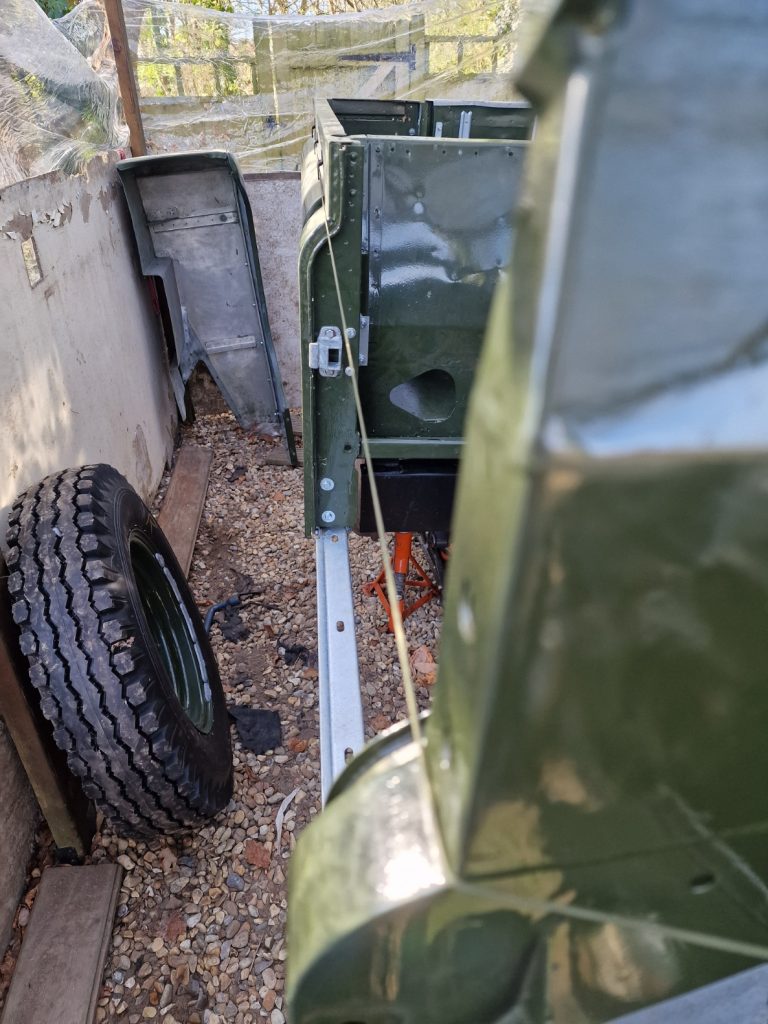
The next part then is to fix tub to the 2 front supports, now this is where it got a bit interesting. Before I moved onto that, I did make sure that the tub was square, and checked the alignment with the bulkhead.

To do this, the way is to run a string line from the back upto and around the bulkhead, making sure it sits comfortably in the top of the curved section. I did this all the way around, down one side, across the front and back up the other side.

It works surprisingly well. It did show me that the tub needed to be pulled to one side a little.

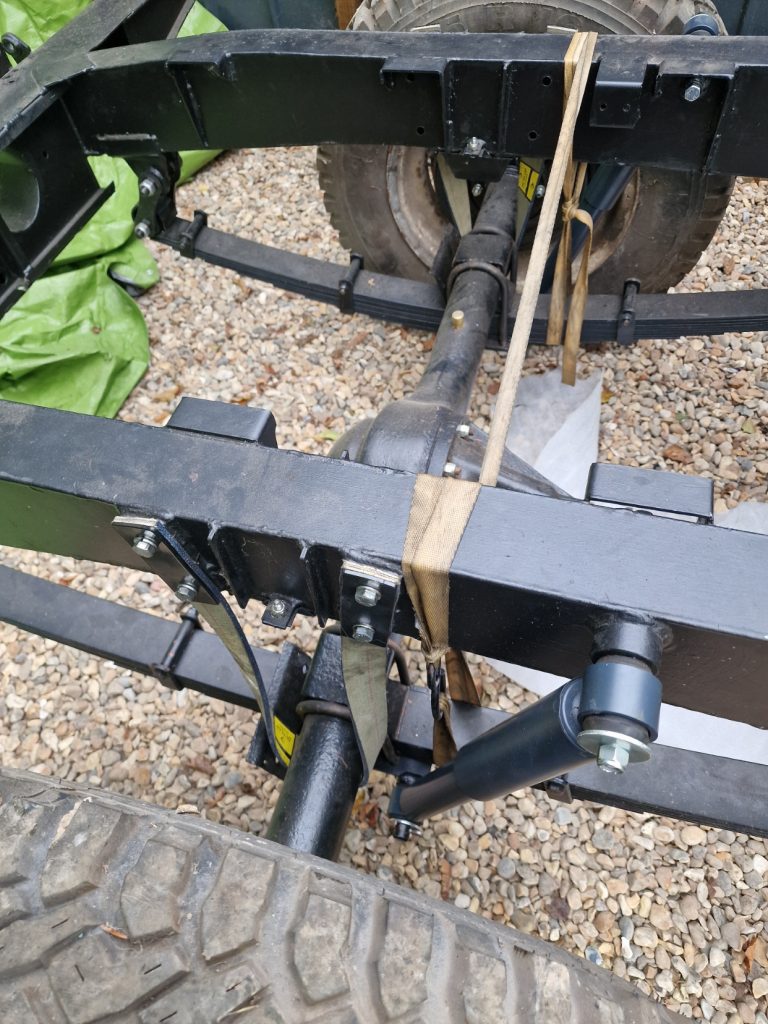
Did that by using a ratchet strap to pull the tub slightly sideways, until the string line sat correct.

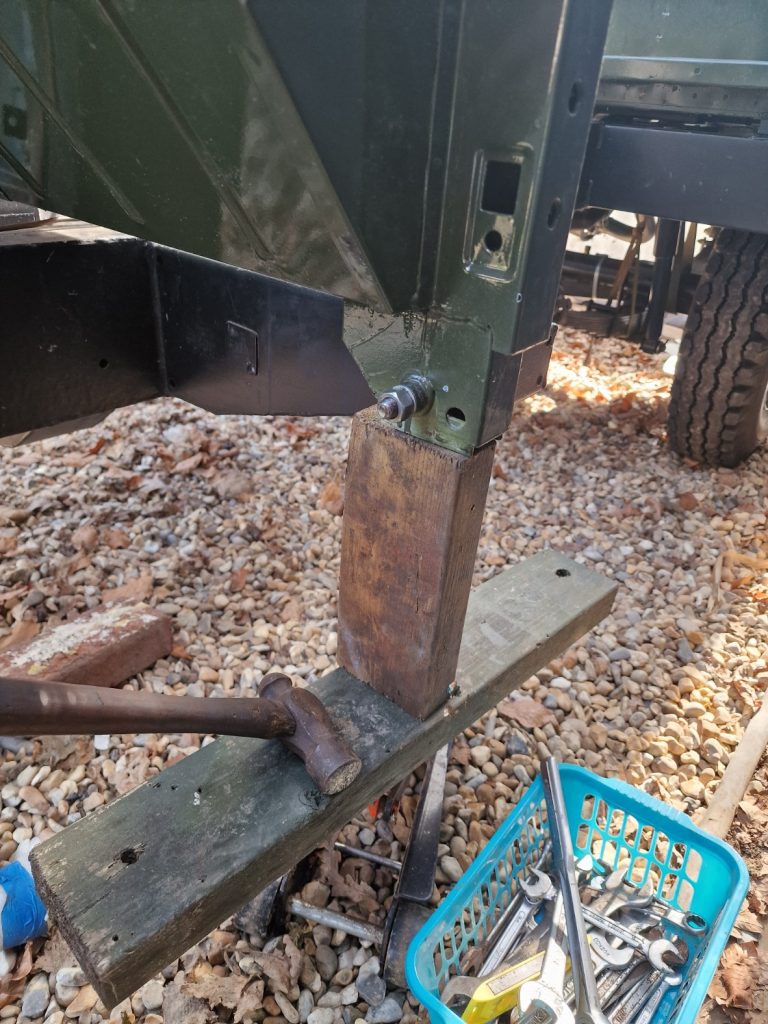
You can see the front tub fixing points in this image, on the front outrigger.

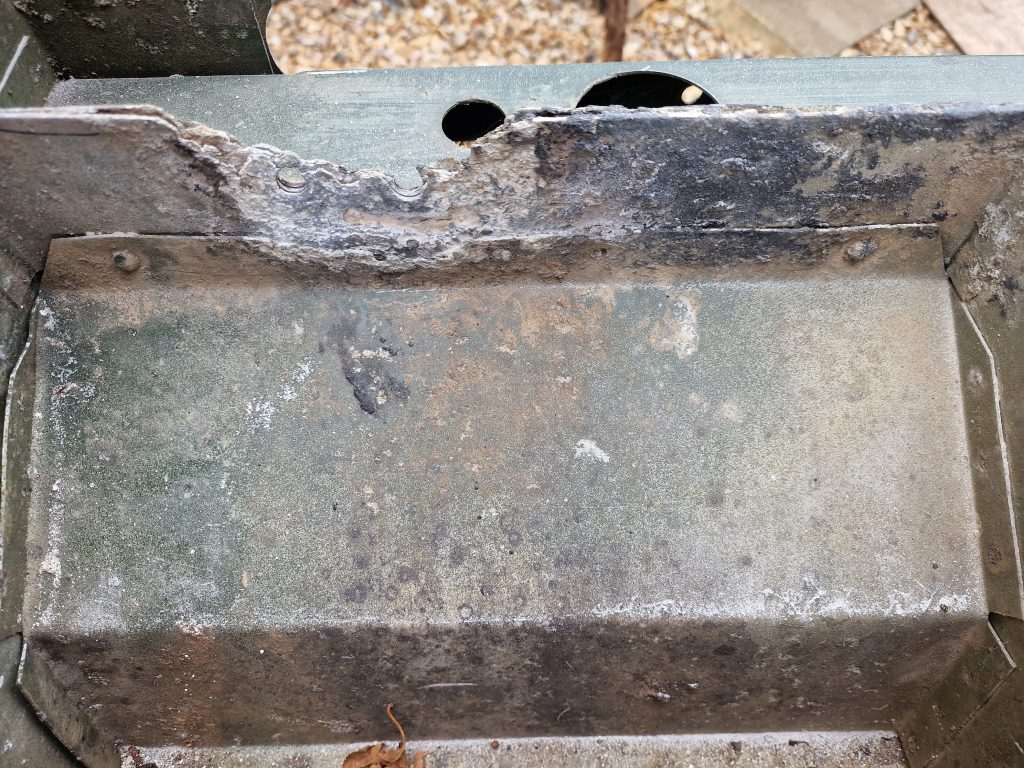
If you have been following this blog, then you will know that I had some repairs to do to the tub where it attaches to those supports.

I did fix it, and drilled the holes where I thought they should go.

Perhaps I should have waited, because they were in the wrong place so had to be re-drilled to match the chassis supports.

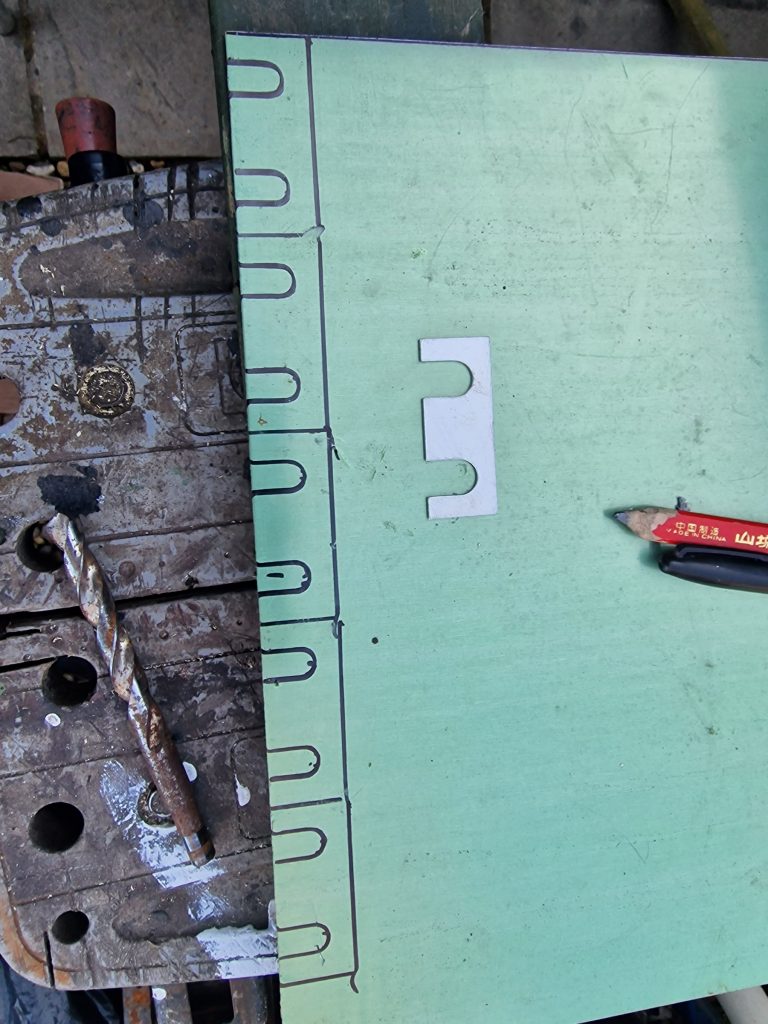
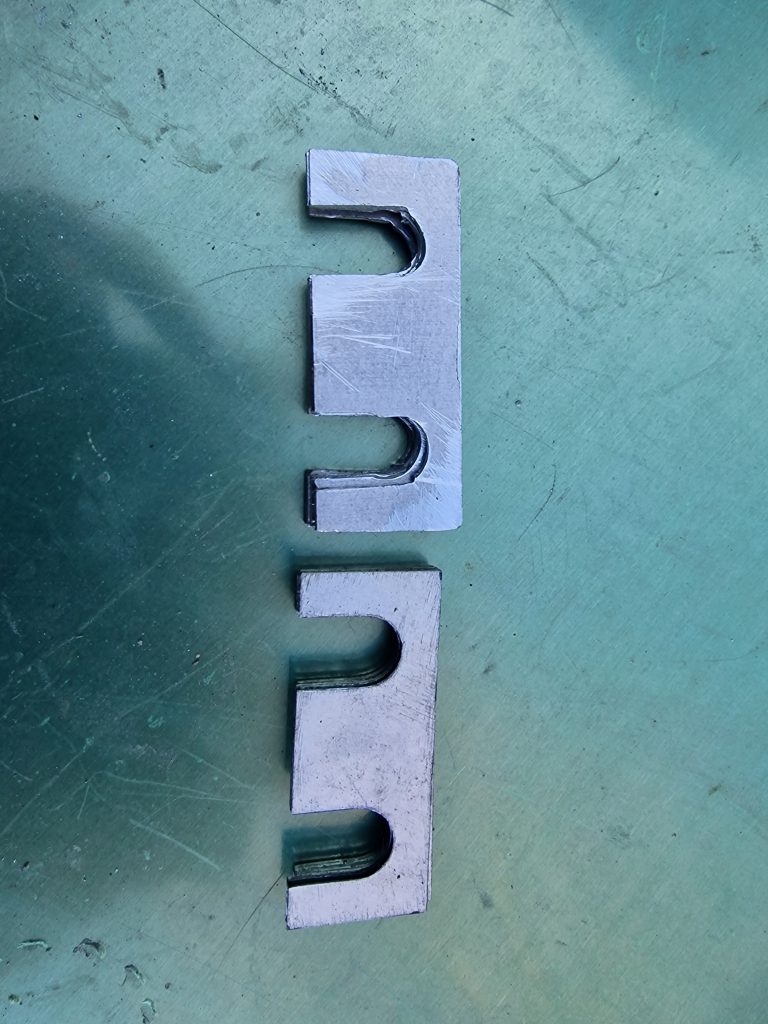
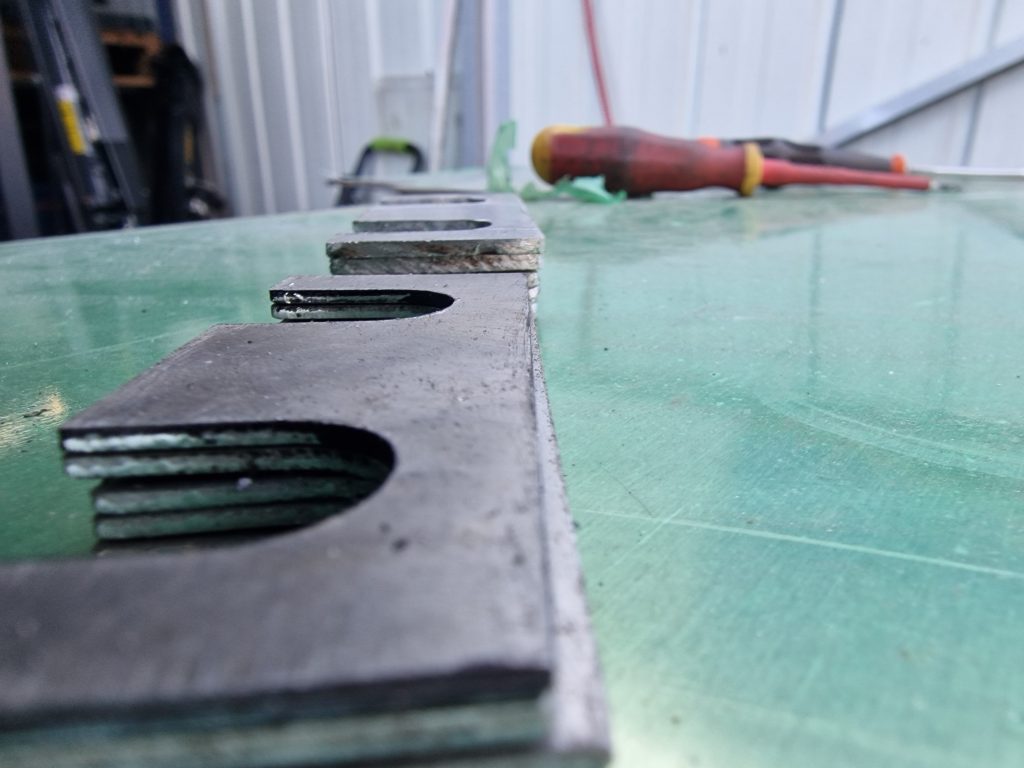
Another thing, apparently, is that it is normal to have to put shims between the Tub and these brackets. I did buy a few on my last order, but when I looked at the gaps, I didn’t have enough, there was almost a 15mm gap between the tub and the bracket on one side, and 5 (ish) mm on the other side. Didn’t have enough, so made some more out of slightly thicker aluminium.
The only really difficult part about this, apart from when I repaired the tub I used pop rivets, and one was in the way, and the holes being in the wrong place, was the space between Isobel and the workshop. Being a tad larger than I perhaps should be, it was a really tight squeeze to get the wheel off, and even harder to get it back on, which needed to happen so I could get under the wheel arch.
With the tub now in position, it was time to line up the bulkhead. Now, the gap between the tub and the bulkhead apparently needs to be 34 3/4″. I have read a variety of dimensions, some as low as 34″, but measuring the door’s 34 3/4″ seemed right.

To get this gap, I needed to add a spacer washer between the bulkhead and the chassis to push the bulkhead forward a little.

Not wanting it to drop completely, supported it with a ratchet strap and jack, while I eased in a spacer washer.

I might have to come back to this later, as while I got really close to the gap, it was a little tight.

With the bottom spaced, very nearly correct, it was then just a case of adjusting the top.

Using yet another ratchet strap, I pulled the top of the bulkhead back, until I had the same gap measurement. Then continued to fix all the brackets in the engine bay to hold the bulkhead in position. (no pics of that, sorry).

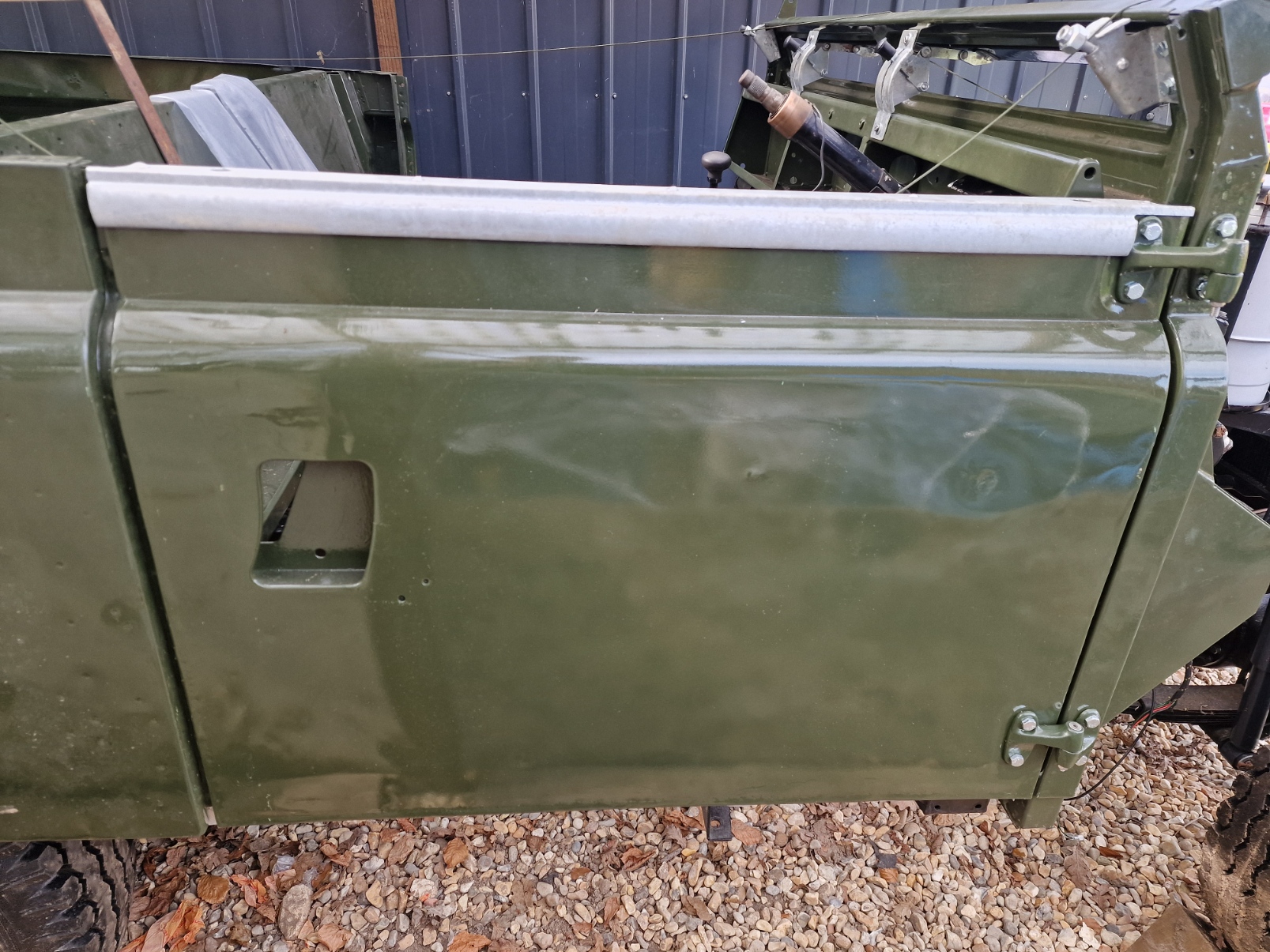
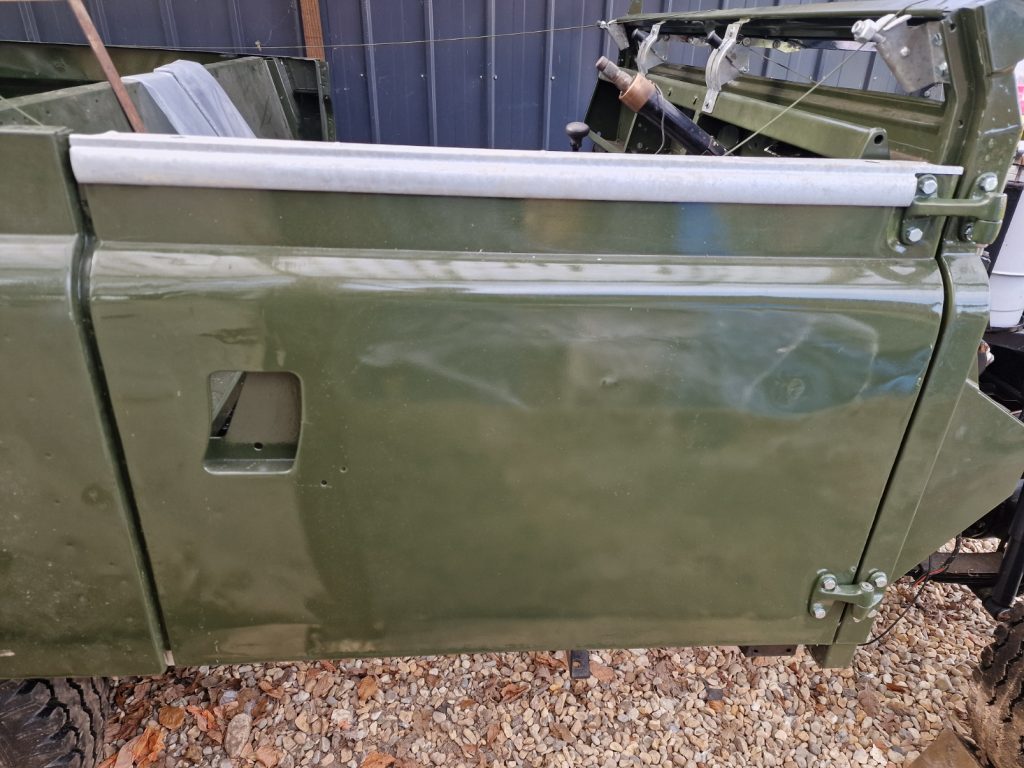
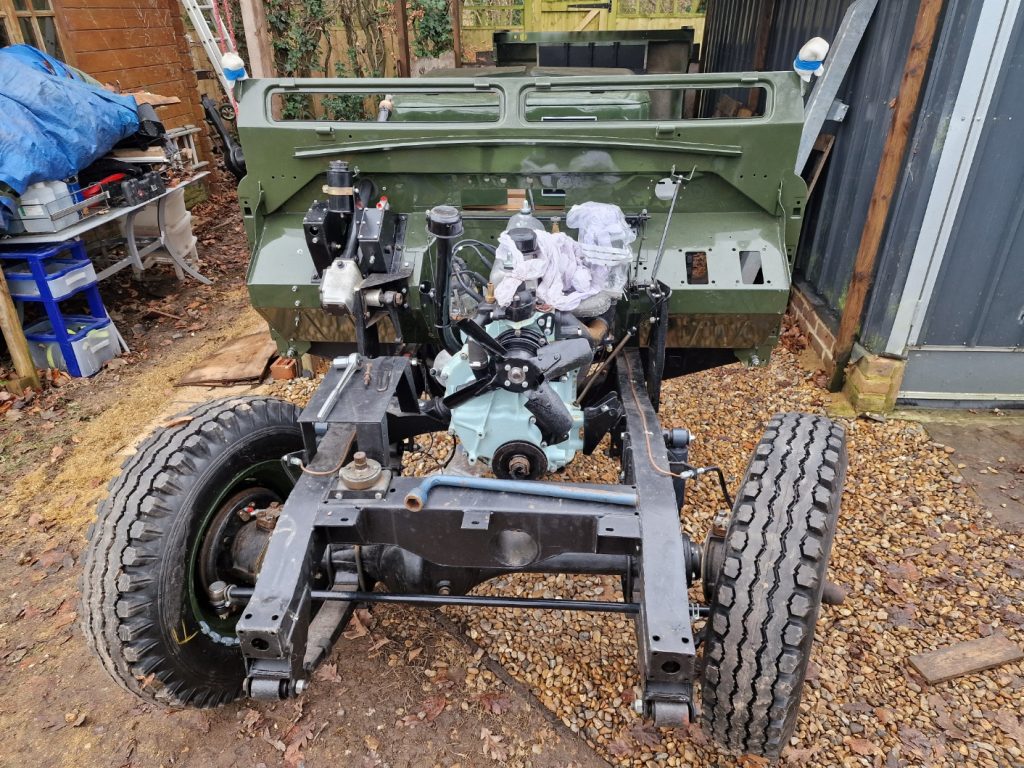
To check it all before tightening everything up, I did actually hang both doors, to make sure it was close enough and gave me pretty even gaps all round. (I dont think this picture does it justice, the gap were pretty parallel both sides).

The reason I said I might need to adjust the bulkhead a little more, the passenger door, had tiny bit less door gap. I think the bulkhead needs to go forward about another 1/16th” or 1/8th”.

So thats the tub fixed, the bulkhead pretty much in the right place, and I now feel confident that I can crack on with all the bulkhead and engine bay accessories, so that will be the next job.

To finish off, a couple of other bits I did.

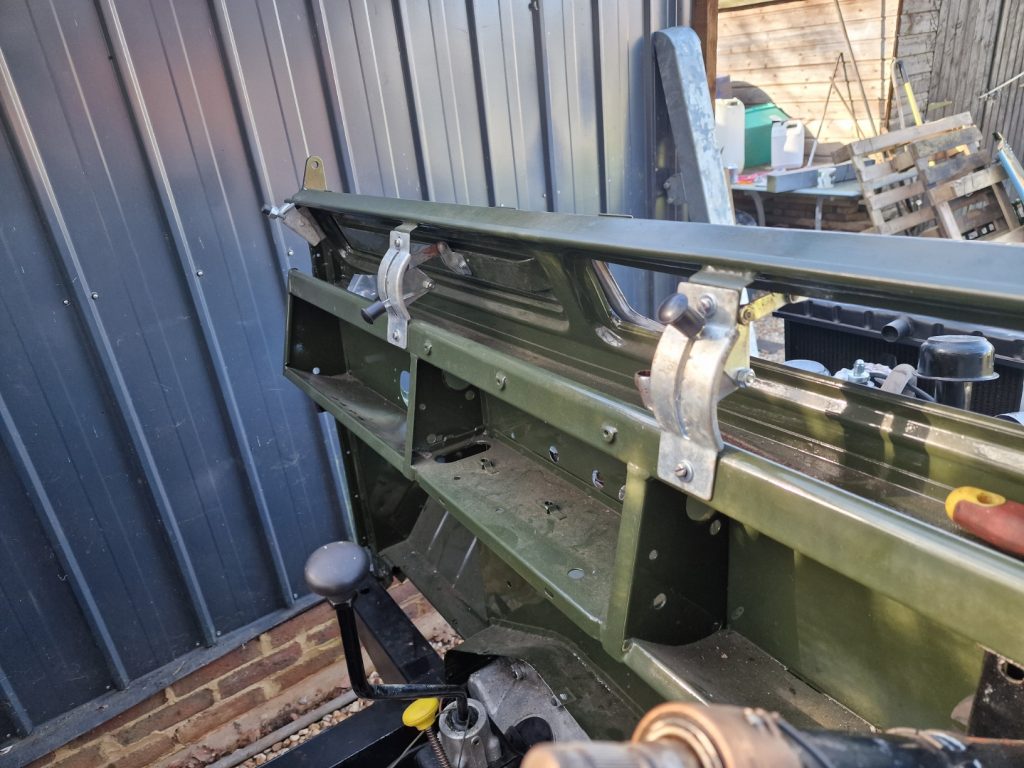
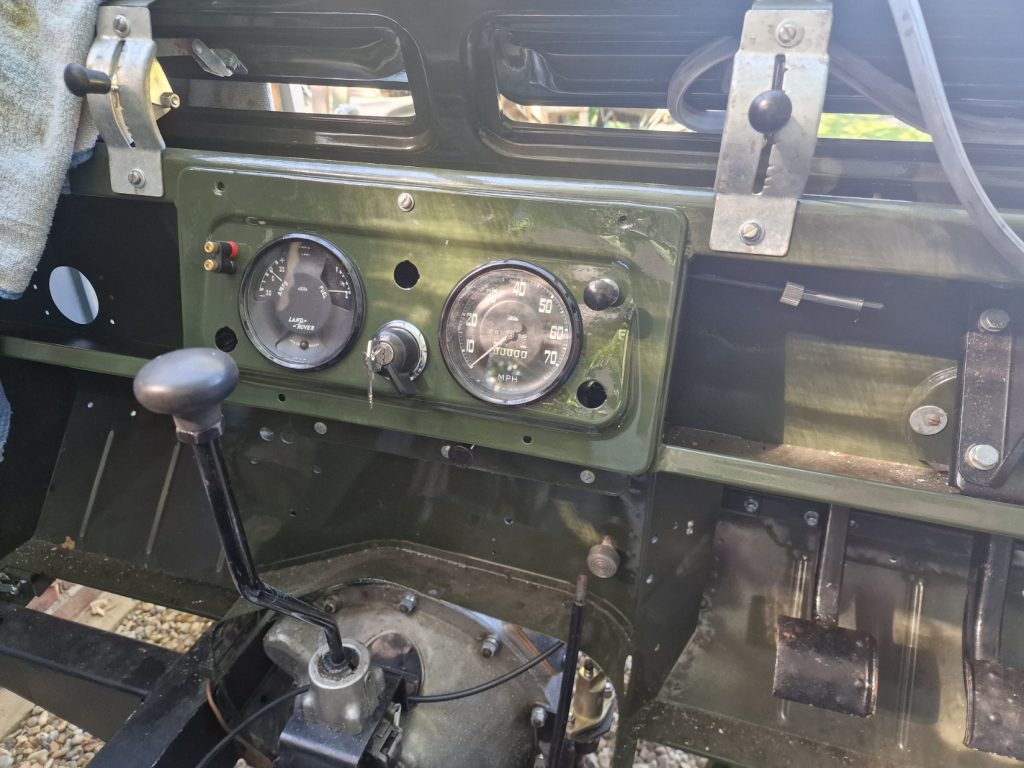
While I was looking for the shims, that I had put away in a safe place, I thought I would add the windscreen locking fixtures and the Air conditioning vent brackets and vents.

Also, over Christmas, I wasn’t totally idle. Apart from the propshafts I mentioned earlier, I also thought I would glaze the windscreen.

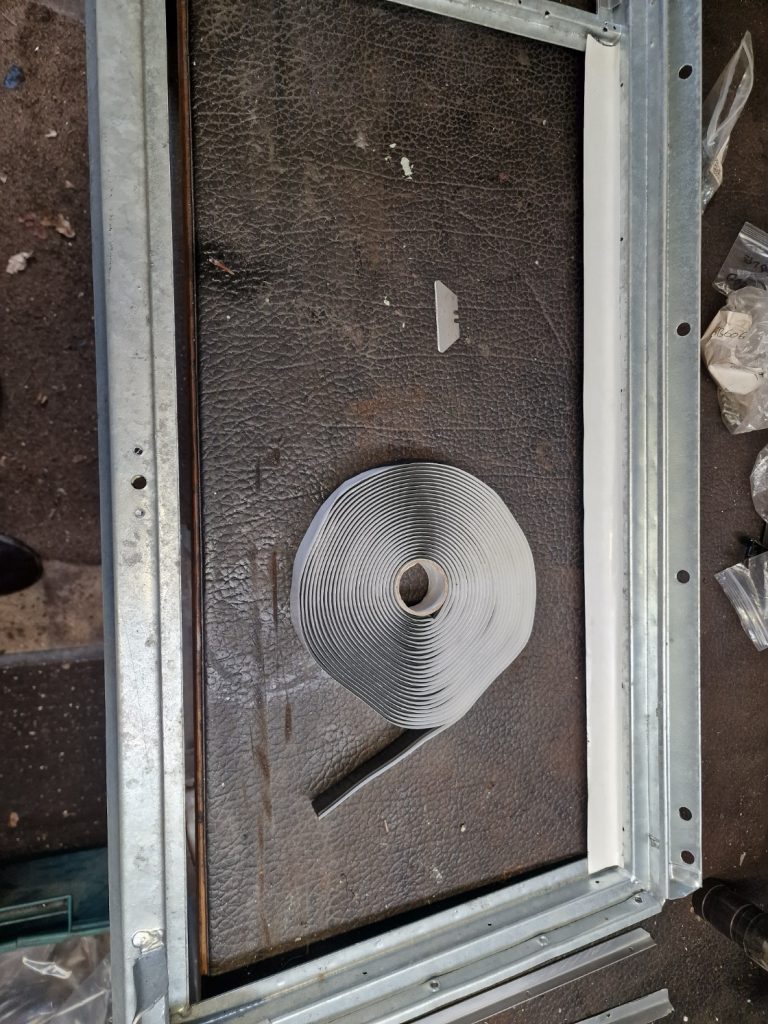
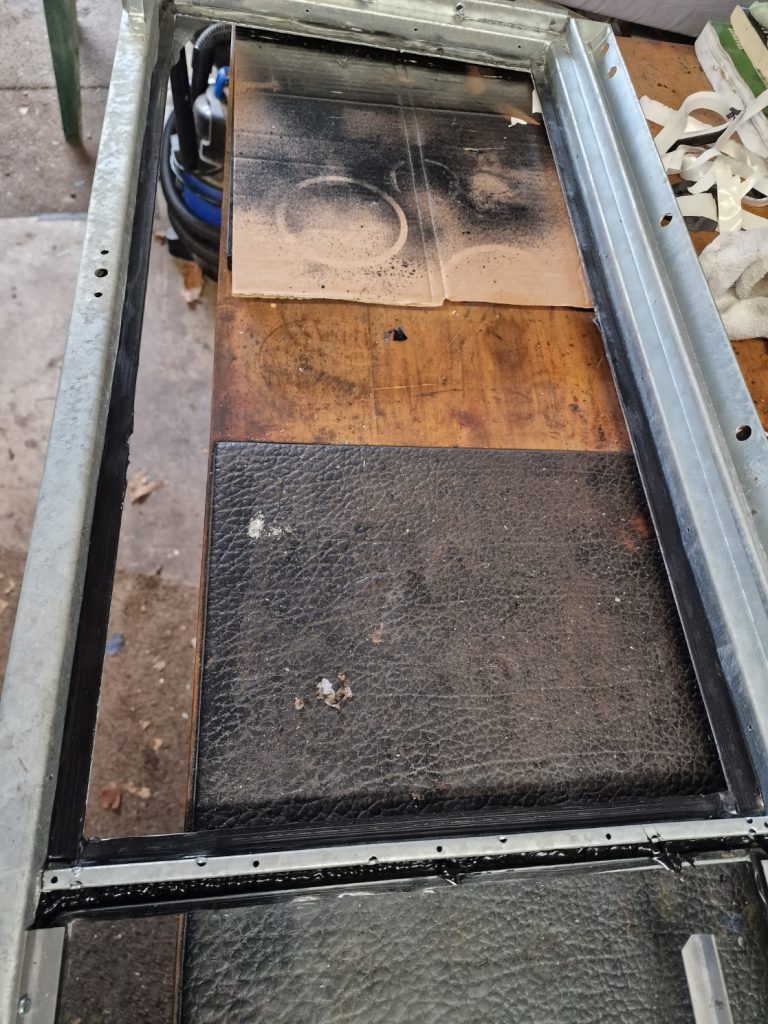
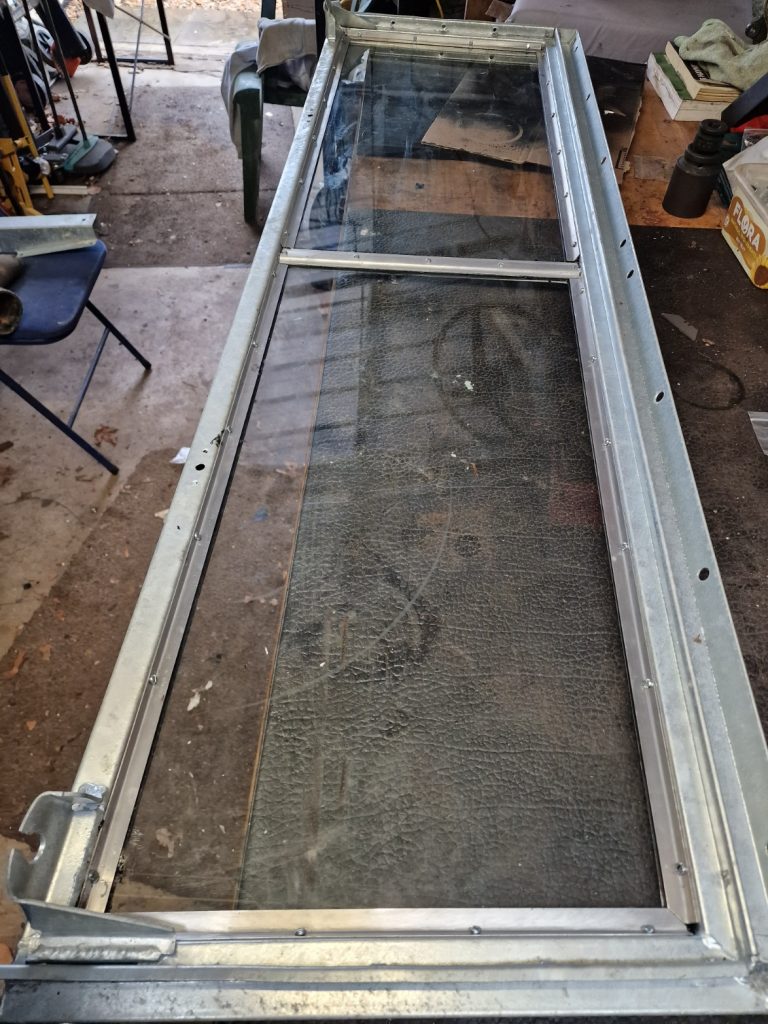
This was a pretty simple process. Stick some butyl tape around the frame, cut off excess and position the glass, pressing it home firmly, but not enough to break it. Finally, screw in the aluminium edging to hold it firmly in-place. I did actually add some more gunk (Cant remember what it was now), around the edge of the glass to make sure it was sealed properly. I wont add the windscreen to Isobel just yet, dont want to risk breaking the glass (as pretty sure its the original glass, from 60 years ago), and in any case not sure it will fit under the car port.

Thats it for now, will see what the weather does over the coming couple of weeks to see if I can carry on, as its all outside work now.


December 2025

Its been a while sincle my last post, back in September 2025, when I completed the engine build. Since then, I;ve beemn busy doing lots of other stuff in and around the house, my wife, brother and sister in-law took a short break in the New Forest, and more recently, prepared for Christmas. All the time thinking about Isobel and what I should be doing. Took a couple of weeks off over Christmas, with the plan to crack on, which I did.

This one then is a bit of a mix of topics, as I spent alot of time doing stuff I dont really need to get done, partly becuase I was short of a few parts, but also becuase I dont do cold very well, so here goes.. A bit of mix and match.

Engine and Gearbox

My last post was completing the engine re-build and getting it and the gearbox, along wiht a new clutch into the chassis. One thing I did forget was to grease the bush in the flywheel and also the clutch withdrawel mechanisum. So, first job was to remove the gearbox and grease those parts up.

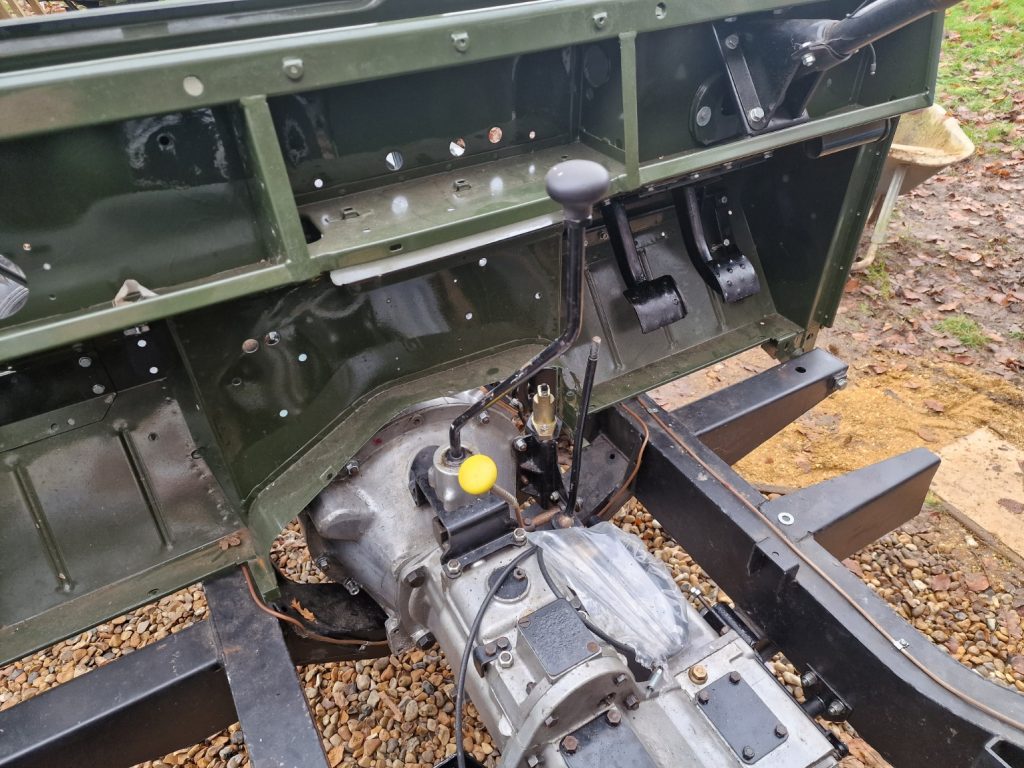
Next, was to put the bulkhead onm which I did manage to get done although with some difficulty, as I did it on my own with the engine crane. Anyway, all on and loosly bolted up.

Before the bulkhead went on, and before my break, I did install the peddles along wiht the master brake and clutch cylinders. Another little error here, I had to correct, I had the wrong master cylinders on the wrong peddles, no idea why I did that, but I did. Swapped them over, so all good now.

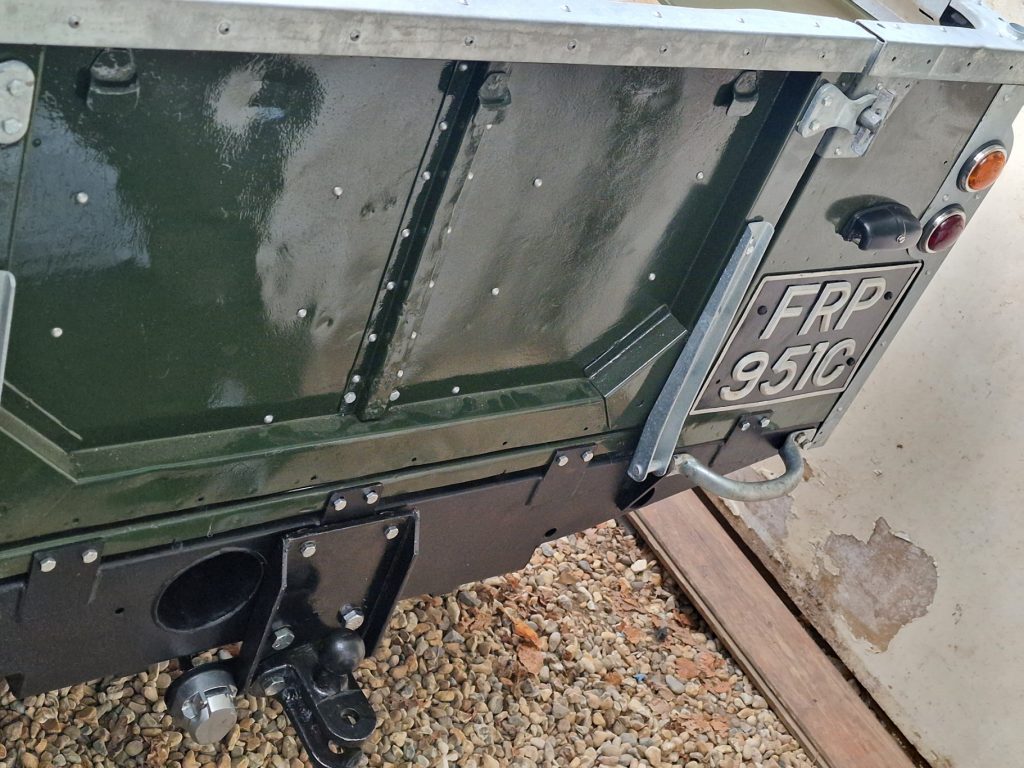
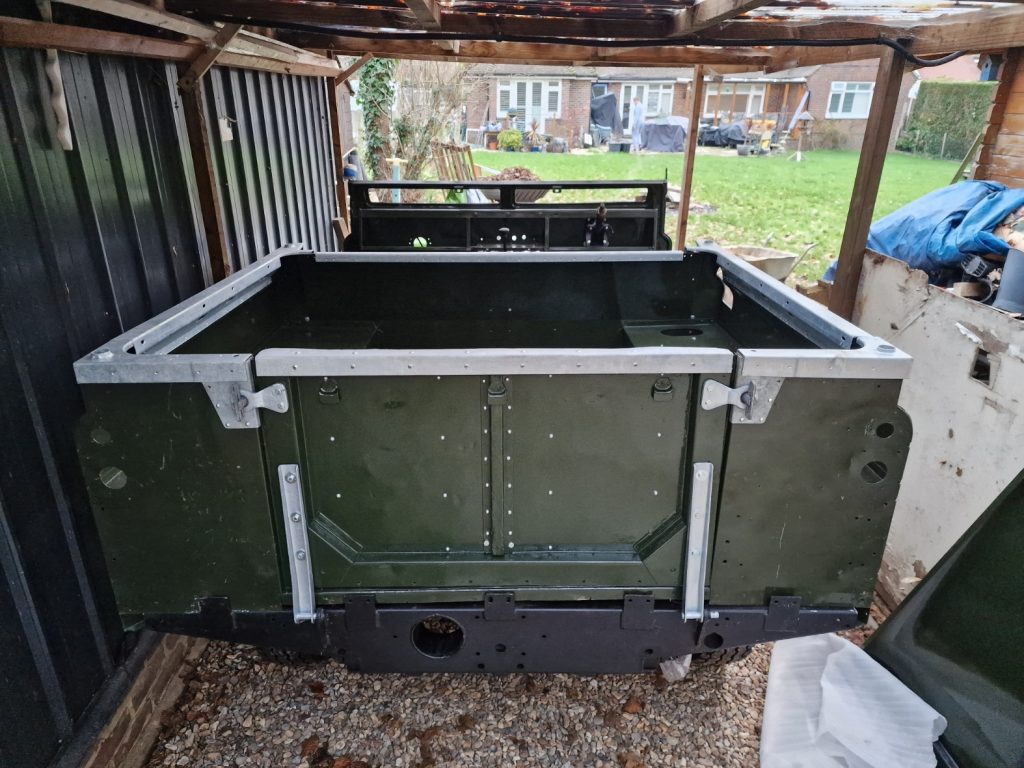
Now I have the bulhead on, I can move the land rover back in its car port a bit futther. to do this I put the tub onto the chassis, and just could no resist the tempation to all a little of the galv cappings and try the tailgate on. Only did the corner cappings.

The next obvious thing would be to bolt the tub onto the chassis and line it up, but didnt have enough of the right size bolts, so parked that bit for a while. The tub needs to be put on, lined up before the bulkhead can be fully tightened, and probably want to do this before adding too much else right now, so needed something else to focus on.

Propshafts

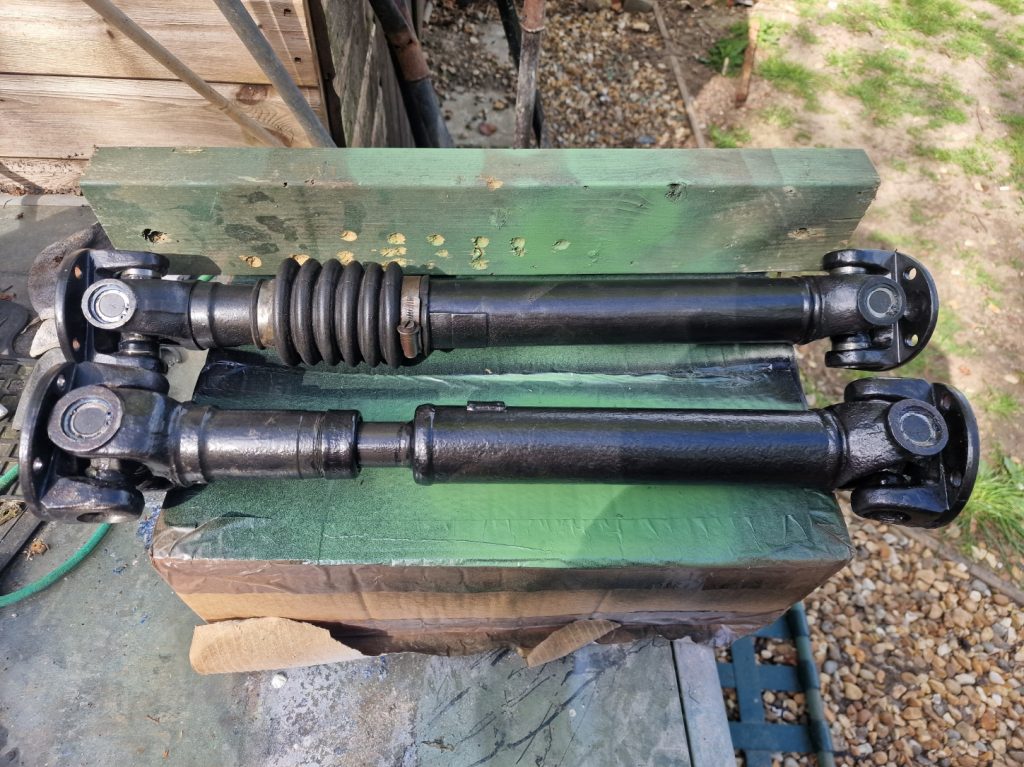
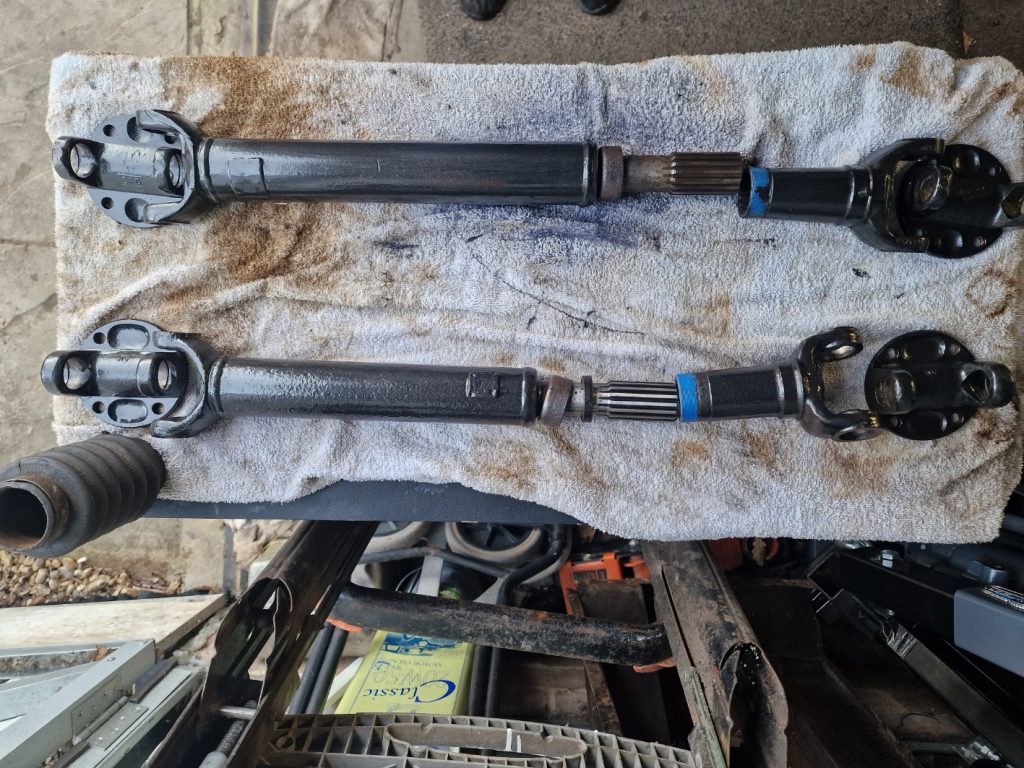
A couple of things have been tucked up in the corner of the workshop I’ve been avoiding for a while are the two propshafts. So decided to start restoring them.
This one, has been cleaned up a bit, they were both way more crusty than this, and took a while to wire wheel them clean.

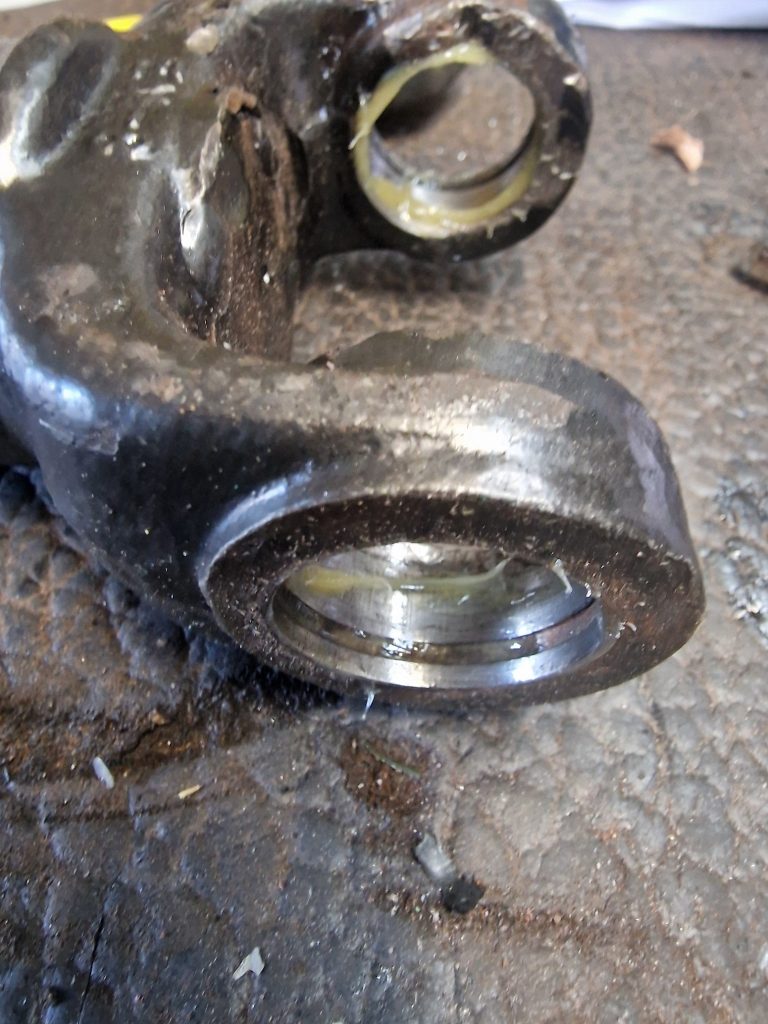
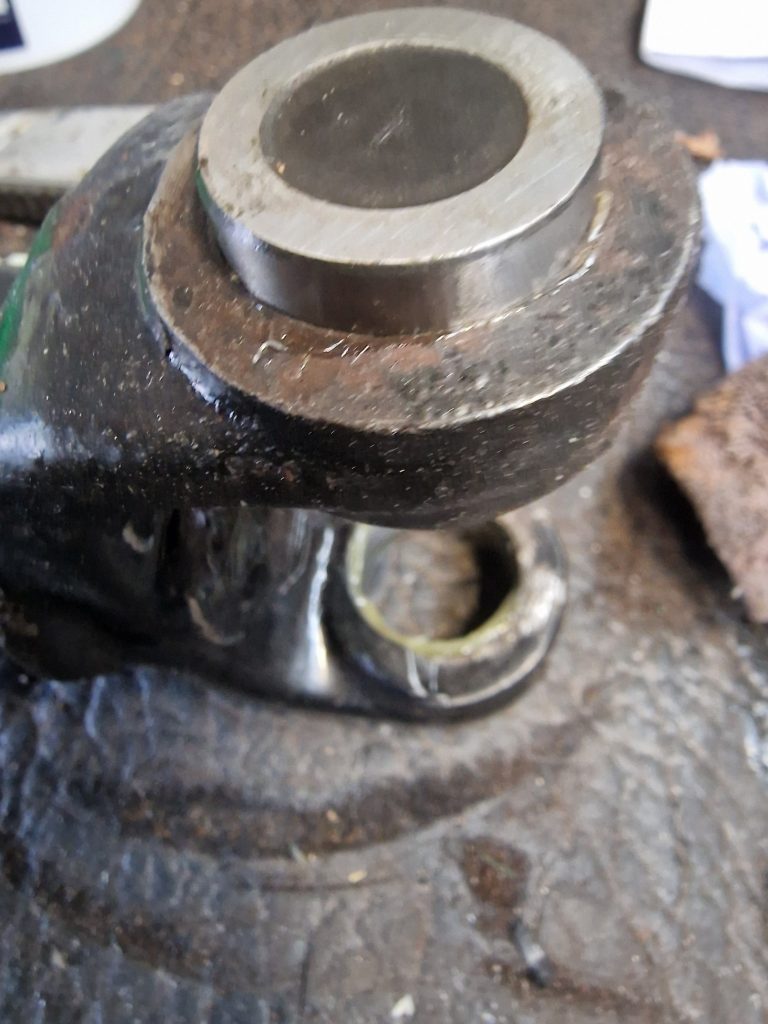
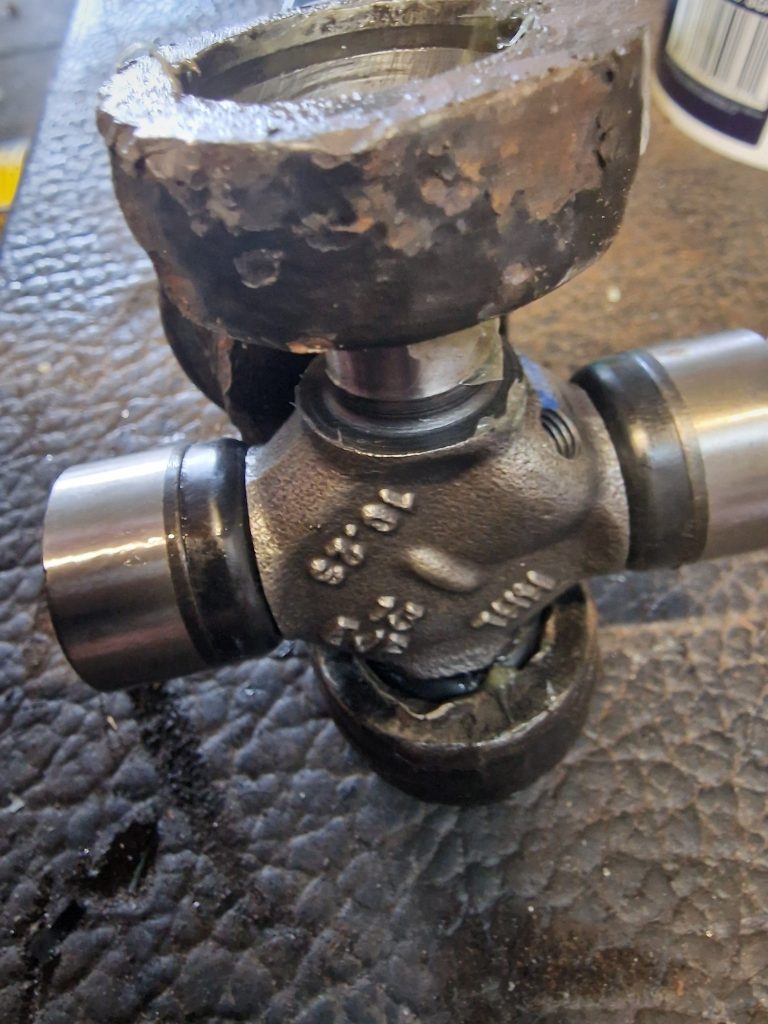
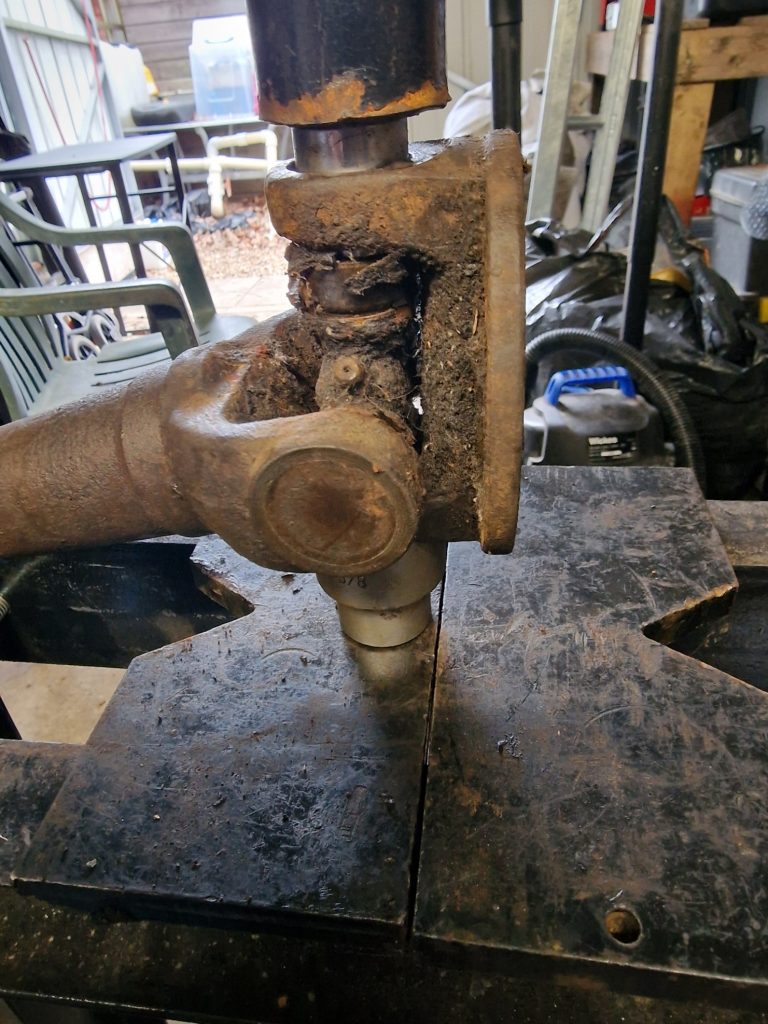
After cleaning then up as much as I could time to take out the old Universal Joints. I tried with a socket and hammer, no luck, so got my borrowed press out. Even with this, it was not easy, kept adding pressure until a couple of them went BANG! as they finally released from the casings. Oh, yes I did take out the circlips before I tried 😉

Anyway, same as before, pressed it as far as it would go, took the roller bearing cap off and then pressed it back the other way.

Finally got all 4 out.

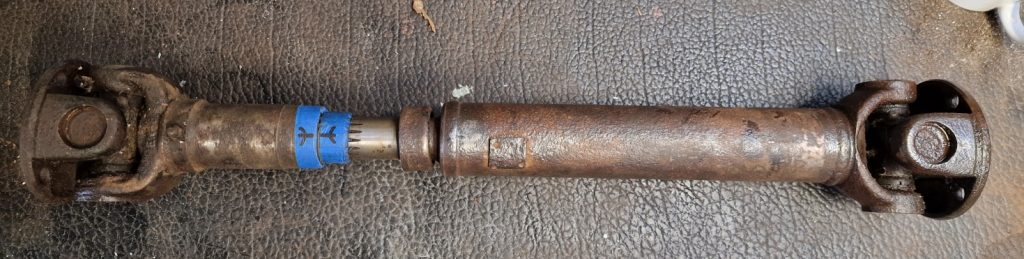
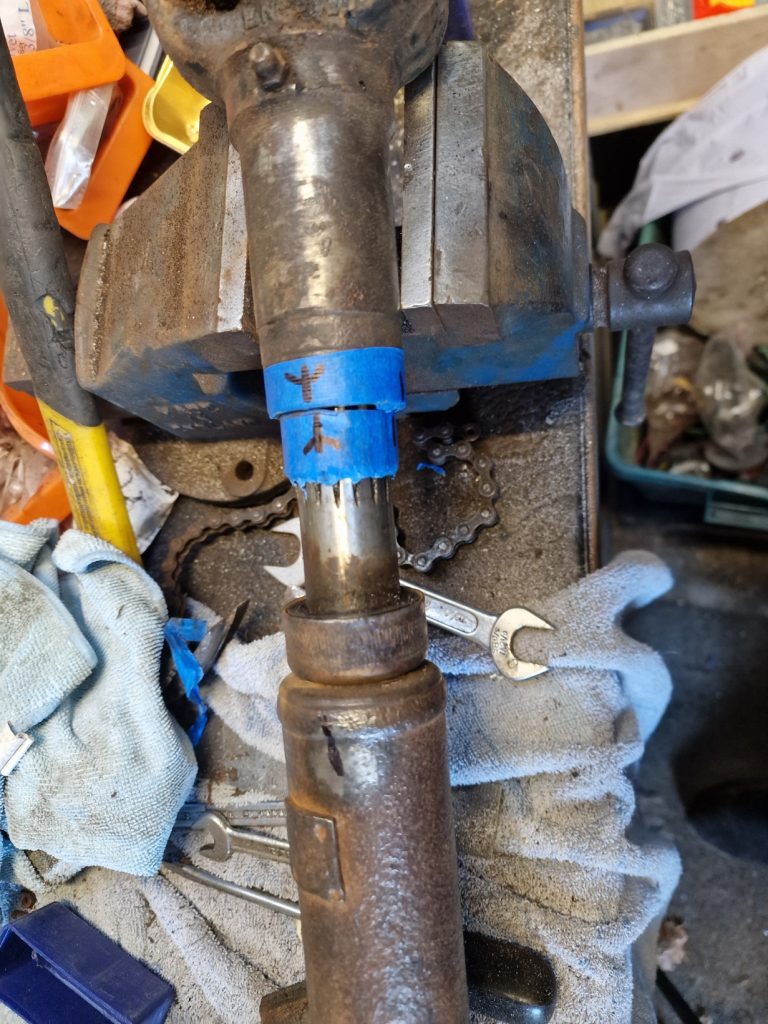
Somehting I did learn before I did this was that they all need to be kept in the same orientation, to maintain as much as possible the balance, so used a little masking take as in the picture, but also stamped the shafts and ends so they can all go back together in exaclty the same way as they came apart.

Went on to then clean the up properly, and got a coat of hammerite – direct to rust black paint.

Cant finish them as dont have the new UJ’s, s onto something else. How about putting some stuff onto the front grill?

Bolted my new, rather expensive radiator on, added the strip across the top with little rivets (Not sure I got these round the right way, but happy with how it looks) and bolted on the bonnet release machnisum.
So thats now reay to go onto the chassis and be plumbed in for when I try to start the engine.
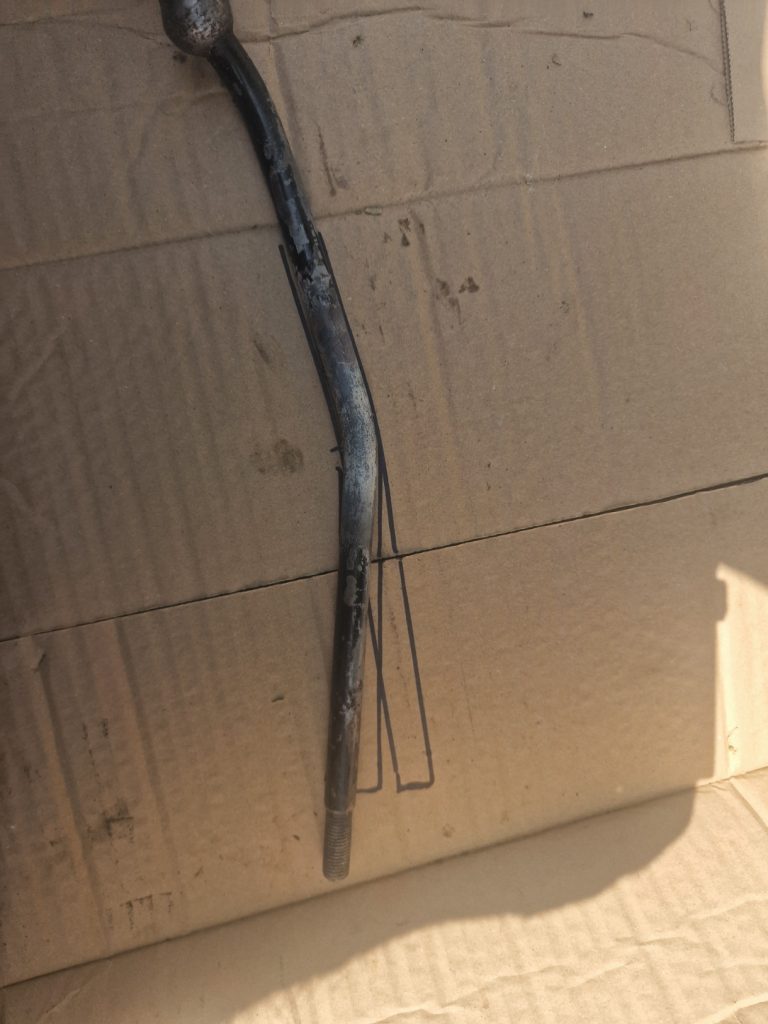
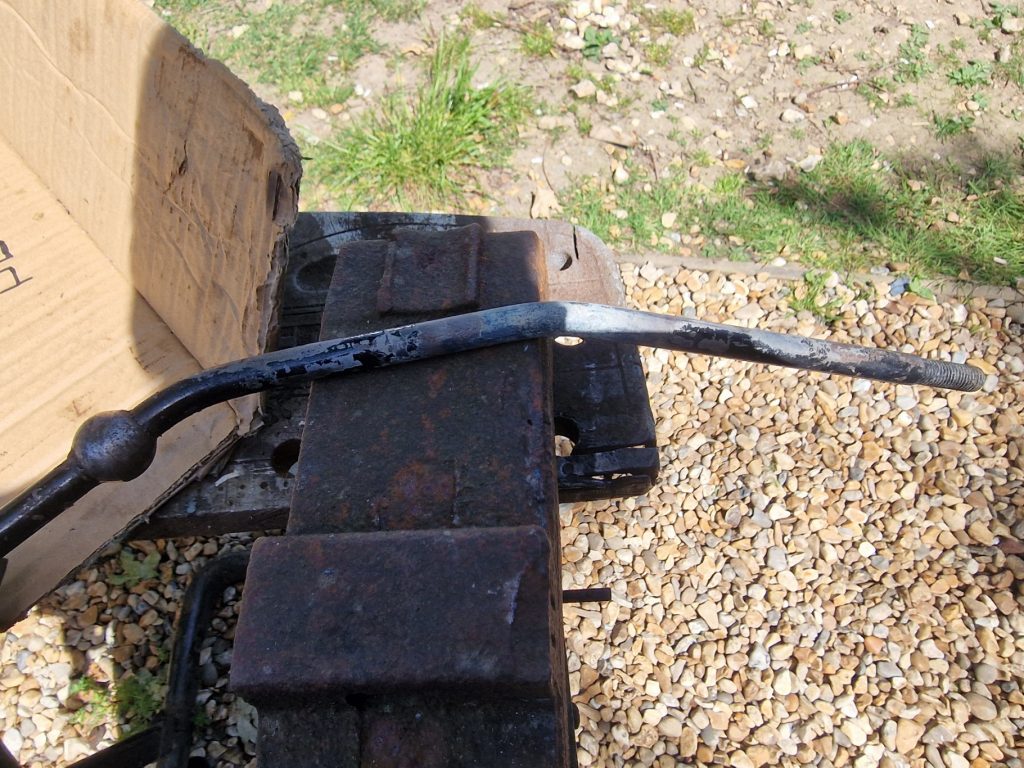
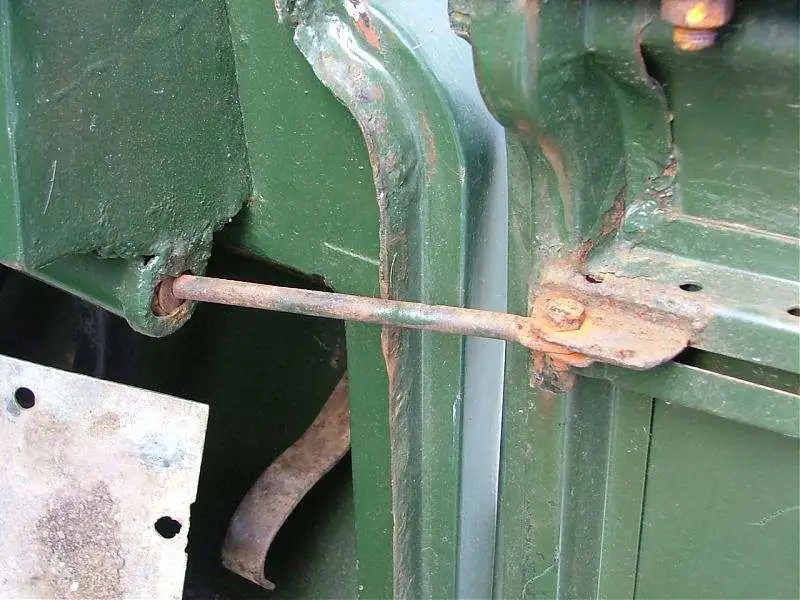
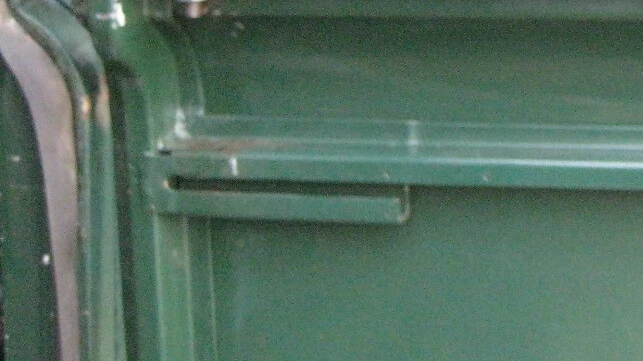
Something I noticed a while ago, but had’nt really thought too much about it was the door stops. Basically its a bar that is located in the bulkhead and attaches to the door, to stop it flying fully open. When I got the Land rover, this never seemed quite right, so investigated.. and this is what I found.

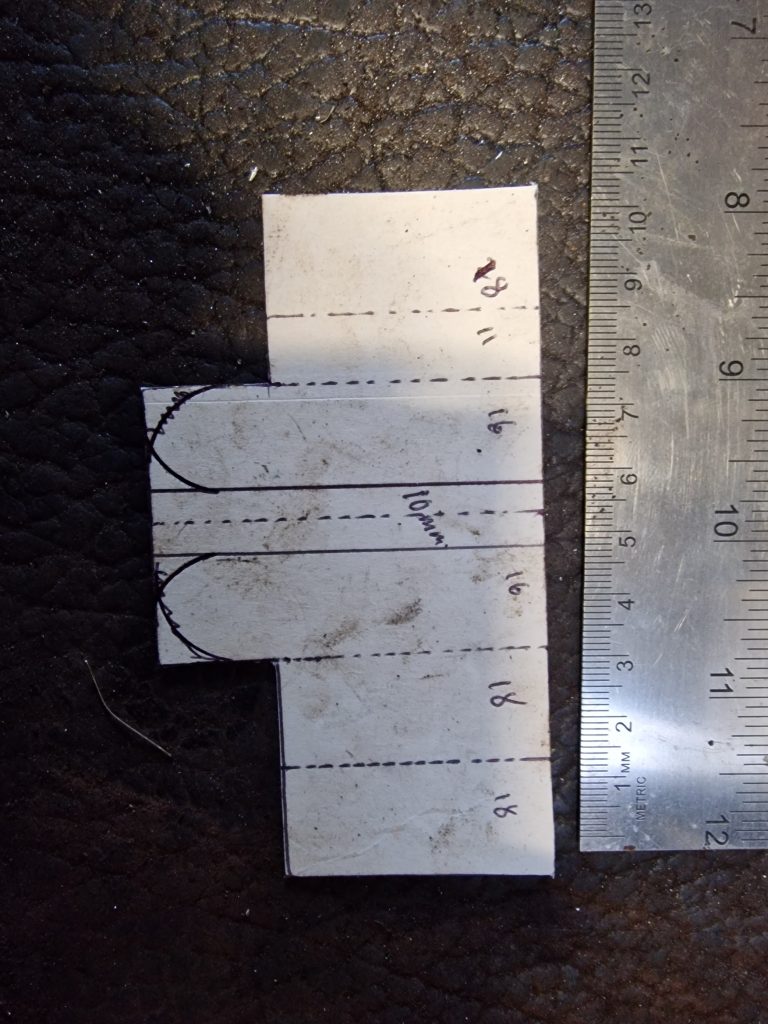
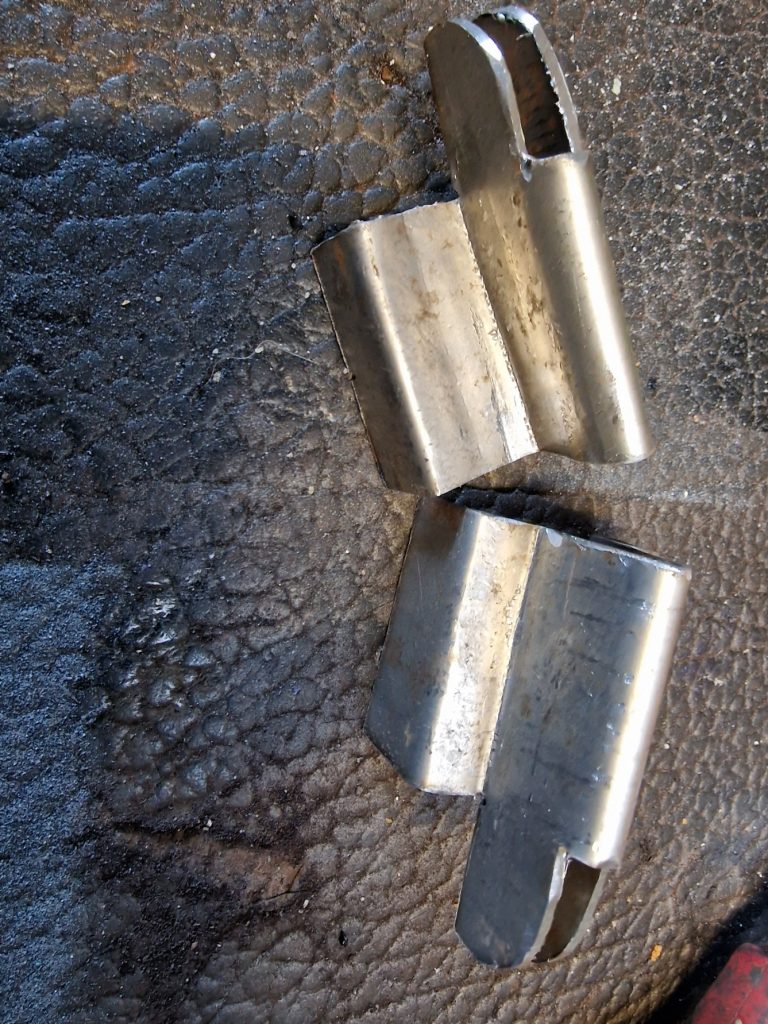
The image on the left and the middle one are actually series 2a doors. The right image is a later series 2a or series 3 door. As can be seen, the door stop mechanisum is a little different. So what do have, I have a series 2a bulkhead and what looks like later or series 3 doors. So I need a way to use the door stops with my seemingly wrong doors! Now, you can buy an adapter for series 3 doors to work with series 2 stops, but while not stupidly expensive, still looking at £30 – £40 for the two, and I have plenty of other stuff to buy, as I will mention later.

So, I decided to have a go at making some… Bit of 2mm steel sheet, and cardboard template and a little bit of fabrication, I did. Not painted yet, and not finally riveted in, but I think they will work just fine.

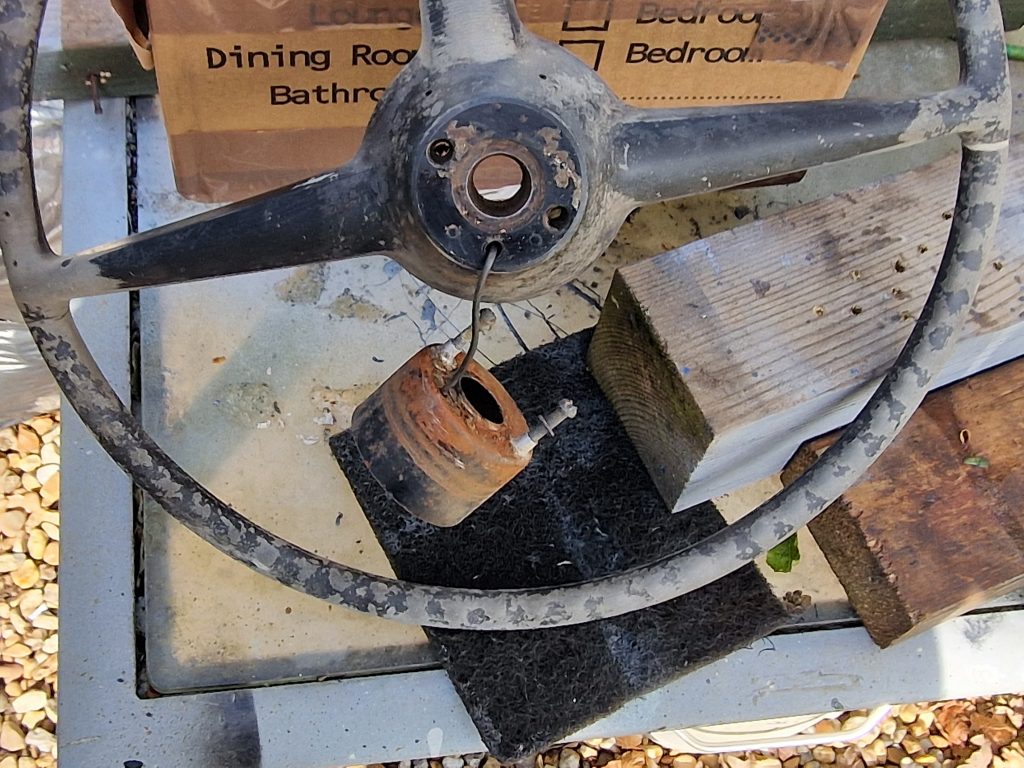
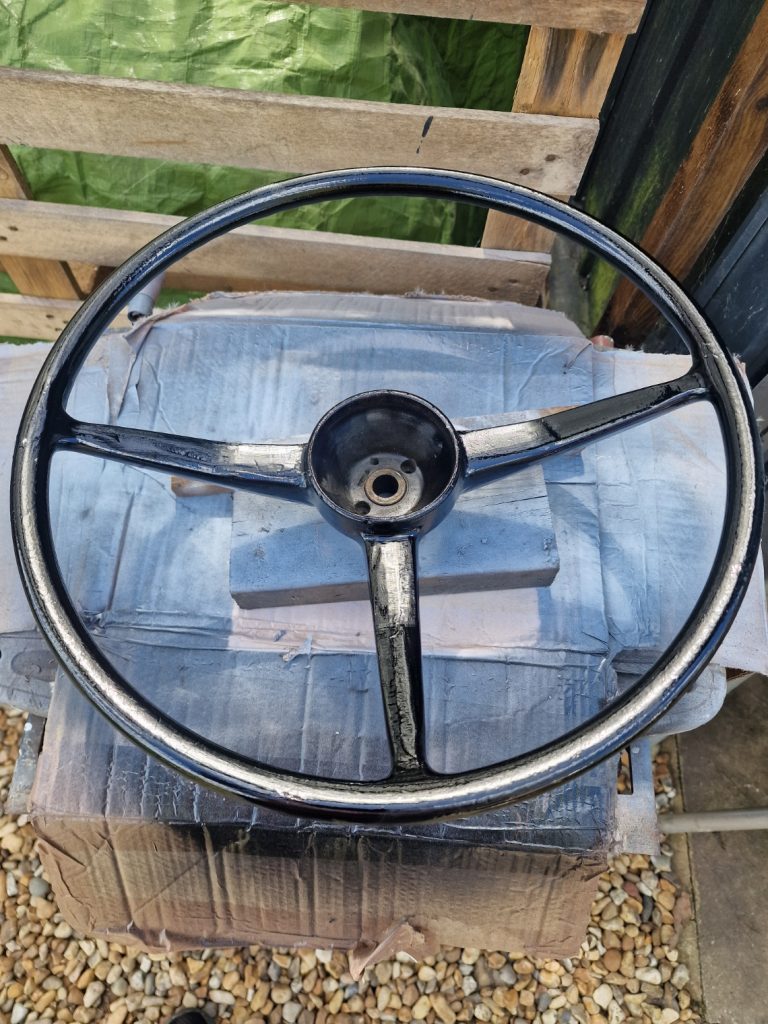
You can also see the check strap in the last image, this, as was everthing on this Landy, very crusty, so out came my zinc plating kit and I zinc plated these, and also some other bits an bobs.

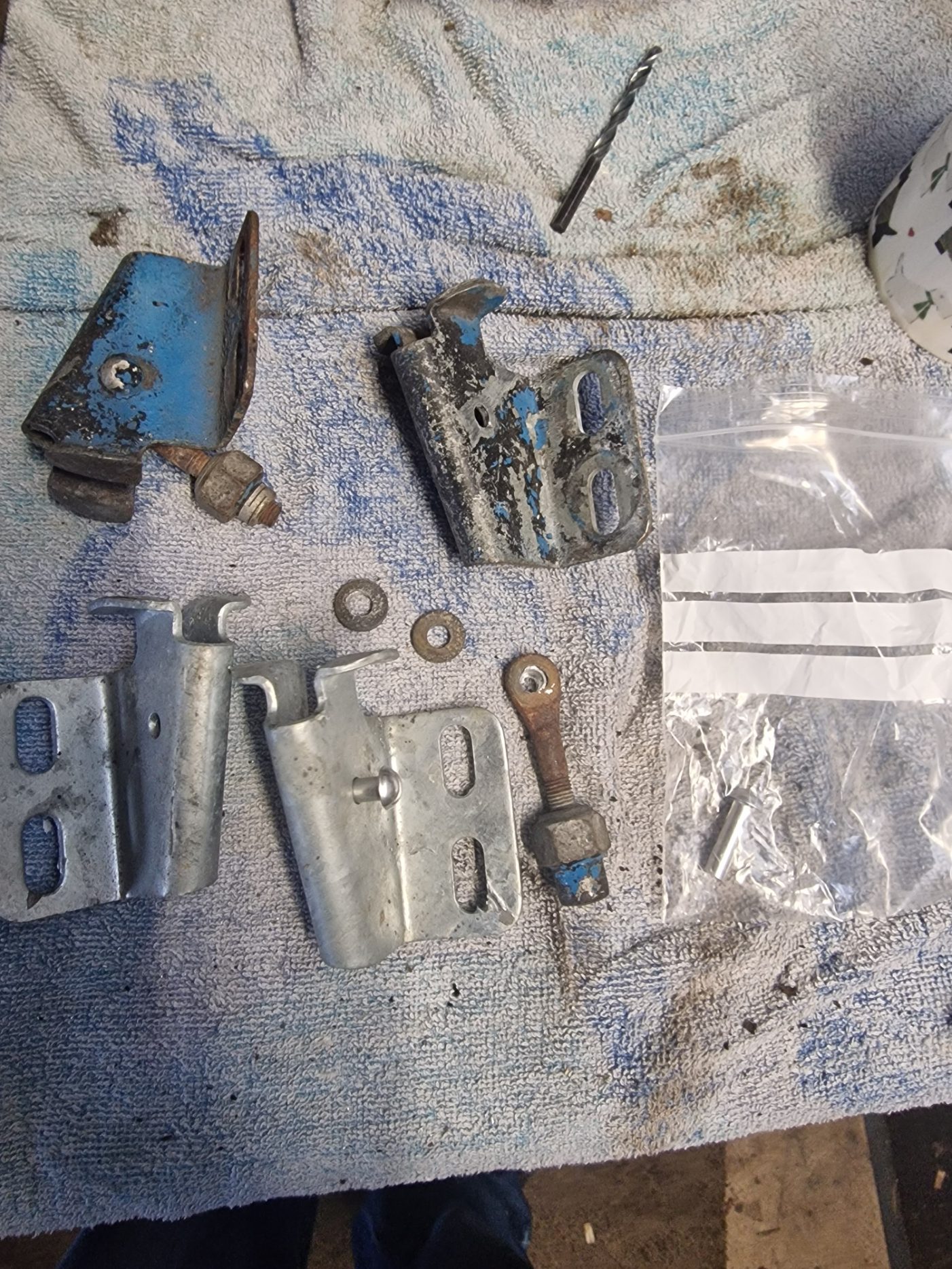
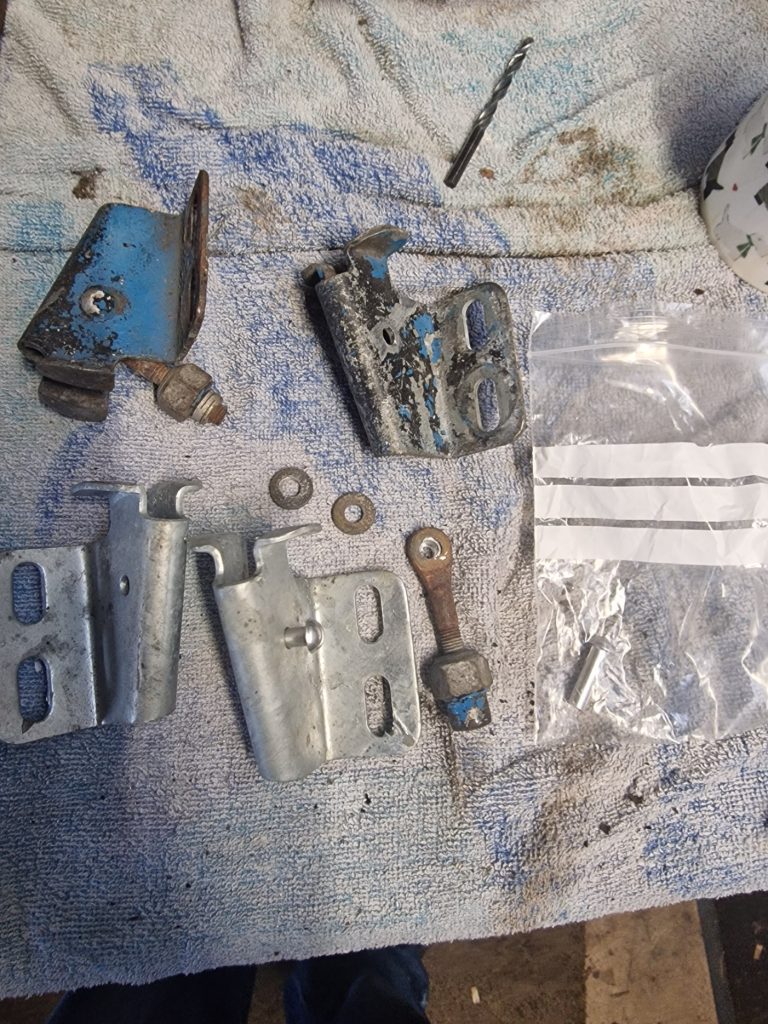
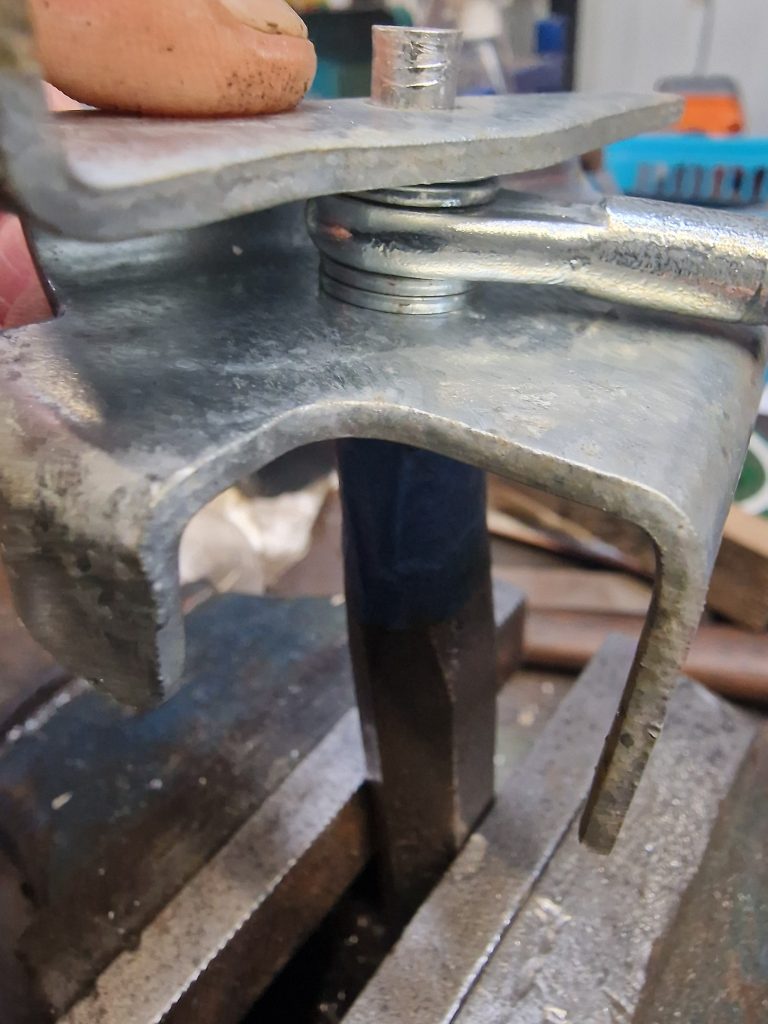
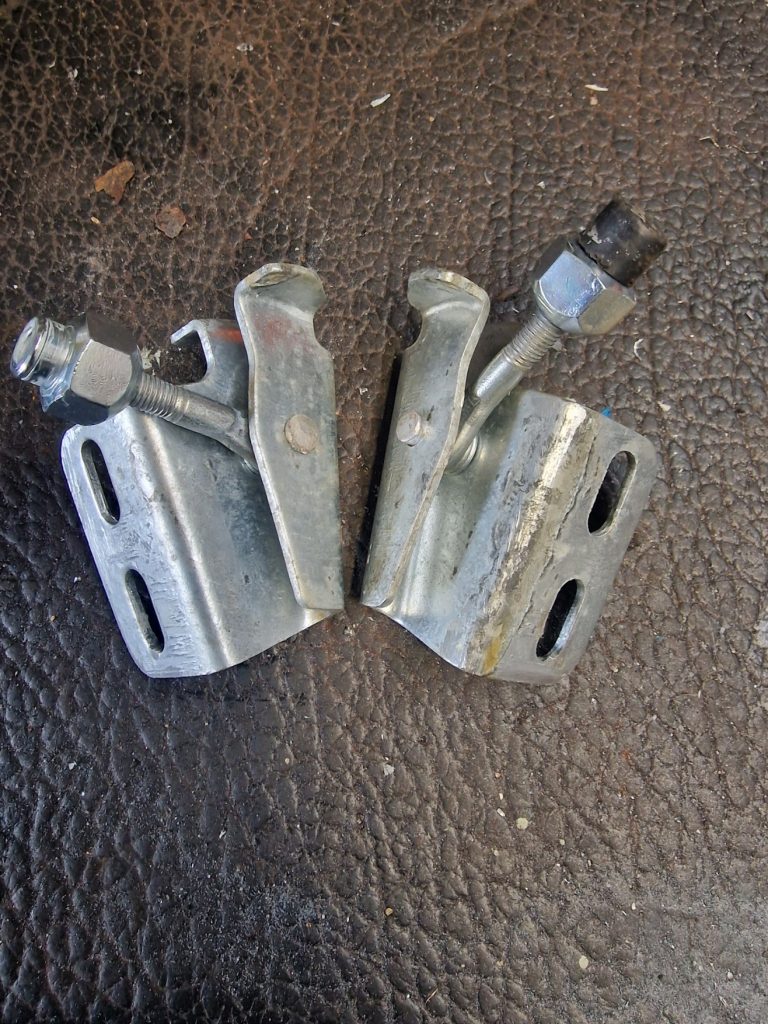
ONe of the other bits I plated was a part of the windscreen locking brackets. Now, when I had the galvanising done, I sent this part also, but didnt realise that a rivet that holds the screw part was aluminium. During gavanizing, which is done at I think 400 degrees, the rivet melted and I lost the screw part!. Cant buy these, and didnt think I could make one, so bought a couple of old parts, took the screw bar off and bought a couple of the rivets. The new/old parts were rust and crudy, so zinc plated them aswell.

Waht I started with, how I riveted them back together, and what i ended up with.

To finish this one up, I have mentioned a few times, Didnt have this or that, all this meant that I placed 3 orders woth my 3 favorite suppliers and bought lots and lots of new bits, including loads of nuts, bolts, wahsers, Propshaft UJ’s, sealer for the windscreen, seals for the rear door / tailgate plus lots of other bits.

Big downside, none of it will turn up until I’m back at work, so will have to continue messing around other bits until I can get some more free time.


Engine Build Completed

The last post was all about the carburettor, and while not entirely straight forward was completed, prior to that I wrote about the final engine build parts, which were not totally completed. I also mentioned that I had a bit of an issue with the manifold’s. So thats where this one pretty much starts.

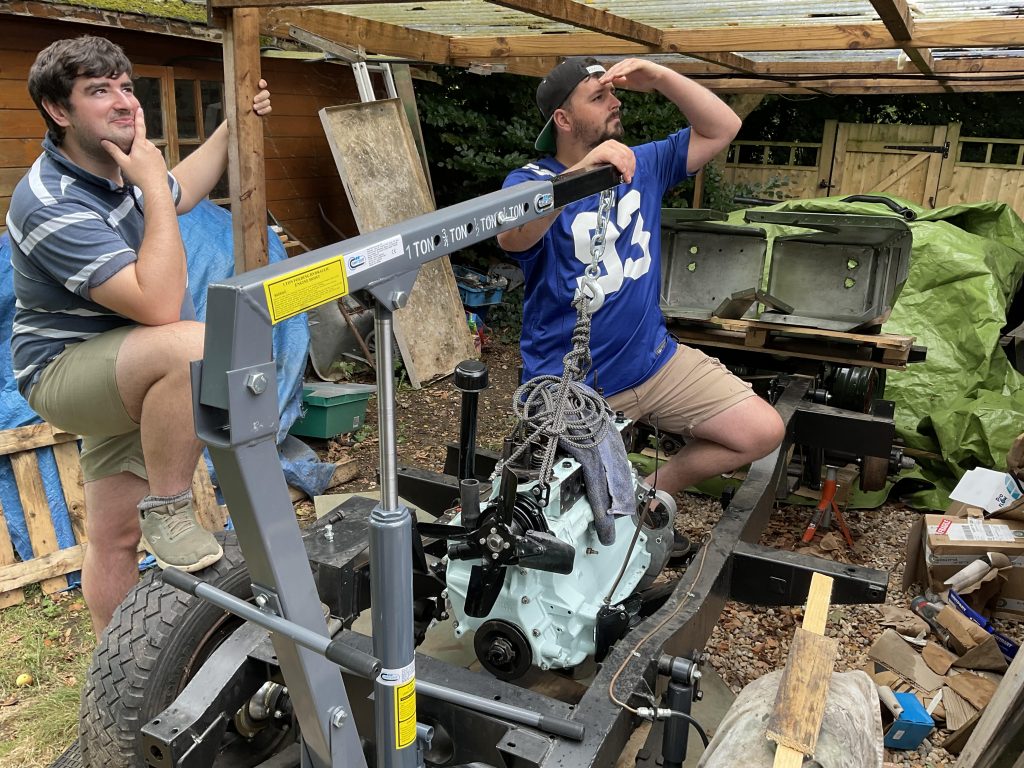
Before I start with that, I decide to put the Engine into the chassis, for 2 reasons, 1 clear out the workshop a little, getting a little crowded in there, and 2, will be easier to add the other parts.

So employed a little help from Dan and Alysda, although wasn’t expecting the posing, I only wanted a simple picture.

Was very grateful for the help.

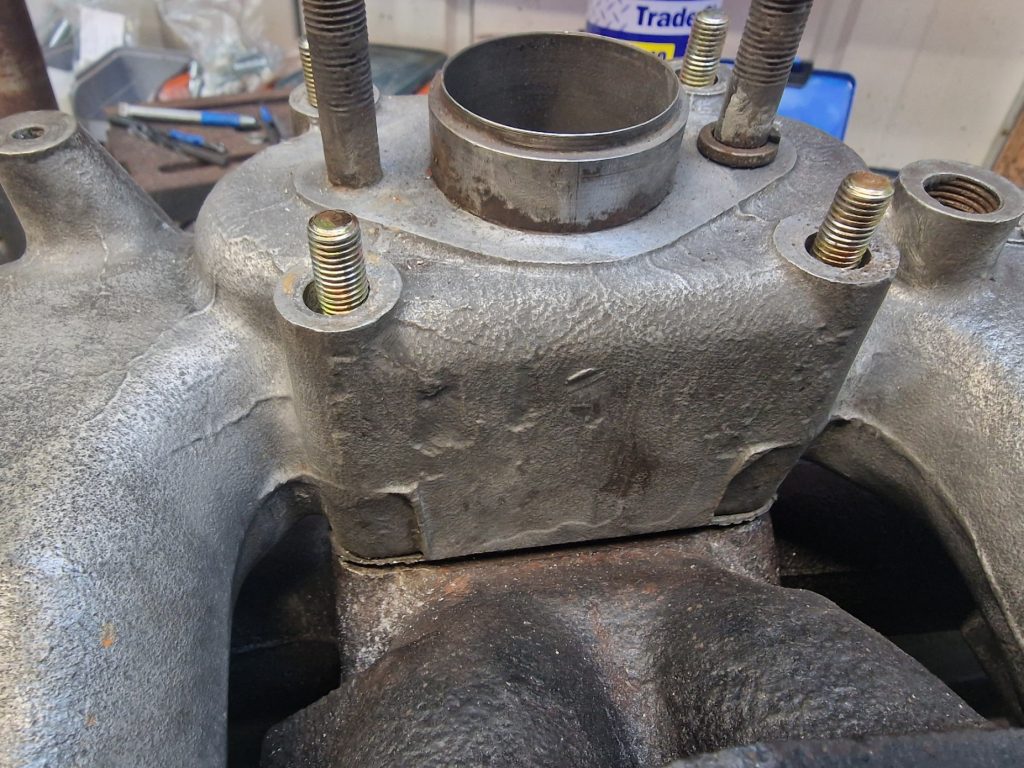
With the engine in, 1st addition was going to be the manifolds, Exhaust and Inlet. This is where things started to go a little wrong, in fact, it was a weekend of things going a little wrong. 1st up, totally my mistake and demonstrated perfectly my lack of knowledge, I put the manifold studs in wrong way round, and spent ages trying to figure out why it wasn’t working. turns out, the short threaded part goes into the head, not the long. stupid mistake. Took the studs out, and because i had messed a few up replaced them with bolts, which all went in perfectly.

I torqued up all the bolts, no issue and then went to torque up the nuts on the studs that hold the Inlet Manifold onto the exhaust Manifold. this is where it continued to go wrong, 1,2,3 all good, number 4, humm, feels a little odd, and doesnt feel like its tightening up.

SNAP…. the f’ing stud sheared off.

Oh, crap was my first thought, how the hell am I going to sort this out the next thought, and then came the bright idea. Cut them all off, drill them out and re-tap the holes and put new studs in.

So I did!

Cut them all off, drilled the old studs out on the pillar drill and re-tapped the holes.

Got some new studs and put them in.

Now they weren’t perfectly straight, but good enough to put the Inlet manifold on.

So, went to tighten them up, and 1,2 & 3 fine, number 4 however didn’t like it, it stripped the thread in the manifold..

It was at this point I was thinking, OK, so I dont have the skills or tools to do this properly, but what I can do, is spend money (like it’s going out of fashion), and bough a new Exhaust manifold and some new studs.

Long story short, got the new studs on, joined up the manifolds, put new studs (the correct way around this time) into the head and put the manifolds on, with a new gasket. torqued it all up and finally….. its done.

The next thing to go in is the Distributor.

This should be really easy, just slide it into the hole Shown in this picture ->

BUT! you can just about see it, there is a cork gasket that sits in a recess, that the distributor slides through, except it doesn’t, it is super tight and took a bit of gentle sanding, some silicone grease to finally get it in and seated properly.

Lets block up some more holes in the engine!

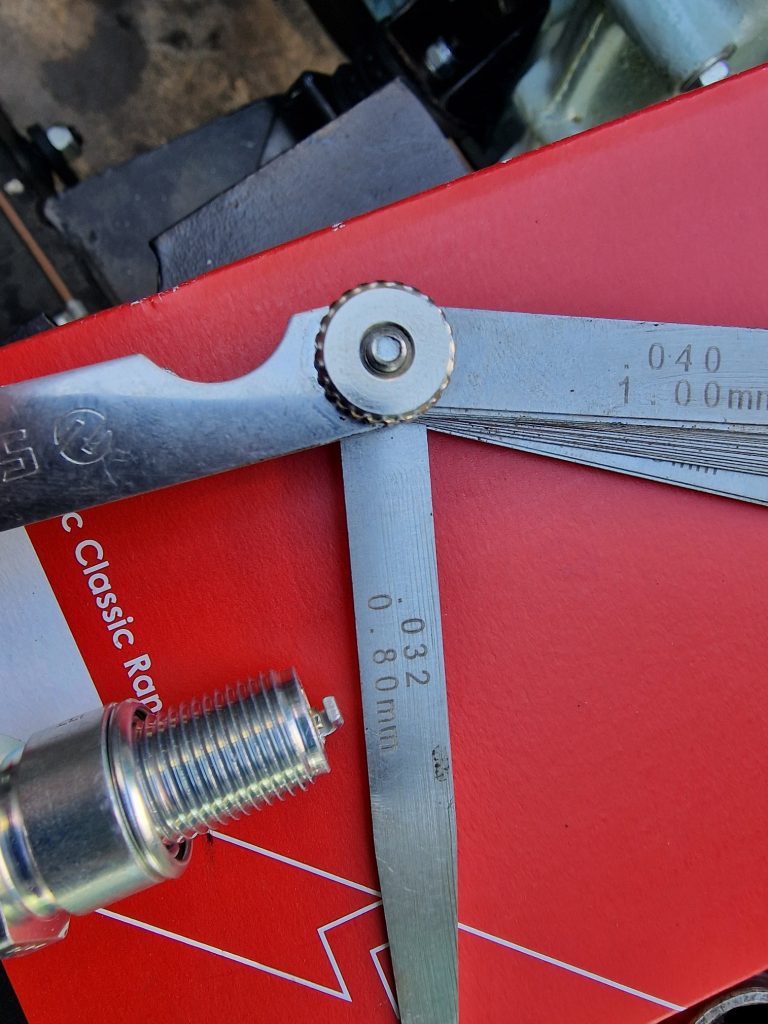
Spark plugs, with the gaps set according to the book to 0.8 mm.

And then finally new points and rotor arm, but forgot to order a new condenser and disti cap, so they will go on later.

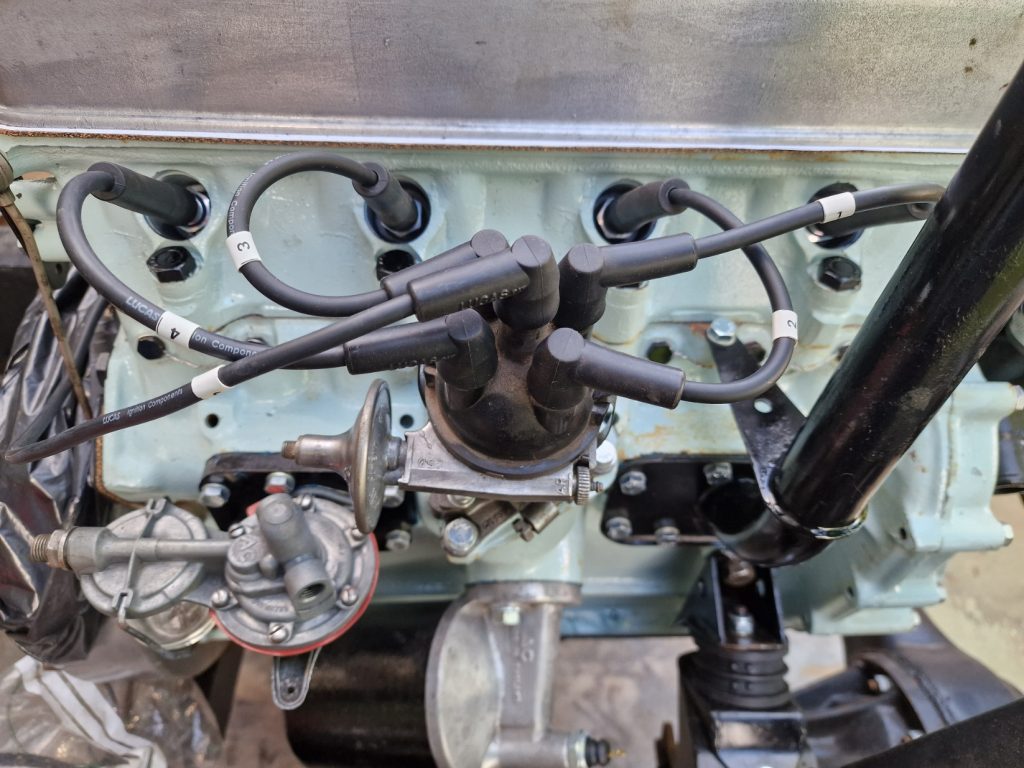
Used the old cap, and fitted the HT leads.

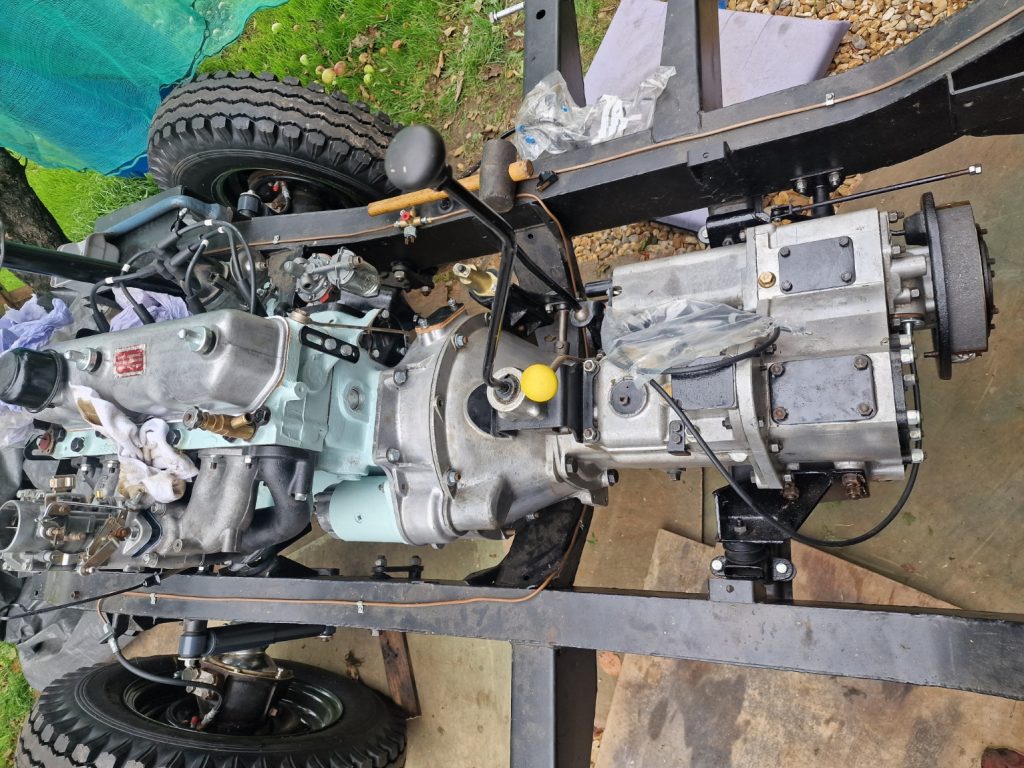
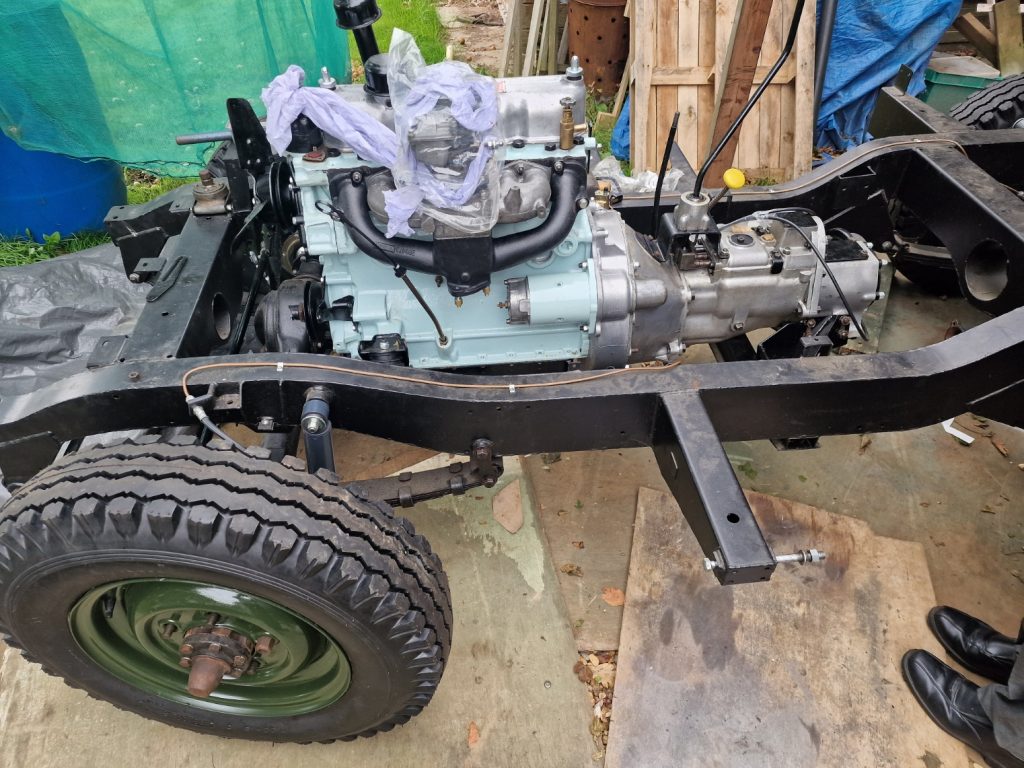
Thats the engine in, all fitted out with the important stuff, including the starter motor. One thing left to go on, and thats the Dynamo, need to figure out exactly how the brackets fit together as its not entirely obvious. Hopefully, Mine and Kims trip to Amberly Museum, to a land Rover show will give me the opportunity to see some finished engine’s so I can take loads of reference pictures for stuff like this.

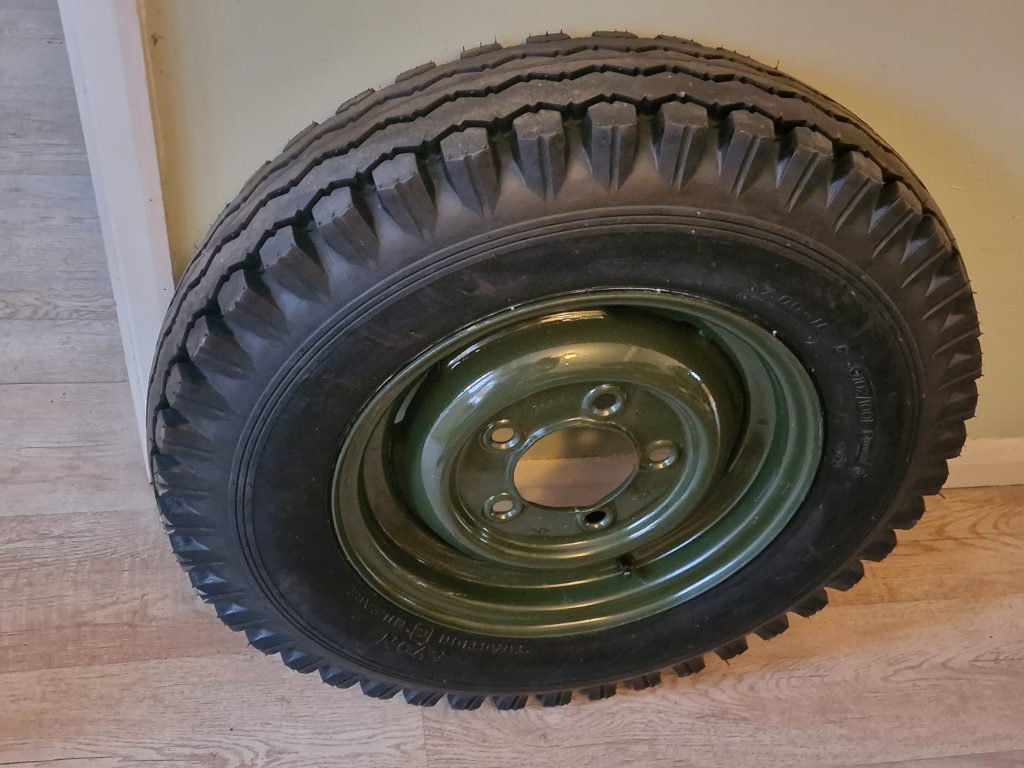
Talking of museum’s and a little side topic, took my wheels to beaulieu, Vintage Tyres who fitted some new Avon Traction Master 7.00 X 16 102/100L tyres. as close to original as I think is possible these days.

Bit taller than the 6.00’s that the Land Rover might have come out of the factury with, but still a standard size..

Tyre choice is a topic in its own right, so might write about that separately.

Back to the engine, well actually the Gearbox. Decided to put this on, now I have 4 wheels again and can move Isobel to where I can get the hoist into.

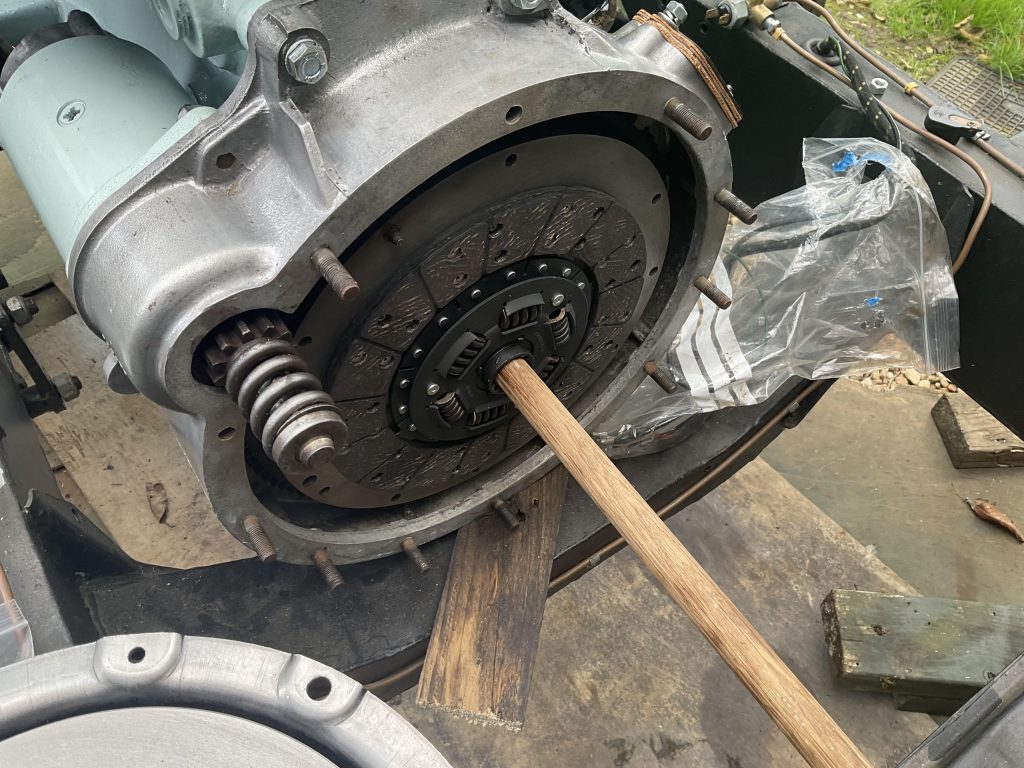
Started with the new Clutch, using a piece of dowel, exactly the right size to keep the clutch plate lined up while I bolted on the clutch plate cover.

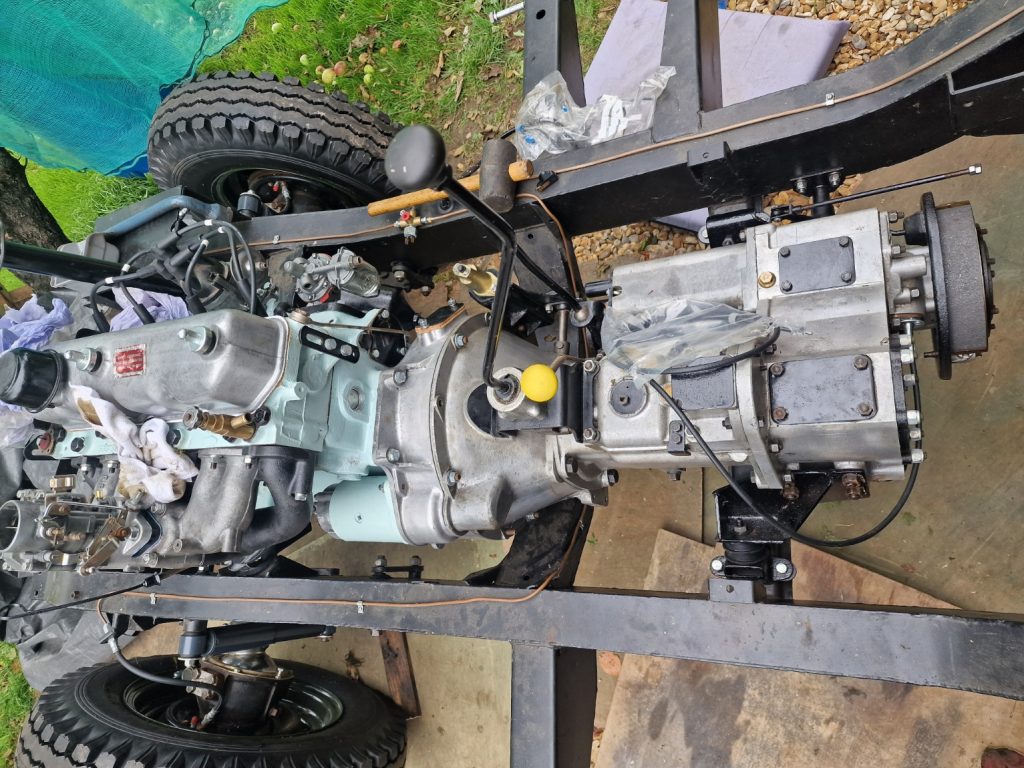
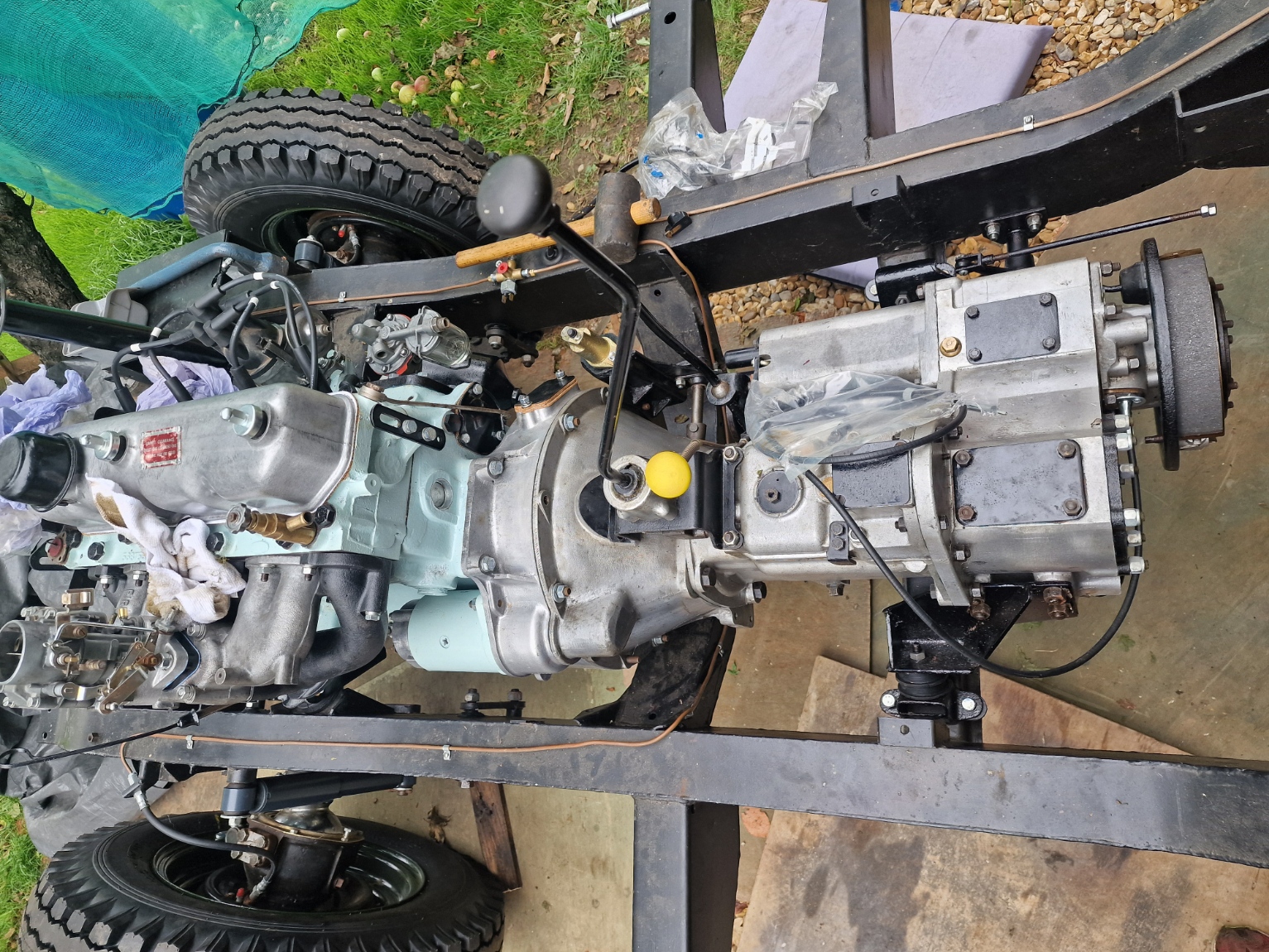
Using the Hoist, and again some help, got the Gearbox lined up and attached to the engine. Really pleased with the way it look, just hoping it all works as good as it looks.

A couple of bits to finish off, gearbox mounts to be properly bolted up, a few more nuts and bolts to hold the gearbox in the engine, oh, and take the gearbox back off, as I forgot, in the excitement of getting it on to grease up some of the clutch mechanism. That should be relatively easy, but will need to wait for next weekend.

Getting closer to the real test of all this work, and thats seeing if I can get the engine started. Before I do that, will be building up the Bulkhead with pedals, and some other bits before that goes back on and then should have everything needed for that attempt at starting it, exciting, but something I’m extremely nervous about.

I think from now on, these posts rather than being topic based, which is what I’ve tried to do, they will be more about the process, i.e. as things happen, we’ll see.


Carburettor Rebuild

Before I start, the main picture for this post, please ignore the split pins!! the ones in the new kit I used were crap, so these will get replaced with better ones.

Seems things are taking an age to get finished on this Land Rover, but things are getting done, albeit sometimes 2 or 3 times over. The last update was about the Carburettor Strip down, which was pretty simple, but resulted in a pile of tiny bits.

Putting it back together, surely would be simple. I bought a carb re-build kit, which has all the bits needed to rebuild, or so I thought. So lets get to it, and not necasseraly in the order things were done.

First off, the top and bottom parts are bolted together, with a gasket between them. One of the things everyone says is that these carbs over time warp.

First thing was to hone the faces, until they are bright and even. I used some fine (600) grit wet and dry, with a coating of light oil and gently rubbed the faces.

Importantly, the surface was a perfectly flat piece of marble, which I hope ensures the finished faces are also perfectly flat.

I had started in this picture.

These are the finished items, nice and shiny, except for 1 small mark on the bottom case, at the very bottom.

It feels very flat, and didnt want to keep going on this one mark.

The issue with them not being flat, is that they can let air in. Not good in a carb where the whole idea is to get the perfect Fuel / Air mixture.

Next was to start putting back all the new jets and bits and pieces. There are a few of these and one of them had me stumped for some time as I could’nt remember where it went.

Now you might be thinking, some of those bits look a little old. Well, they are, the kit as it happens does not have all the bits in, so ended up using some of the old bits as well as new!

Also, one of the videos I watched on rebuilding a Zenith 361V carb, suggested that the main needle valve replacement had a nylon tip, where the original was all brass. That was indeed the case, so as in the video, I chose to use the all brass version, as it didn’t look worn at all.

All jets back in, start to assemble the case, but before we get to that, I had one little problem. I managed to loose 2 pieces (circled in the images below).

The one at the top (not seen in this smaller picture) is just a simple spacer, the one at the bottom is the arm that pushes the piston for the accelorator pump.

It is this bar that is connected to the accelorator peddle, so when you press down on the peddle, hopefully this results in more fuel into the carb, leading to more speed (or not, given its a Land Rover)

Anyway, I nearly went off and bought a second carb, just for these two bits, just about to buy it off FB marketplace, when I thought, just one more look… and amazingly, it was the first bag I picked up, and there they were. Phew..

Ok, so onto assembly, pretty simple, so nothing much to say or show about that.

The next part then was to put all the the levers on, which had me turning it upside down, back to front to try and figure out how they all fit. One thing I did do was to get my Zinc plating kit out again, and this time used both Silver and Gold/Yellow passivates, with mixed success, but certianly better than putting back on crusty / rusty parts. Simple lesson if Zinc plating, Clean, Clean and Clean again, without which you wont get good results.

These three images, 1st one, before, 2nd and 3rd images are after. While not perfect, I think they look the part.

All that remains with this is to put it onto the engine. Now, that leads me to another topic, that I’ll touch on here.

I had a weekend a couple of weeks ago, where it seemed everyhting I touched turned to SH.T. Very briefly, I put new studs into the head, to hold on the manifolds. Stupidly, I tried to put them in the wrong way round, should have been short threaded end into the head, so ended up buggering those up. Replaced them with Bolts, all good, they tightened up nicely, so went on to Tighten the 4 nuts holding the inlet manifold onto the Exhaust manifold. The reason for talking about this here, is because the carb sits on top of the Inlet manifold.

Anyway, only needed 17ft lb torque, 1 OK, 2, OK, 3 OK, 4, Humm, doesnt seem to be tightening. SNAP, the f’ing stud snapped.

This pic is after I really did throw my toys out of the pram, after which I calmed down, partialy, well enough to pick up a hacksaw as I decided the only way forward would be to cut them all off, drill them out and re-tap the holes.

Did a fairly good job on the pillar drill, not 100% straight, but good enough. Put new Studs in, 1, good, 2, good, 3 good 4, bugger it stripped the new thread, Ohhhh, FFS.

The moral of the story, leave jobs like this to the pro’s. Ended up buying a new Exhaust manifold, and more new studs for this and also for the head.

So, after all that, kindoff back on track now, (certainly in terms of my thinking) with a revised plan, so will crack on with finishing off the engine in the chassis on the next dry weekend. Until then….


Carburettor Strip Down

There are many things needed for an engine to run, one of the most important is the Carburettor. Now I dont know much about Carb’s (Not the food type, know lots about those), so this is totally new territory, and a slightly daunting one.

Anyway, it needs to be done, so started by stripping mine down. Land Rover Series 2A’s came with one of two types, A Solex, which was used up until Engine Suffix H inclusive, and a Zenith, used from Suffix J onwards inclusive (dont think suffix I exists). My Engine is a suffix G, so should be a Solex! but its not, its a Zenith, which apparently is a better one, but odd never the less.

That brings me to something else that confused me slightly. The parts manual often refers to Early type Engines and Later type engines, and some parts differ between the two. Mine “seems” to be a bit of a mixture in various places which either means its not totally original, or came out of the factory like it is and is a bit of a cross over from Early to Late.

Anyway, not too much to say about the strip down, other than to say was very careful to document everything with pictures, so rather that me rant on, here is a selection of them, showing it in various states of being taken apart. I did actually buy a Service Kit for my Carb type, which has all sorts of new bits that I’m yet to understand what they are and where they go.

To Finish up, here’s a picture of all the bits and pieces. I do have one issue possibly, there is one bit that I think needs to come out, but seems to be stuck. I need to check i have a replacement in the service kit before I try various methods to get it out.

Now, I dont plan on buying more parts than the service kit, but some of the levers are a bit crusty. I have done some Zinc plating before, with a silver finish but these parts need to be / should be yellow’ish / gold ‘ish / blue’ish. I have the solution to do this, so bought some more Distilled water, and will be spending some time seeing if I can get them back to looking brand new. Will come back to that, if (No WHEN) it works.


Engine Rebuild – Fuel Pump, Oil filler, Head and Rocker

Was a couple of weeks ago, I last wrote about progress, and thats for two reasons. firstly, I was procrastinating over whether the engine was a little tight, when turning over by hand, and secondly went away to a lovely part of he country, Devon, for a week’s holiday with the entire family, Wife, Kids, almost Step Grandchildren (Son and his partner not married just yet) and the dogs (yes, Dogs plural, we have another dog).

Back to the first point. when turning over by hand, it needs a spanner on the starting dog to turn it, it’s a little too tight to turn it by hand. With the spanner, it turns nice and smoothly, but was unsure if it was a little too tight. My Nephew has said he will pop round to see it for himself and give me his opinion, but he and family are on holiday this week, and we were away last week, so cant look just yet.

Before my Hol’s I had almost made up my mind what I would do, so ordered a second set of bottom end gaskets, just in-case I do need to / decide to strip it down a little. My main concern was the T seals in the rear main bearing housing, they need a special tool to put them in normally, which helps to compress them before they are pushed into the block, but I didn’t use one, I used a thin fealer guage, which was not ideal.

So first thing was to make something similar, cut two strips of 2mm sheet steel and bent them just over 90 degrees, and drilled two hols to bolt them to the block.

With the two pieces bolted in place, when the bearing cap with the T seals are inserted, they compress and slide in much easier.

So, job done I think.

Re-cleaned everything, applied some assembly lube and put it all back together. The crank is still a little tight, but its smooth, and doesn’t take huge amounts of effort to turn, and have to consider, It has all new bearings, new pistons and rings, new cam chain, new camshaft bearings and loads of assembly lube, so have taken the view it is good to proceed. Will get Lee to come have give me his opinion at some point, and if needs be, will strip it and do it all again, but dont think that will ne necessary, jut need the piece of mind.

Right, so onto the stuff I’ve done.

First up is the Oil Filler. First part to go in in a plate that clearly is designed to divert the oil (technical name is baffle). Now, I had a set of gaskets, but only had one to fit, so luckily, have bought another set, had the two that were needed.

All that goes on next is the long black tube, with a filler cap on top.

Finished off with some new bolts and spring washers, as I will be doing with all visible bolts.

moving on, on goes the oil filter. Pretty straight forward, gasket first, then bolted on.

Just as a note, all gaskets are coated both sides with Hylomar Blue. There are lots of discussions online as to what is best, I dont really know and everyone has an opinion, so sticking with this for now, until its all together and leaking like a sieve.

Fitting the Fuel pump, like the oil Filler is two parts. The backing plate, which is bolted to the block, and the pump which is attached to the backing plate. I did this twice, as the first time I put the plate on then the pump, but realised that the arm of the pump, was not sitting on the camshaft lobe responsible for creating the pumping action. Took it off, attached the pump to the backing plate and put them both on together, making sure the arm of the pump was sitting on the camshaft lobe.

I perhaps should have done this before the other bits, but, didn’t. First on the Head Gasket, which is simply laid on the block. the Head, which sits on this is heavy, so lining up the bolt holes without pushing and pulling the head around is not easy. Some people use old head bolts with the end cut off to act as a guide. I dont have any spare, so called upon Reuben to give me a hand.

I held the head over the top, while he located two of the bolts to ligned it up perfectly, before placing the head down.

To bolt the head down, the rocker also needs to be put on (I did clean this up again, and lube’ d it up with assembly lube and some oil).

All 18 Bolts were located in their respective holes and tightened finger tight.

To fully torque them up, to 65 lb ft, with the smaller bolts on the rocker to 12 lb ft (Actually in the book I used, this was quoted as 18 lb ft, which is what I did them too).

To tighten the bolts, there is a specific order to do them in.

The order is shown here. each one was dont little by little, until hitting the torque setting, and then all were checked again.

Finally, torqued down the rocker bolts to finish this part off.

I didn’t do this straight after, got distracted by some other bits, but the next step is to set the gaps between the rockers and the valves. What I didn’t mention above, before putting the rocker assembly on, the push rods needed to be inserted, which were done, coated in assembly lube and made sure each one was properly seated in the tappet.

As with the head bolts, there is a specific order these need to be done in. I have seen other methods, but decided to stick to the book’s method.

Basically, you rotate the crank until one of the valves is fully open (down) and then set a corresponding gap.

To find when the required valve is fully open, I used a dial gauge, which required the crank to be turned over slowly until fully open. Once set, the corresponding gap between the rocker and valve can be set to 0.010 in (.25mm). Once set, tighten the locking nut, and re-check after it is fully tight. Fairly straight forward, if not a little laborious.

Last bit, is the Flywheel. Fairly simple, but one thing needed to be changed, the bonze bush in the middle. Now this is funny (well I found it funny) since i stripped down the engine, there has been a bronze bush floating around the workshop, and it had no idea where it came from, until this point! It had fallen out of the flywheel.

First, apparently the new one needs to be soaked in oil for 24 Hours, so did it, cant do any harm. Also, I recently bought a new clutch from LOF, which I didn’t realise also has one of these in the box. Hey Ho, have a spare now.

To put it in, simply used a bearing tool and carefully, but firmly knocked it home.

A bit out of sequence now, but wanted to get the flywheel on the engine, but to do this it needs to come of the engine stand. Also, the engine is getting rather heavy, and I dont want to leave it dangling for too long. When I took the engine out, I hired a Engine Hoist, and was planning on doing the same to put it back in. But I thought about it, and while I could put the engine and gearbox in with the Bulkhead in-place, it would be much easier with it out of the way.

Knwoing full well I wouldn’t be able to get it all done within a sensible hire time, bought myself a engine hoist.

Not expensive, in-fact no more than two days hire costs. So, put it to use and took the bulkhead off, steering box and all.

Using my new toy, I was finally able to get the Engine of the Engine Stand, and settled down on a pallet, sat on top of the engine hoist legs.

All ready for when it goes into the chassis, which I thought would be today, but ran into a bit of a problem!

I dont have the right size bolts for the engine and gearbox mounts, so yet another order of bolts to be made.

Back to the flywheel, put the flywheel case on, and using some new Fly Wheel bolts and locker tabs put the flywheel on, torqued it up and bent over the locker tabs.

One of the tings I got distracted with, was the Air Filter. Its been sat on the shelf since I took it off, so decided to clean it up and paint it. I couldn’t decide if it should be black or silver. Decided on spray on Galv. Few pictures of it, but nothing much else to say.

Actually didn’t take a picture of the finished item!

I did do a couple of other bits over the last couple of weeks. totally out of context with the Engine.

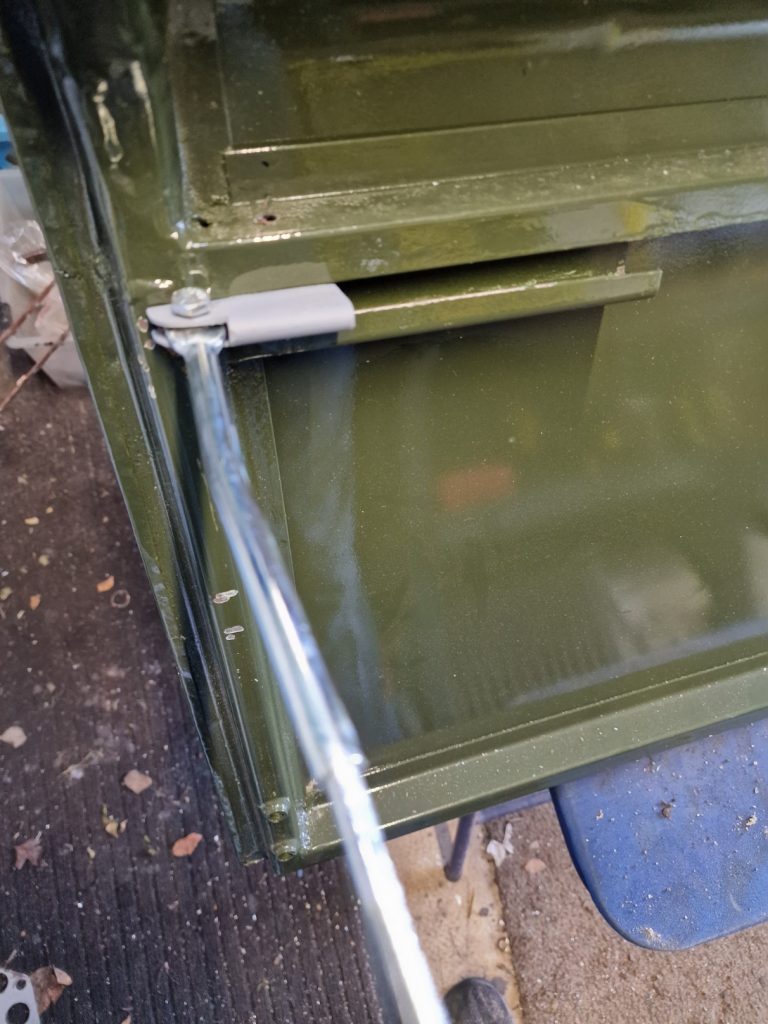
But bought the bolts to secure the door hinges, and put them together.

A bought these from a company called Emberton Imperial they do some really nice stuff. Now I mention that because the pack was missing a couple of items, one being really key, a brass ball. Emberton sorted it without fuss, and quickly.

Thats it for now, I was going to put the clutch on, and hoped to get the engine in the chassis, but didn’t manage both, so back to it, probably next weekend, although I have some more decorating to do, so that might take precedence.

On a final note, our “nearly” step grandchildren bought me a Kim (my wife) a pressie for taking them on holiday. Mines in pride of place, above the workshop doors 🙂


Engine rebuild – Oil Pump, Front cover and Water Pump and Sump

Straight back to it then. Started the day off by checking the torque on the Main Bearing caps (85lb ft) and Piston Connecting rods (Big ends), supprisingly low torque (25 lb ft).

The goal for tody, was to get a few ancillary parts onto the engine.

First, was the Oil Pump, this needs to go in before the suimp goes on. No pictures of my stupid error!

The filter part (to the right), I put it on facing the wrong way! Stupid mistake, so had to ease out the locking tab, undo the nut, move it and re-tighten it all back up.

I hav’nt checked that the pump actually works, although did check it out and it looked fine, wrote about that here, so will have to keep a close eye on oil pressure when I do start the engine for the first time.

Next was to put the front cover on. This took me an age to figure out the bolt sizes for each of the holes, there are 4 different sizes, mostly 5/16 U.N.F., but on the water pump, which I test fitted that at the same time, there are some 1/4″ U.N.F. and two I could’nt figure out. Turns out they are 1/4″ U.N.C., which is a little odd, as it didnt change to U.N.C. untiul after the suffux on my engine, mines a Suffix G, and it changed to UNC from suffix H, hey ho, need to but 1 bolt for that 🙁

Just for info, UNF means United National Fine (Fine being the thread pitch) and UNC United National Course, again course being the thread pitch.

Before I went ahead and put gasket seal on the gaskets, and try to bolt it on, I re-tapped all of the holes in the engine block to make sure it bolted up nicely.

I also re-tapped the holes for the rear cam shaft cover, which was duely fitted with a dry cork gasket. Hope thats right, it was the only gasket in the gasket set that was the right shape.

Front cover on, and all new BZP (Bright Zinc Plated) bolts and spring washers.

Continued at the front and bolted the water Pump on. I was going to service the old pump, but broke it while trying to take it apart, so bought a brand spanking new one some time ago, looks good.

If you look carefully in the background, you can see some new (to me) shelves, with all (most) of the engine parts ready to be fitted.

Turned the engine upside down again, for the last time hopefully, and put the sump on.

Something like 21 bolts and 1 Nut that needed gently tightening all the way around so as to not distort the sump, which is a relativly thin material, so could easily buckle.

Finished the day with a test fit of the engine mounting brackets.

Need to get some new bolts for these, so these will come off again later.

Need to check I have these on the right sides.

So what next, well thats a good question. I could continue adding parts to the engine, The Head, Fuel Pump, Distributor, Oil Filler, Oil level stick and some other bits, but have decided to stop there for now, as I think I will put it into the chassis before adding some of those parts, will make the lift and moving it a little easier.

I planned to hire an engine hoist, but cant be sure I will get it all done in the time I have it for, so bitten the bullet and ordered myself one, a relativly cheap one, and once i’m done with it can sell it on.

Also, this will allow me some time to place yet another order for things like clutch, some more bolts, some special bolts for the fly wheel. when i’ve got them all, I can then put the gearbox and engine in, in one go, apparently thats easier than doing them seperatly.

Only down side is that he bulkhead will have to come off. Not too much of a big deal, will have an engine hoist in a couple of days to lift it off.

So what will i spend my time doing, well, I might finish off some of the body work, still have the dynamo to service, might start bolting engine mounts onto the chassis, might put the handbrake mechanisum on, who knows, but what ever I do, I will write about it here.