Articles

Engine rebuild – Camshaft and Timing Gear

After the main bottom end bits were in, started on the camshaft. If you remember, I had Turner Engineering put my new Camshaft bearings in, so time to make sure my camshaft actually fits ๐Ÿ™‚

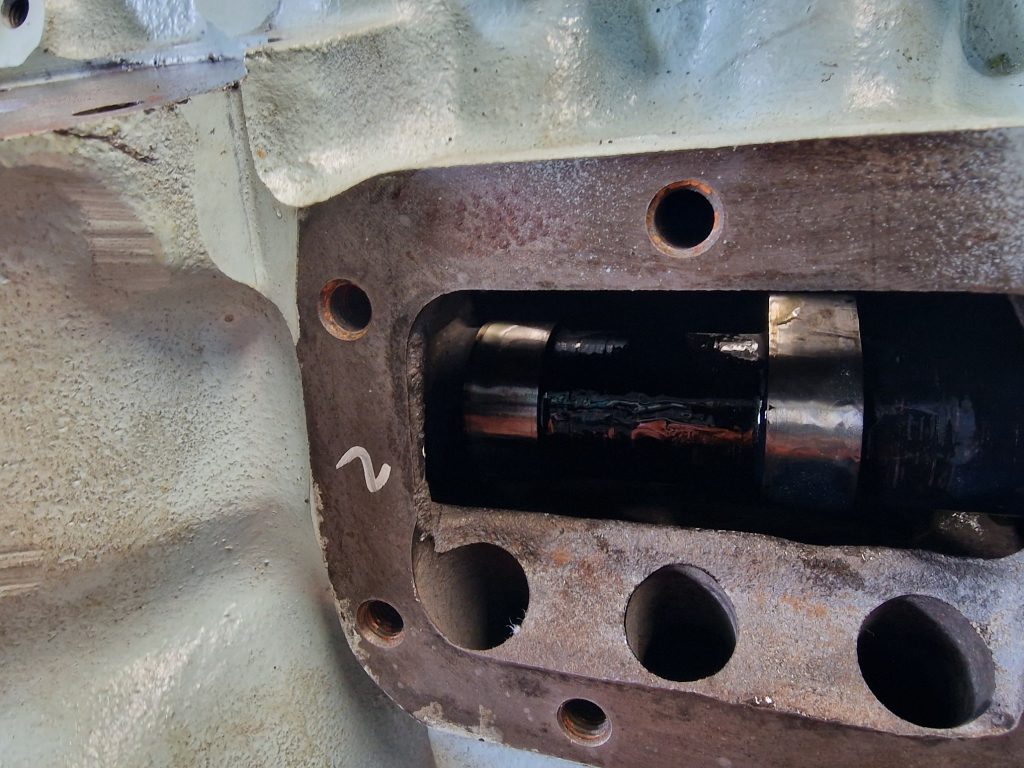
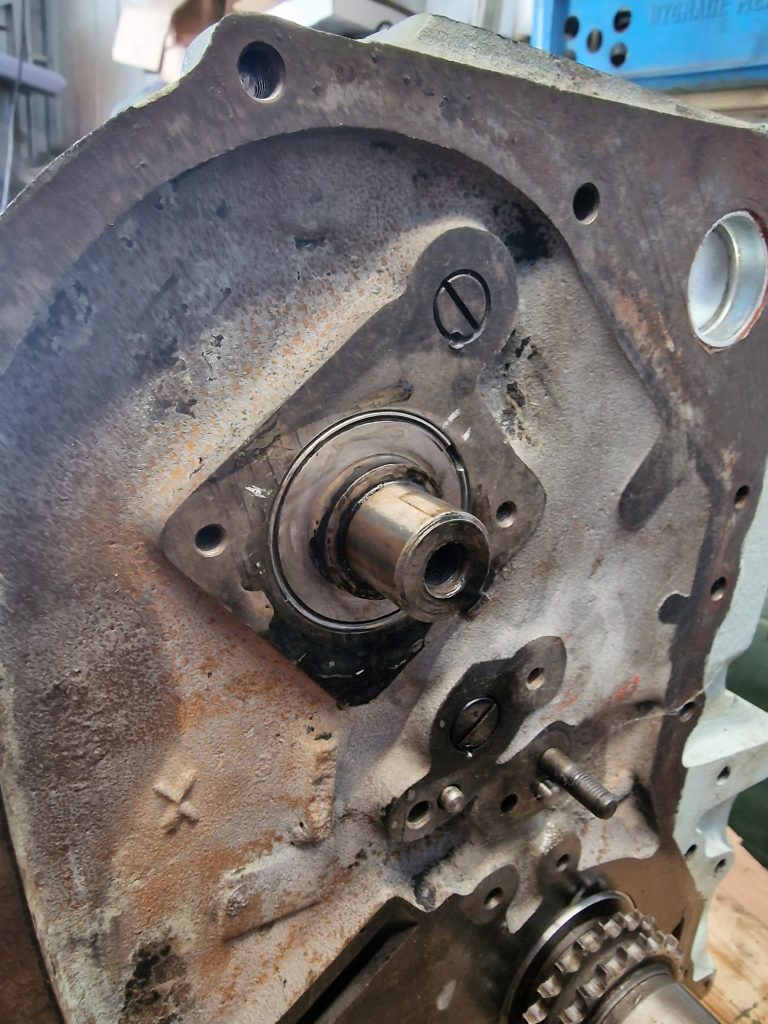
Putting the camshaft in is a very simple process, clean it and the bearings, lube it up and gently, without hitting the bearings, slide the camshaft home, front to back.

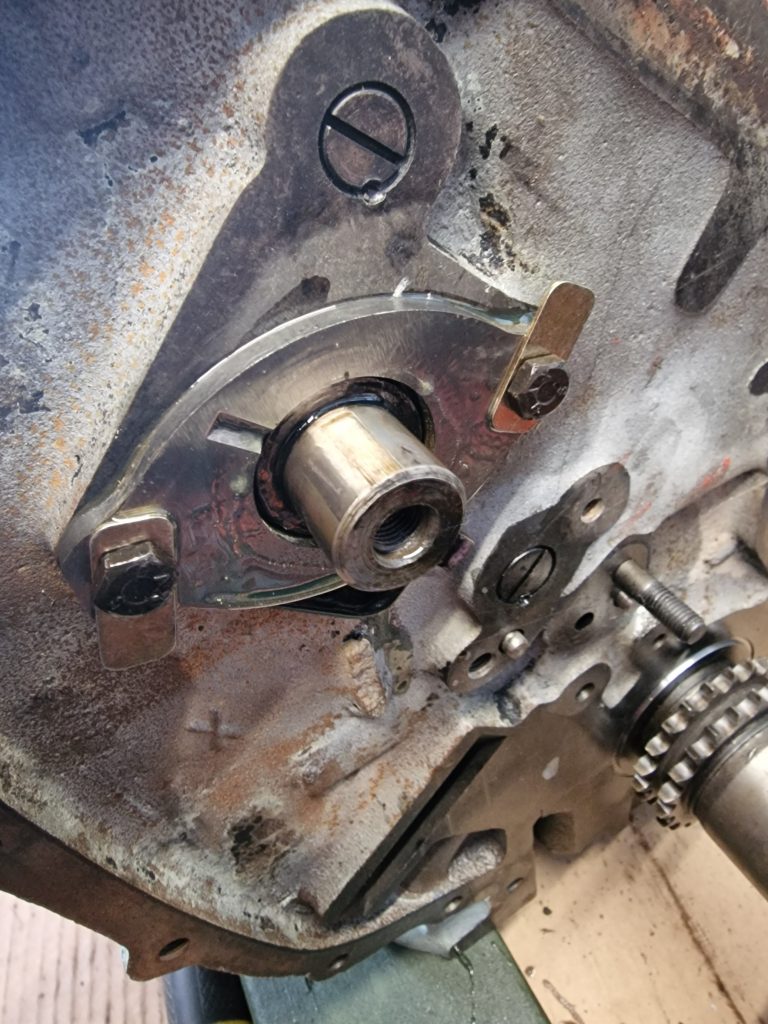
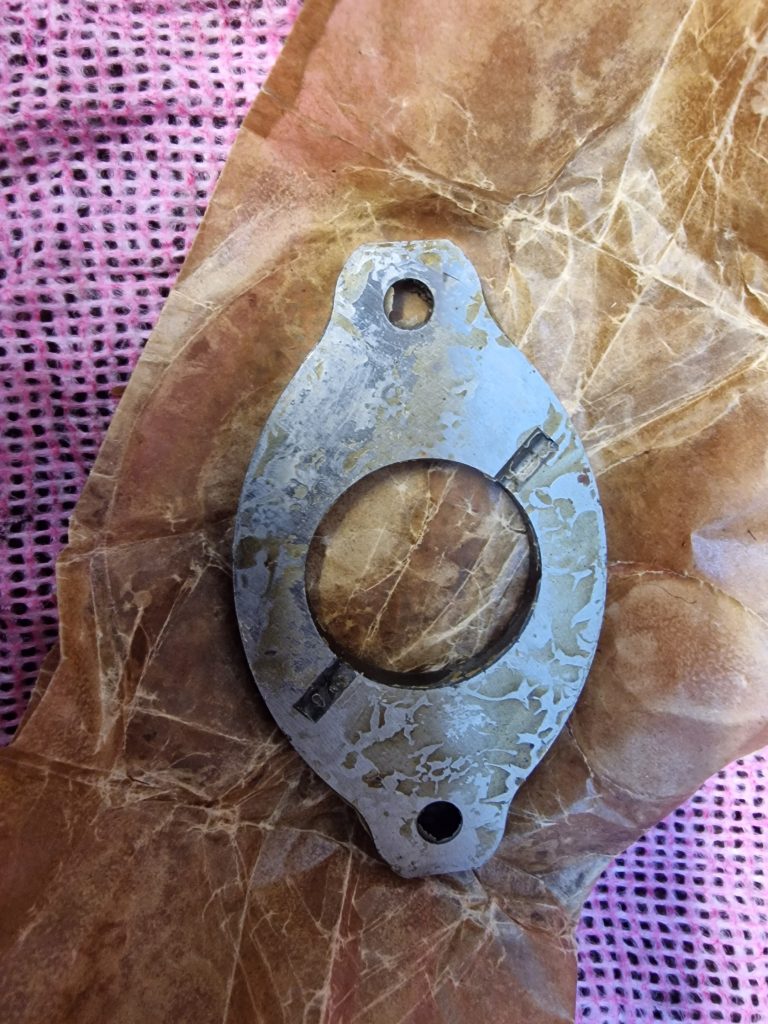
The retaining plate was a new one, and even that needed a good clean before being put on.

Plenty of Lube, both sides this time.

This is quite important, as it sets the end float of the camshaft.

Thats the easy part done, the next part is to fit the Cam Chain Wheel, and the Cam Chain. Now this has to be done right, as it connects the Crankshaft to the Camshaft. the crankshaft moves the pistons up and down, the camshaft opens and closes the valves, but the timing of those two things need to be bang on.

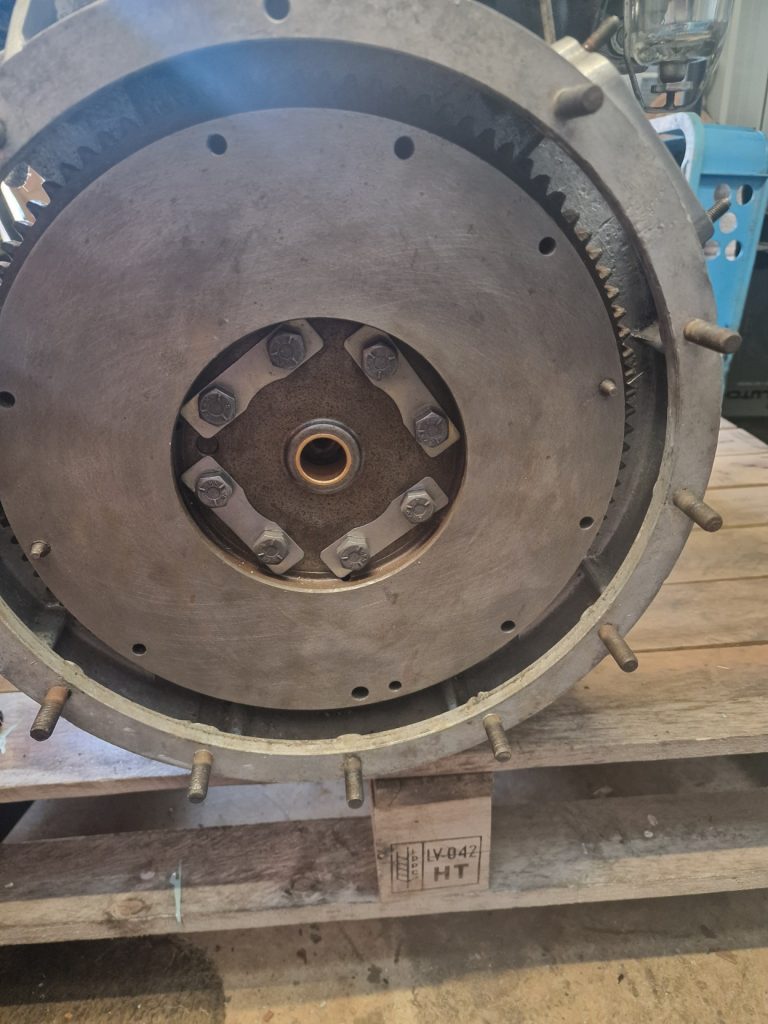
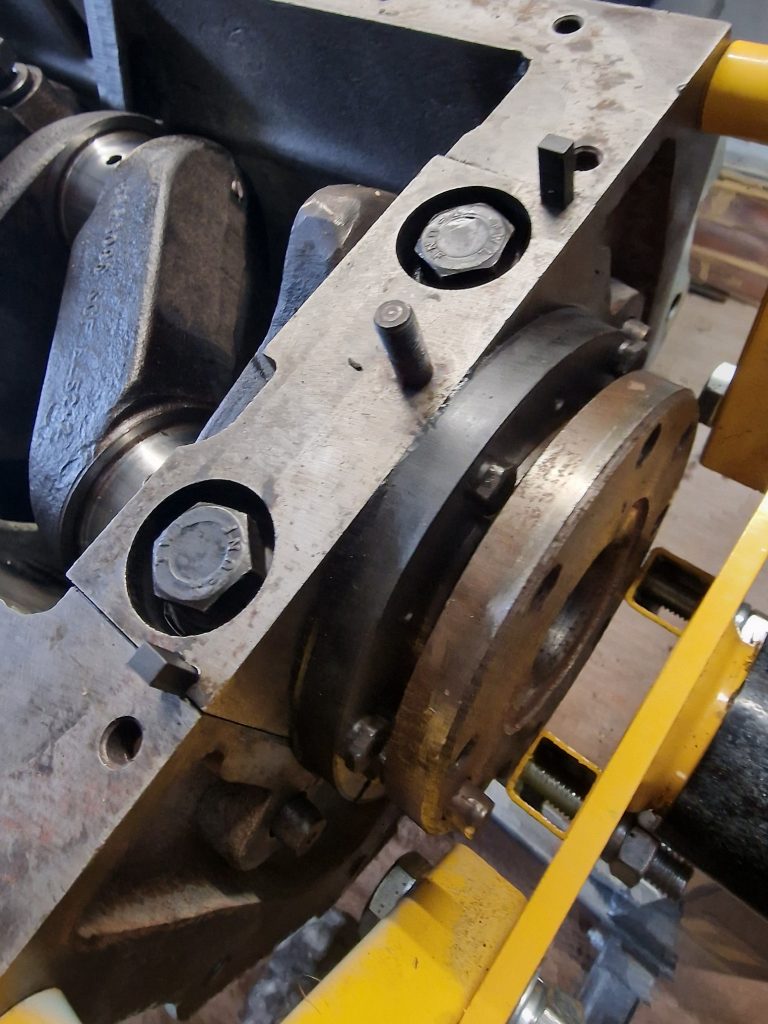
I had to take the engine off the engine stand to do this, as I needed to temporarily fit the flywheel housing and the flywheel.

On my Engine, the timing marks are on the flywheel,not on the front pully, as it is on some.

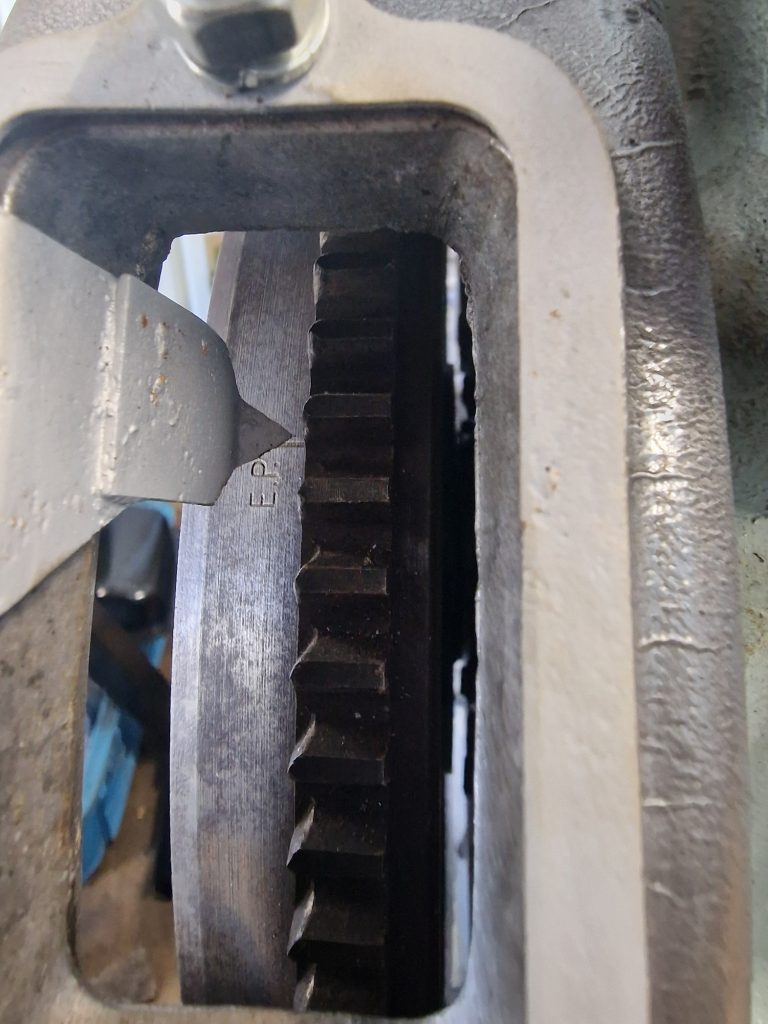
Step 1, after doing that, is to rotate the engine, in the correct direction until the EP mark is lined up with the pointer. EP stands for Exhaust Peak.

Thats the Crankshaft, and Pistons in the right place

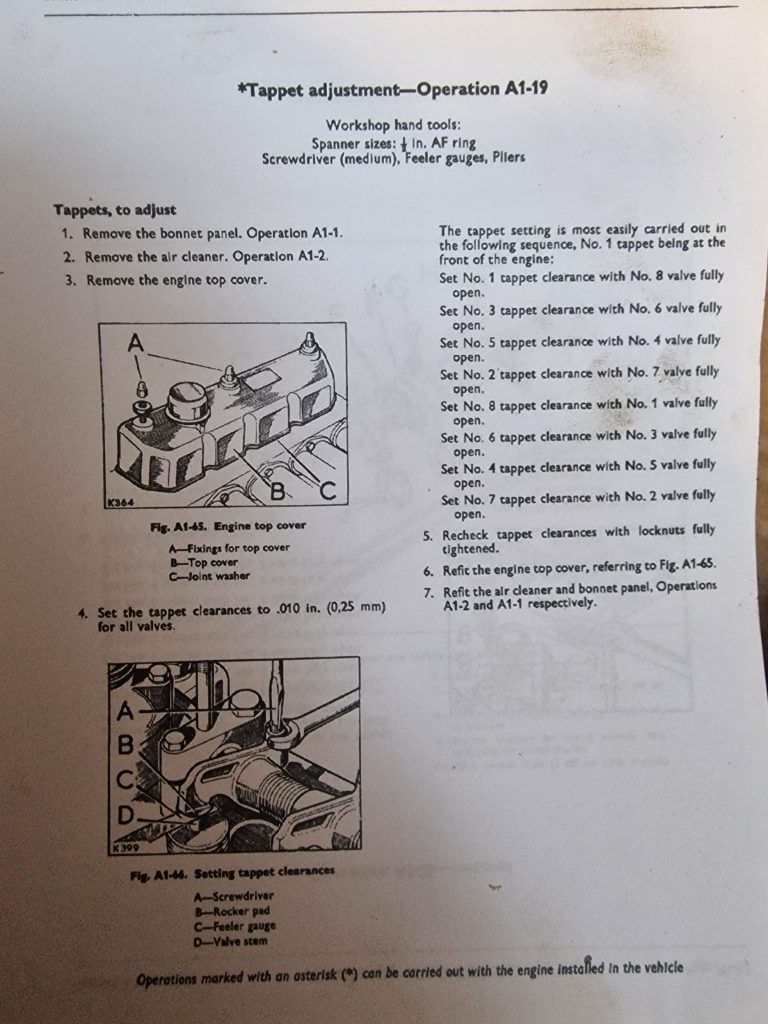
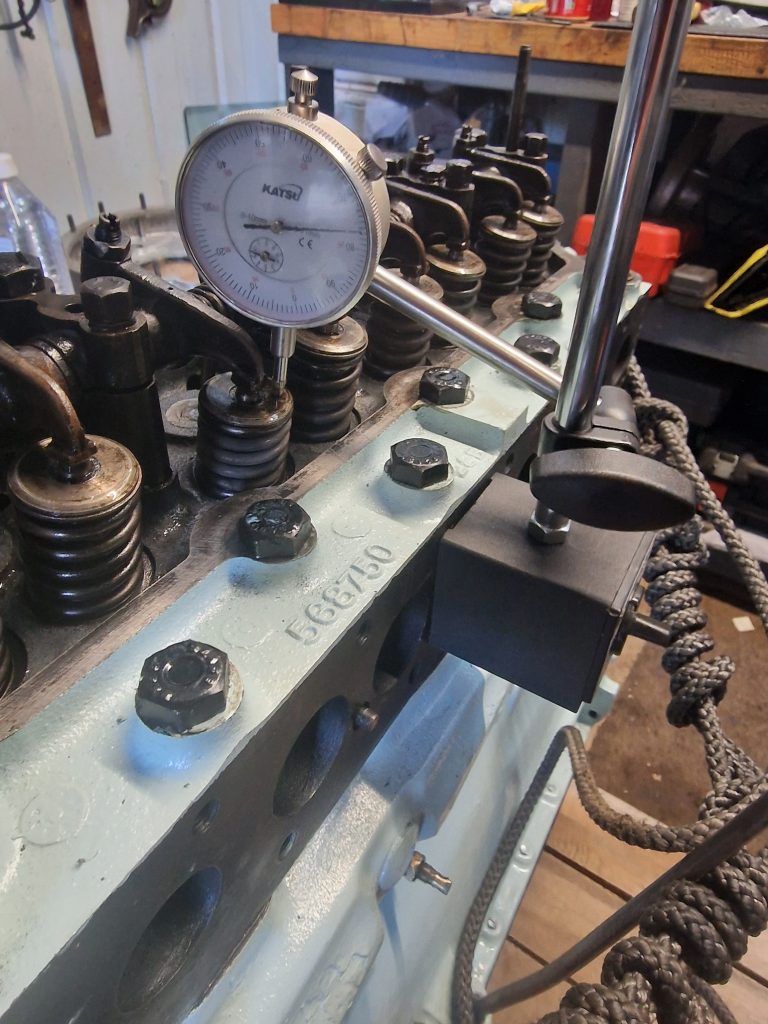
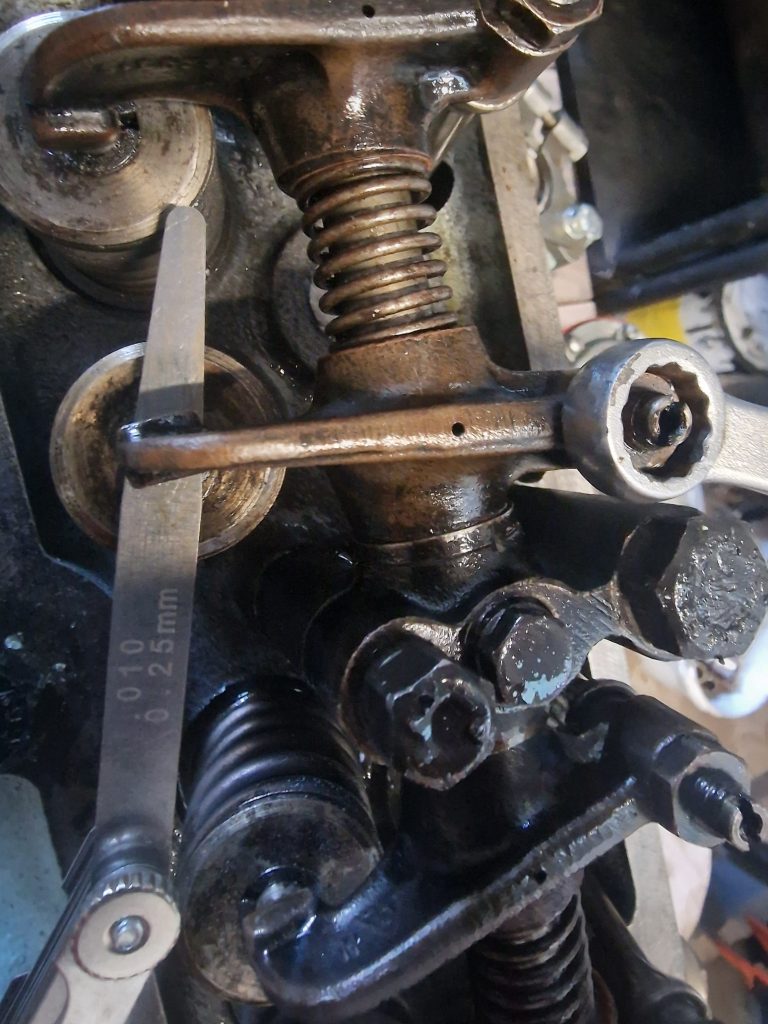
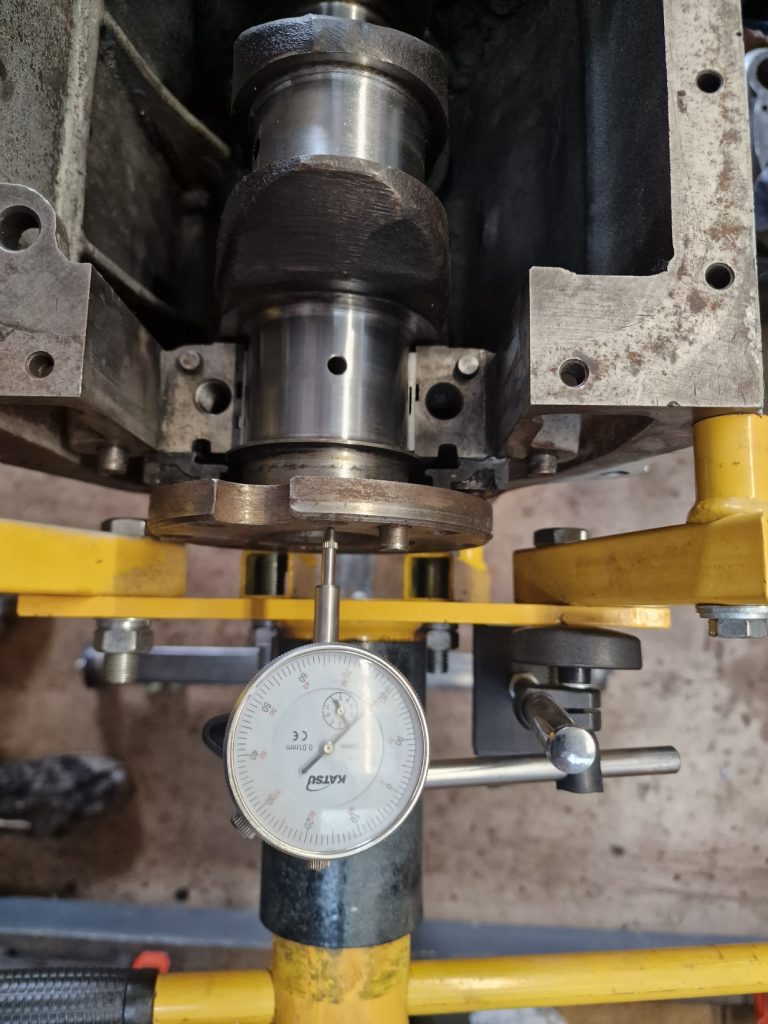
So now I need to make sure the camshaft is in the correct position. Now to do this, exhaust valve 1 needs to be fully open (at its peak). Normally this is done with the head and rocker on, but my head is not on, so I put in the tappet assembly into Exhaust valve 1, so I could put a dial gauge on it to ascertain when it is at peak (fully open).

There is a routine for this, where you mark the chain wheel and the case when Exhaust Valve 1 is nearly at peak, then rotate the camshaft until you read the same on the dial Gauge, and then split the lines, aligning it with the first line on the case. Phew, simples…

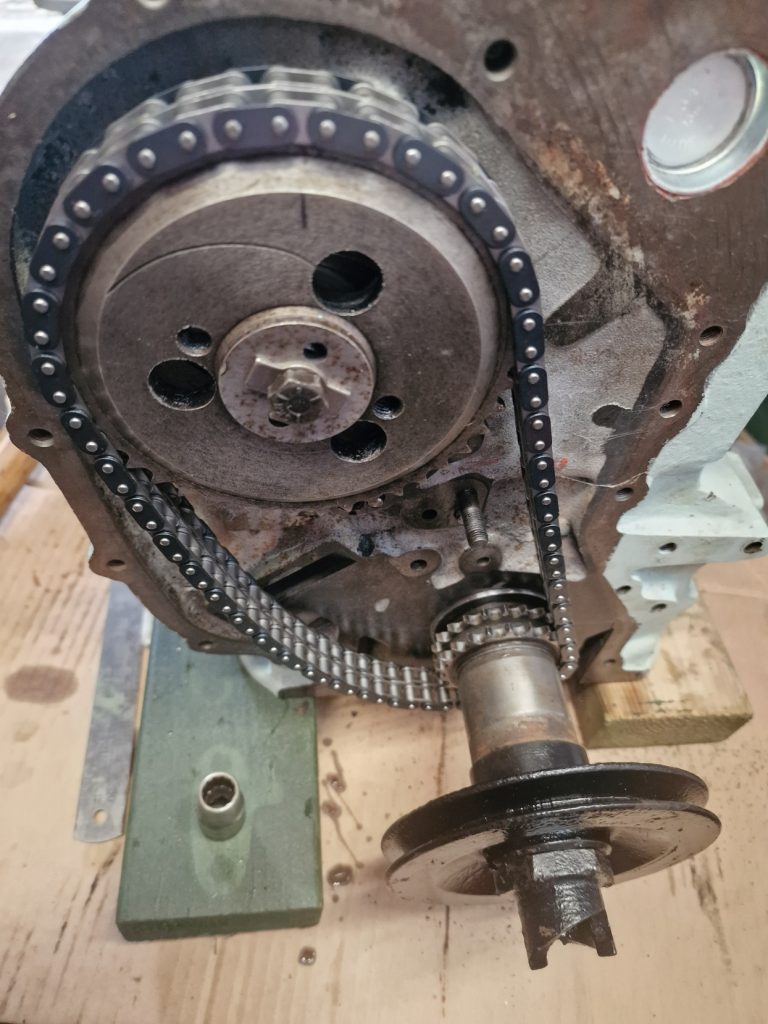
When its all lined up, new chain goes on, making sure it is tight down the right hand side.

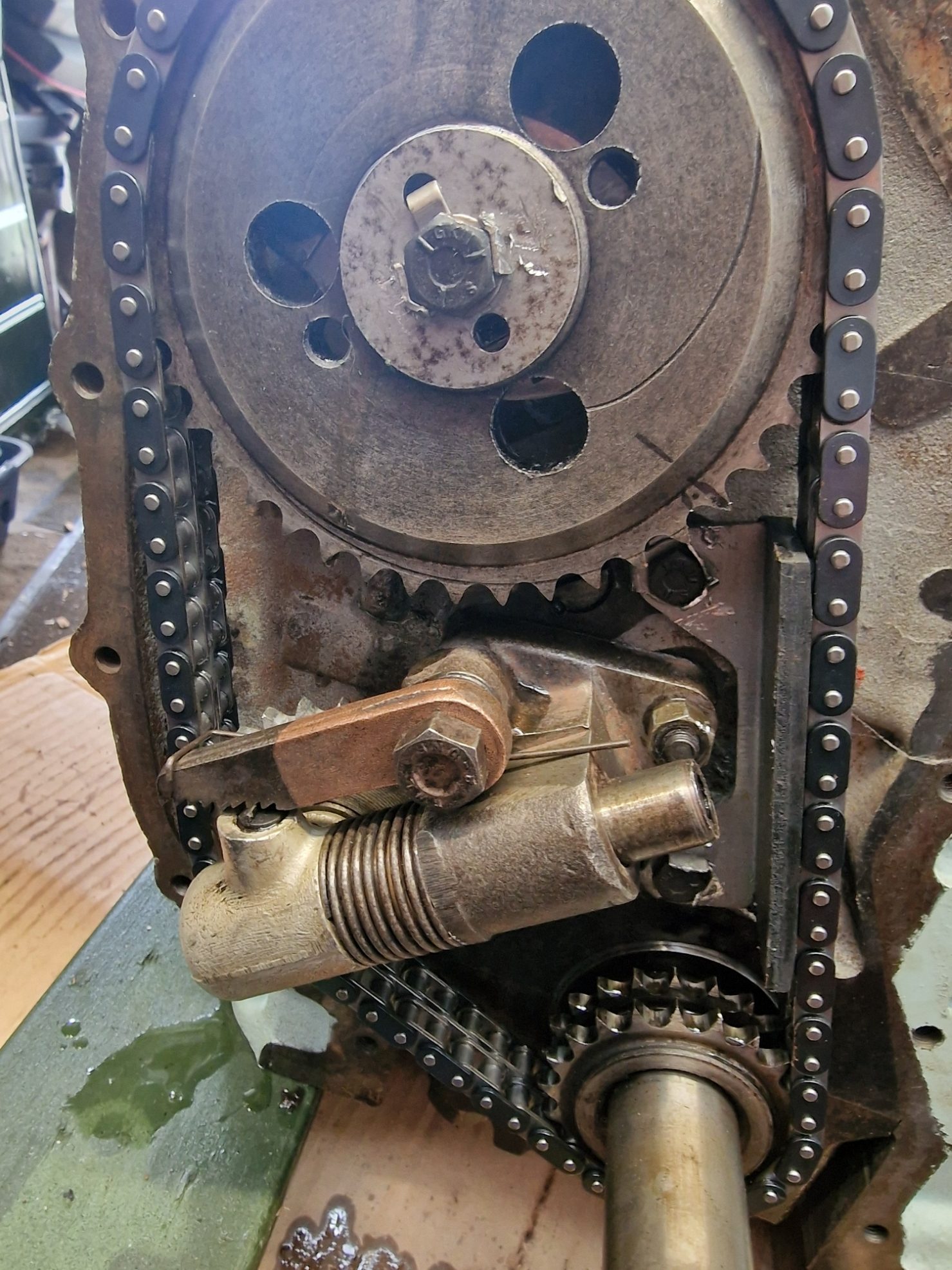
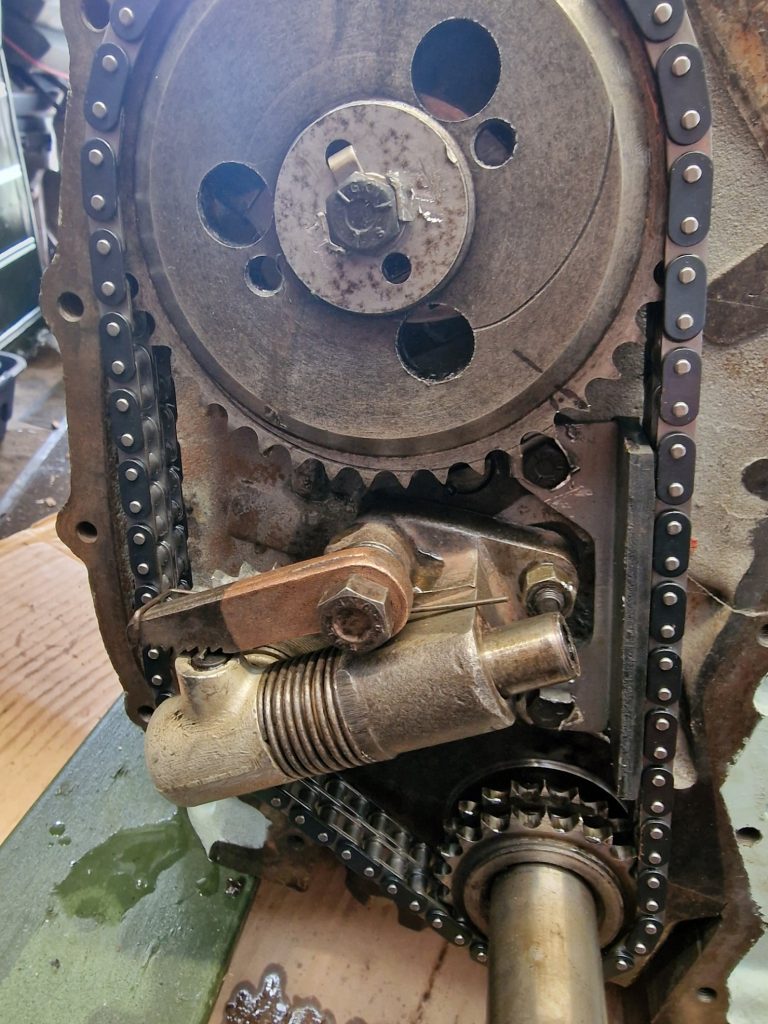
Cam Chain wheel on, new chain and the chain tensioner all fitted.

You can also see a new Vibration Damper, which also needs to be lined up correctly, i.e. no more than (cant find it again in the manual, but think is 1thou”) away from the chain.

Now that wasn’t too difficult, I just hope I’ve got it right. I am going to re-check the cam timing when the head and rocker gear is on, to be sure.

The other part of the timing, is the Distributor, i.e. the things that creates the spark, on the right cylinder, at the right time. I cleaned up the Disti a while ago, so set about installing the distributor assembly. Humm, easy yes, well actually not, took me hours.

First thing is to line up the flywheel with some other marks, in this case it is 6 degrees before Top Dead Center. this refers to when piston 1 is at the absolute top of its stroke, and the point at which the ignition is fired. 6 Degrees before TDC, is to cater for todays fuel (according to the book).

Before I did this, as you can see I fitted the rest of the tappet guides, rollers and tappets, all fairly straight forward, except getting the bolts into a retaining hole in the slider case. These bolts need wiring togther at some point.

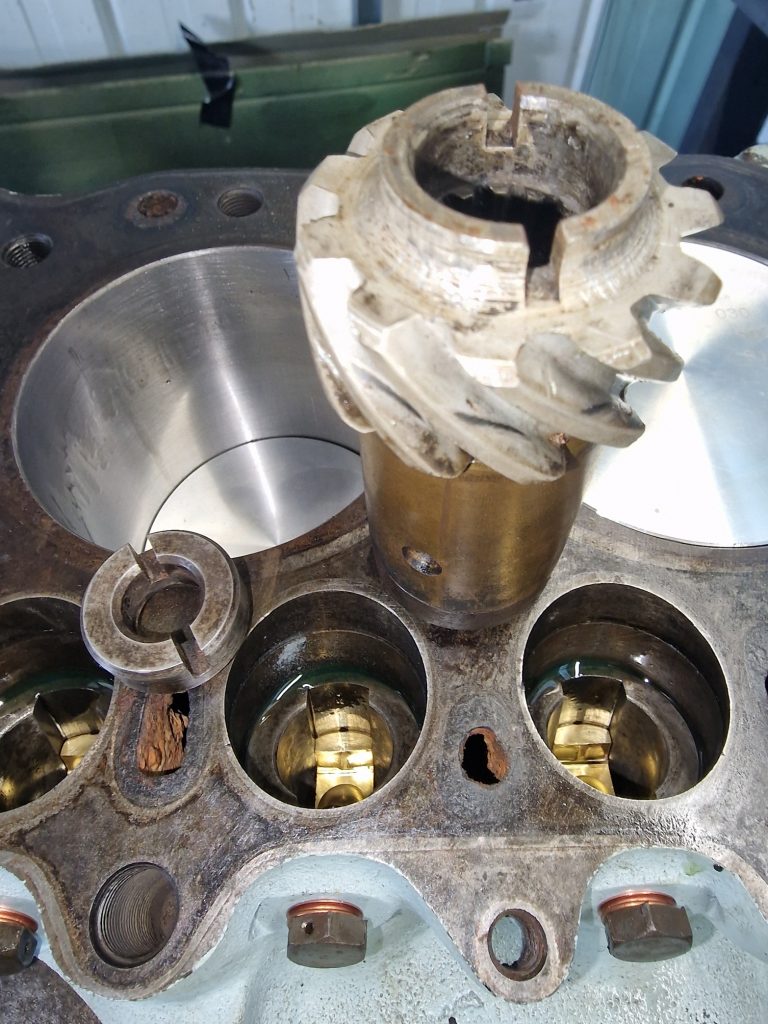
The thing sitting on the block, is the distributor drive gear, and this is what caused me some issues.

It has to go into a hole, and the gears connect up with the gearing on the camshaft. But as you can see they are a spiral gear, so when it goes in, it twists, and this causes two problems.

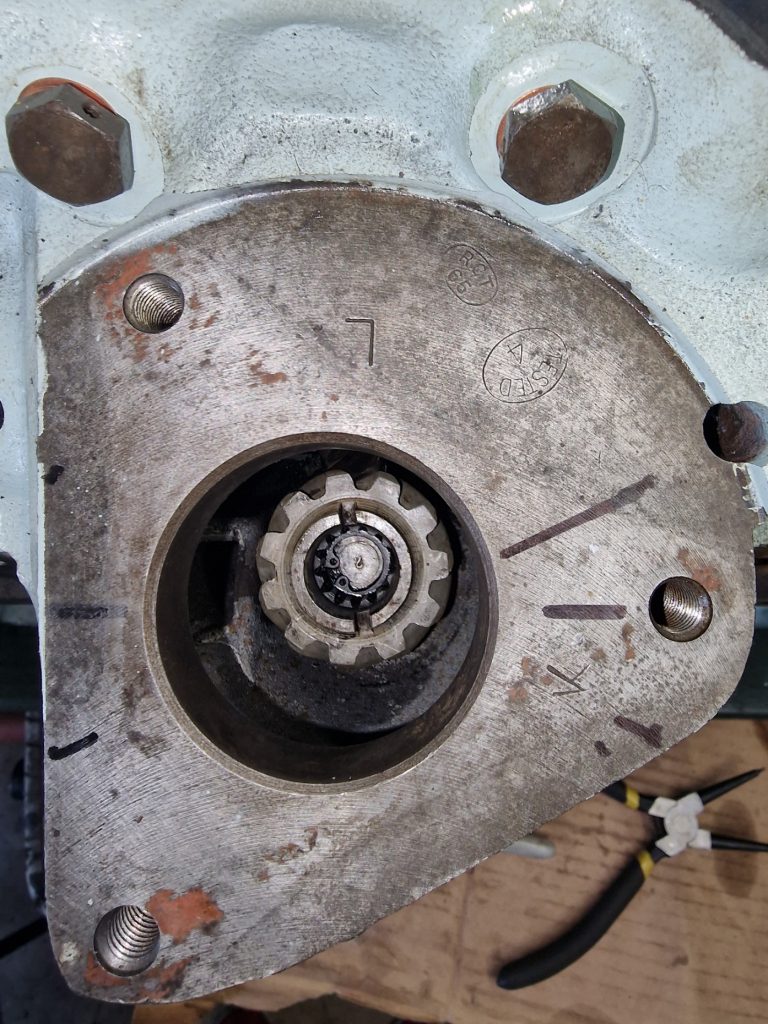
First problem, the spline in the centre (it has 1 larger spline on one side) has to point to 20 degrees form the engine centre line. You can see my poor attempts to mark it here.

Challenge one. As the gear goes in, it rotates, so it takes a few attempts to get it in, and end up pointing in the right general direction.

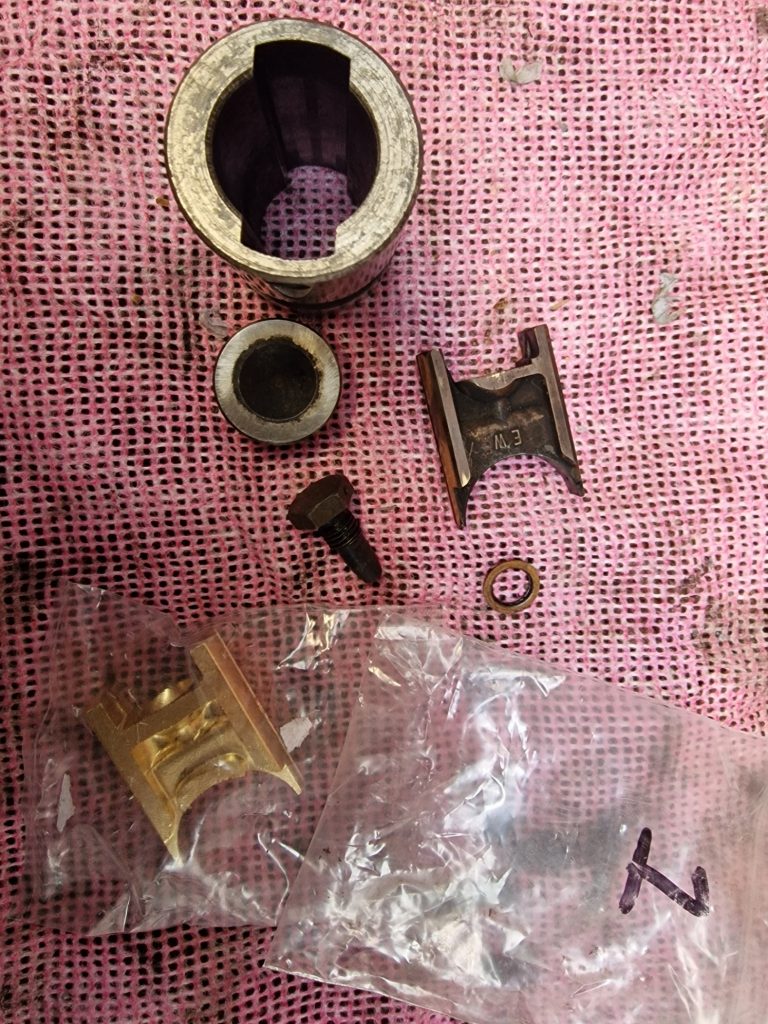
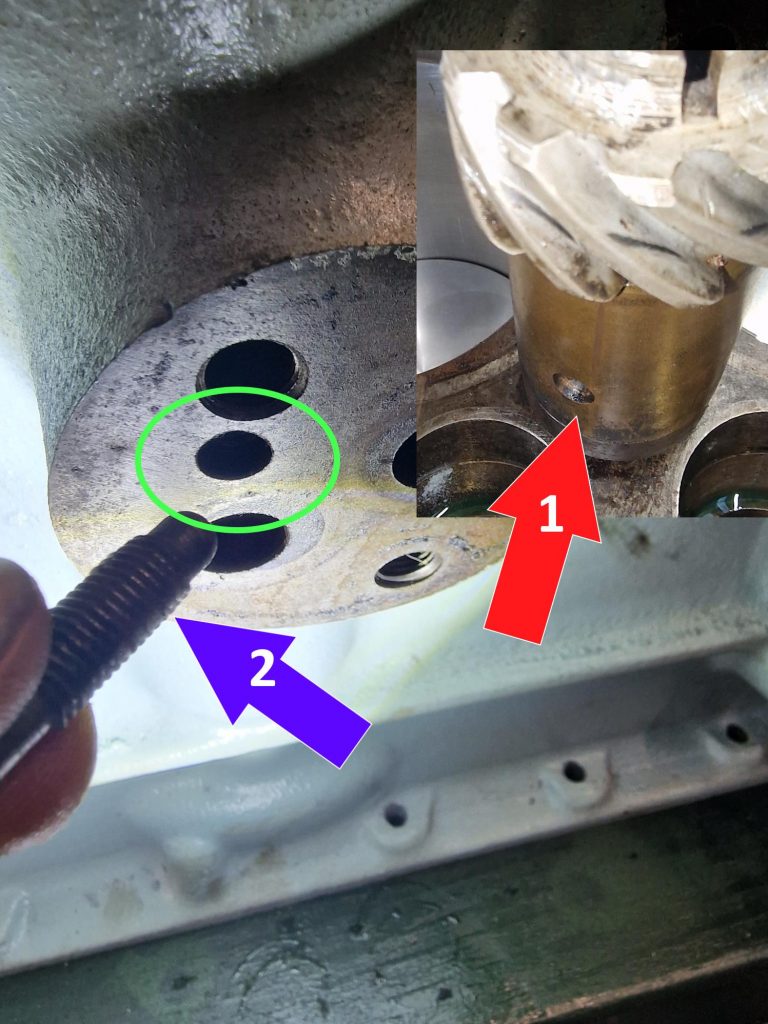
This is the second and more trying challenge. Simply put, the little grub screw (2), needs to go though the Green hole, and locate in the brass sleeves hole (1), it stops the brass sleeve rotating as the distributor spins.

Easy hu, well no, the brass sleeve rotates on the shaft, so as the gear goes in, you have to account for it rotating on the camshaft gear, at the same time the brass sleeve rotating, and also, as I found out, if it goes in a little too far and needs to be lifted a little, changes the orientation and alignment, but also makes it really hard to find the hole.

Anyway, got it in the end after many, many attempts…. I think.
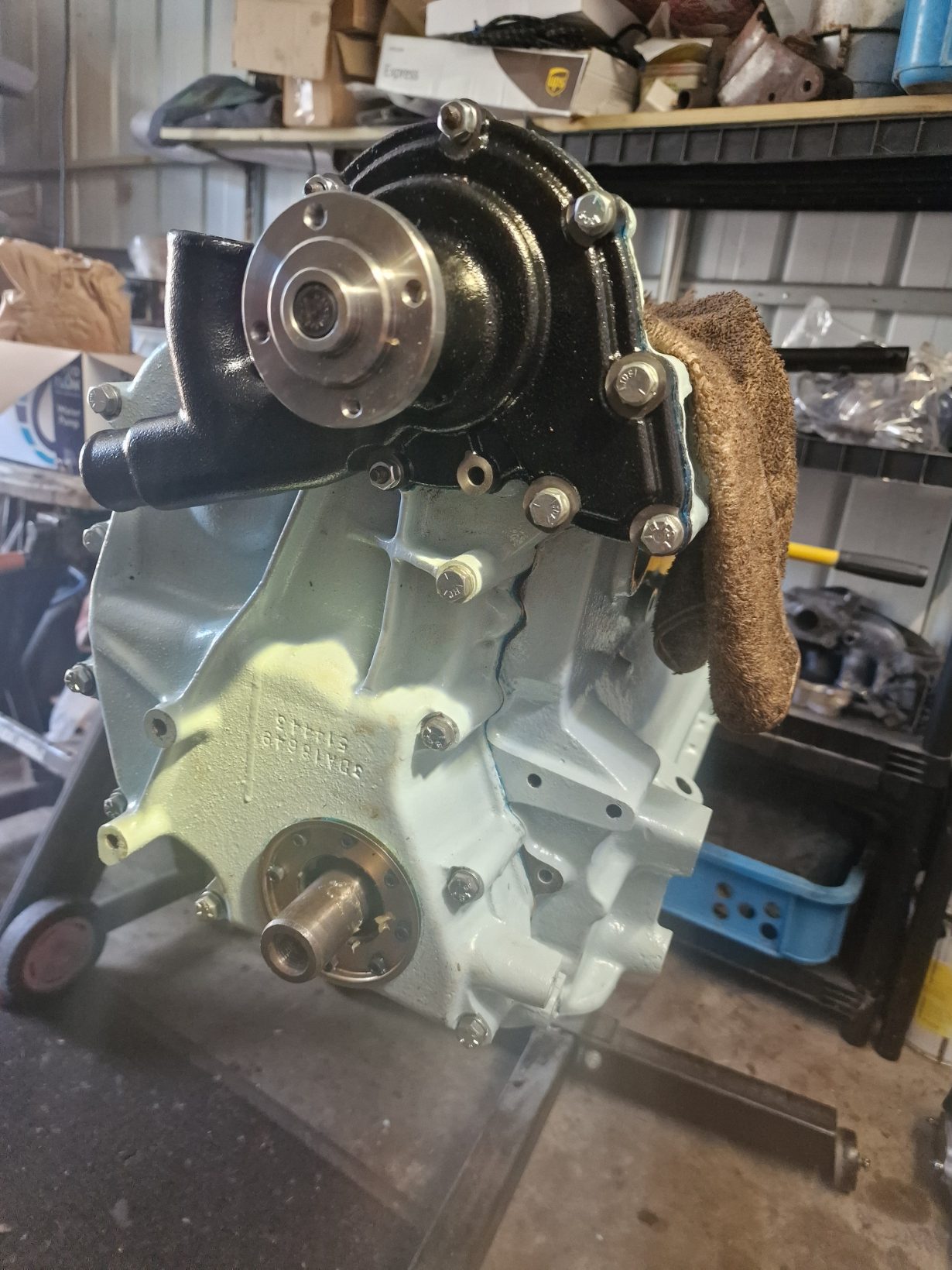
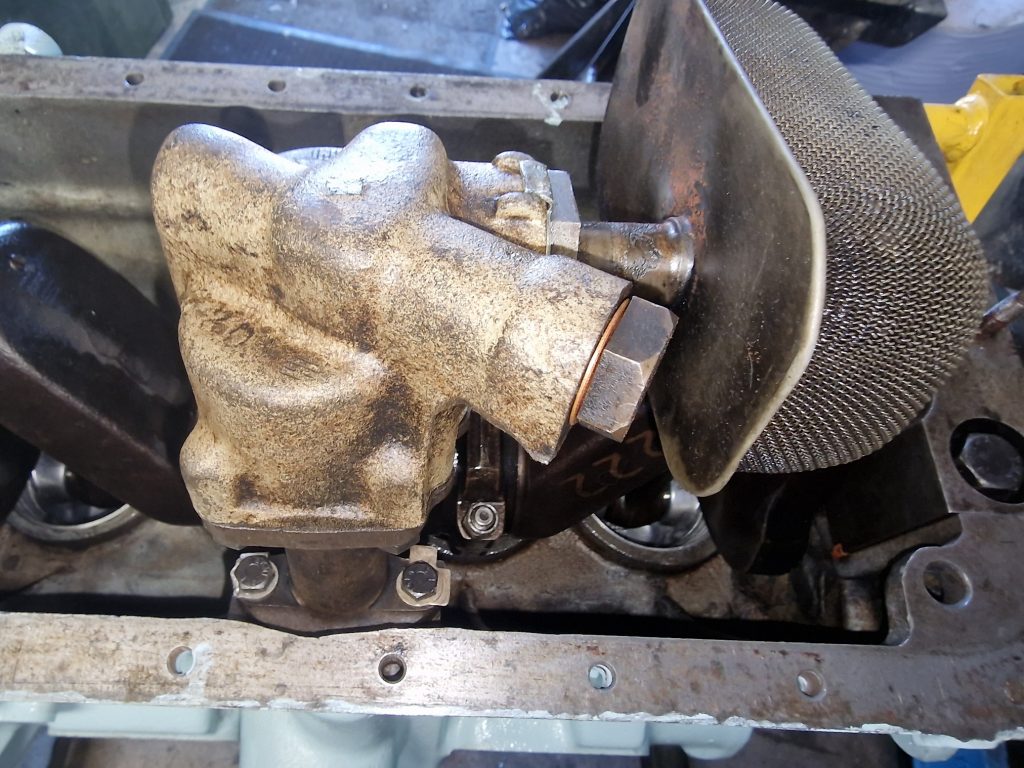
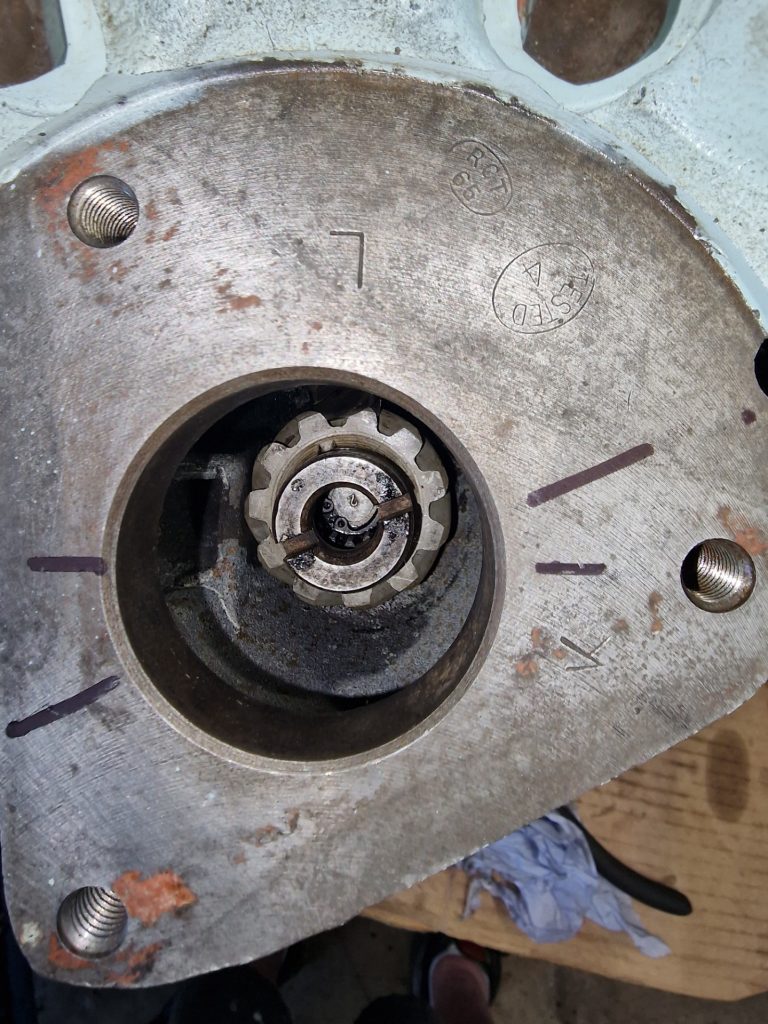
Next is to put a little drive coupling on the top, which changes the orientation of the slots to take the distributor.

The coupling is shown on here, with the slot riunning in a different direction, actually pointing at cylinder one, as this is the one that needs to be firing at this time in the timing.

I did put the distributor on temporarily and it seems to align correctly, i.e. firing on cylinder 1.

Thats it, camshaft in, cam chain on, Distributor drive gear in and hopefully in the right place, but we’ll see, when I come to start it. I’m not so worried about this part, if its wrong it just wont run, or run very well. the cam chain on the other hand, if I have that badly wrong, it could be the end of my engine.

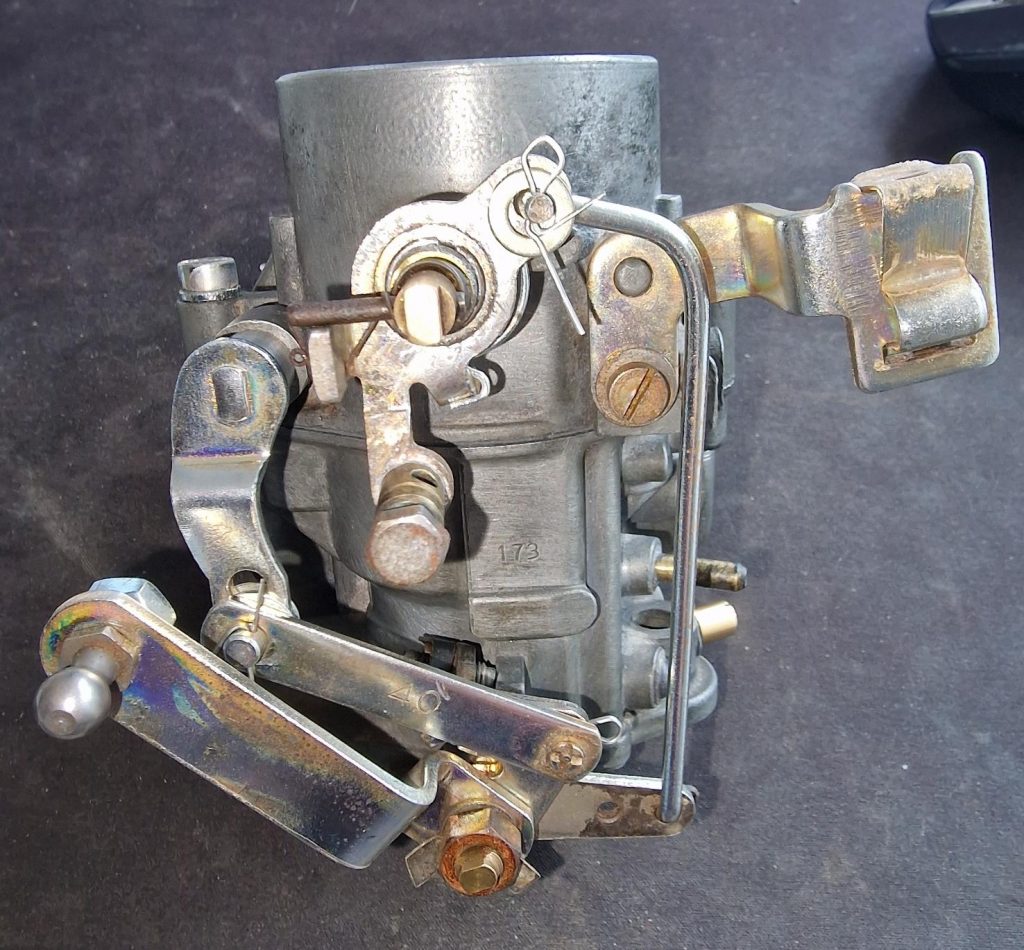
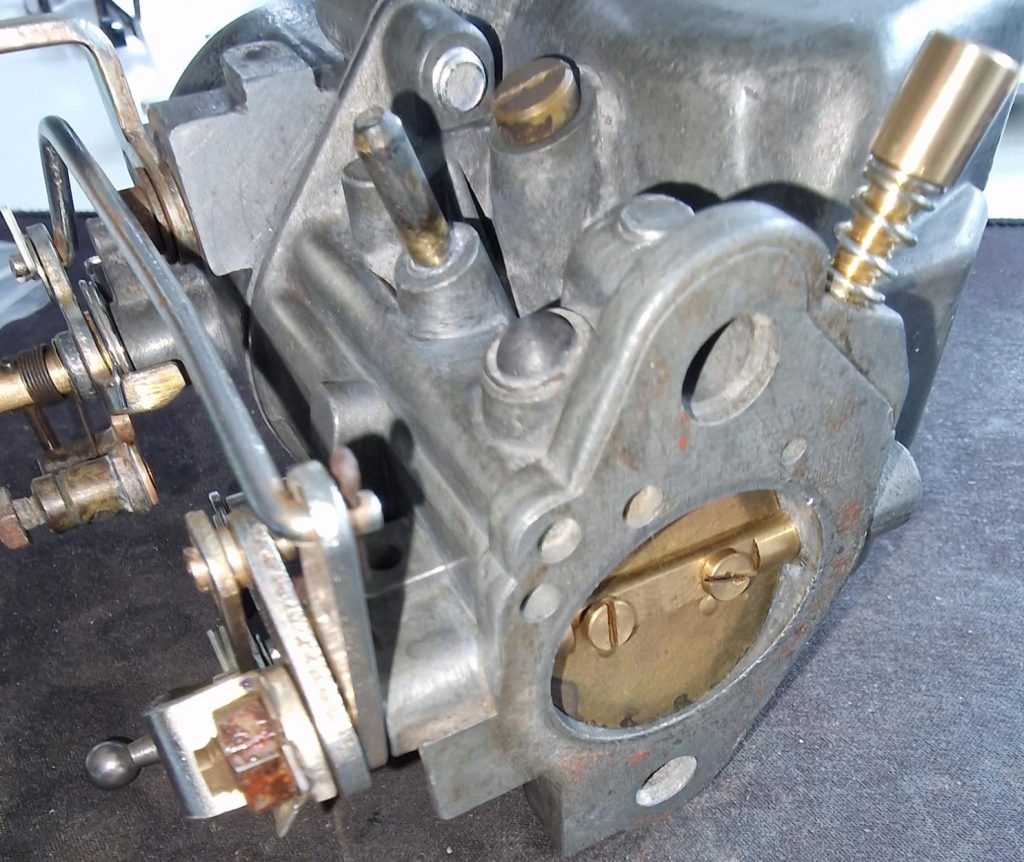
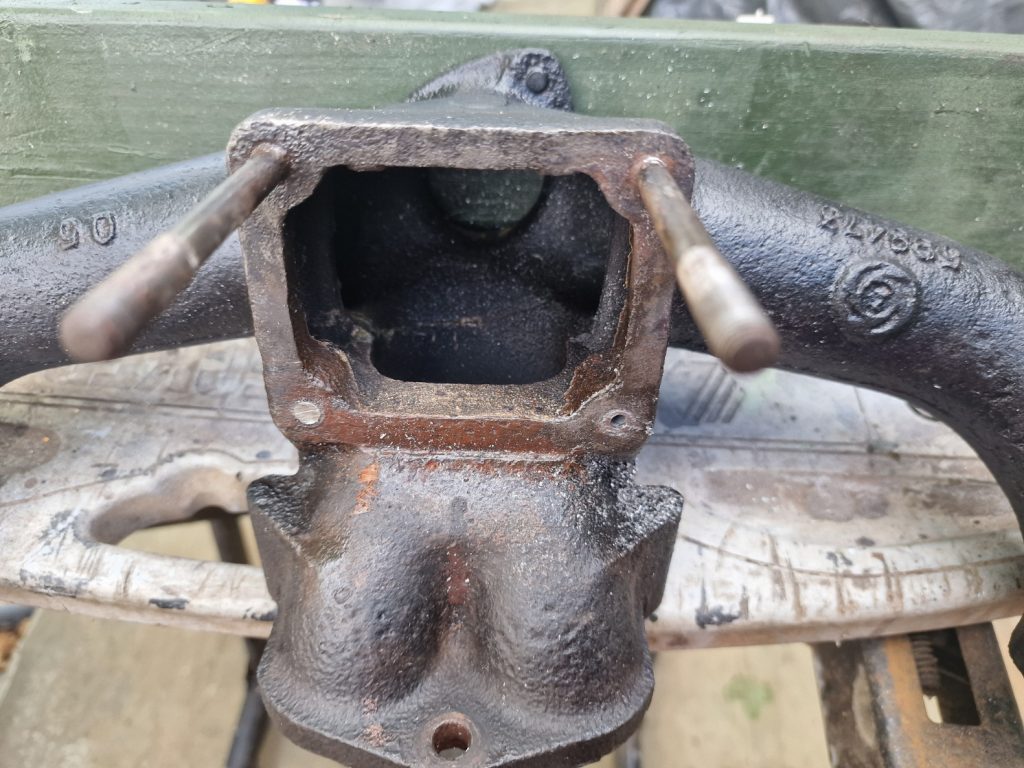
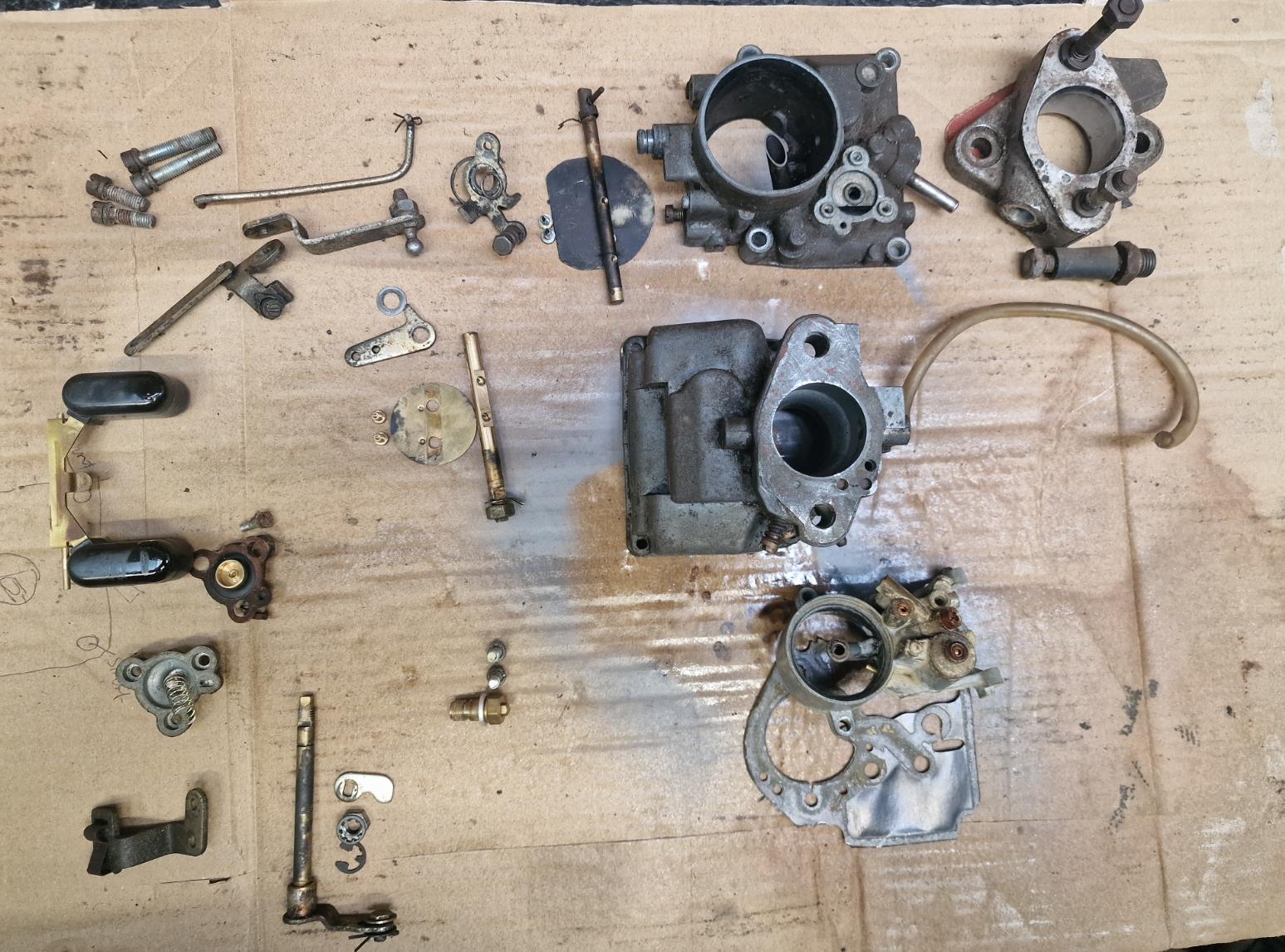
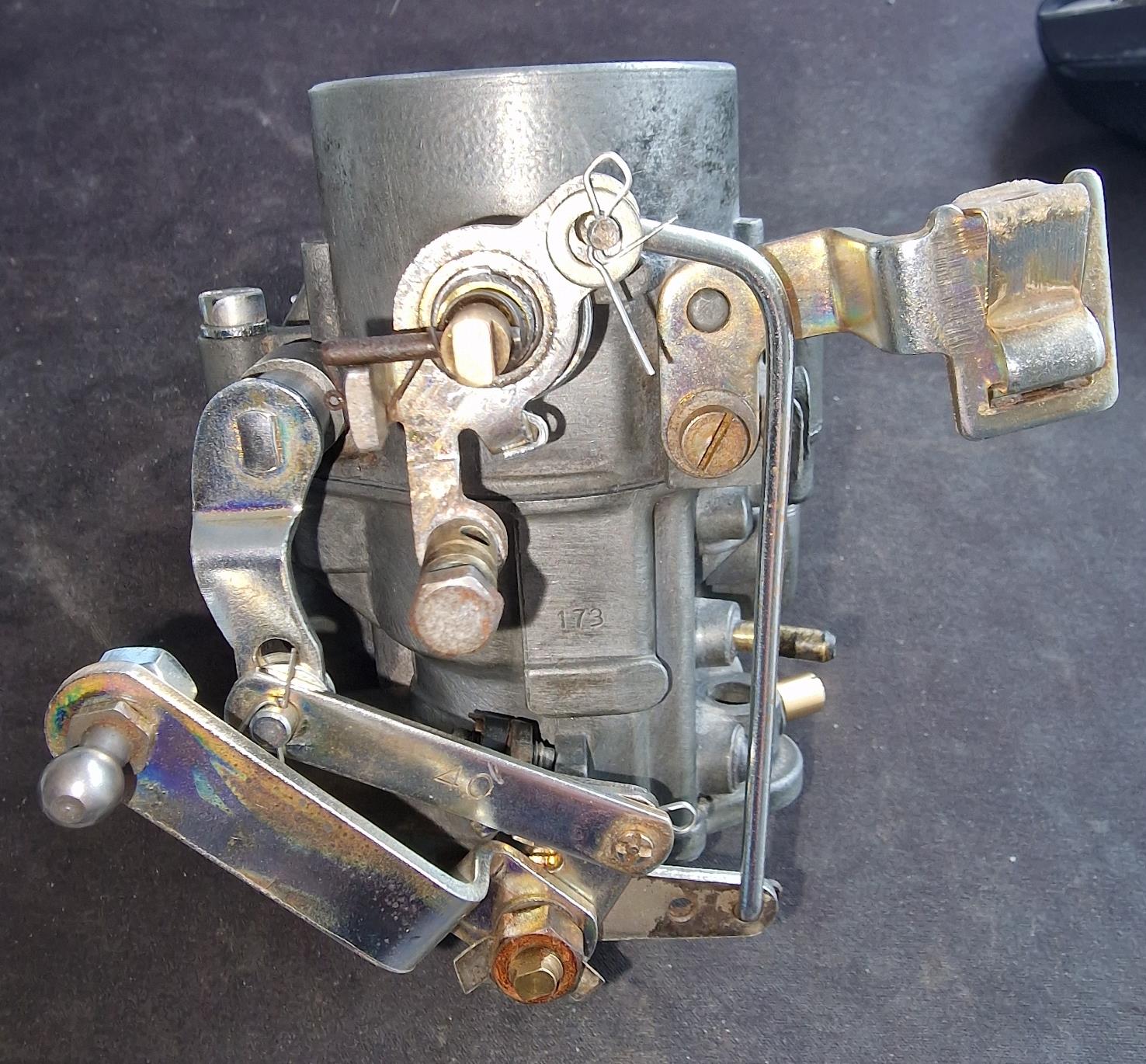
On Hols for a couple of weeks, so hopefully will get to, or close to putting the engine back in the chassis, I can then seriously start to think about getting it running. Oh, thats when I have done some of the electrics, sorted out the carburettor and probably a load of other jobs I’ve not even thought about yet.


Engine re-build – Bottom end

It was sometime ago I wrote about a failed attempt at re-building my Land Rover Series 2.25 engine, more precisely the Camshaft Bearings. I mentioned I was taking the block to Turner Engineering for them to do it. I also mentioned it needed a good wash inside and out, as recommended, so that was done.

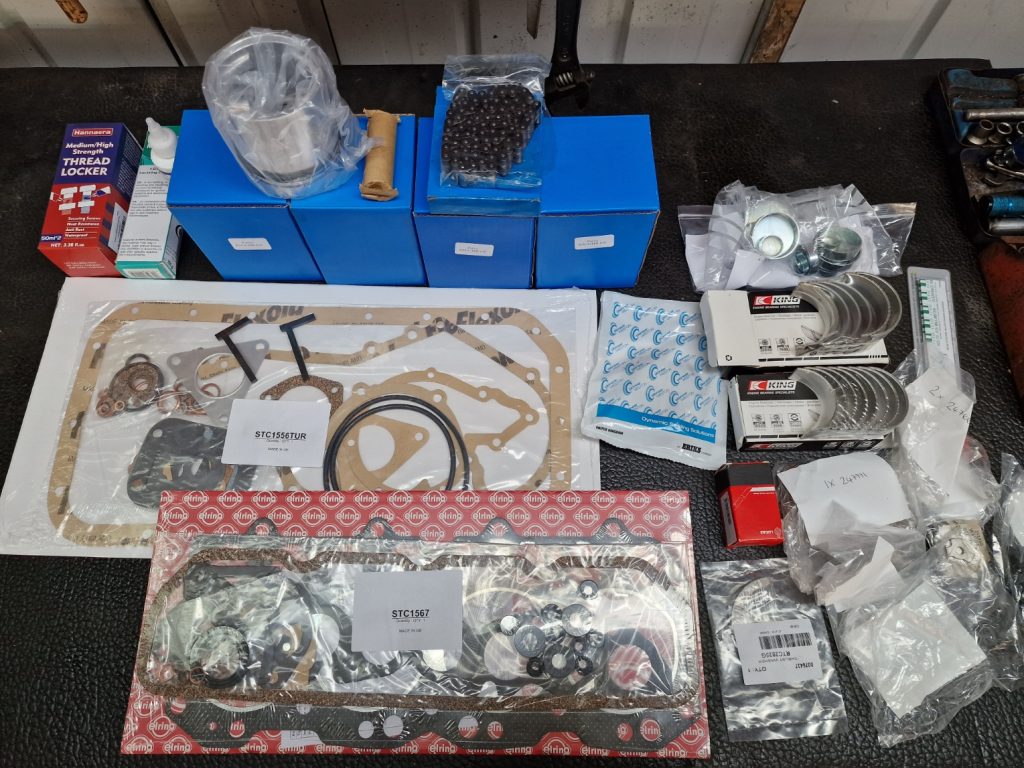
To the re-build, but first, a quick look at all the new parts.

CRANKSHAFT

1st job was to make sure the bearings and everything else was in spec. For info, the Crankshaft has 3 Main Bearings, some engines are 5 bearings, but mines a 3.

First thing is to make sure all the bearing caps fit correctly, which means putting them on, tightening to the correct torque, and then loosening one side. A feeler guage is then used to measure the gap on the loosened side. No Pictures of this, but did do something similar with the piston connecting rods, which is shown later.

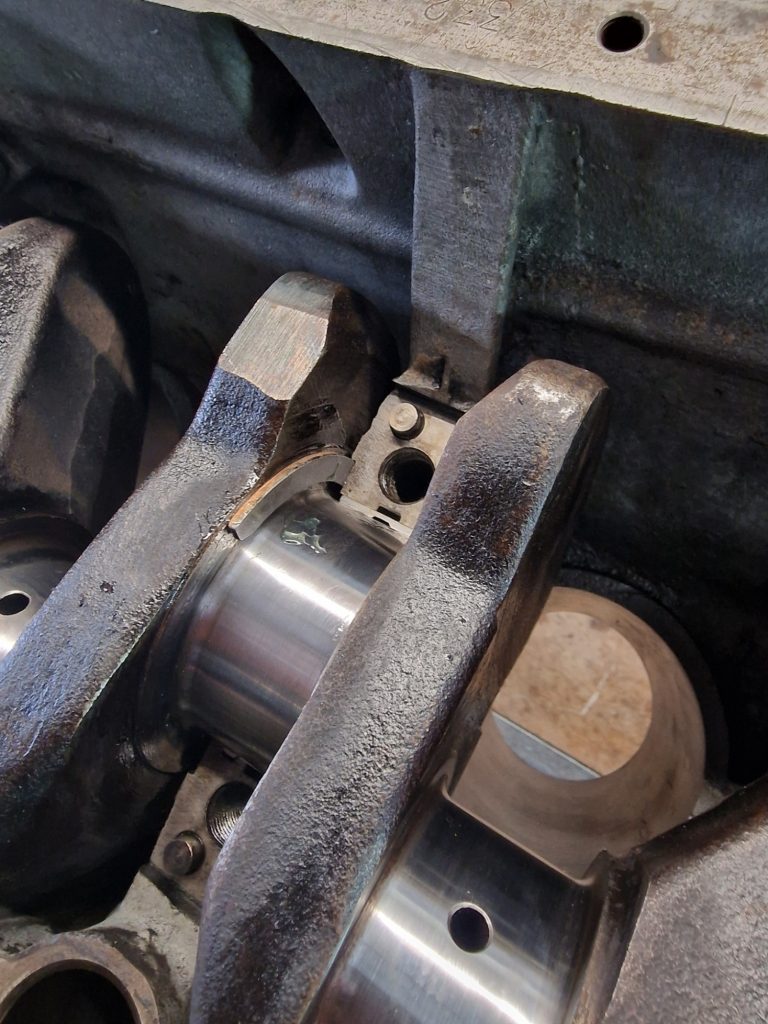
Next is to make sure that the gap between the bearings and the journals are within spec. To do this, the lower (or when the engine is up the right way, top bearing) is put in-place and carefully locate the crankshaft onto the bearings.

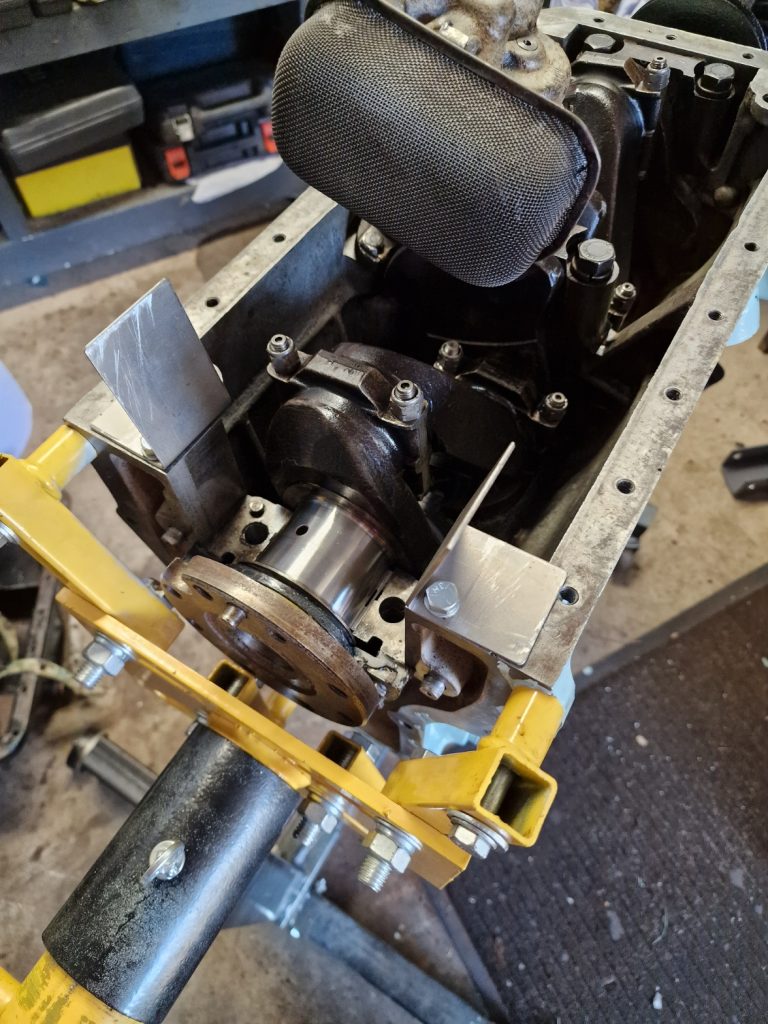
This is the front bearing journal, and you can just see the bearing sitting underneath it.

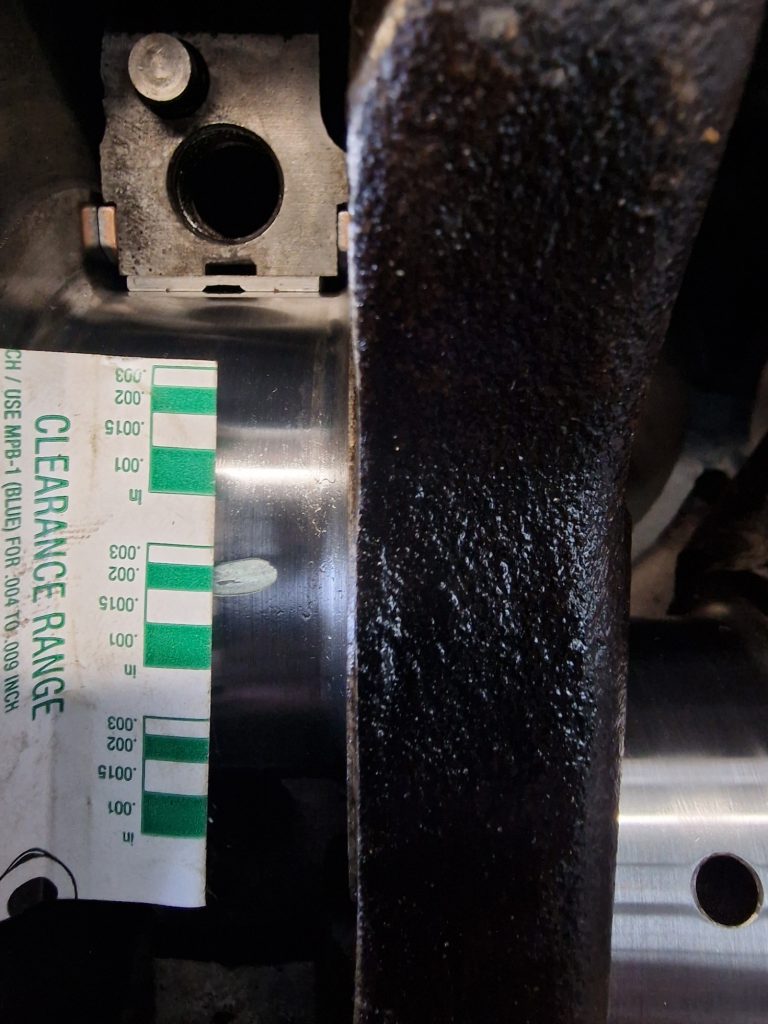
A small piece of Plastiguage is placed onto the journal and then the cap and bearing located and torqued to the right setting.

The image here, is after the bearing cap was removed, allowing the expanded Plastiguage to be measured, checking the tolerance, which should be .001″ to .0025″. Did this on all three journals, all within spec.

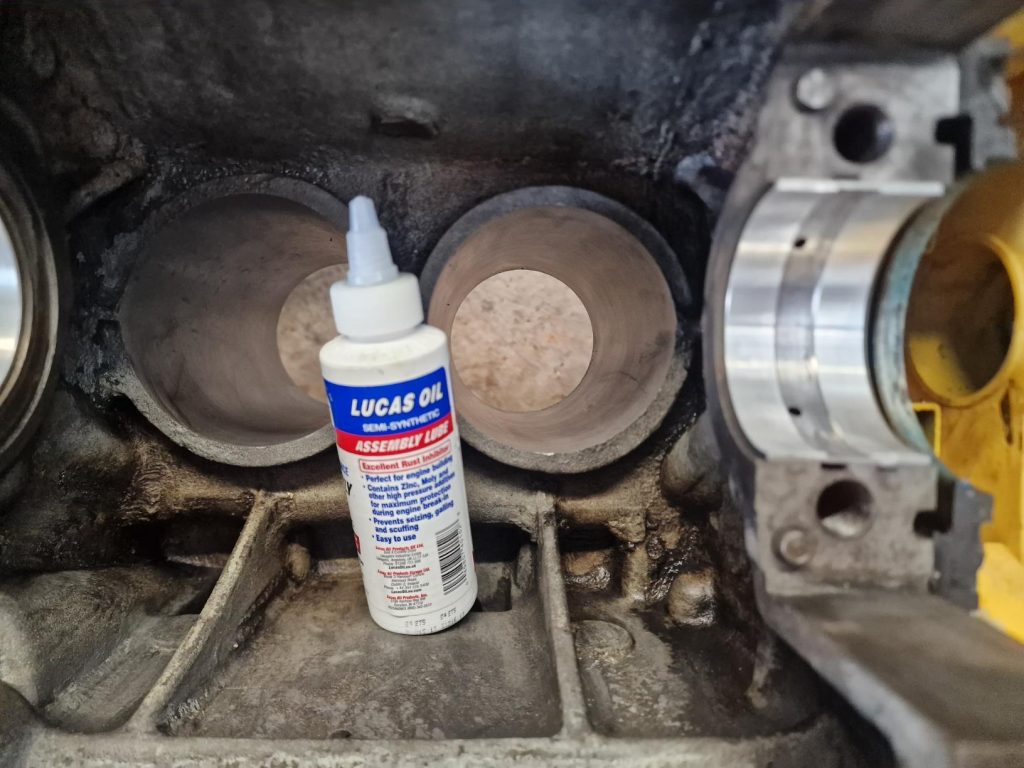
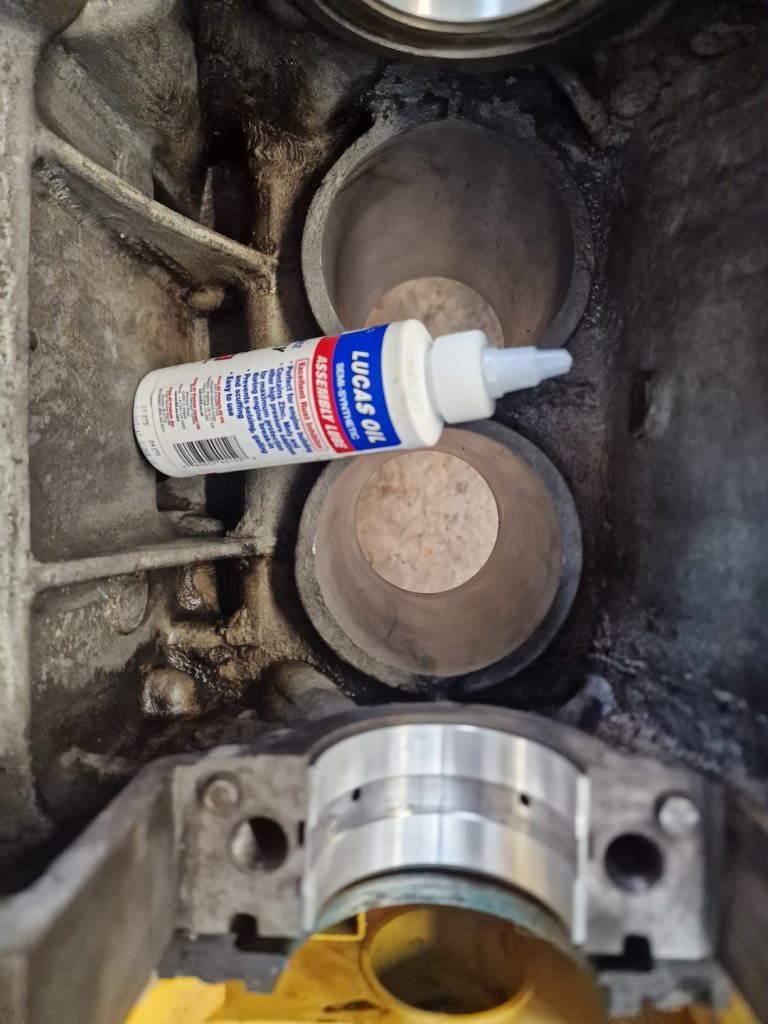
After it was all checked, time to put the crankshaft in properly, which simply meant remove it, clean the journals and bearings with brake cleaner and then apply liberal amounts of Assembly Lube, and re-fit the bearing caps.

Assembly lube is a very sticky oil, that does not run off, which means it can be left a while before getting oil circulating the engine when its running.

All the time during fitting, tested to make sure that the crankshaft didn’t lock up and felt smooth in rotation.

Bearings 1 & 2 are relativly straight forward, however the rear bearing cap incorporates some oil seals.

There are 2 seals and a seal retainer that all need to be put on.

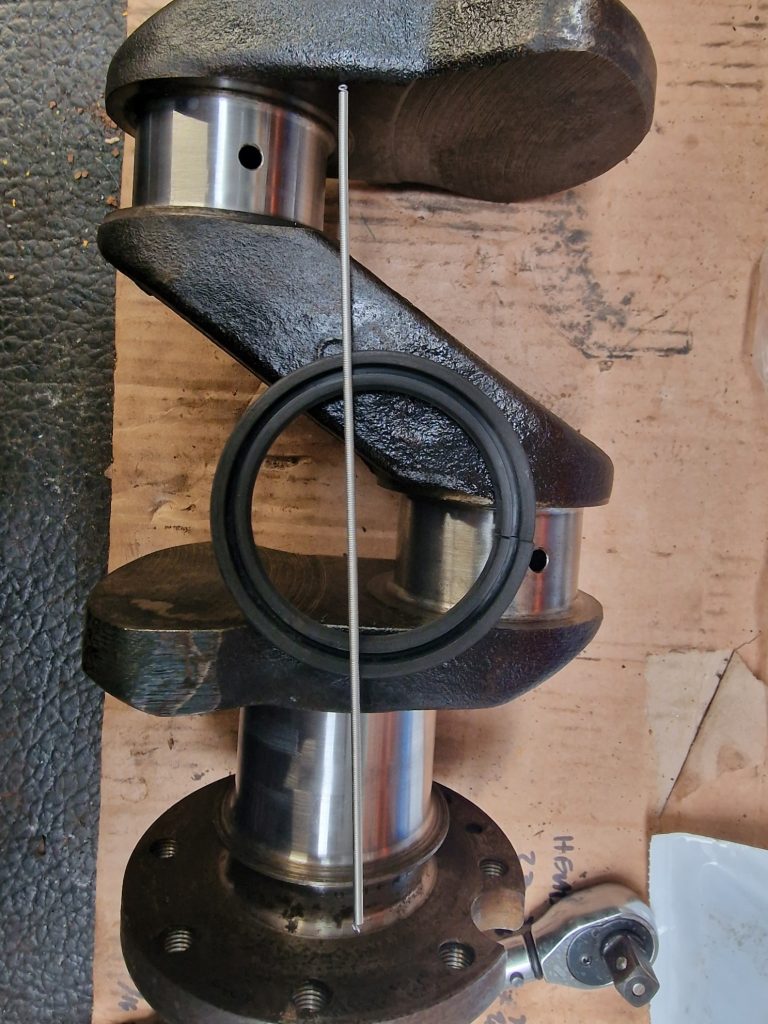
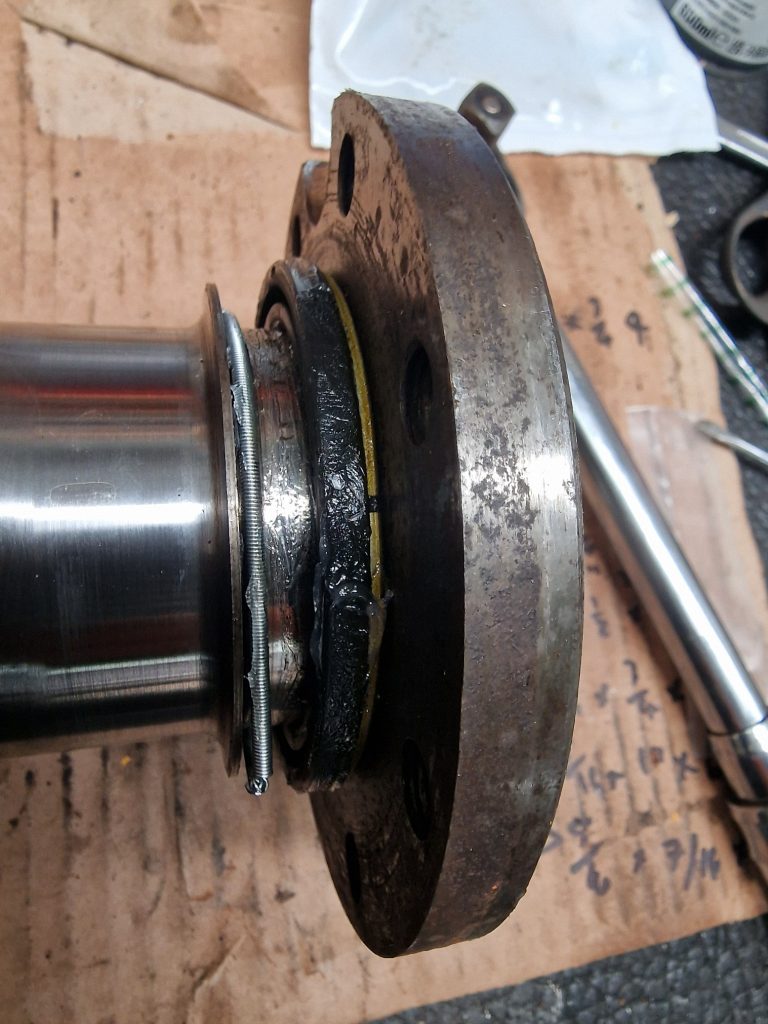
This is the rear seal, which comes in two parts, the seal itself, which is split to allow it to be located over the crankshaft journal, and a spring.

The seal is opened up gently, and placed over the Crankshaft. The sprint is then connected together and gently inserted into the back of the seal.

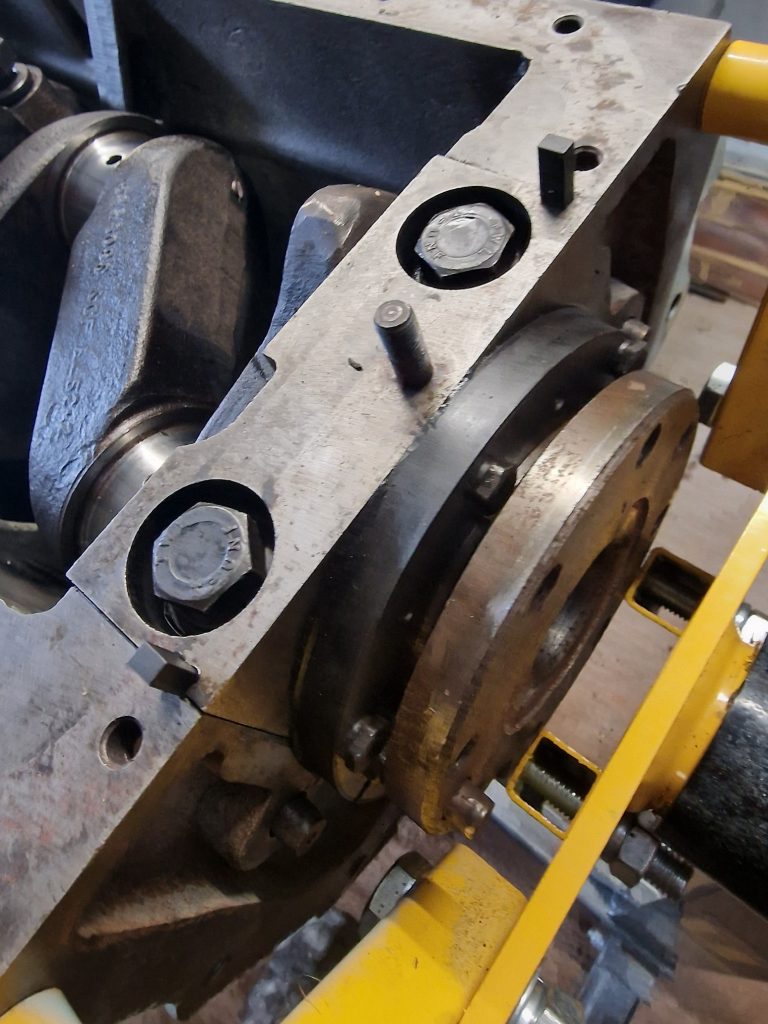
This is the rear bearing housing, and you can see the top of the T seals poking out ( a real challenge to get the bearing housing in, with these seals in-place). Attached to the bearing cap, you can see the Oil Seal retainer.

I have to be honest, I had a couple of goes at doing this. the first attempt, I used rubber T seals, which didn’t go well, it locked up the crankshaft. Removed them, and put in cork T seals instead, which went much better.

Thats the crankshaft in and turning nicely.

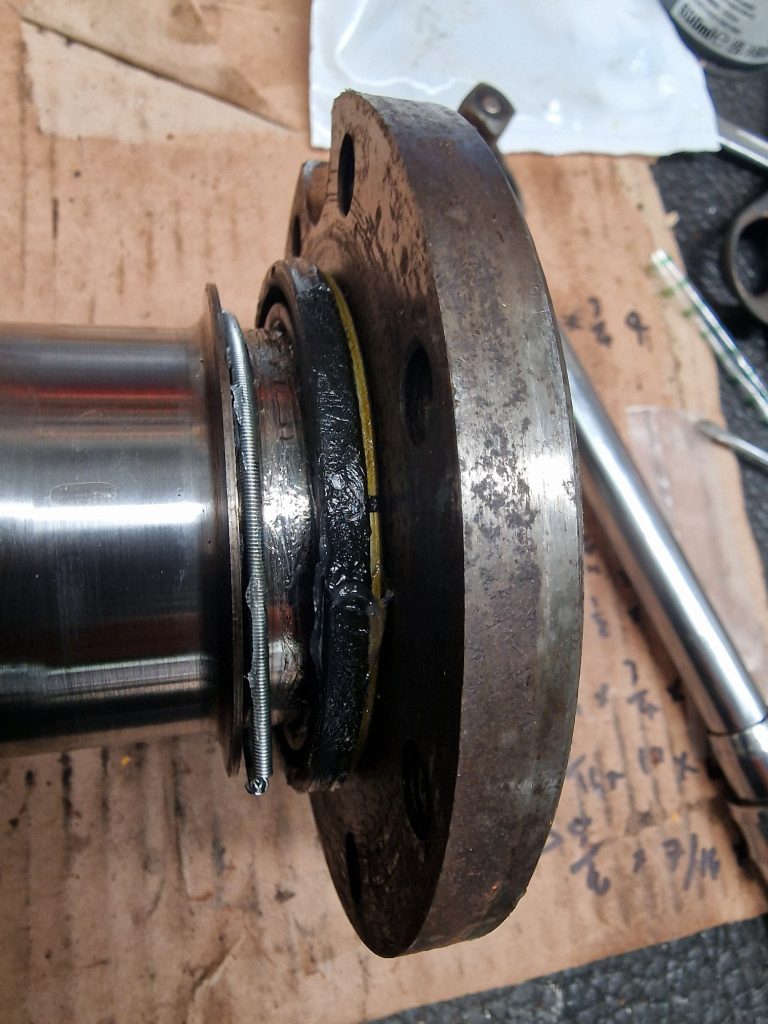
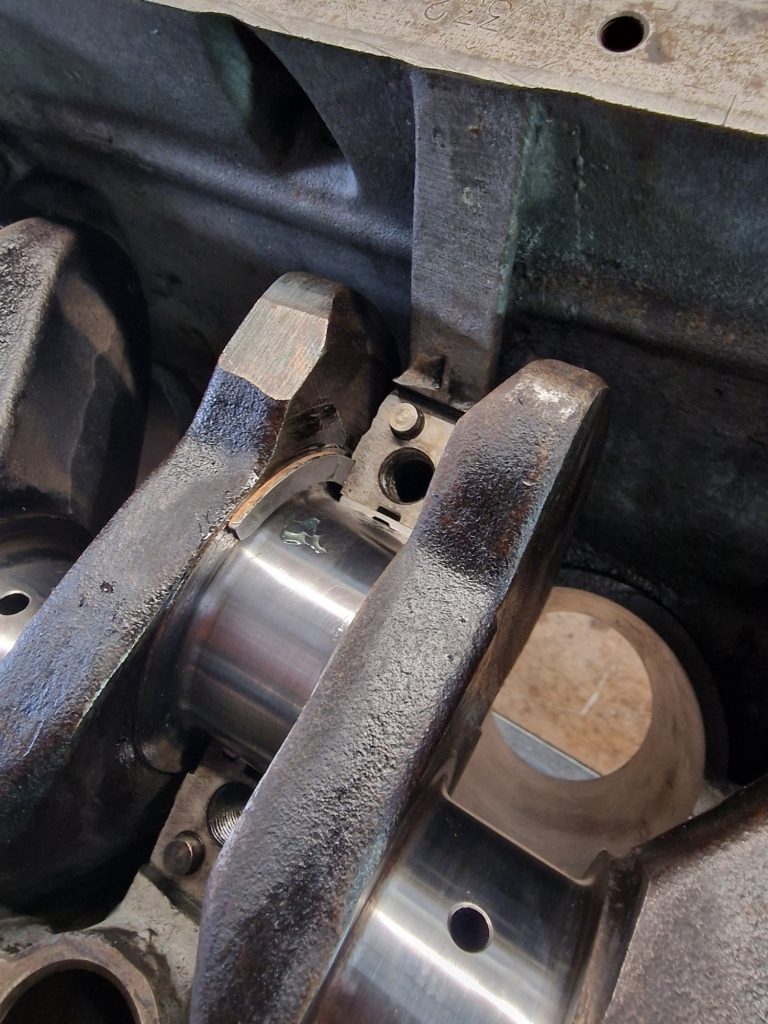
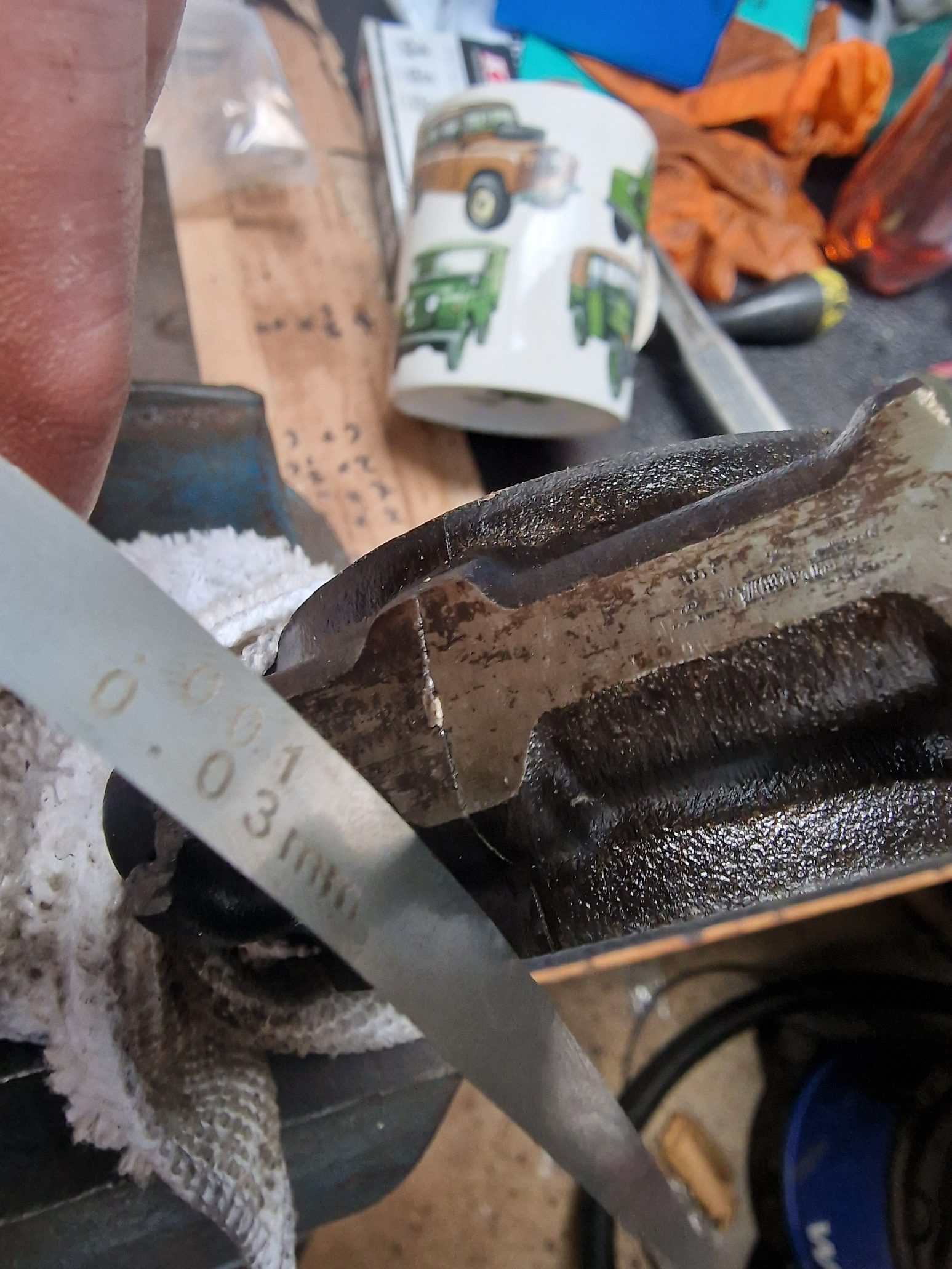
Couple of things I didnt mention above, was that Bearing 2 (middle one) has two shims, one either side, this is to manage end float of the crakshaft, which must be measured and shown to be in tolerance. (the image measuring it, is not the actual method!!! )

PISTONS

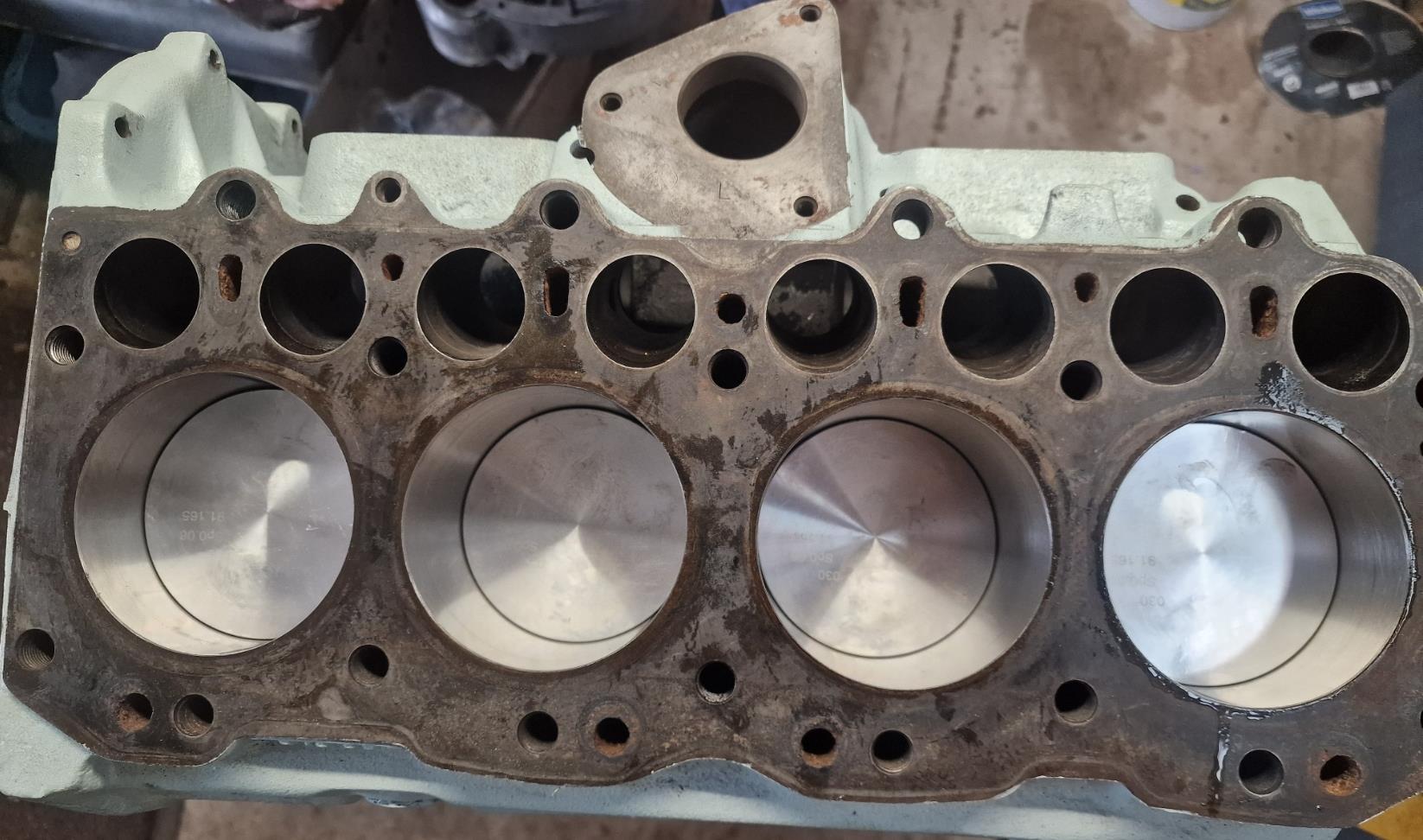
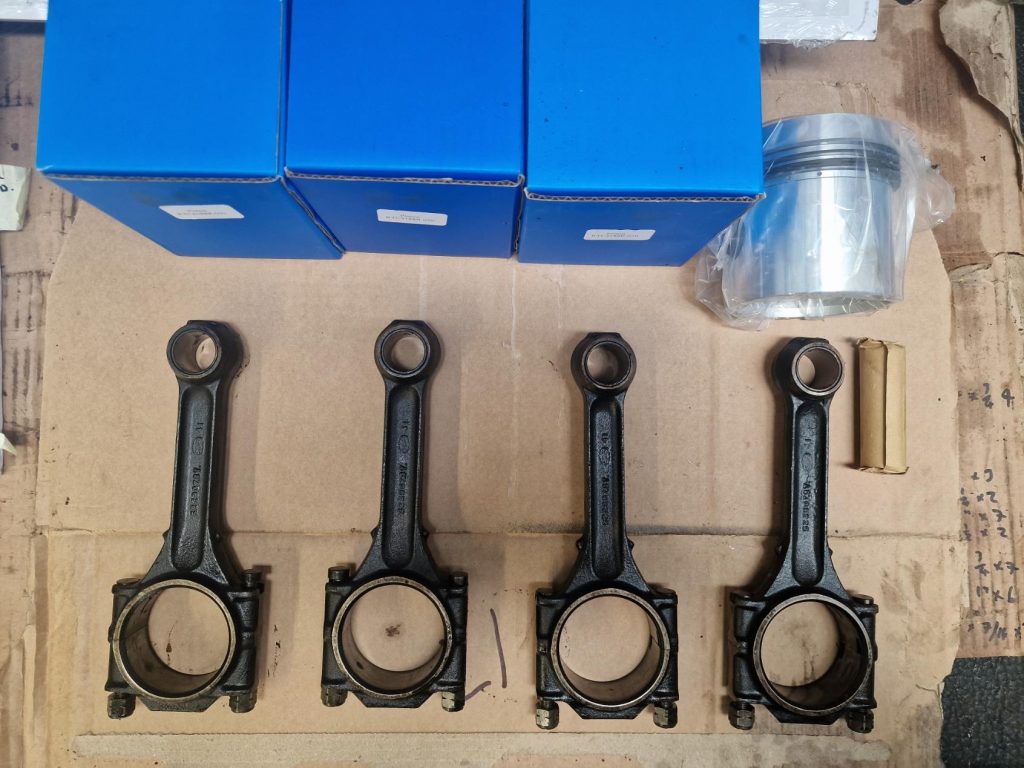
The engine block was re-bored to 30 thou, so new pistons needed. I mentioned earlier measuring the gat between bearing caps.

This is the basic principal, to make sure that the housings join up correctly.

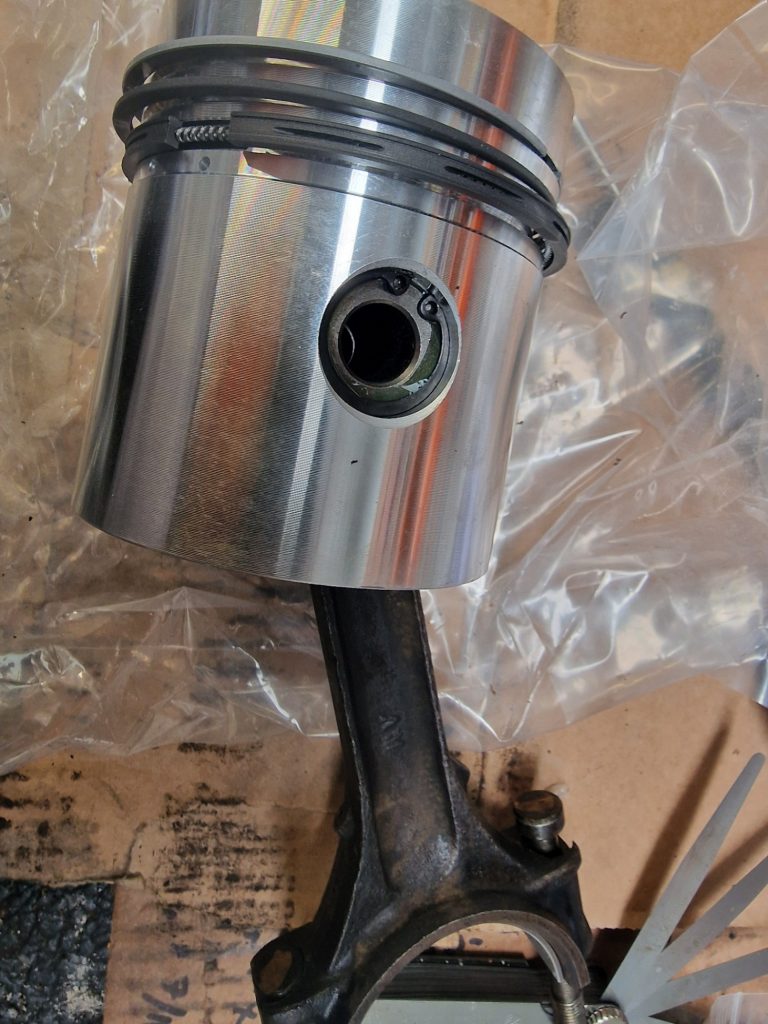
The new pistons come with new Gudgeon pins (the pin that holds the piston onto the connecting rod, often referred to as the small end), and are already fitted with piston rings, so no need to worry about them.

I used the existing connecting rods, after checking them as above.

Stricly speaking there are a couple more checks that should be done, 1st is to fit the piston rings in the bores and check gaps, the 2nd is to check that the connecting rods are not twisted at all.

Didn’t do either of these, 1 because they are new pistons and rings, and has had a proper re-bore (so they should be OK) and 2, because I dont have the equipment to test the straightness.

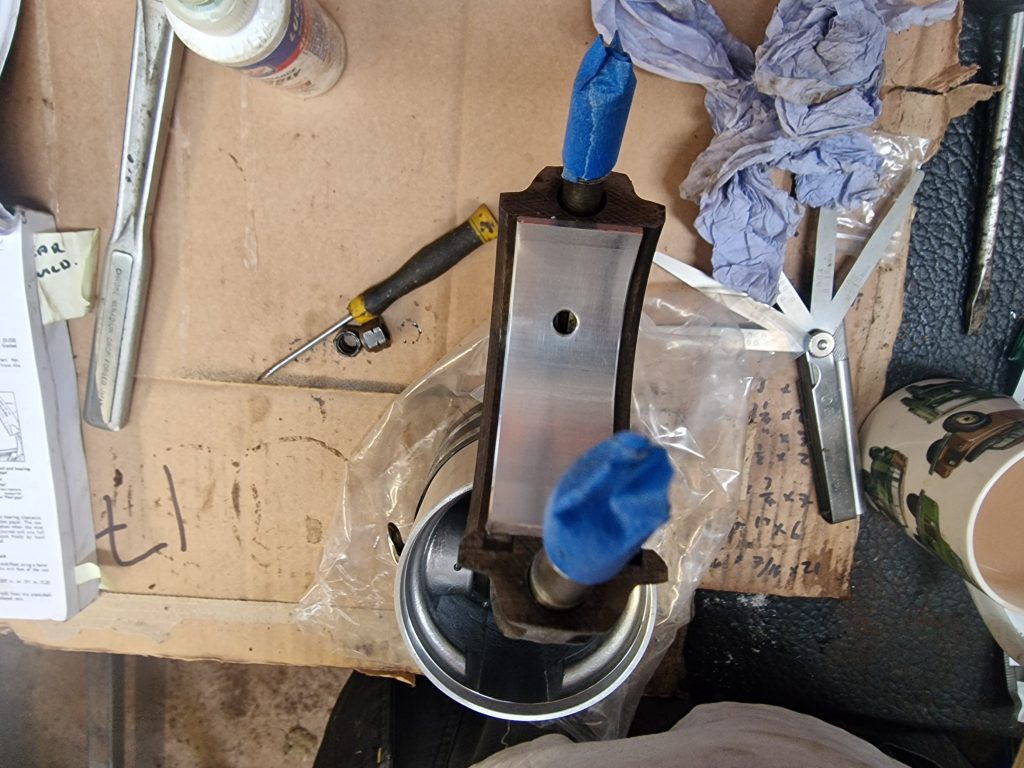
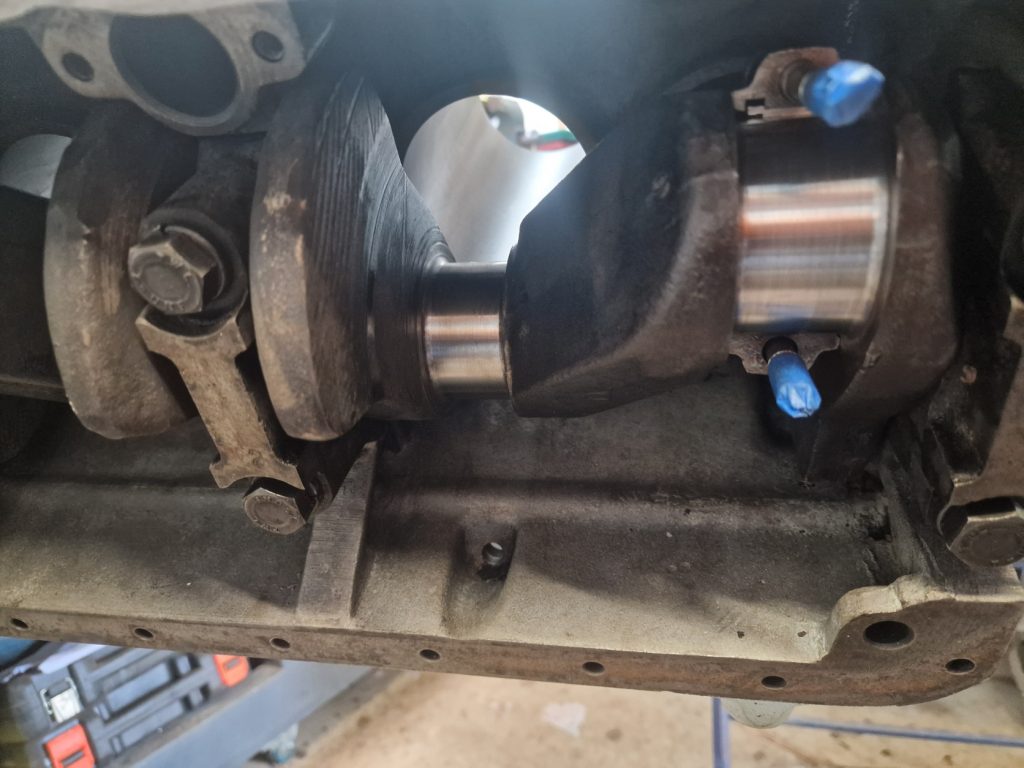
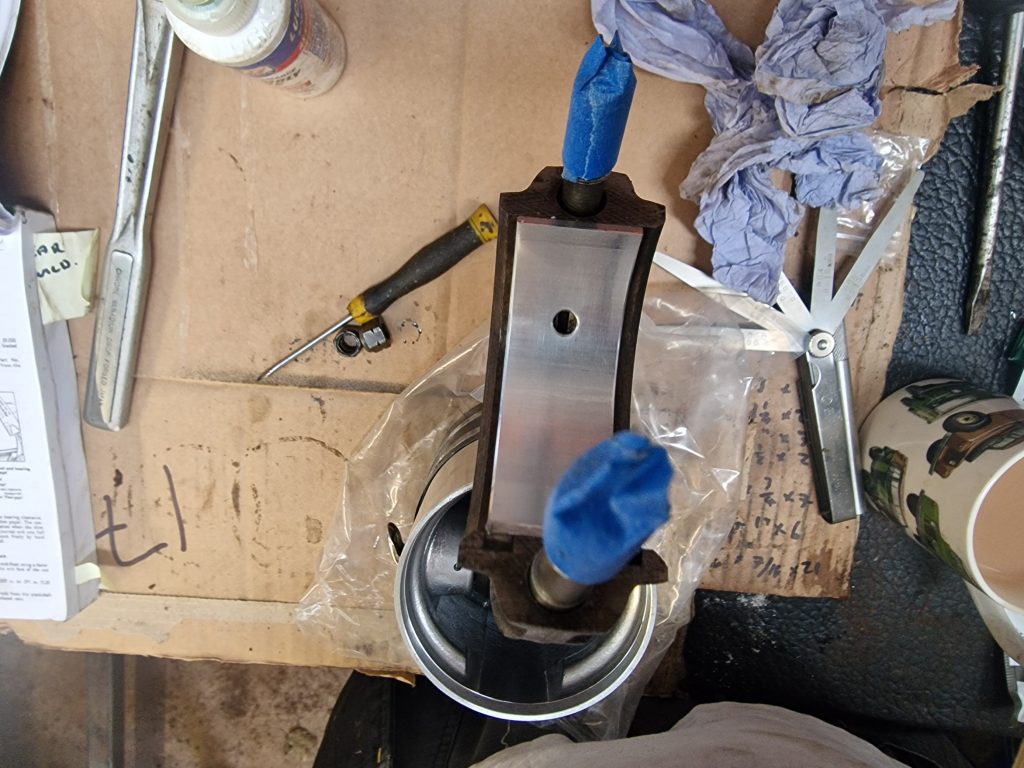
Same procedure as before, clean and put the bearing in, and generously cover in assembly lube. Also, taped up the ends of the bolts, to stop the bolts marking the crankshaft.

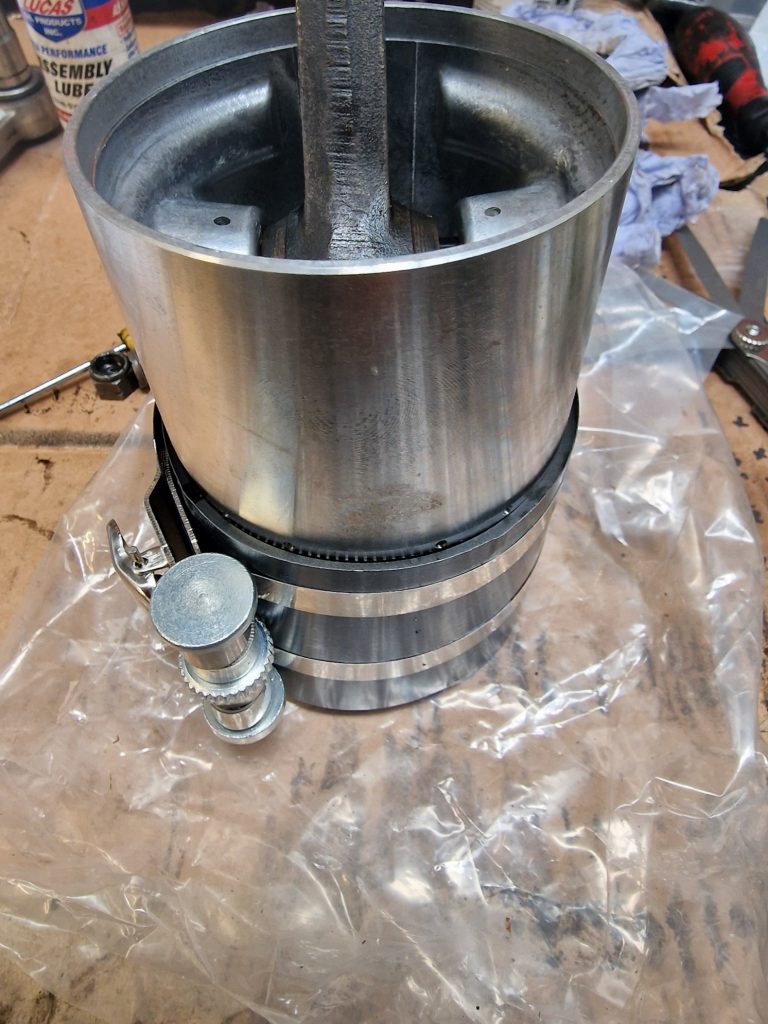
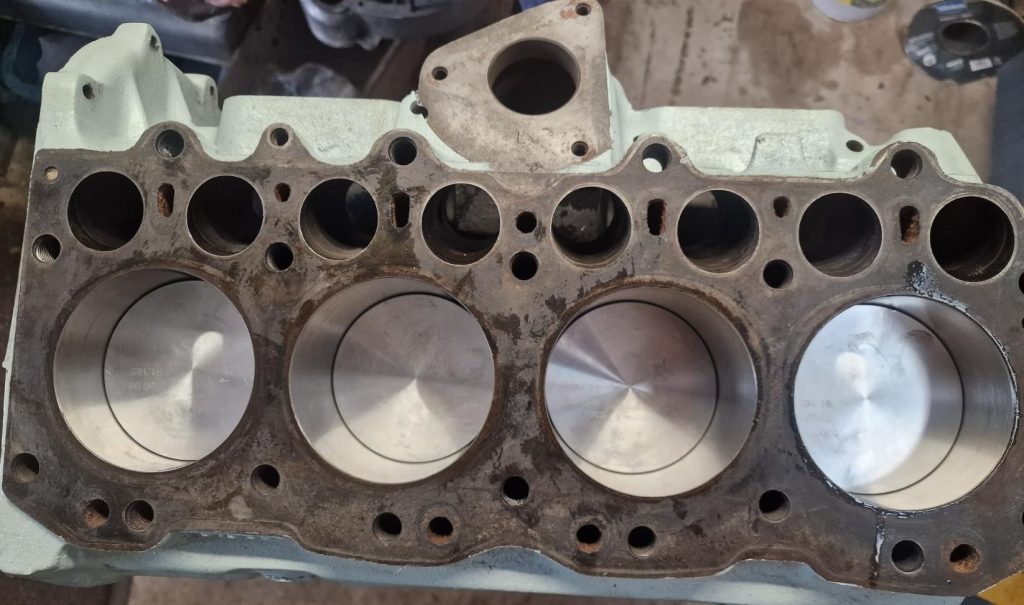
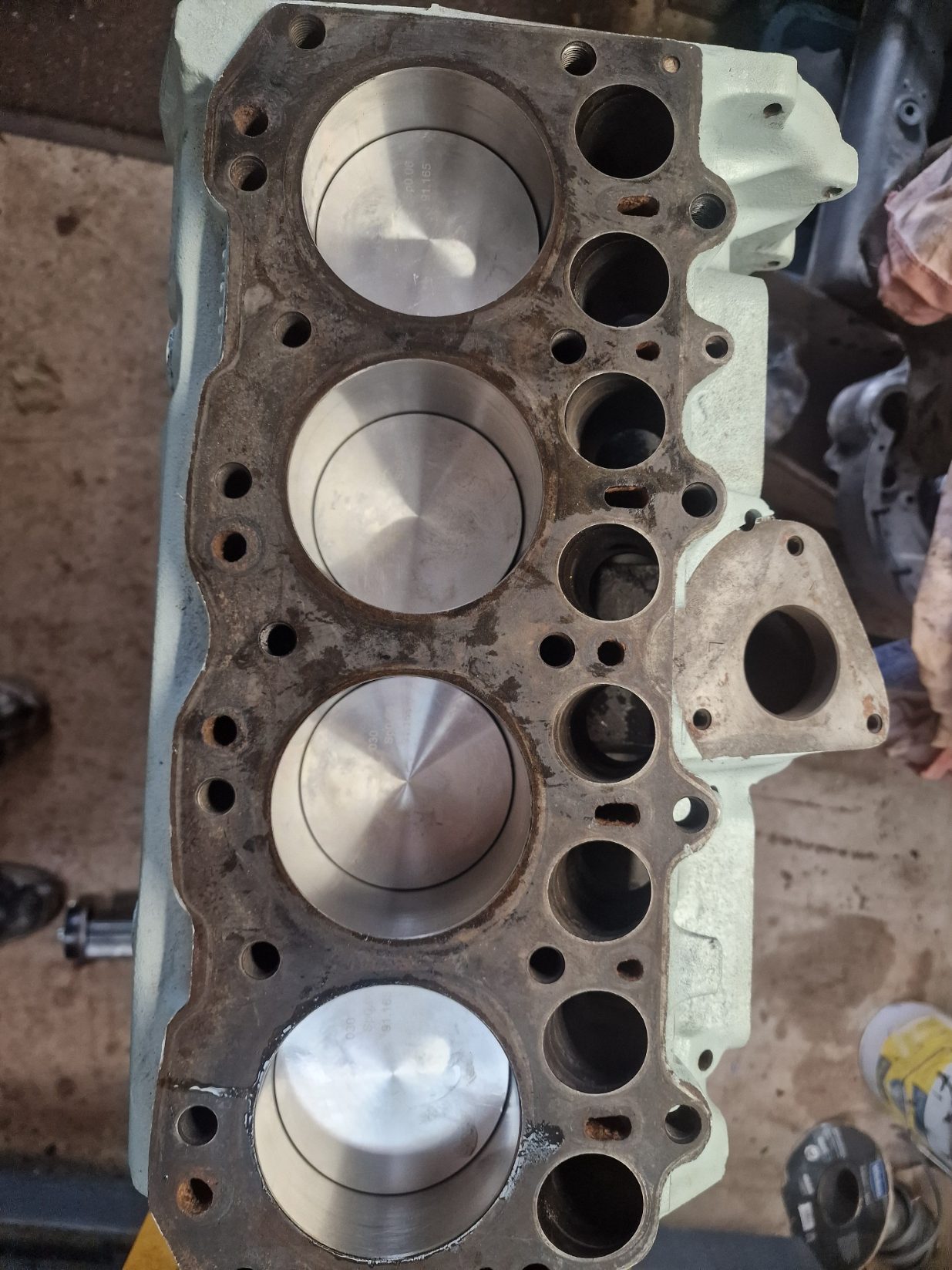
Each piston done in turn with a ring compressor, and gently tapping the piston into the piston bores from the top. Caps fitted as I went, until all 4 pistons were fitted.

Again, checking rotation of the crankshaft as I went.

Thats it, Crankshaft fitted, Pistons in, new bearings and plenty of Assembly Lube.

A closing note, totally un-related to this post. I wrote about the last bit of painting, where I had, had the wheels blasted before I painted them. This has left Isobel stuck on two spare wheels and a couple of axle stands, so need to get those wheels back on sooner rather than later. So, need some tyres.

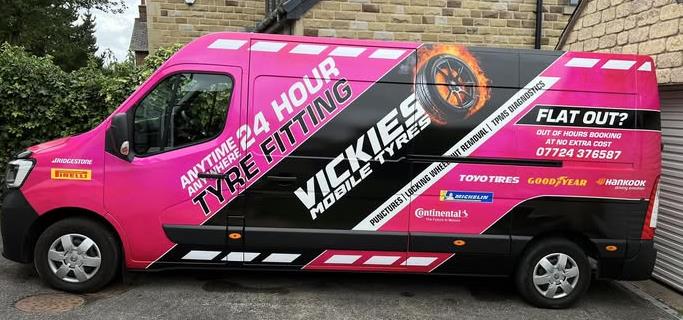
I like to mention people that have helped me out, and the picture over is a new business just started by one of my closest friends Son, Matty who has sourced some new rubber for me. Just need to get them down from Yorkshire now.

The colour, and name of his Business is very special, so here’s wishing Matty all the very best with his new venture.

Cant link to his web site, he doesn’t have one, yet!! working on that for him, but here’s his Facebook Page.

Thats it, next up Camshaft and Timing gear.


Door Tops

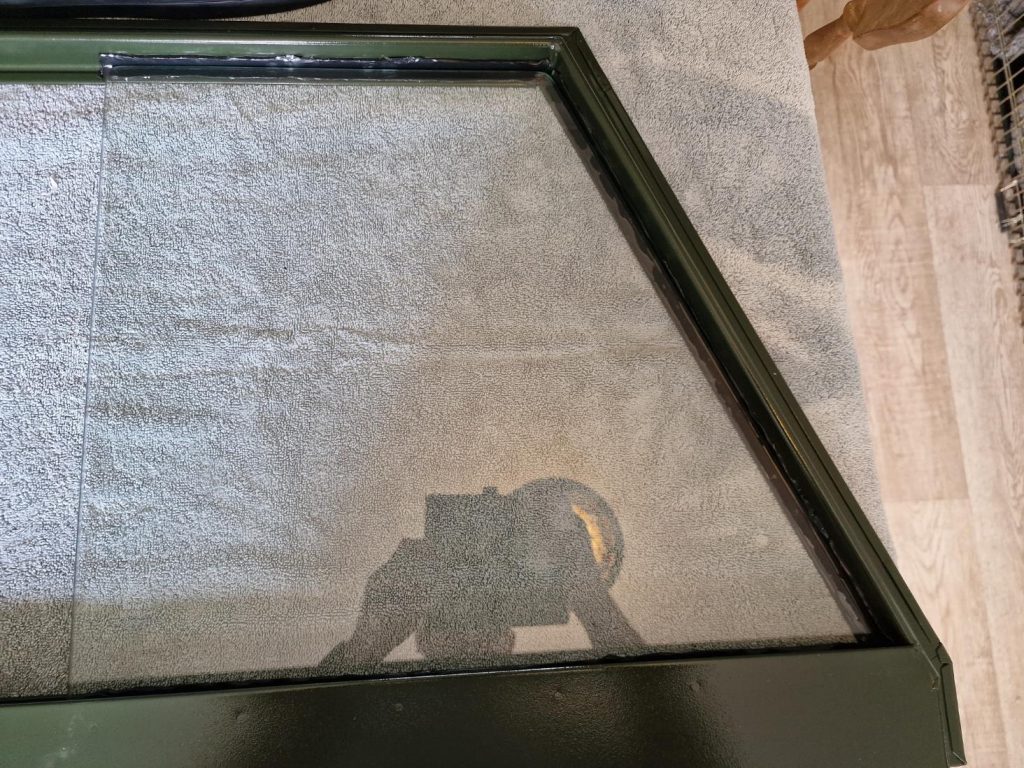
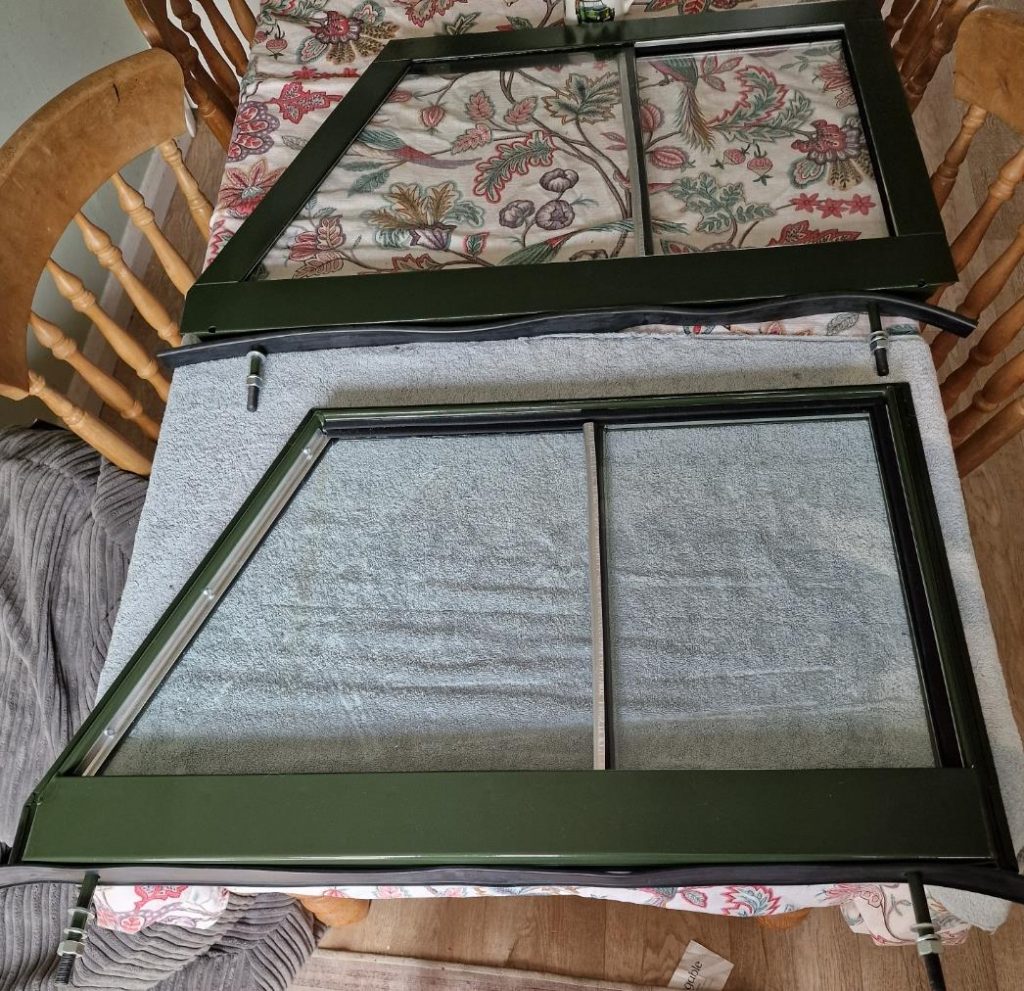
The final job before my holiday concludes, and am back to work Monday, and as I dont yet have what I need to wash the block I decided to clean up and fit the glass into the door tops that I painted last week.

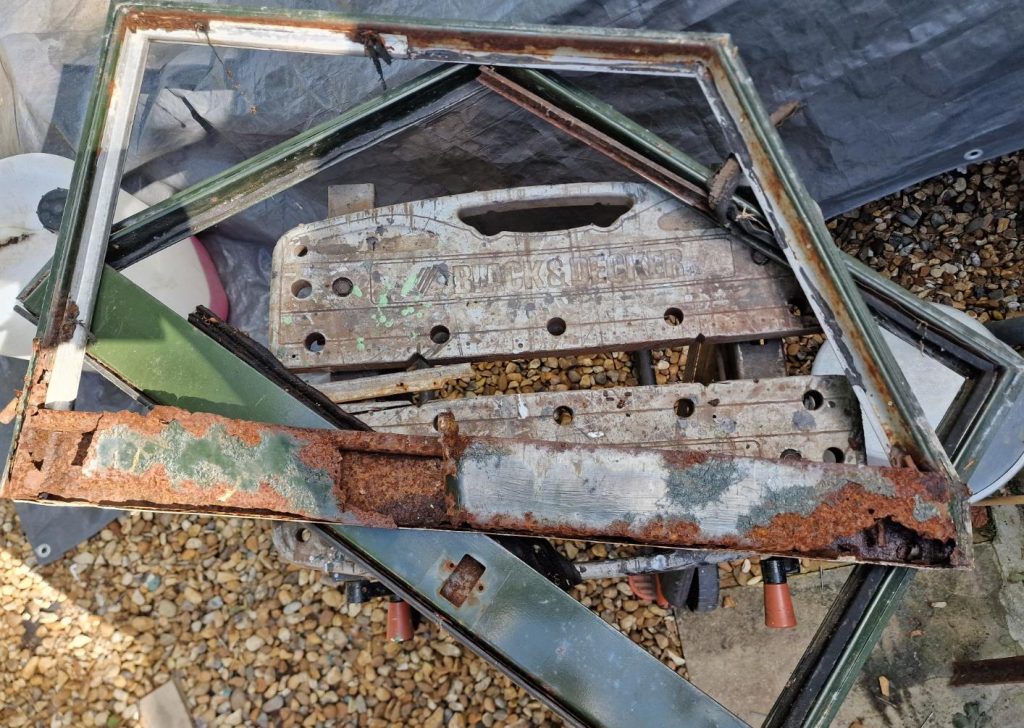
The door tops were new from Paintman Panels. Same company I bought all of the paint from, and seem to have a pretty good reputation. Why change them, well heres why!

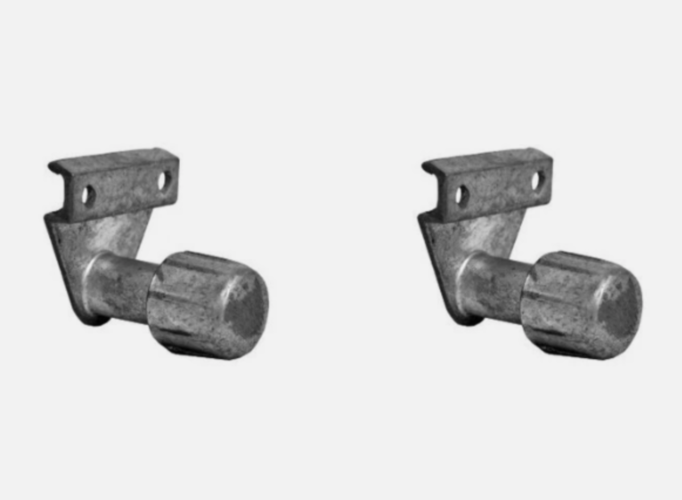
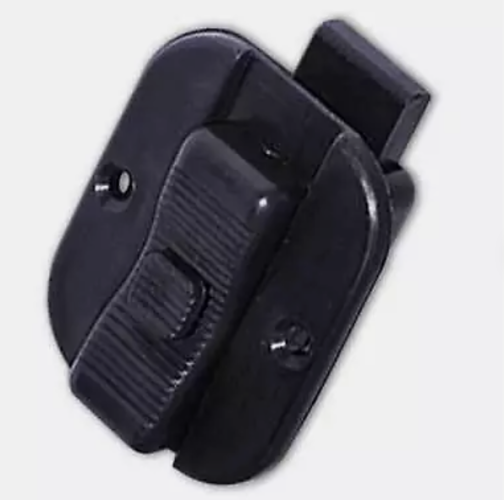
When I bought the new door tops from Paintman Panels, I also bought a glazing kit for each side. did’nt need the glass as I was happy with the glass that I took out. On the glass, there is some details etched into the glass, both sides are different, and one side is dated, 1967, which is two years later than Isobel. I am wondering if that is also why they had the window catch in the body of the frame, rather than the earlier version that sites at the top of the frame. Anyway, I ordered the earlier type, without the holes for the window locks. On the left, the early type and on the right the later type.

So to start the glazing. The kit comes with very easy to read instructions, so much so, there are none!

I did find a video, where one of my goto youtunbe channels shows how to fit the kit.

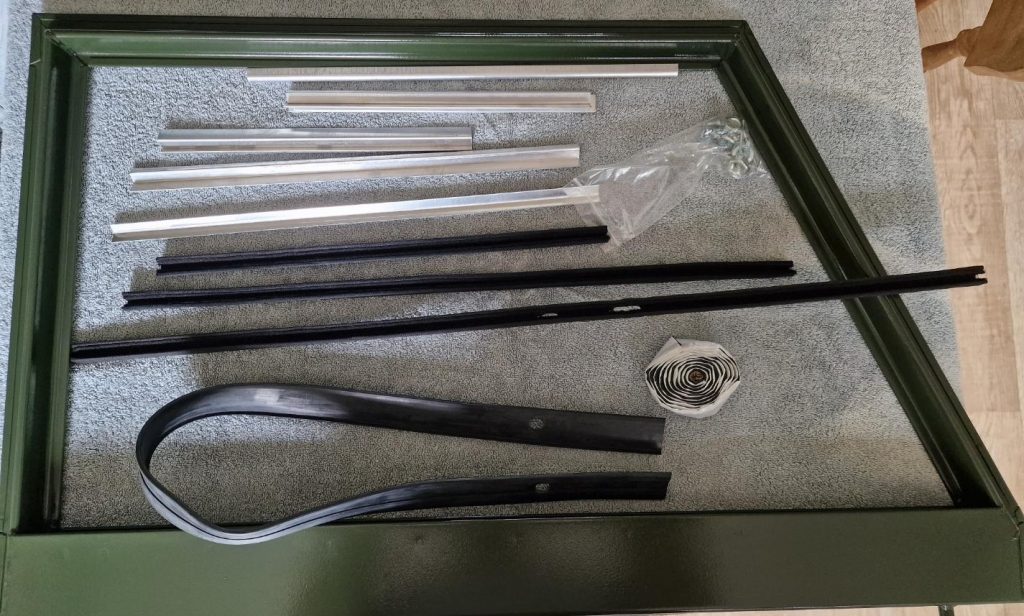
Its all pretty straight forward, and the kit comes with everything needed. The glass runners, aluminium spacers, window seal, screws, nuts and washers.

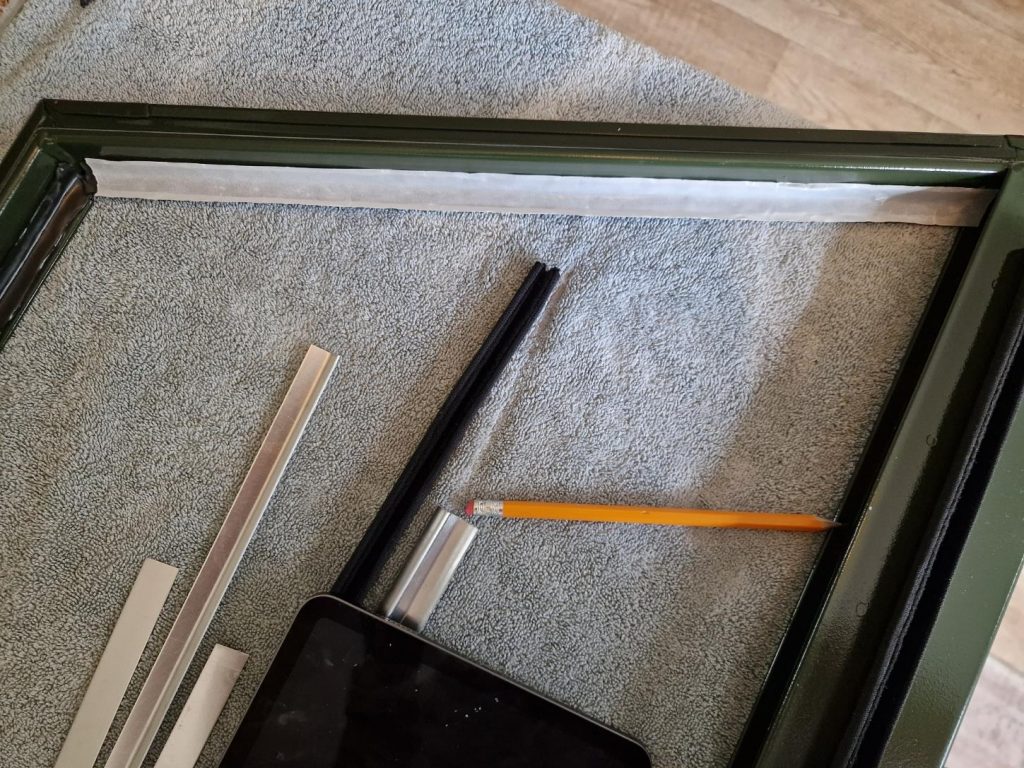
First job is to fit 3 strips of sealer for the front window to sit on, bottom, side and top. Need to pay attention as this sealer can be seen from the outside of the door frame, so care needed.

I did get some a little out of position, its very sticky, but cut the excess off after all was fitted.

After the sealer is positioned, time to put the front glass panel in, gently, but firmly pusing the glass into the sealer.

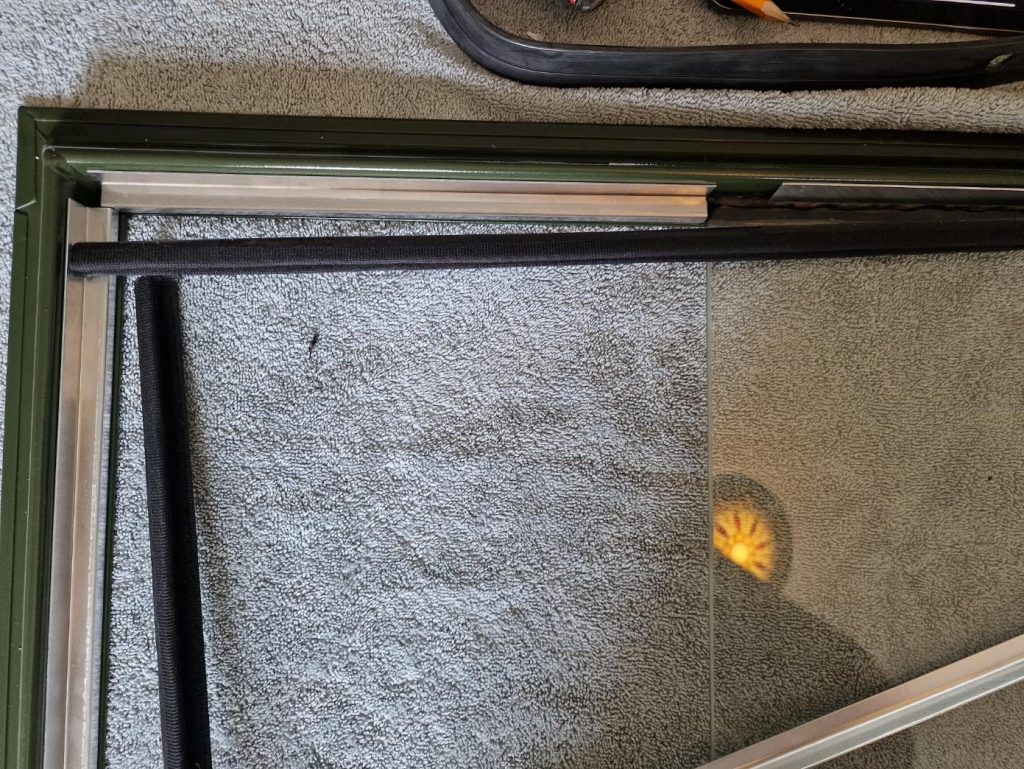
Once the glass is seated, time to put in the bottom runner, with one of the spacers. This is for the rear pane of glass to allow it to slide foward. The Runner is secured with 2/3 screws.

No electric windows this this thing!

Same for the side frame, both a spacer and runner are positioned and screwed into place.

Cant do the top one until last, as the rear glass panel needs to be in first.

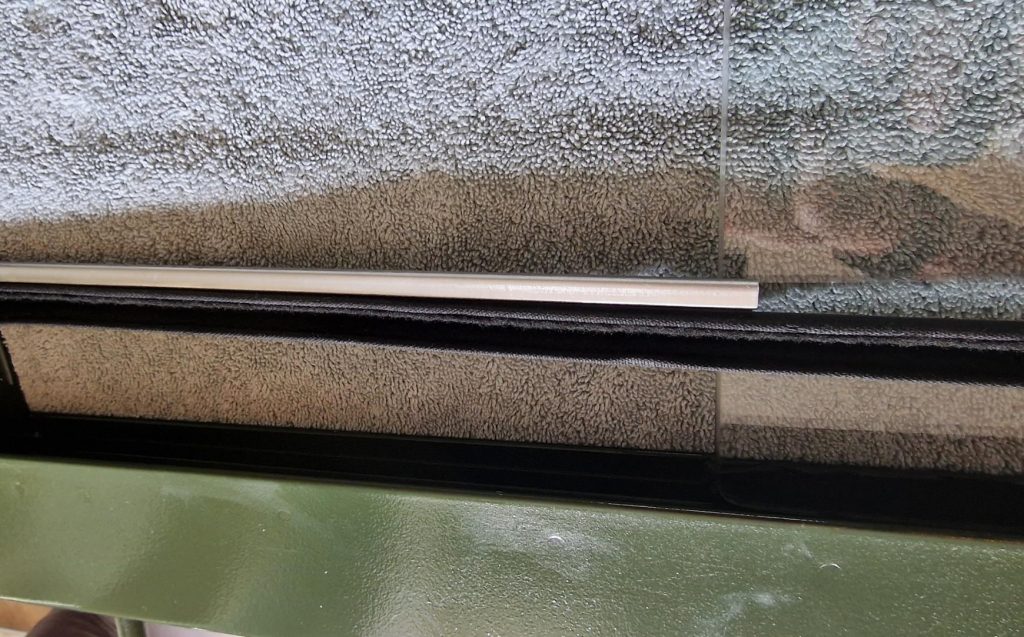
Also, before putting the rear glass in, a rubber seal and aluminium strip needs to be attached to the end of the glass. This proved a bit of a challenge to keep in-place.

Might come back to this latter and use some adhesive to hold them in-place

So with the rear glass located in the bottom runner, the top runner can be put onto the glass and along with another spacer located in the top of the frame. Again, securing with 3 screws, making sure that the screws are tight enough not to interfere with the glass as it is sliding.

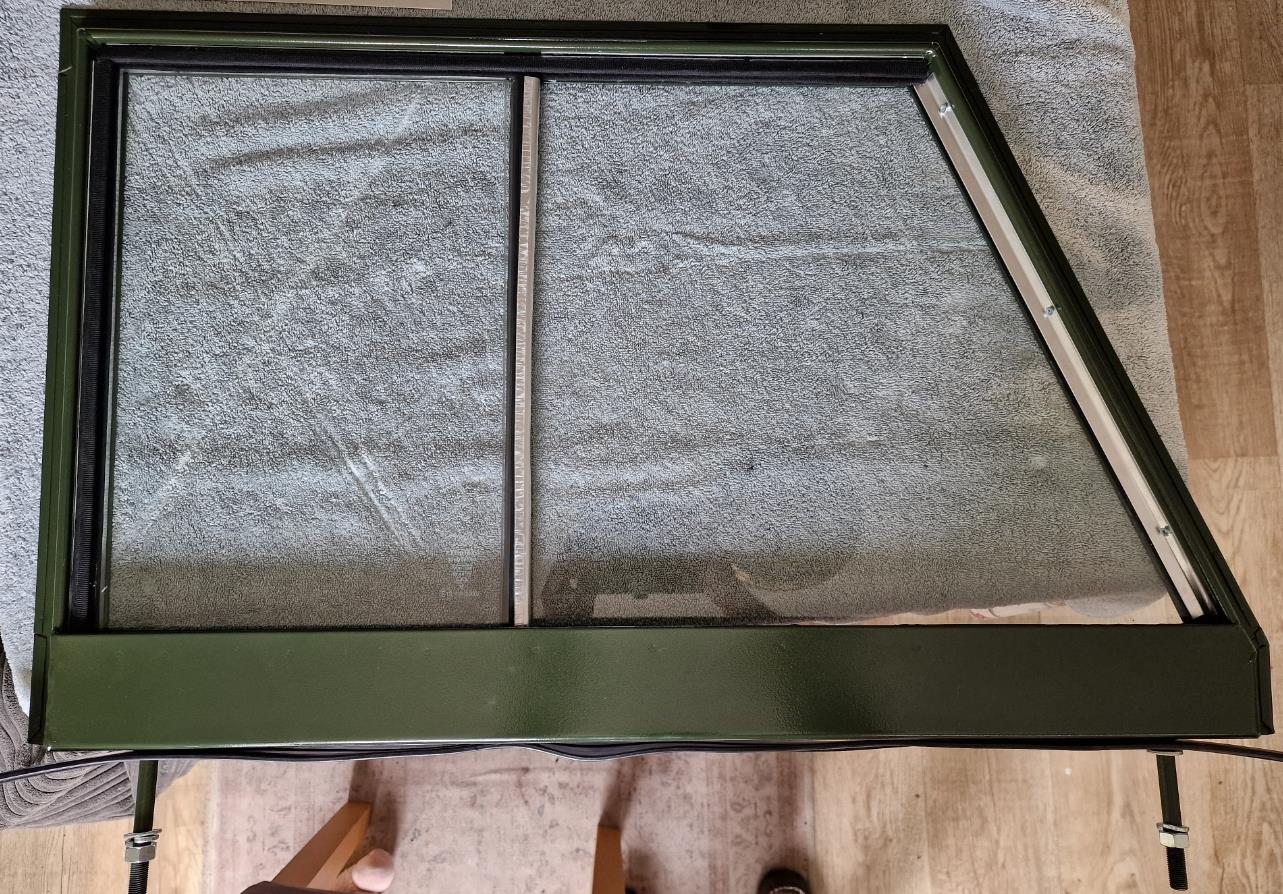
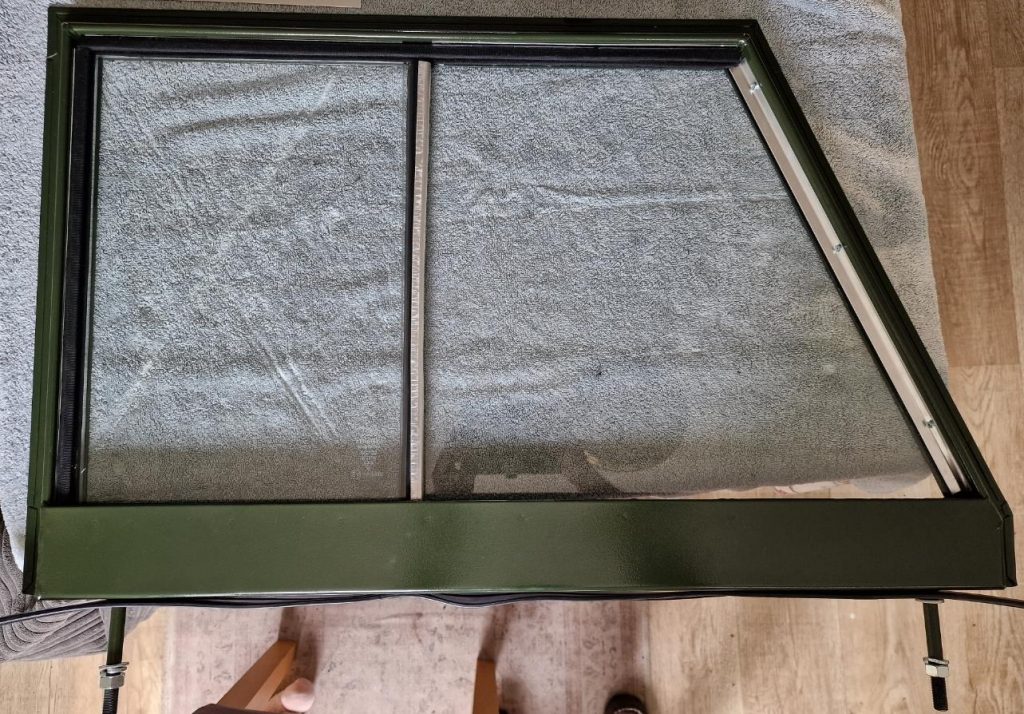
Final part is a aluminium strip secured with screws down the front of the frame, further sealing and securing the front glass panel.

Simpe job, bit of care needed, but the results are nice.

The rubber strip along the bottom shoud be riveted into the frame and trimmed. I will do this later when the door bottoms are ready with the galv cappings.

As with most things on this project, door tops now put away for later!

ย 


Fuel Pump

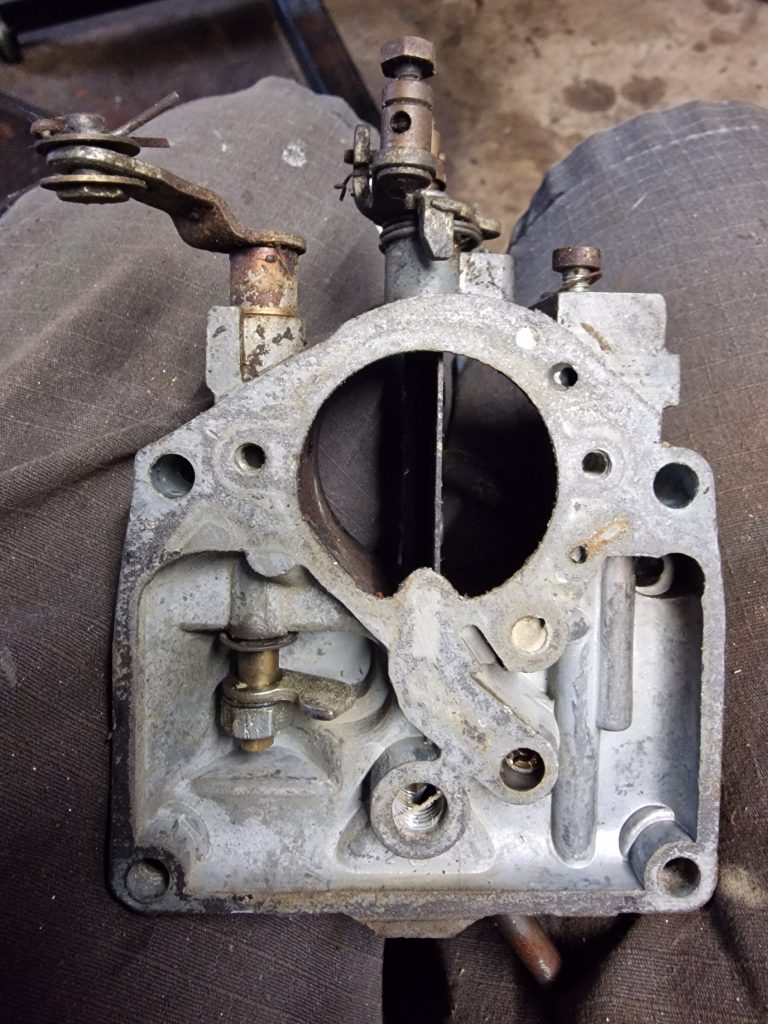
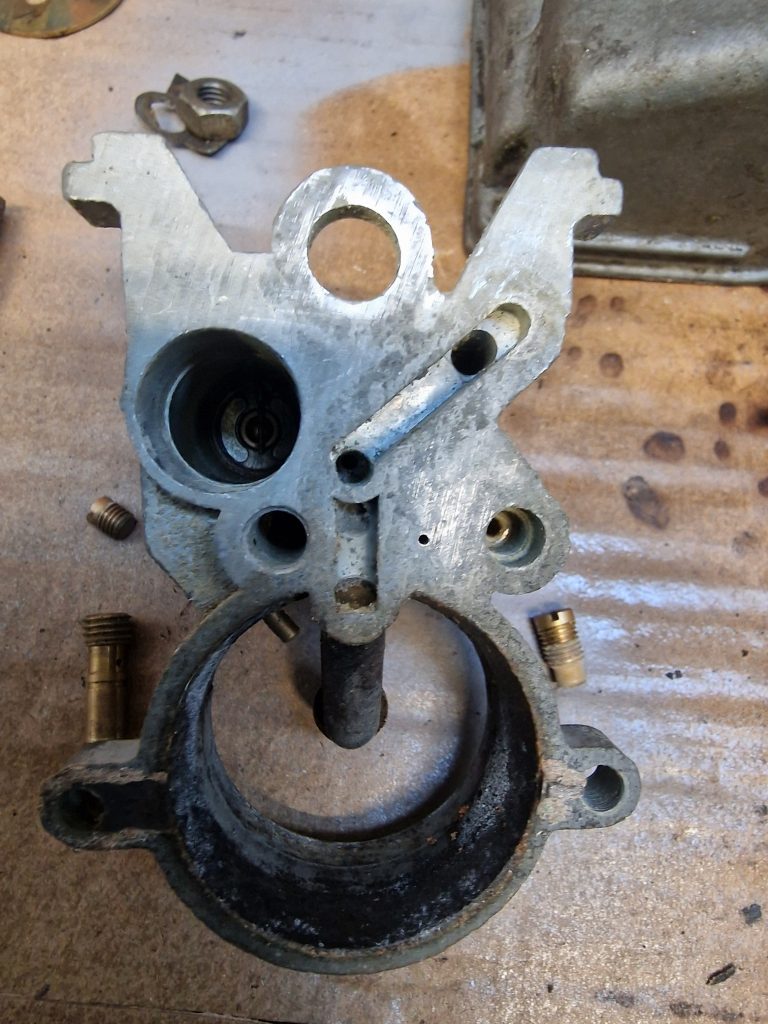
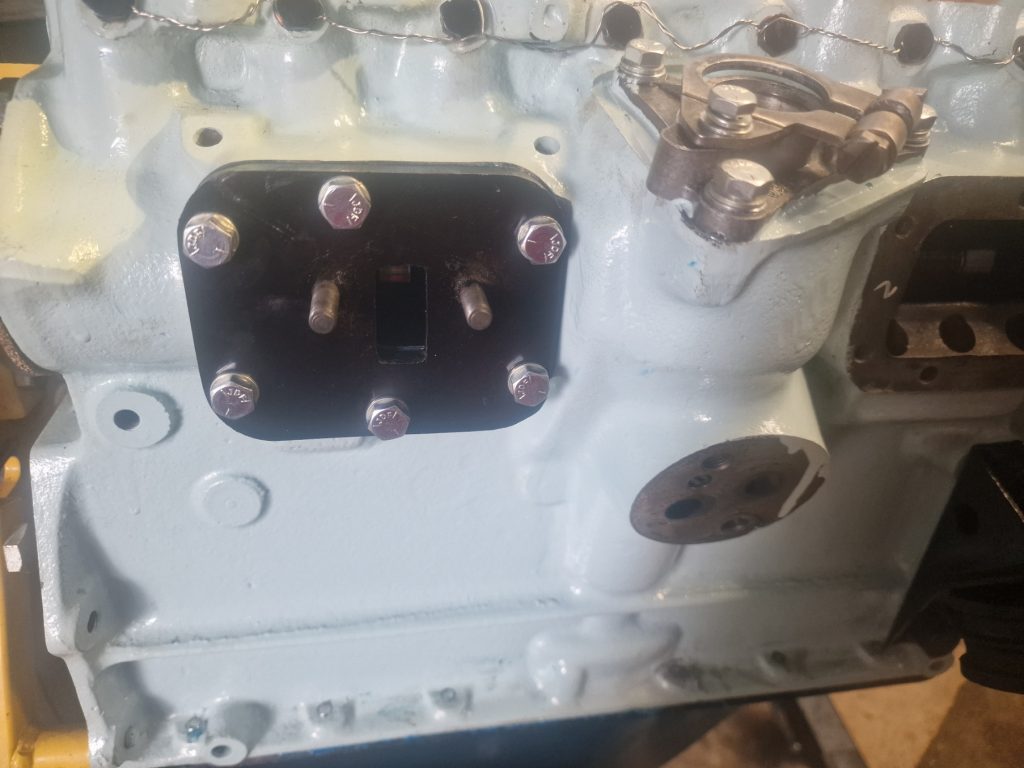
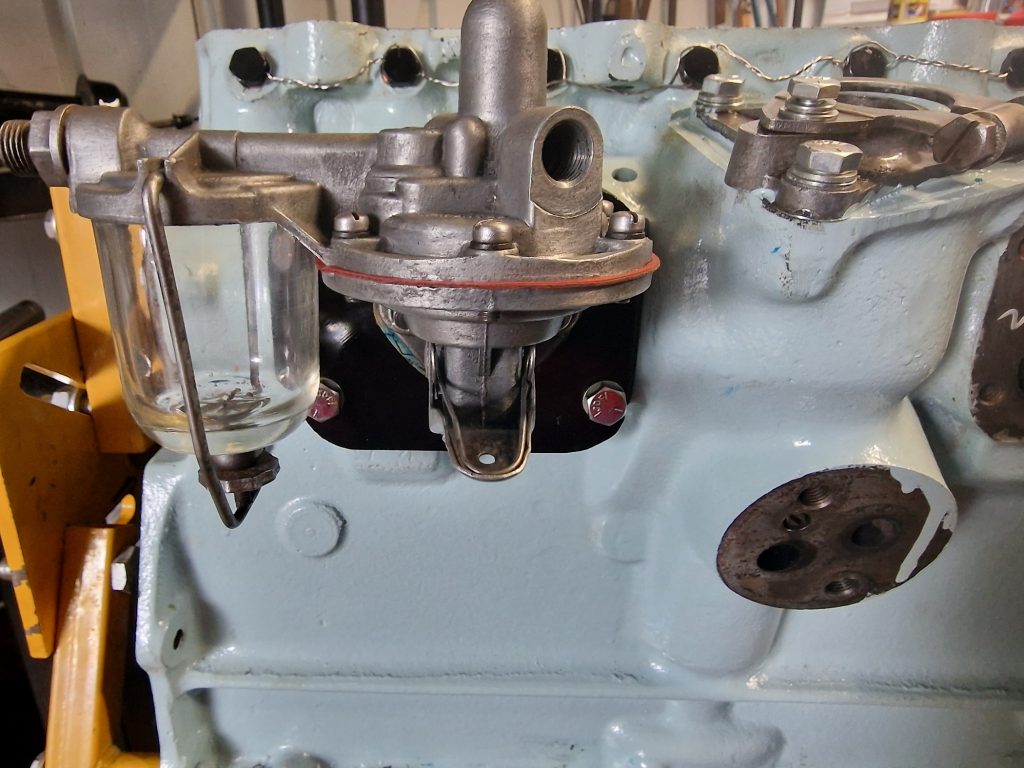
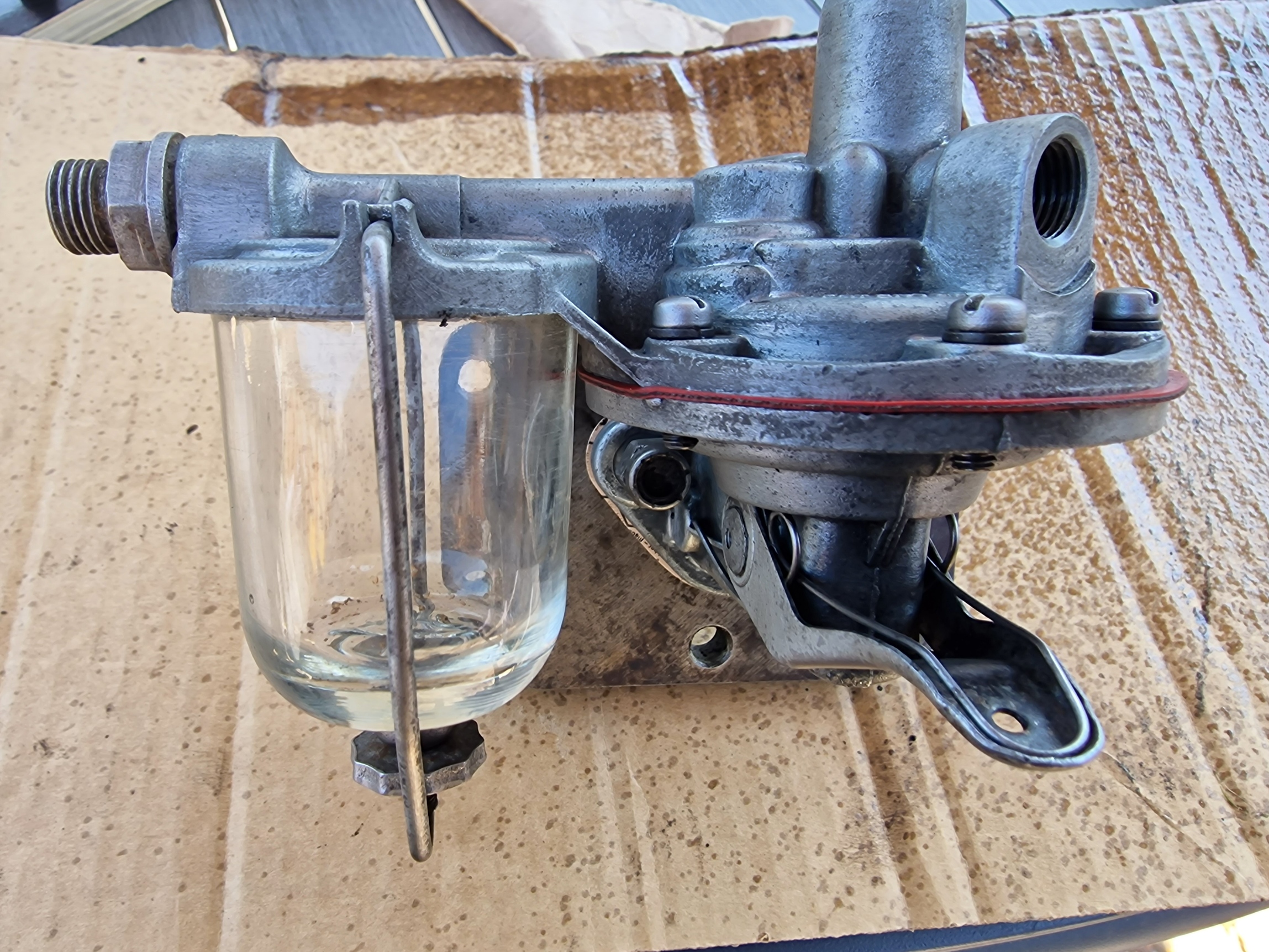
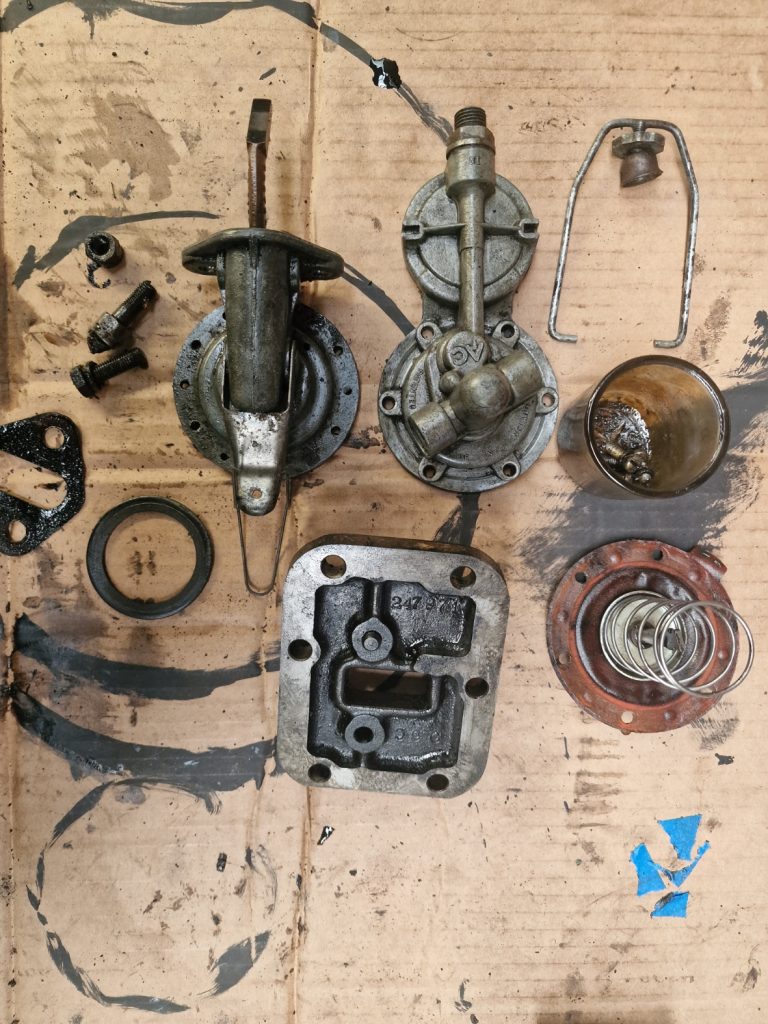
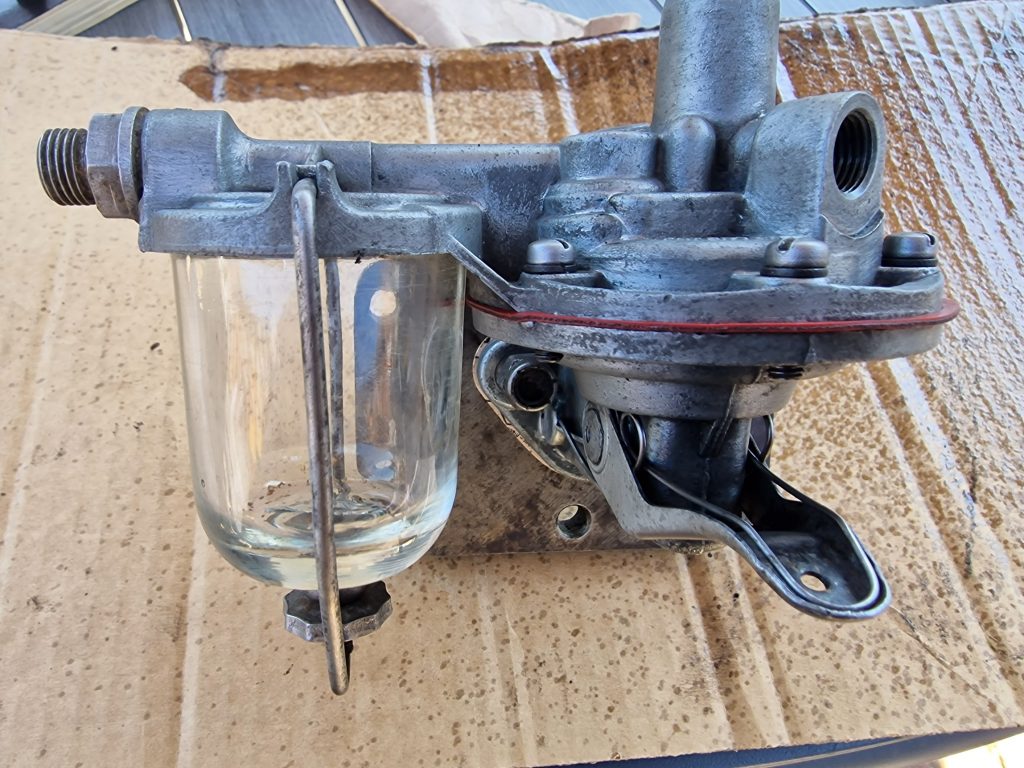
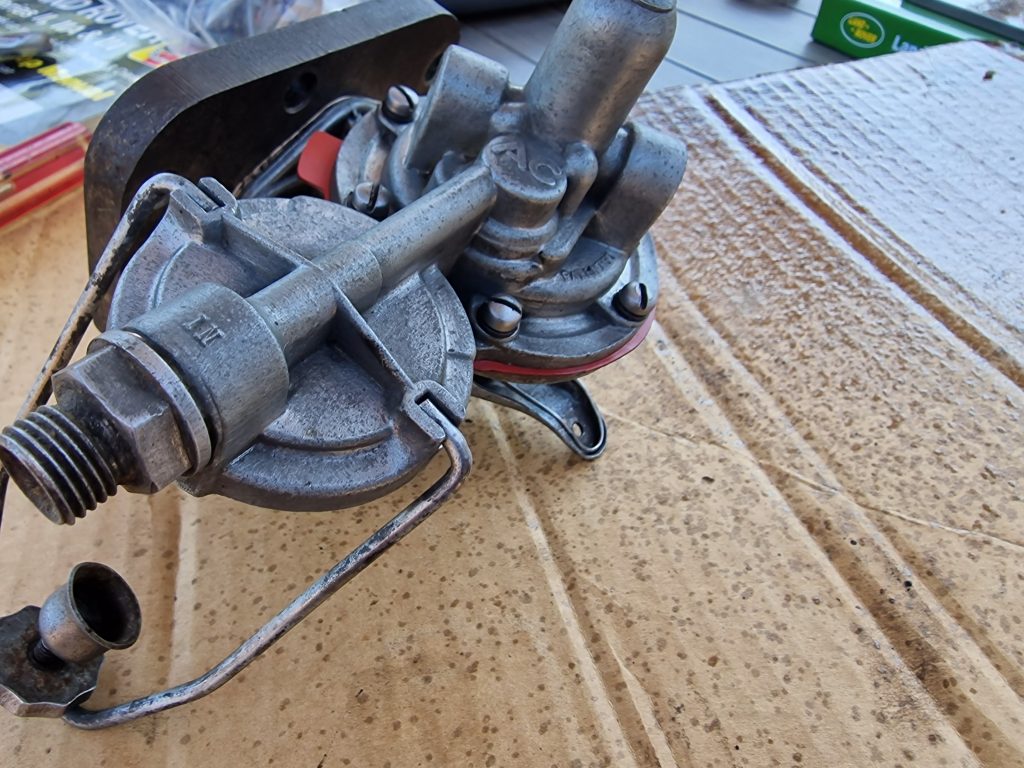
This engine has a mechanical fuel pump. I dont know if it worked or not, so decided to take it apart and check it all out.

Having never done one of these before, assume the important parts are the diaphragm, seals and two little valves. I invested in a service kit, which included the diaphragm, seals and 2 new valves.

… but was missing what I thought was a really important part.

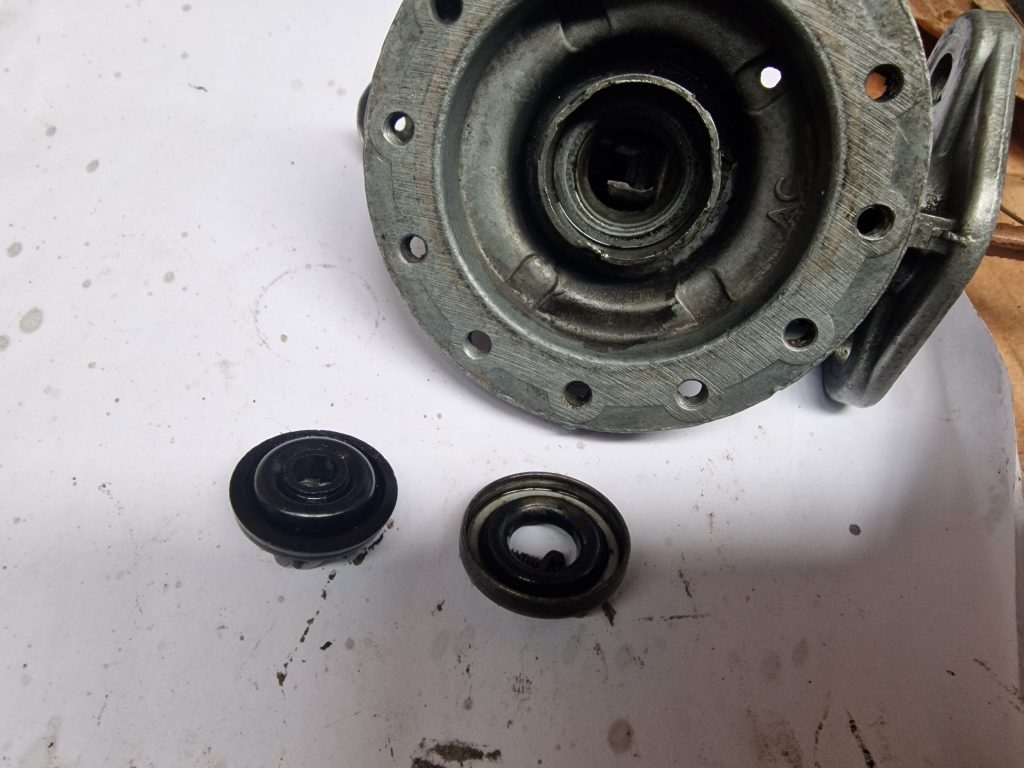
And that is a seal that sits in a metal cup and where the diaphragm goes through. This is important as it keeps the oil in the right part of the pump.

I could’nt find one anywhere, no kits have them, there is not a part number and my seal was loose on the shaft, so needs sorting.

I did watch a couple of videos of people serving these, but no one hardly mentioned this seal, infact more often that not suggest just buying a new pump, which are to be fair, are relativly cheap. But, me being me wanted the original.

So off I went to the Series 2 club forum again, just on the off chance someone would know if and where these are available. As always, what a result. This is the important part of the message I got back from a chap in the USA. “I ended up getting the Tractor REPAIR KIT, FUEL PUMP, 1896401M91 Part Number S41634”

What a gem, this kit is actaully available in the UK, and becuase it’s for a tractor ๐Ÿ™‚ not too expensive. And, the seal and metal cap was a perfect fit.

Finally got it all back together, after some fiddling around loacting the diaphragm end into its locators.

Oh, my wife did ask me, “whats that glass thing in the dishwasher?” Oh, that, that will be…. “quickly changing subject”
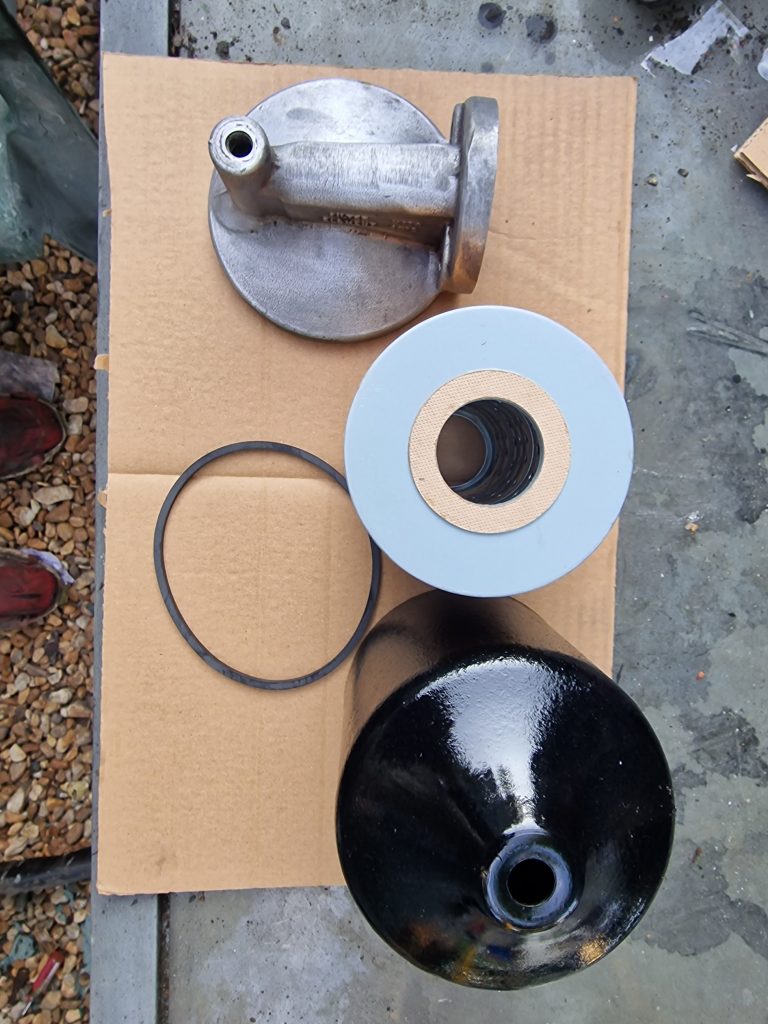
Thats it, another thing ready to onto the engine, just as soon as I re-build it “Again”.

Oil Pump & Filter

After the problems I had with the Camshaft bearings and not wanting to be idle, started work on the oil pump.

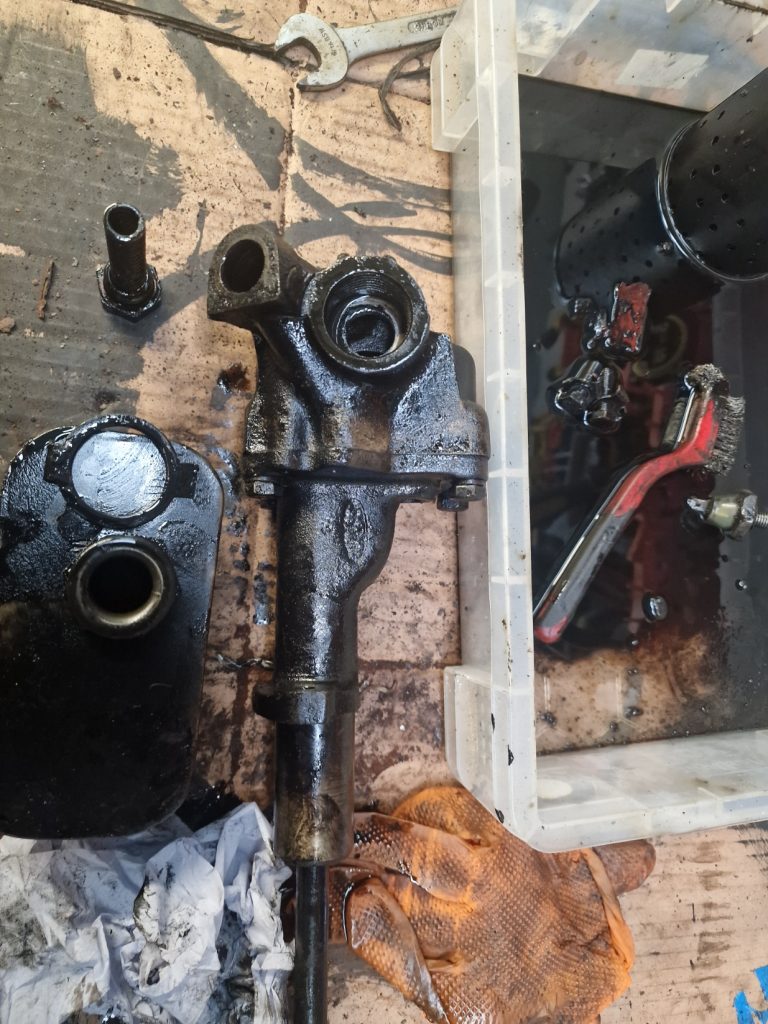
Started by dis-assembling the pump and inspecting and measuring the tollerences. I had already bought some new bits I knew that I would need, hoping that everything else was going to be ok.

Clean up took a bit of effort, but got all the old oil off, ready for inspection.

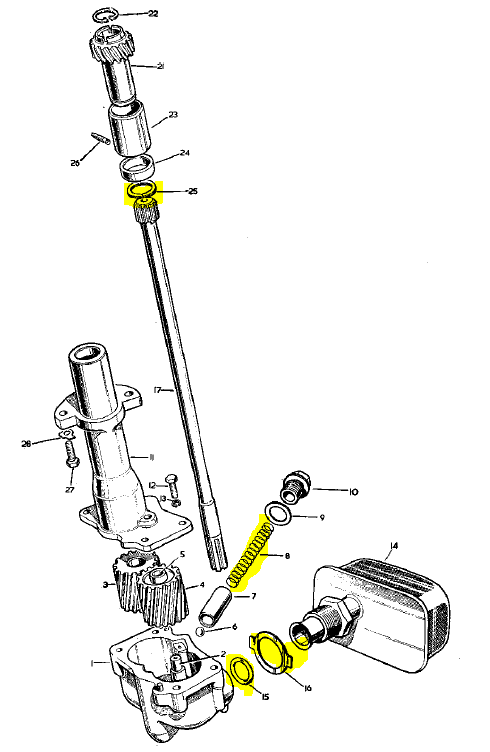
Here’s a diagram of whats inside, with the replacement parts highlighted in yellow.

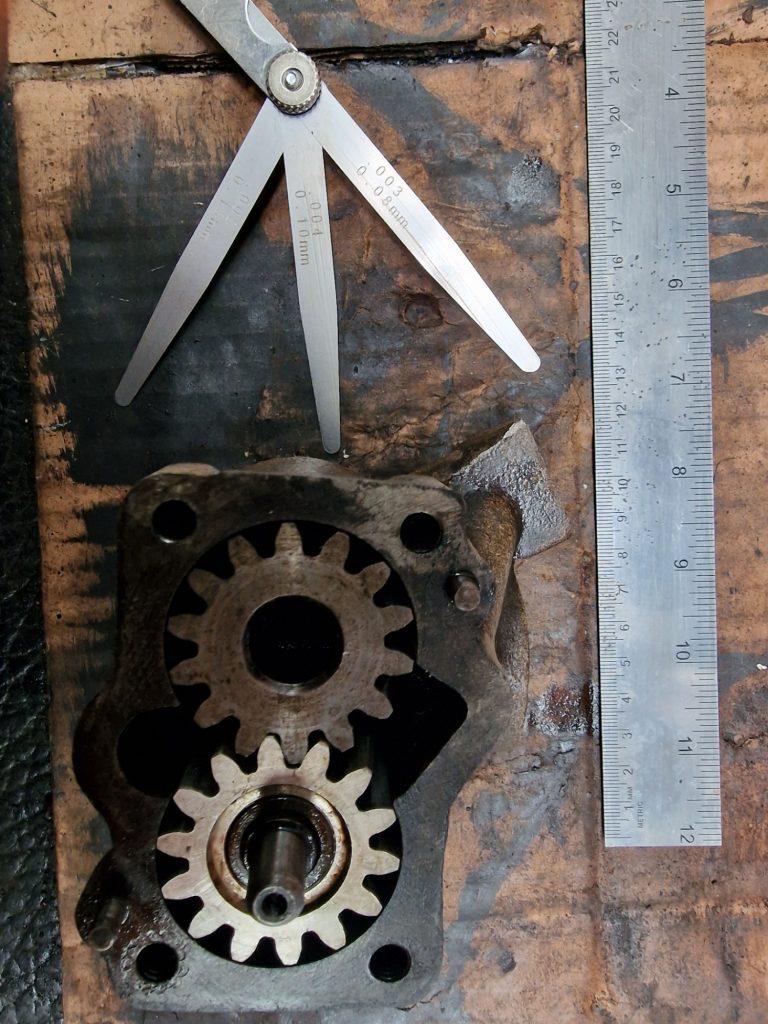
Measured the tollerences of the two gears, both between the gears and the case and also, using a straight edge across the top.

Everything was then re-assembled, and stored for later.

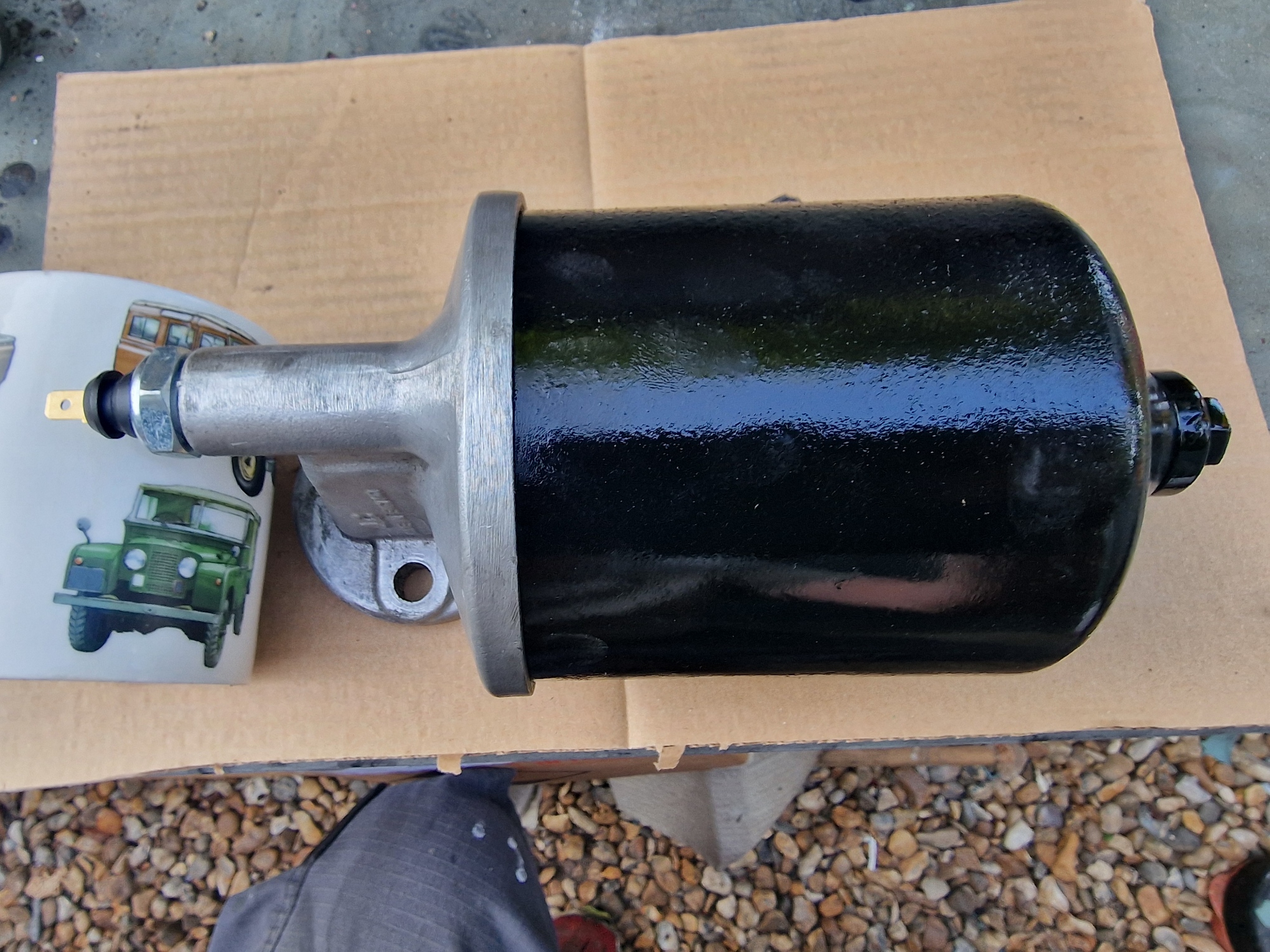
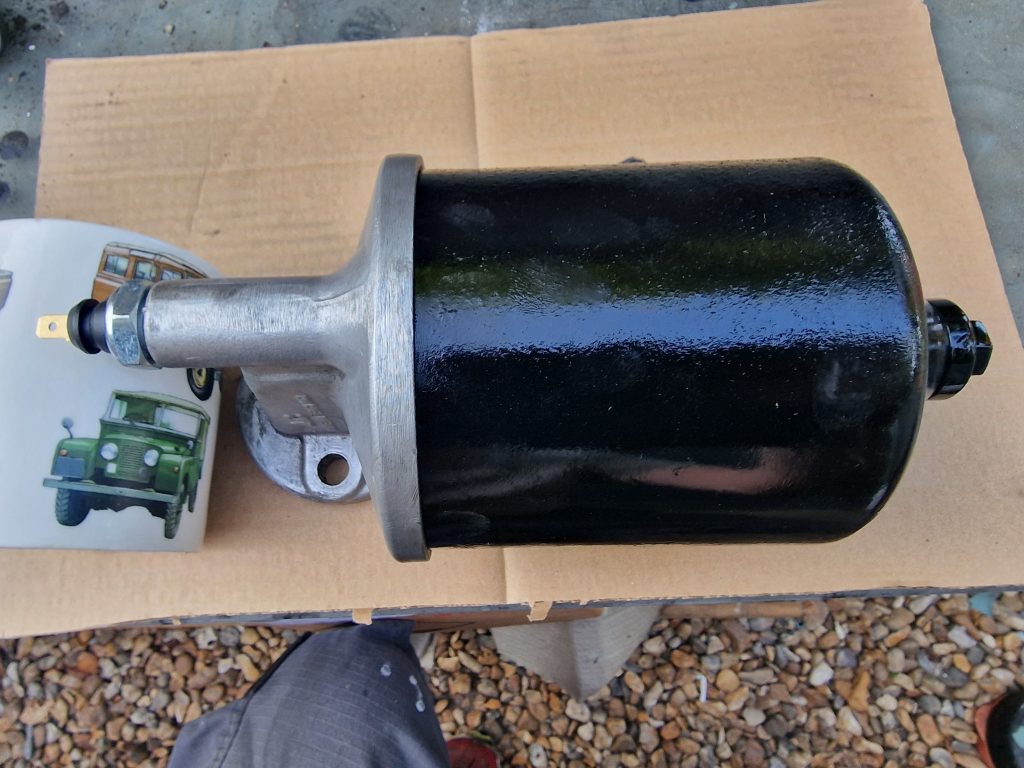
While at it, also cleaned up the Oil filter, and fitted new seals and new filter.


Engine Re-build – Fail

So fail is a little strong, what I should really say is I “F..ked Up”.

OK, so that is really strong, but actually true. So this article will not be so much about the engine build, rather what happened.

Before I start, I had put in the Crankshaft, fitted the pistons, rear main oil seal and it was all looking really good. Heres a few pics of where I got too. Not much write up, will do that “again” later. But briefly, the Crankshaft main bearings, Shims, Main oil seal and new pistons.

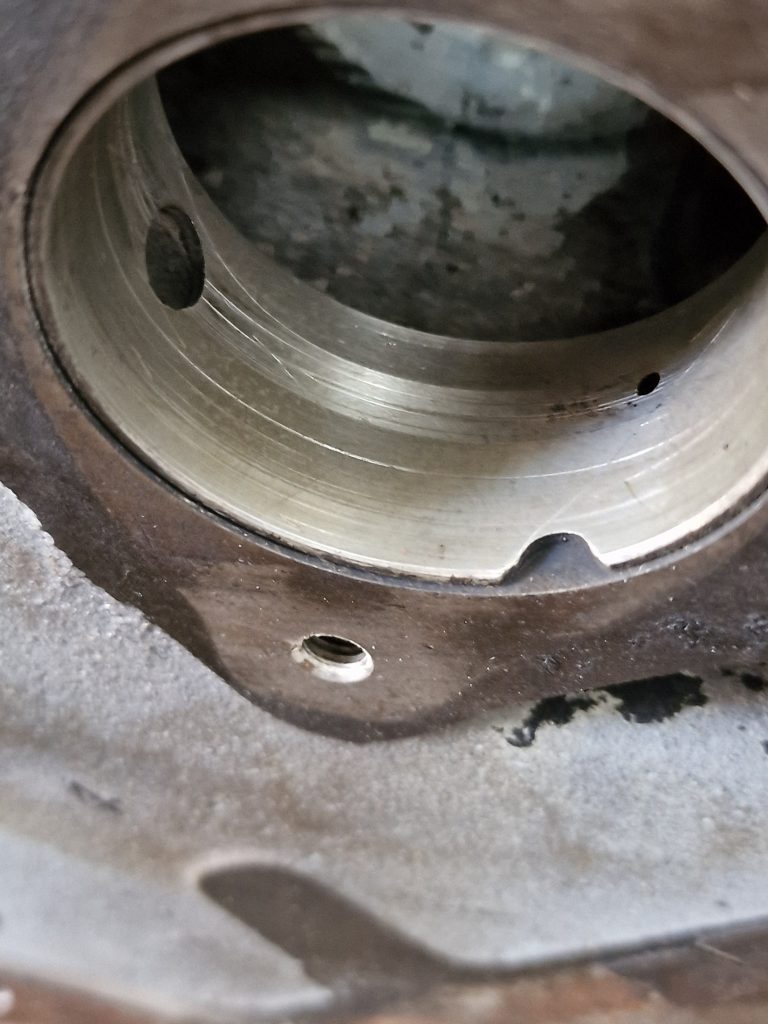
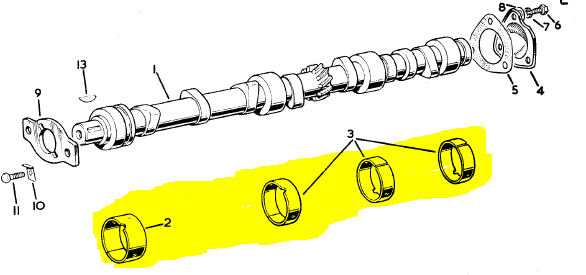
But I had also decided to replace the Camshaft bearings. The one pictured is the front one, there are four in total, and it can clearly be seen it is quite badly scored. The others seemed better. From what I gather, its because the cam chain is this end, putting tension on the camshaft. I have read that some people only change the front one, thats supposidly the easiest to do.

So why did I struggle, becuase it is putting in the new ones that I F’d up.

There are a few reasons. There are 4 bearings, 2 right inside the engine block which are difficult to get too. Also, as can be seen above, the bearings have a hole in them. This needs to line up perectly with the hole in the block (both orientation, and amount they are pulled / knocked in)

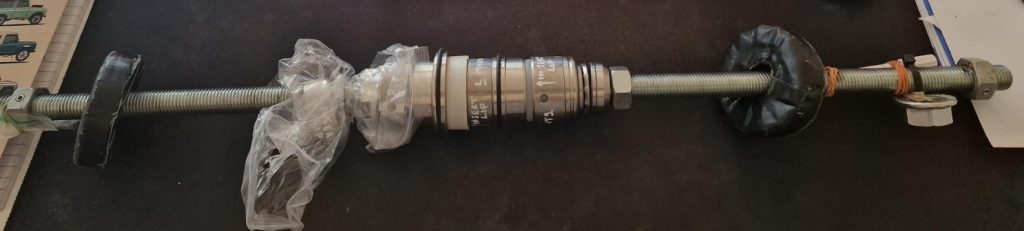
I knew I would struggle with the normal tool to do this, as they are all knocked in. I did however find a tool I could hire, along with the bearings supplied that pulls them in. So I bit the bullet and hired the tool off a really nice and helpful guy in Doncaster.

This is the tool I hired, basicaly it is a series of mandrels, bolts and locknuts that allow you to pull the bearings in. This is important as it allows you to align the holes perfectly before pulling and also has indicators to show when they are pulled in enough. Now, while it can be used on a Series engine, I belive it was designed for later engines

Heres some pics of it in action, and all was going well, for while, and you can see the white lines added to aid in alignment.

So what was the issue. Well, when It comes to the last one, you use one of the mandrels inside the engine to keep the bar completly aligned, but because I could’nt get the right mandrel into the right location, I had to compromise, and this was “partly” part of the issue, the last bearing got completly mangled being pulled in.

OK, so after throwing my toys out of the pram, I sat down and thouhgt about it, ok I will get some new bearings from Turner Engineering, and try again with them. This time I messed up before really getting started. The Turner Bearings are split, so they compress together as they are located. Now, when I started to pull the first one in, because they are split, it rode up and over the mandrel and as a concequence, got knackered. Ohhh, FFS, I know what I should have done, I should have put a tyewrap around the bearing to hold tight on the mandrel until it’s in, and then cut it off.

Keeping it short, ordered another new set from Turners, this is getting irritating and somewhat expensive, each set of bearings is close to ยฃ50.

Not wanting to waste any more time or waste more money, I rang Turners for some advice. They were, and have been so helpful, but the conclusion was that I would take the block to them, and they would put the bearings I bought from them in, and not only that ream the bearings which, I belive should ideally be done, but certainly not something that can be done at home.

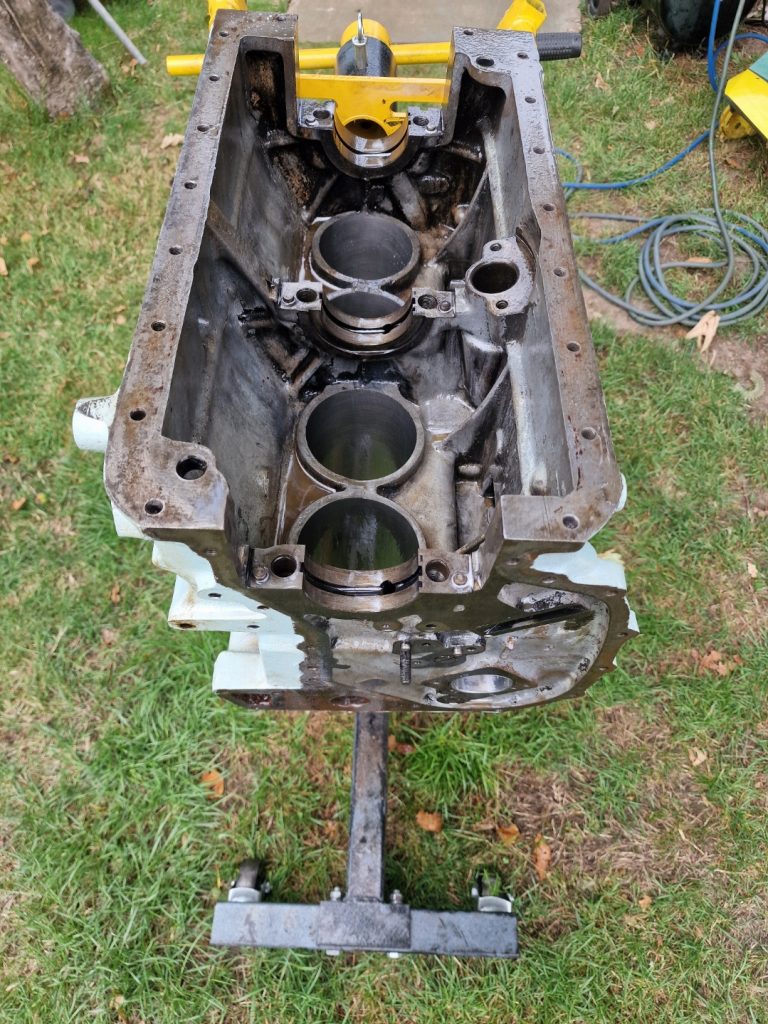
This lead to me undoing all the work on the engine, Pistons out, crankshaft out, back to a basic block. Off to Turners I go, who thankfully are only about 1 hour away. Me, Caleb and Reuben, who came with me, did get a rather nice breakfast while wating for them to be done from a local garden centre.

Anyway, thats it, going to start all over again, armed with a little more knowledge past down from the guys at Turners, and more importantly a set of Camshaft bearings properly installed and reamed.

It was booked in during my second week off from work, with the first few days of my first week spent at a spa hotel in the New Forest, where I experienced my first ever Thai massage, will have one of those again for sure. It also allowed me to crack on with some other bits and pieces, like the final bodywork painting, the oil filter and oil pump and the fuel pump.

So, now have the block back with Camshaft bearings in and some advice to give the block a good wash out, so that will be the next job on the next warm / hot day, so it dries quickly and does not rust the new bores and new bearings.


Bodywork – finally finshed

It was a year ago I did the majority of the bodywork, finishing with some “nicely”, but not perfectly painted panels. There were a few items that I didnt get too (or didnt have) and a couple that I was not happy with.

Just to finish off this section, here is what I finished / re-worked over the last couple of weeks.

The two wings, i wqas not happy, they were a little rough ontop, so these were treated to a good rub down and finally two top coats, the last one (as before) being a 50/50 mix of Top coat and lacquer.

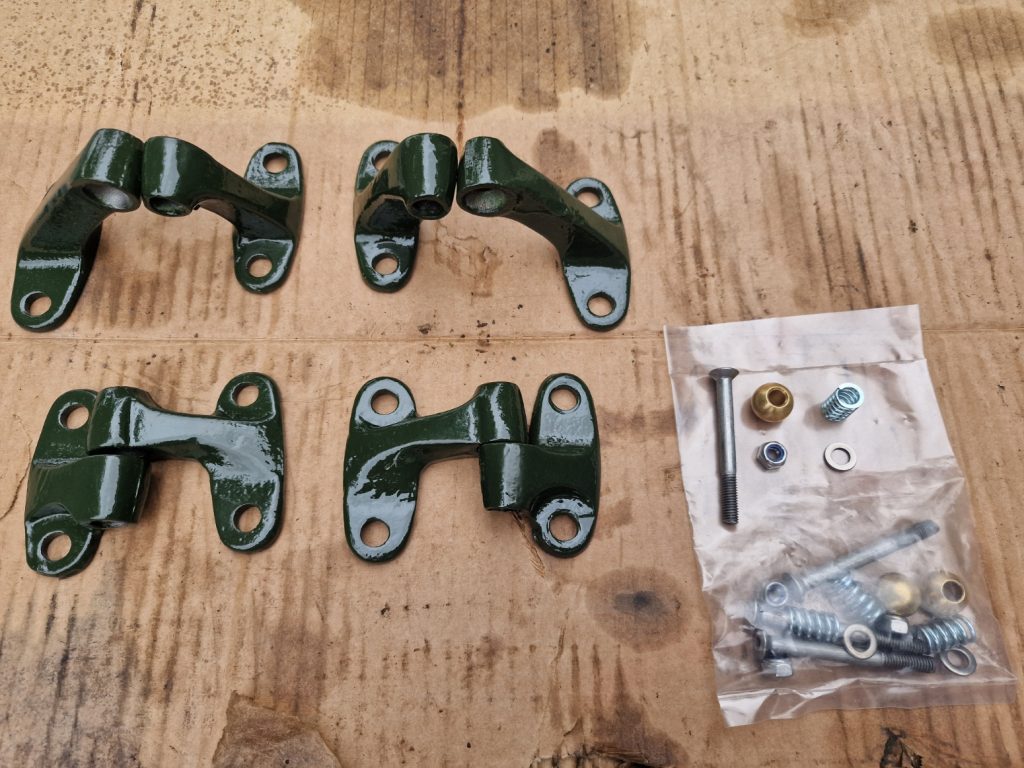
One bit i had not done last year were the door hinges. These were vapour blasted last year, and kept wrapped up until I was ready to paint again.

Door tops. The ones on the Land Rover were basically rust, being held together with a little paint. I sourced these new ones from Paintman Panels, along with glazing kit (I saved the original glass).

These were treated to the full pain job, 2 Primer, 2 Undervcoat and 2 top coats.

Tailgate. Isobel came as a hard top, which is fine, but I have my heart set on a softtop, as such was missing a tailgate. This one is not strictly the right one, the hinges (will write that up when I finally get to putting all the newly galv parts on) have three bolts, and should have two, but it will be perfectly fine for me, so this also got the full treatment (twice, as the first time I dropped it onto the grass, so had to re-do it completly)

Wheels. Most Land Rovers seem to have the white’ish wheels, but I have gone for Bronze green. My understanding is that this is correct for a Bronze Green vehicle, and I have loads of Bronze Green left over from last year.

First job was to get the tyres removed and then off too Penfolds metalizing to be sand blasted.

That was after of course sorting through the seven wheels to see if I had 5 of the correct rimms, which I do (Part number 231601).

Becuase they were taken back to bare metal, I did etch prime these before starting the painting process.

Not many picutues of the finished items, but here are the wheels before applying the final top coat, I like them.

Thats it, as far as I can think, everthing for the Bodywork is now painted, and ready to be assembled onto the vehicle.

Oh, and I mentioned the front wings. no pictures (I’ve been lazy) but they were re-painted and I’m much happier with them now, will know for sure when they have properly dried.


Engine re-build – preparation – part 2

In the last post, I had just got my engine parts back from the engineers, and purchased a few new parts. Before I start putting it all together i thought the best strategy will be to ensure it is all as clean as clean can be.

Before I do that, there was something I had not don before it went off to the engineers, a fairly innocuous thing, but as it turned out quite a challenging thing. In the block, the tappets sit inside a tappet guide. I had taken everything off, except the guides.

The tappet is the top part, which sits on a roller which rides on the camshaft. The pushrods for the valves sit in the top of the tappet.

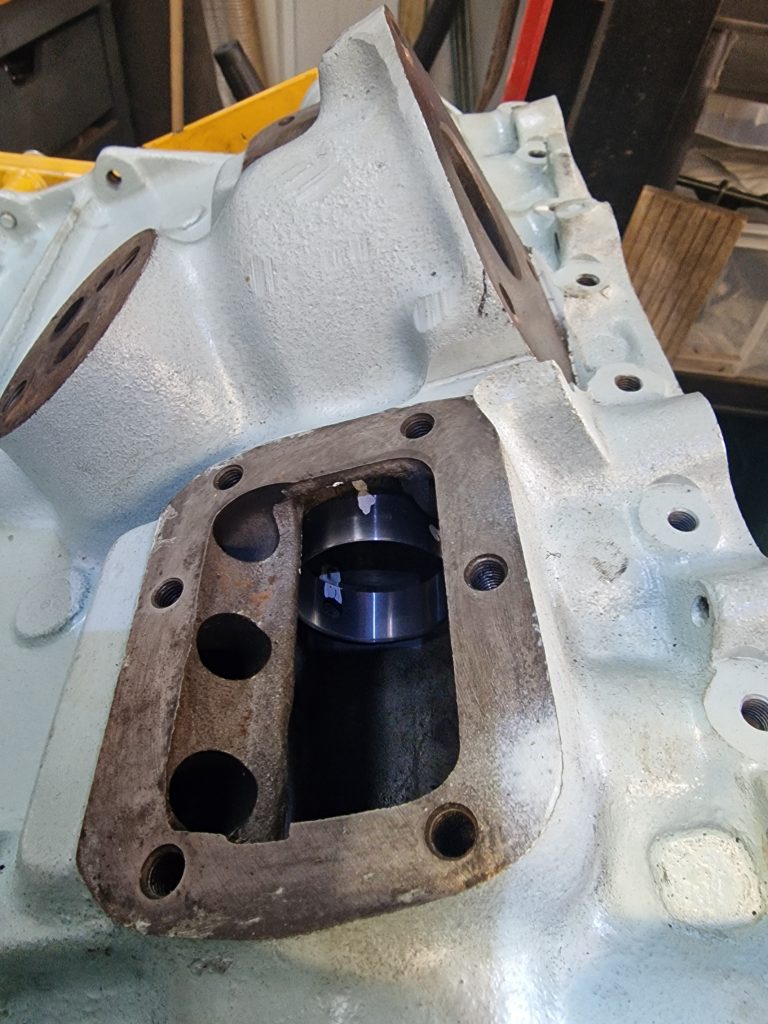
The guide, as mentioned is a push fit into the block and held in position with a special bolt.

Now when you see people put new guides in, they just slide home, so I thought, they would slide out! Nope, could not have been more wrong

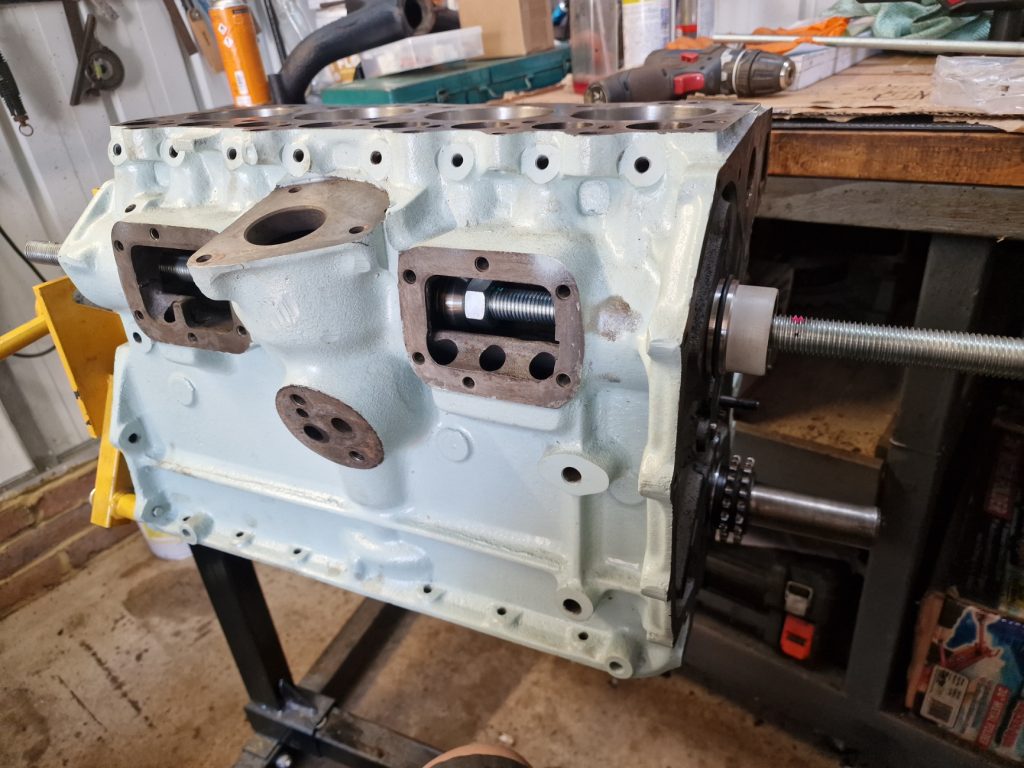
To get them out needs a special tool, which is basically a slide hammer, with a bit on the bottom that can slide in, rotate and lift the tappet guide out.

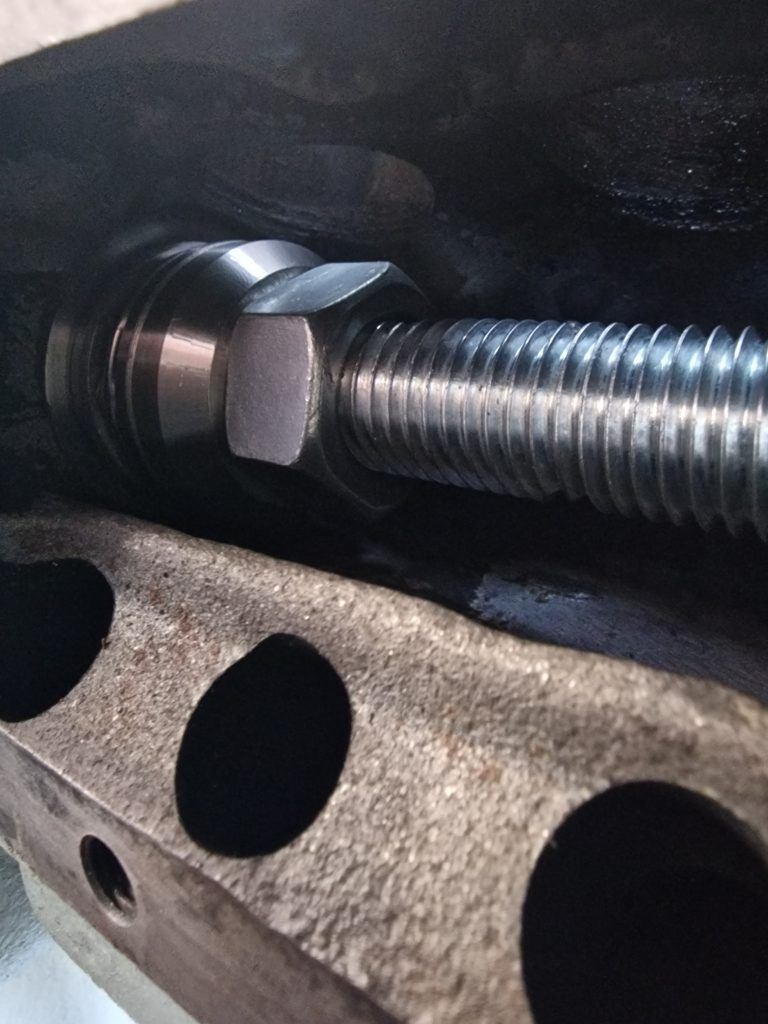
So, not wanting to spend more money on another tool I will likely use 1 time, made this masterpiece.

Basically a bit of 16mm threaded rod, a small “thing” bolted to the end, further secured with a nut, and on the other end the remains of a club hammer.

It mostly worked, although did have to modify it for a couple to pull the guides out, which unfortunately resulted in one being broken, so need to replace one.

Finally got them all out and inspected. Need to replace all the tappets as quite worn, but the rollers and all but the broken guide are good to go again.

Have to be honest though, half way through I was doubting the decision to take them out. But given they are all caked in old sticky oil, with the oil ways partially blocked, think it was the right decision.


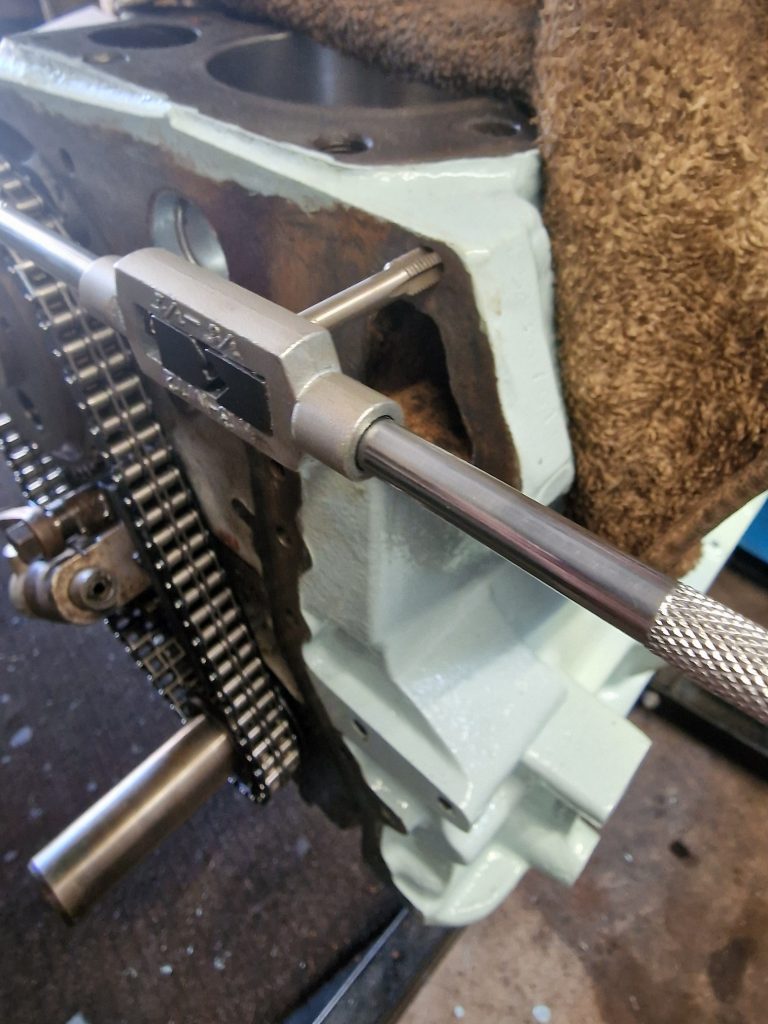
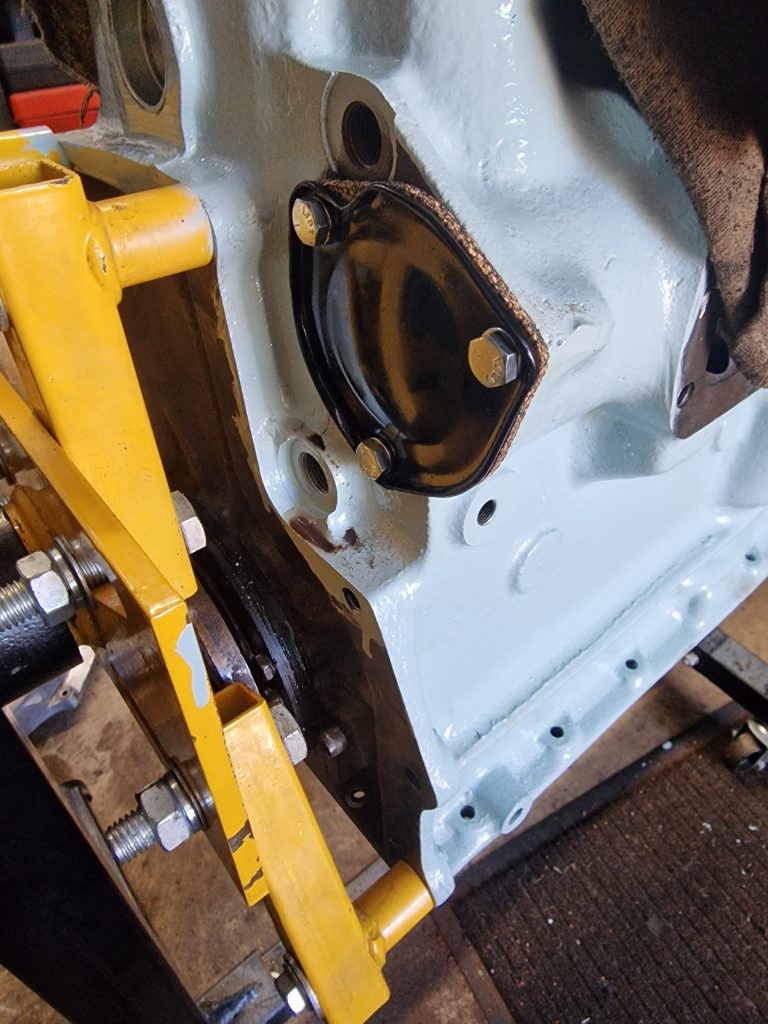
The final bit of disassembly was the front timing cover. While it didn’t go off the engineers, there was a part that I decided to replace, the Oil Seal. I didn’t really think about it when I took the cover of the engine, but realised there is a bit missing. There should be a mud excluder on top of the seal, in the left picture below, so will need one of those. The other odd thing is that this is held on with some sort of rivet. Apparently, when replacing the seal, to put the mud excluder back on requires tapping out the holes in the cover and using self tappers. Will think more about that later, might see if I can source replacement rivets.

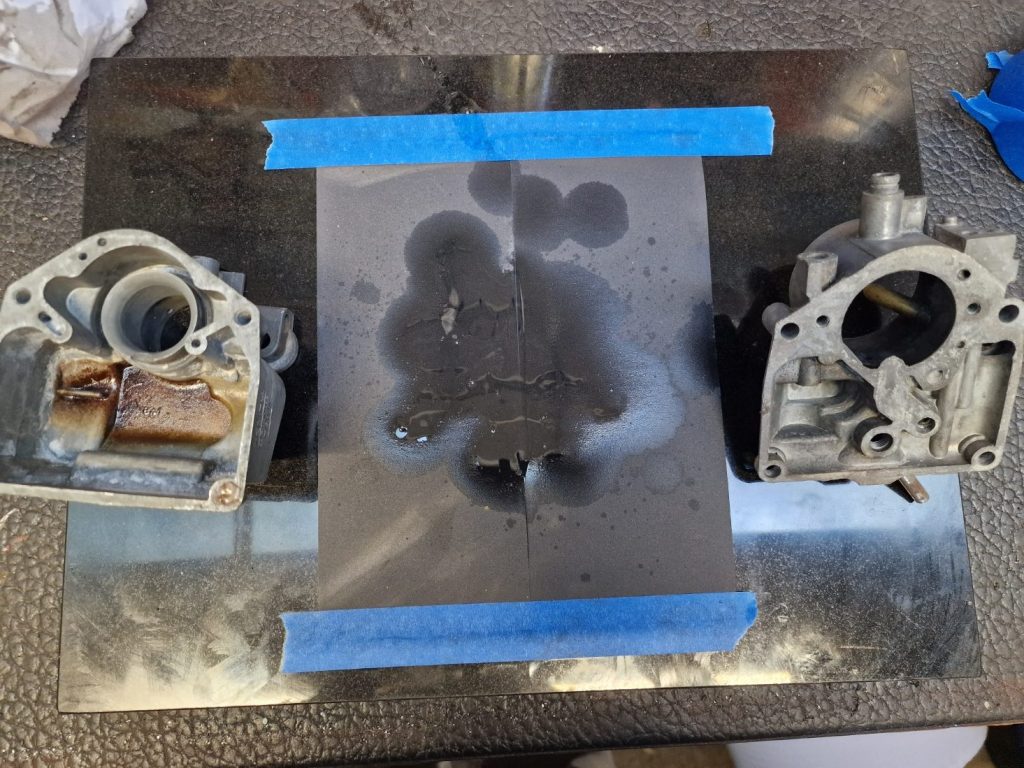
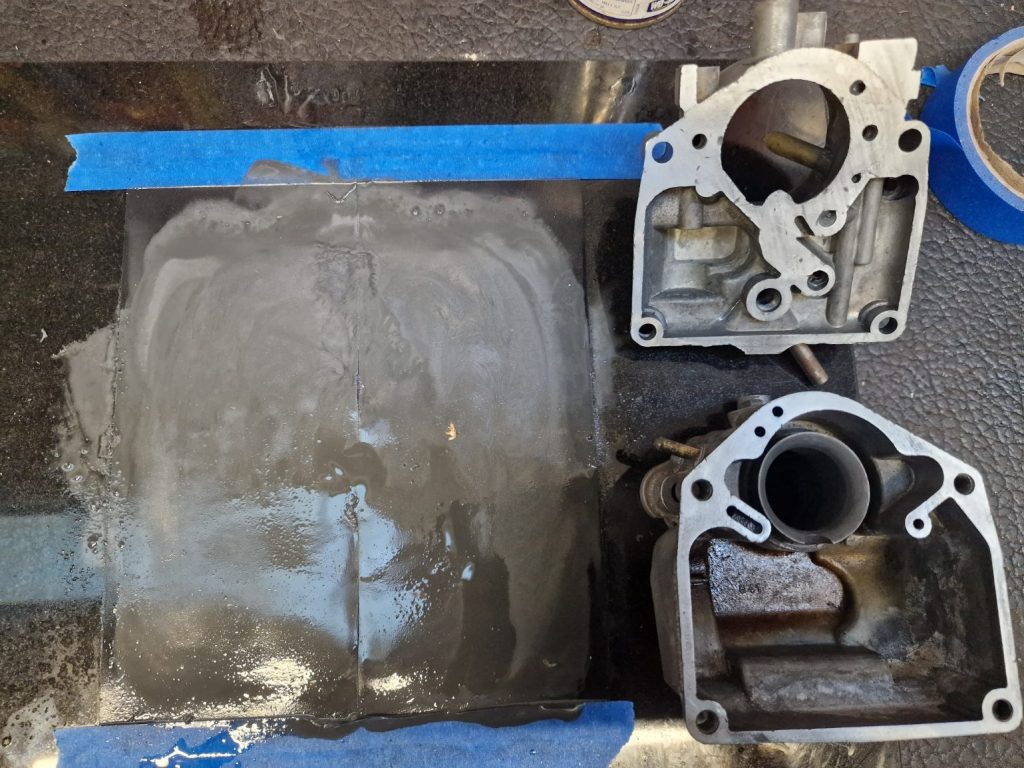
Now I can start cleaning everything, scrapping sticky oil off, scrubbing, de-greasing and then repeat. And while I was at it cleaned up a few other bits also, including the fuel pump, which was covered in old grease and oil.

Not much else to say on this just yet, suffice to say my shopping list is growing yet again.

So onto cleaning, and masking up the engine block, head and front cover in preparation for some colour.

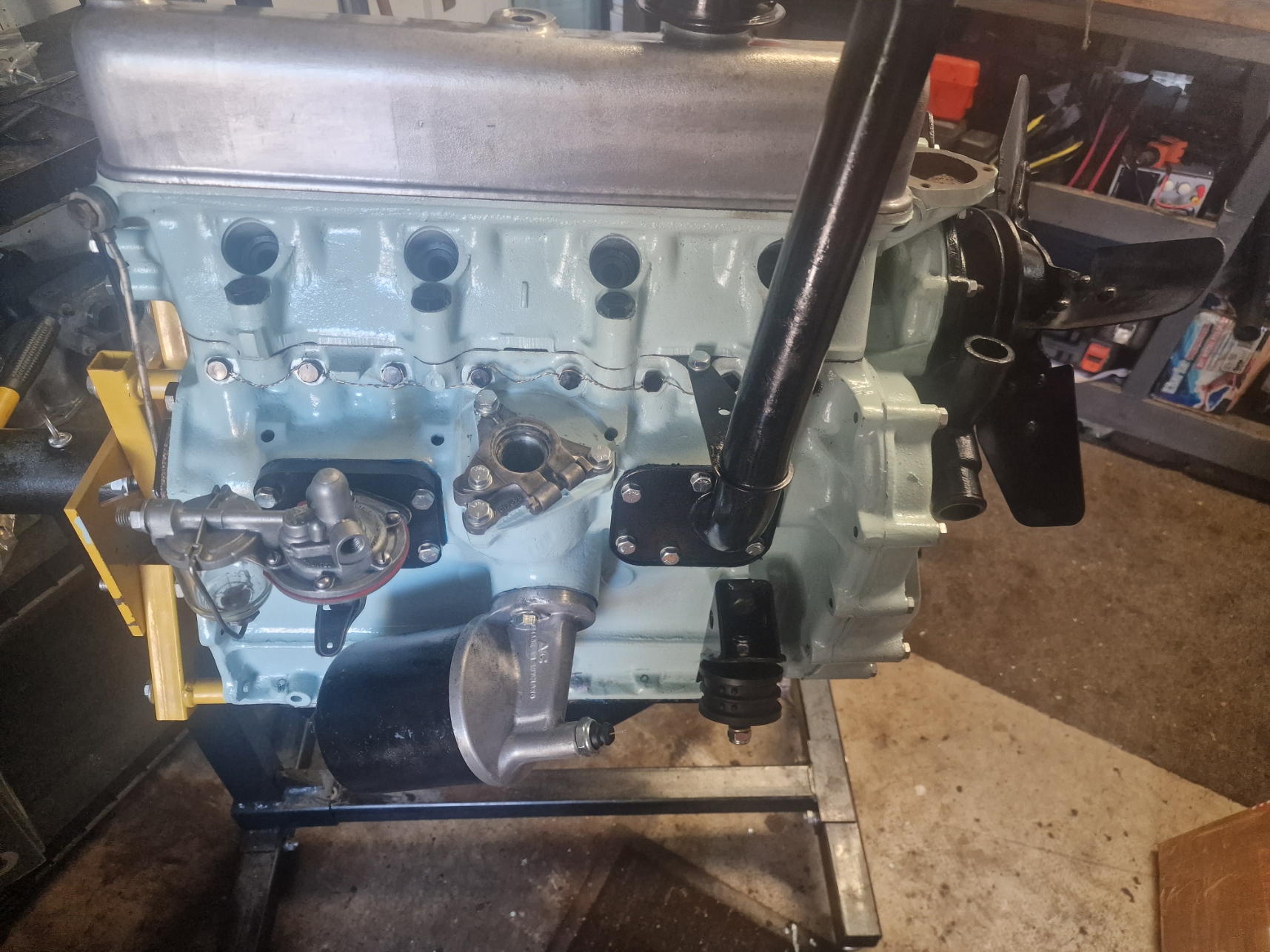
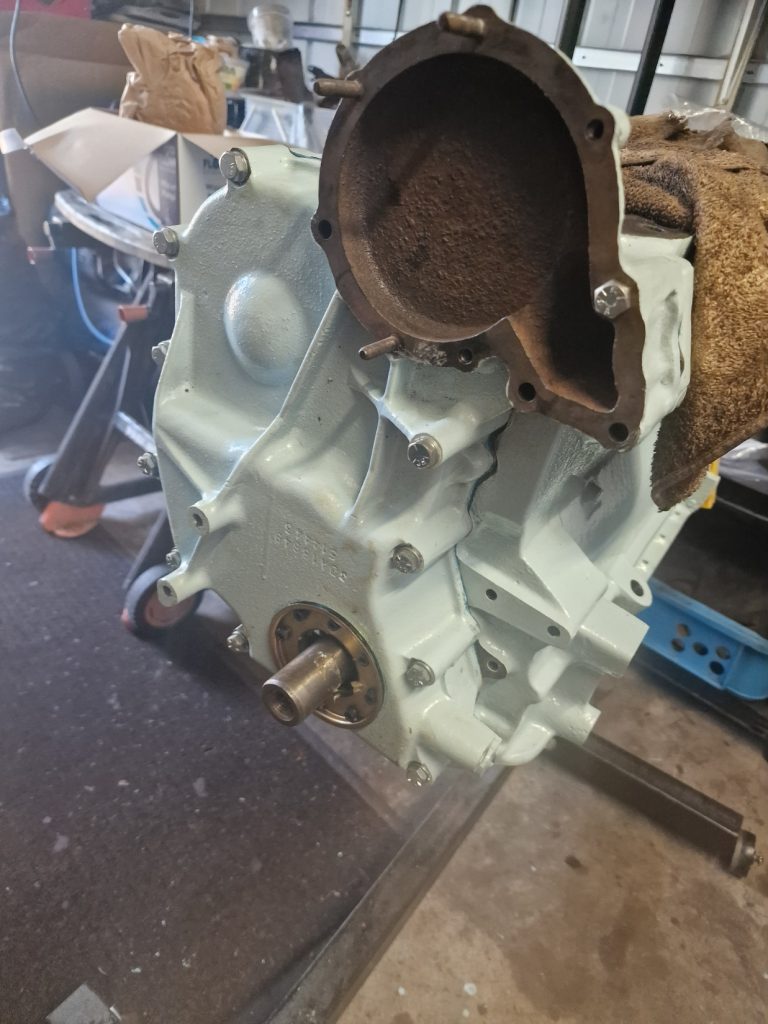
And finally some colour. I used Engine paint from Paintman, and should be pretty close to original Land Rover 2.25 Petrol engine colour. While it was not ideal spraying weather, bit windy, I’m happy. Will see what it looks like over the next few days.

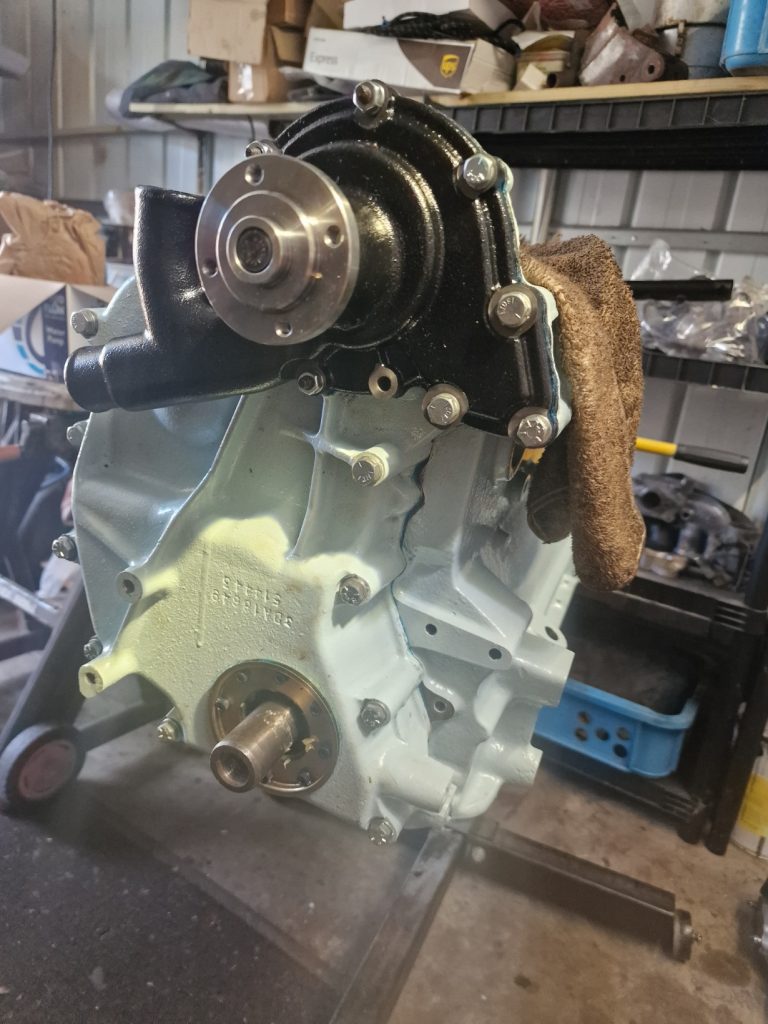
And while I was at it, thought I would paint some of the other engine parts, this time in Shinny Black, again using engine paint, although these parts probably didn’t need it, cant imagine they get too hot.

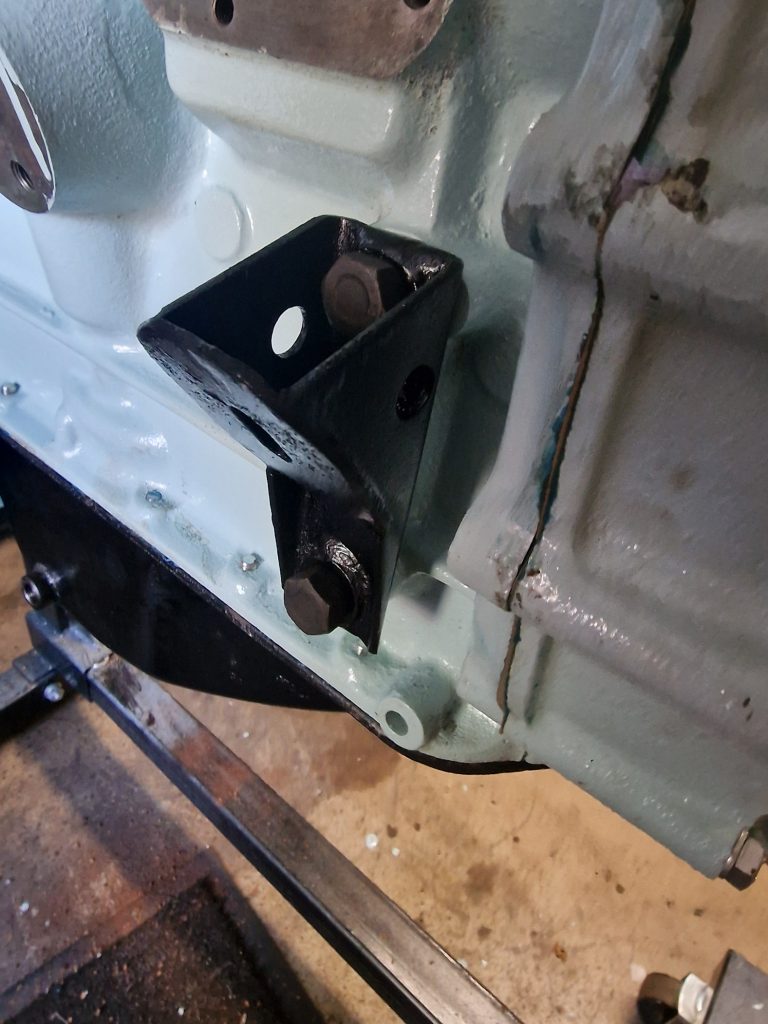
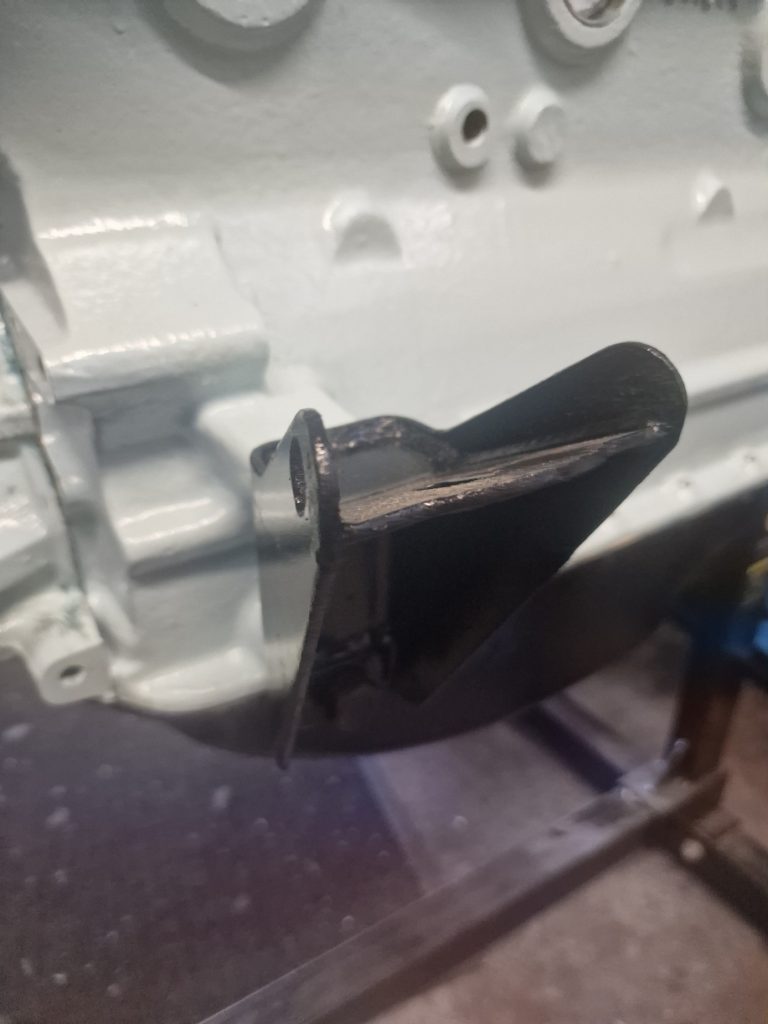
So what have we got here, well starting from the top, Water Pump housing, engine mounts, another bracket (forgotten what thats for at the moment), cover for timing mark on bellhousing, Oil filter case, Oil Filler pipe, Front crank shaft pully, water pump pully.

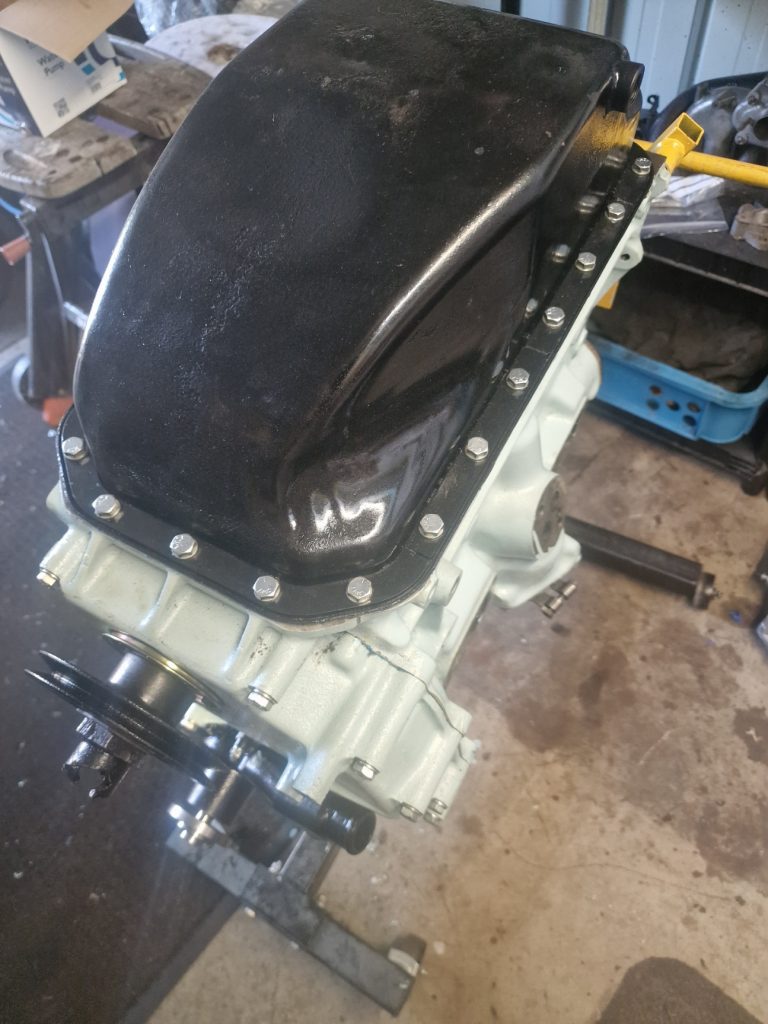
Think thats about it, oh, not quite, didn’t take a picture but also got some black on the sump.

Not sure if I will be ready to start re-building next weekend, have a few bits to do first, like put in new core plugs, and paint the head (didn’t get that done, ran out of time). Also have decided to replace the camshaft bearings. so will need to hire a special tool for that job, and will write that one up as a seperate post, as I will for the main engine re-build parts, which I think will start with Crankshaft then Pistons and then, who knows? will work it out later.

More to come soon!


Engine Re-build Preperation

Its been a while since the last update, and thats for a number of reasons. Had to have a small operation, repair our swimming pool and take down a shed in the garden, due to rodents.

Anyway, back at it again now and while all of that was going on, not been entirely inactive.

In the last update, I had stripped down the engine, and was thinking about what needed to be done.

After a personal recommendation, and reading a number of superb reviews decided to give Banda Engineering a call. Banda Engineering are based in Portsmouth, right near the Navel Base main entrance which I knew well after all the times I dropped and picked up my eldest son when he went on or came back from deployments.

After a brief call, took all the engine bits down, not really knowing what exactly needed to be done. After 5 minutes of Banda taking a look, a couple of measurements later and telling me exactly what needed to be done I was more than happy.

So what was done?

The pistons that came out were original, so possibly could have gone with 020 oversize.

As it turned out, the block was cleaned up a little and re-bored to 030.

Number 4 had a bit of a score mark, probably the reason for skipping 020.

So re-bored and honed, ready for new Pistons.

Next, the head. This was again cleaned up, painted and skimmed with hardened valve seats fitted and existing valves re-ground in.

Also, there was a couple of snapped bolts from the manifolds, these were taken out also.

The crank shaft was measured and shown to be in tolerance, so was treated to a polish of the journals.

Last up was the flywheel, to me it looked beyond saving, however, this was re-skimmed back to as good as new.

Now I’m a little new to this level of detail so cant really judge the quality of work, but from what I see, the price I paid I’m super happy it all looks great and Banda, while being more used to working with people who know what the hell they are on about were super helpful.

This is when things stopped for a while, except me stocking up my store cupboard with a few new parts, ready to re-start the re-build.

What did I buy? other than some Assembly lube, some other lubricants and sealers along with some more WD40, scotch bright pads and some squirty bottles.

Most of what I bought came from Turner Engineering as I didn’t want blue box (Britpart) parts In my engine, same as when I have done all other major parts so far.

  • Oversize Pistons (0.03)
  • Main bearings (Standard size)
  • Thrust washer for crank shaft. (Standard size)
  • Connecting Rod bearings (Standard Size)
  • Top end gasket set
  • Bottom end gasket set
  • Oil seal for rear of Crankshaft
  • Timing chain
  • Various lock tabs

All of this “should” be enough to complete the main engine rebuild.

Getting ready for the build, I need to do some more cleaning, mostly ready to paint the block but also so I am working with completely clean engine parts, essential as I understand.

First thing is to mask up the block, making sure the insides keep as clean as possible and free from paint.

A little tip I saw somewhere is to put the masking take on, and then gently with a small hammer, tap the edge, which creates a really nice, clean edge.

Will come back soon, after I get the casings all cleaned up and painted and also when I start putting things back together.


Engine Strip Down – Part 1

Because I had not planned on doing this, well not until I knew for sure I needed too, plenty of reading and watching video’s, just so I would know what to expect. Have to say, that was time well spent.

First step was to remove the rocker cover, exposing the rocker assembly.

One of the things I did learn by reading and watching was that things need to be kept in the same place from where they came off.

Using the rocker cover upside down, keeps it all together.

Off comes the flywheel. Another tip taken from videos, was to use two bolts, a selection of washers to pull the fly wheel off. That all went pretty easily.

Then removed the fly wheel cover.

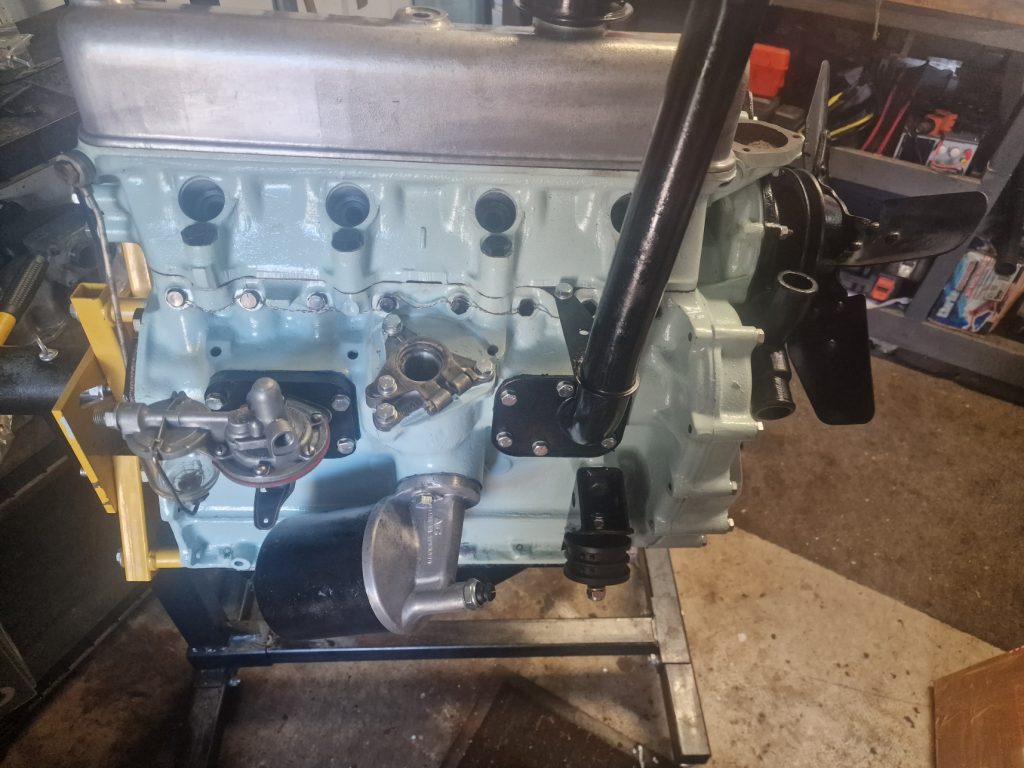
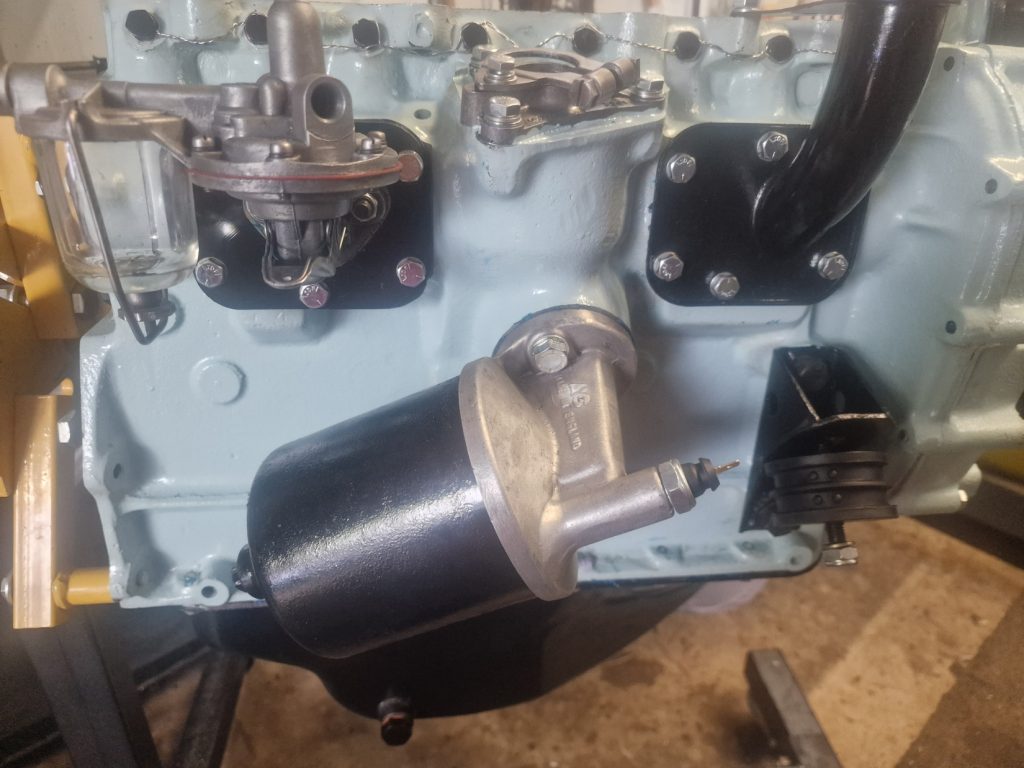
Then it was a case of removing all the other ancillary parts, the oil filler pipe, distributor, heater pipe tap, engine mounting brackets, oil filter assemby and various other bits.

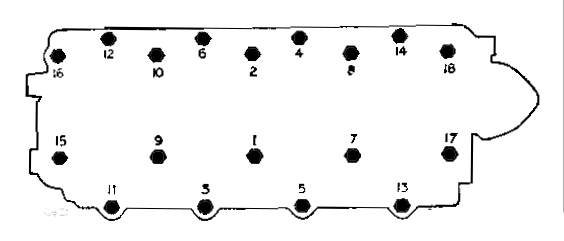
Once all those bits were off and safely stored, next was to tackle the head. Taking care to undo the bolts a bit at a time and in exactly the right order (reverse of the order used to tighten them).

With the cylinder head off, it was time to take off the inlet and exhaust manifolds.

Humm, even me with my little knowledge knew this would not be easy, but I was surprised! the bolts started coming out fairly easily, until that is 2 snapped.

Then there was one bolt that I could not get a socket on, and could not find a spanner with grip to undo this little bugger, which had a slightly knackered head.

So, looked for a tool that would help and found these little things, sockets with a spiral inside that grip the bolt head, and small enough to fit in the gap, just.

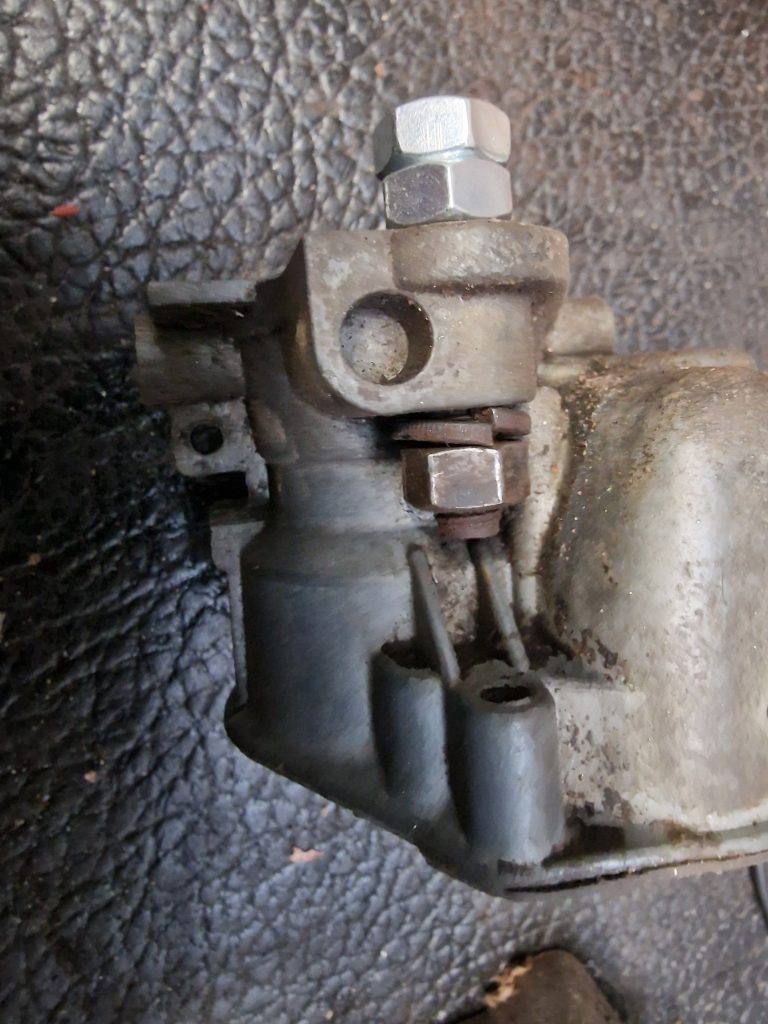
With the help of an extension bar, out it came.

Thats it for the cylinder head for this one, will cover the rest of that in part 2 when I have bought yet another tool, to remove the valves.

Next, the timing chain. Removed the timing chain cover, which needed 4 bolts removed from the sump.

Now, the right way to do this, is to set the engine to TDC (Top Dead centre) on cylinder 1, and mark where the gears are to maintain the timing between the crank shaft and the cam shaft.

Because the engine had locked up, I couldn’t do this so will have to re-set all the timing when it goes back together.

With the timing gear off, the cam shaft can come out. To do this, all the rocker parts need to be taken out first.

Again, all these were bagged up in separate bags to keep them in order.

So, back to the main block.

Next then, is to remove the sump, so I can get at the crank shaft, main bearings and ultimately remove the pistons.

Cant quite see it here, but in the bottom of the sump is a collection of small metal bits! Something somewhere has gone to poo!

I kind off stopped taking pictures at this point, my hands were covered in old oil, and the gloves I bought are next to useless.

Removed the top of the piston connecting rods, keeping all of them in separate plastic bags.

This should allow the pistons to come out the top of the block.

Difficult to know how much work this engine has done, but suffice to say enough to create a small lip in the piston bores to make this a bit of a challenge.

A little cleaning with some emery cloth, and got all the pistons out eventually, except number 4, which was the one that had caused the engine to lock up.

With three out, I was able to remove the crank shaft, which gave me better access to No4, which eventually came out.

There it is, an empty block, bags and bags of bits and old Oil everywhere. Didn’t mention, before I started needed to drain the oil out, which kind of worked, until I moved the container, not realising the oil was spilling onto the floor.

To finish up, cleaned up the case a little and took out three of the casting plugs.

Will re-new these during the rebuild, after the block gets a nice, original coat of paint.

Thats it for now, will do the head next time and then focus on cleaning everything up.

This brings me to the plan, what am I going to do with it all now its in bits. Well, this is where the budget will get spent. It will be going off to an engineering company, probably in Portsmouth (based on a recommendation from my Nephew Lee) to be looked at in detail, tolerances, condition etc. and come up with a plan.

My gut feel is that at a minimum I will be looking at:

  • Head skimmed
  • High temperature valve seats in the head, to deal with modern fuels
  • Re-bore of cylinders or even sleeved, with new cylinders
  • Check cam shaft and cam bearings and renew if required
  • Re-skim flywheel (if tolerances allow)
  • Remove broken studs from head
  • Give it all a really good clean (inside and out)

And when that, plus any other issues are dealt with, will start to put it all back together, and then get it into the chassis, along with the gearbox. Now that will be exciting.